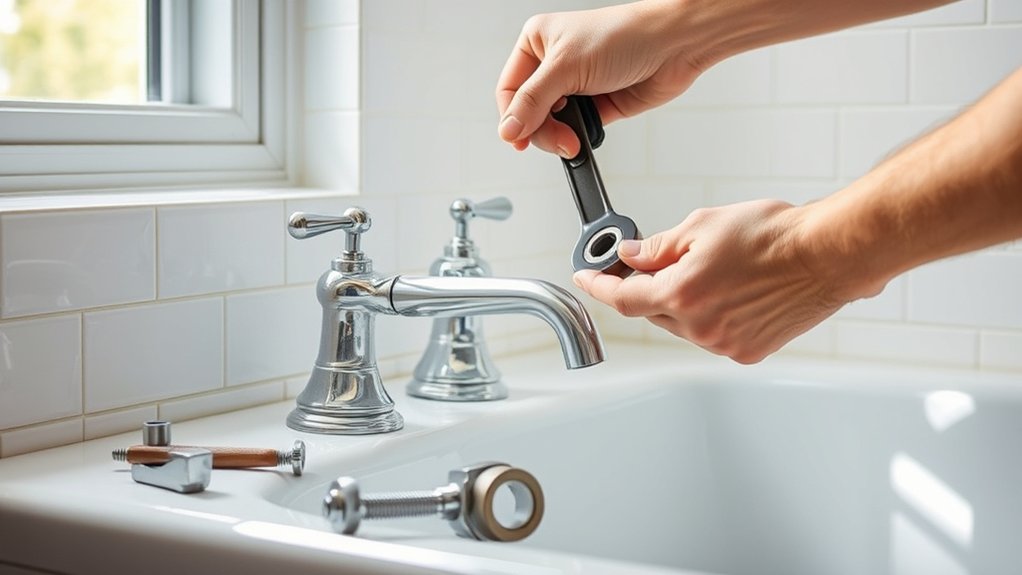
Replace a Two-Handle Bathtub Faucet in 7 Easy Steps
To replace a two-handle bathtub faucet in seven easy steps, start by turning off the water supply to avoid any spills or damage. Gather all necessary tools, including a wrench and screwdriver, to ensure a smooth replacement process.
Removing the old faucet handles and spout carefully is essential to prevent any damage to your plumbing.
Next, clean and inspect the plumbing for any signs of damage or buildup that could affect the new faucet’s performance.
Slide the new handles and spout into place, securing them tightly for a secure fit. This step ensures your new two-handle bathtub faucet will function properly and look great.
Finally, turn the water back on, check for leaks, and test the faucet to guarantee smooth operation.
Keep going to uncover tips for a flawless installation and long-lasting results.
Key Takeaways
- Turn off water supply valves and confirm no water flow before starting the faucet replacement.
- Remove old handles, spout, and escutcheon plates carefully, cleaning residual sealant and inspecting pipes.
- Install new handles and spout by aligning and securing them properly to ensure smooth operation.
- Tighten all faucet fittings evenly and securely to prevent leaks and ensure a snug fit.
- Test water flow and temperature, check for leaks, and address any issues before finalizing the installation.
Gather Tools and Materials for Faucet Replacement
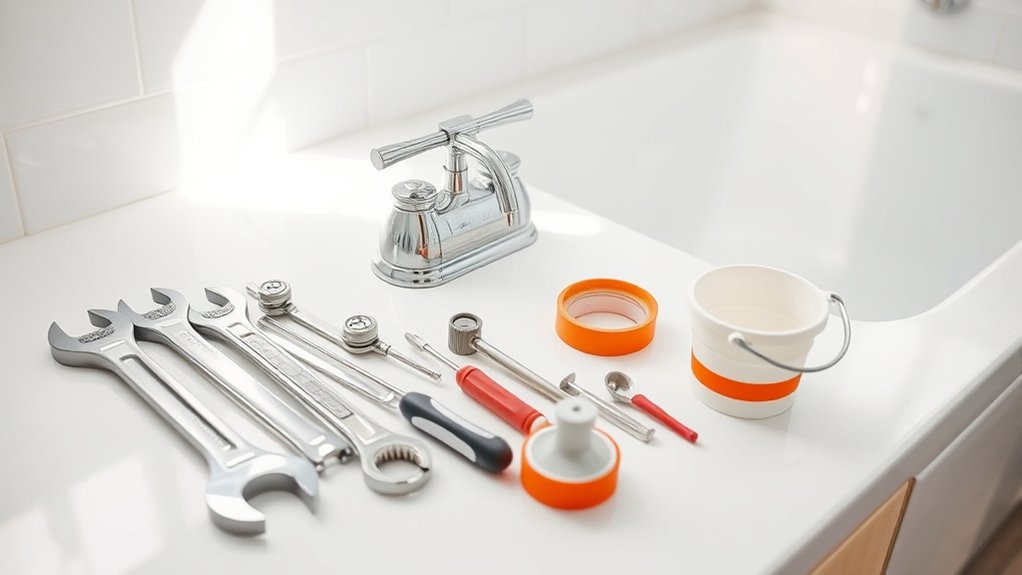
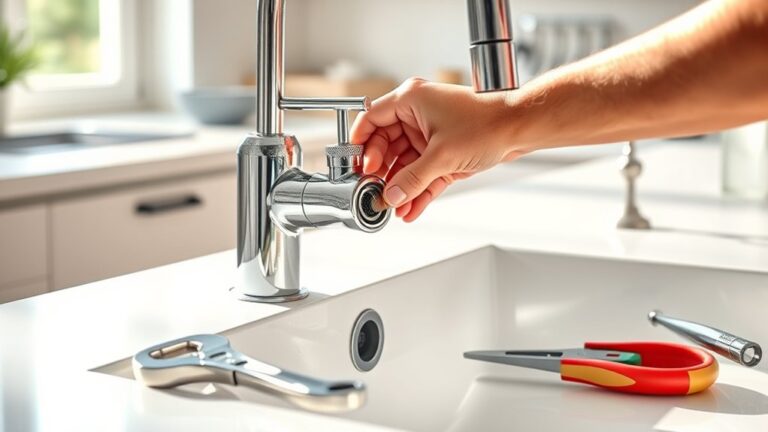
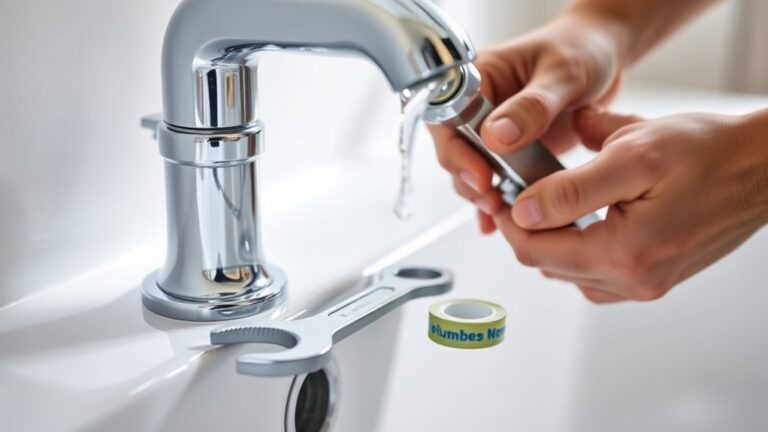
Before you begin replacing your two-handle bathtub faucet, make sure you gather all the necessary tools and materials. You’ll need an adjustable wrench, a Phillips screwdriver, plumber’s tape, and a basin wrench for tight spaces. Grab some channel lock pliers to loosen stubborn nuts and a utility knife to cut away old caulk.
Have a bucket or towel ready to catch any water drips. Pick up a new two-handle faucet that fits your tub’s existing plumbing. Don’t forget plumber’s putty or silicone sealant to prevent leaks.
Turn Off the Water Supply and Prepare Your Work Area
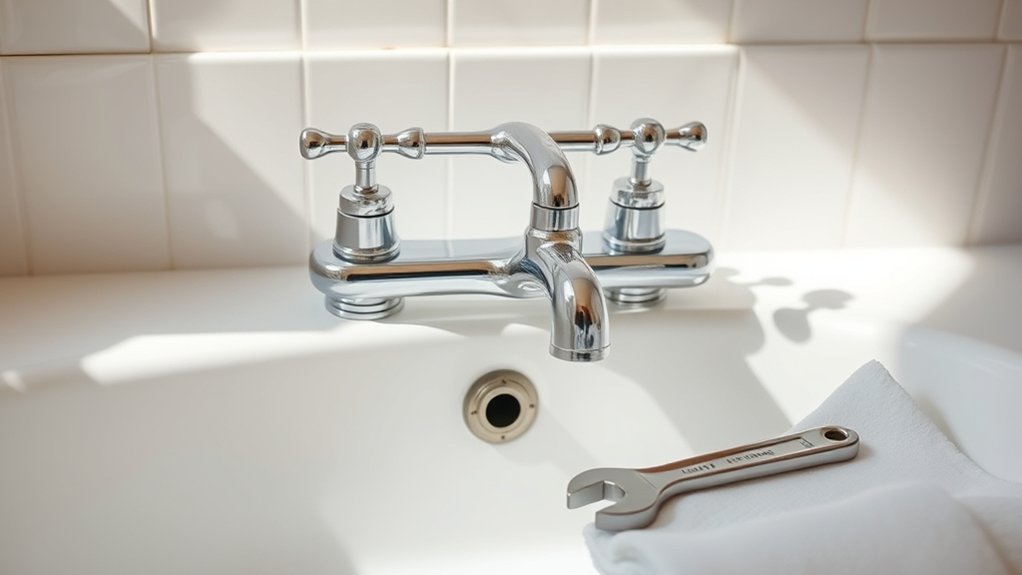
With your tools and materials ready, the next step is to shut off the water supply to prevent any leaks or spills while you work. Locate the main water valve for your home or the shutoff valves specifically for your bathtub. Turn these valves clockwise until they’re fully closed.
To confirm the water is off, open the faucet handles and let any remaining water drain out. Next, clear the area around the bathtub to give yourself plenty of room to move. Lay down a towel or drop cloth to catch any drips and protect your floor.
Have a bucket nearby for excess water and keep your tools within easy reach. Preparing your workspace this way helps you work safely and efficiently without interruptions.
Remove the Old Two-Handle Bathtub Faucet
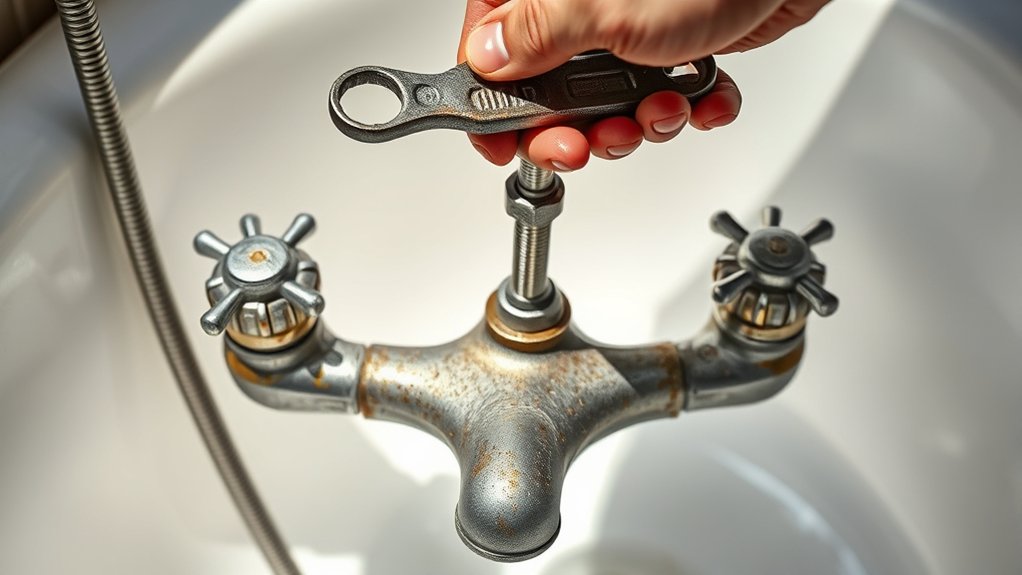
Once the water supply is securely shut off, you can start removing the old two-handle bathtub faucet. Begin by unscrewing the decorative handle caps with a flathead screwdriver, then use an Allen wrench or screwdriver to remove the handle screws. Carefully pull off both handles.
Next, loosen and remove the escutcheon plates—the decorative coverings behind the handles—by unscrewing or prying them gently with a putty knife. Use an adjustable wrench to disconnect the faucet spout by turning it counterclockwise, or if it’s secured with set screws, loosen those first. Be cautious not to damage the surrounding wall or tub surface.
Once all parts are removed, clean up any leftover caulk or sealant around the openings so you’re ready for the next step.
Clean and Inspect Plumbing for Issues Before Installing
Although you’ve removed the old faucet, you can’t skip cleaning and inspecting the plumbing. Take a close look at the exposed pipes and connections for any signs of corrosion, mineral buildup, or leaks. Use a cloth or a soft brush to clear away any debris or grime inside the faucet openings.
If you spot damaged or worn-out parts, replace them before moving on. Check that the supply lines are secure and free from cracks or corrosion. Make sure the valve seats are smooth and intact to guarantee a proper seal with the new faucet.
Taking these steps now prevents future leaks and guarantees your new faucet will fit and function perfectly. Don’t rush this step; a clean, sound base is key to a successful installation.
Install the New Two-Handle Bathtub Faucet Handles and Spout
Before you attach the new faucet handles and spout, make sure the valve stems are clean and properly aligned. This guarantees a smooth fit and prevents leaks. First, slide the new handles onto the stems, aligning any notches or splines carefully.
Press them firmly but gently into place. Next, secure each handle using the provided screws or caps, tightening them just enough to hold without stripping. For the spout, align it with the outlet pipe, then slide or screw it on depending on your model.
If it uses a set screw, tighten it securely. Double-check that the handles turn smoothly and the spout fits snugly. Taking your time here makes the final installation easier and helps everything work right from the start.
Fasten the Faucet Securely and Check for Leaks
Now, tighten the mounting bolts evenly to secure the faucet without warping it. Carefully inspect all water connections to guarantee they’re properly sealed.
Finally, turn on the water and test the faucet for any leaks before finishing up.
Tighten Mounting Bolts Evenly
When tightening the mounting bolts, make sure you do so evenly to avoid misalignment and guarantee a secure fit. Start by hand-tightening each bolt, then use a wrench to alternate between bolts in small increments. This approach keeps the faucet stable and prevents uneven pressure that could damage the fixture or cause leaks.
Taking your time here pays off with a faucet that feels solid and reliable.
- Feel the confidence as the faucet locks in place perfectly
- Avoid frustration from uneven tightening and potential leaks
- Enjoy the satisfaction of a job done right the first time
- Prevent costly repairs by securing bolts evenly now
- Experience the peace of mind that comes with a sturdy fixture
Inspect Water Connections Closely
After tightening the mounting bolts evenly, secure the faucet by fastening the water connections carefully. Use an adjustable wrench to snugly tighten the hot and cold water supply lines, but don’t overtighten—they should be firm without risking damage to the fittings. Check that the connections sit flush against the faucet base to prevent gaps where leaks could form.
Also, inspect the washers or O-rings inside the connections to confirm they’re properly seated and undamaged. If you notice any worn or cracked components, replace them before continuing. Take your time to verify every connection feels solid and stable.
This step is essential to avoid future problems and guarantees your new faucet functions smoothly once you turn the water back on.
Test Faucet For Leaks
How can you be sure your new faucet is properly sealed? First, fasten the faucet securely to avoid any movement that could cause leaks. Turn on the water slowly and watch closely around all connections.
Check both hot and cold handles for drips or moisture. If you spot any leaks, tighten fittings carefully but don’t overtighten—they can damage the seals. Remember, a leak-free faucet means peace of mind and a job well done.
Keep an eye out for:
- Tiny drips forming around the base
- Moisture pooling beneath the faucet
- Water seeping from handle joints
- Sounds of dripping or running water
- Sudden drops in water pressure
Catch leaks early to save yourself frustration and costly repairs.
Test Your New Bathtub Faucet to Ensure Proper Function
Now that your faucet is secure, turn on both handles to test the water flow and temperature. Make sure the water flows smoothly without any sputtering or uneven pressure.
Check that the hot and cold water mix accurately to avoid any surprises when you use the tub.
Check Water Temperature Accuracy
Although installing your new two-handle bathtub faucet is exciting, you’ll want to verify that the water temperature adjusts correctly before finishing up. Turn on both handles slowly and let the water run. Feel the temperature carefully as you adjust each handle.
Make sure the hot water is truly hot and the cold water pleasantly cool. If the temperature doesn’t change as expected, you might need to check the faucet’s internal parts or your water heater settings.
- Enjoy the comfort of perfect water warmth every time
- Avoid unexpected scalds or chills during your bath
- Feel confident that your installation was done right
- Appreciate the smooth control over temperature changes
- Know you’ve enhanced your bathroom’s safety and comfort
Inspect Water Flow Consistency
After confirming your water temperature adjusts correctly, the next step is to check the water flow consistency. Turn both handles slowly and observe how the water flows from the faucet. You want a smooth, steady stream without sputtering, drips, or sudden pressure changes.
If you notice irregular flow, it could indicate trapped air, debris in the lines, or installation issues. Test both hot and cold handles individually and together to verify balanced pressure. If the flow seems weak, double-check your supply valves are fully open and that the faucet’s aerator isn’t clogged.
Address any issues promptly to avoid future leaks or damage. Once your water flows consistently, your new two-handle bathtub faucet is functioning properly and ready for regular use.
Frequently Asked Questions
How Do I Choose the Right Faucet Style for My Bathroom Decor?
You’ll want to match your faucet style to your bathroom’s overall design—go modern for sleek looks, vintage for classic charm, or rustic for cozy vibes. Consider your finishes, handle shapes, and how they complement existing fixtures.
Think about the color and material of the faucet to ensure it blends well with your bathroom decor. Pay attention to the shape and size of the handles to maintain balance in the space. Small details like these can make a big difference in the overall aesthetic.
Can I Replace a Two-Handle Faucet With a Single-Handle One?
Absolutely, you can swap your two-handle faucet for a single-handle one, just like switching from a rotary phone to a smartphone. You’ll need to adjust plumbing and possibly the mounting holes, but it’s totally doable with the right tools.
Make sure to turn off the water supply before starting the replacement. You might need to use an adapter or modify the sink to fit the new faucet.
With some patience and the proper instructions, the upgrade can be a smooth process.
What Materials Are Best for Long-Lasting Bathtub Faucets?
You’ll want faucets made of solid brass or stainless steel since they resist corrosion and last longer. Look for finishes like chrome or brushed nickel—they’re durable and easy to clean, keeping your bathtub faucet looking great for years.
These materials not only enhance the faucet’s lifespan but also maintain their appearance with minimal maintenance. Choosing quality materials ensures you won’t need frequent replacements or repairs.
Investing in faucets with these characteristics can save you money and hassle in the long run.
How Often Should I Replace Bathtub Faucet Washers?
You should replace your bathtub faucet washers every 6 to 12 months—unless you enjoy that charming drip-drip soundtrack 24/7. Don’t wait for a flood; swapping them keeps leaks and annoying noises at bay!
Are There Water-Saving Two-Handle Faucet Options Available?
Yes, you can find water-saving two-handle faucets designed to reduce flow without sacrificing pressure. Look for models with aerators or flow restrictors to save water and lower your utility bills while keeping your bathroom functional.
These features help maintain a steady stream while minimizing water waste. Many manufacturers now offer options specifically aimed at conserving water.
Conclusion
Now that you’ve tackled replacing your two-handle bathtub faucet, you’re basically a plumbing superhero! With just a few simple steps, you’ve saved yourself from endless drips and leaks.
Remember, taking your time to double-check connections guarantees your new faucet works perfectly. If you follow these steps, you’ll enjoy a smooth, leak-free bath for years to come.
Who knew a little DIY could make such a huge difference? Replacing a two-handle bathtub faucet is easier than you think, and mastering this task means fewer plumbing repairs in the future. Embrace your new skills and enjoy the benefits of a properly installed bathtub faucet!