10 Factors Affecting How Much a Vacuum Leak Repair Costs
You’ll find vacuum leak repair costs vary based on several important factors that influence the final price. Understanding these factors—such as your vehicle’s make and model, the location and severity of the leak, and labor time—can help you anticipate repair expenses.
Quality and accessibility of gaskets or hoses also play a significant role in determining costs. Labor time increases with complex diagnostics and hard-to-reach parts, while additional engine damage can further raise expenses.
Repair choices between dealerships and independent mechanics also impact pricing. Seasonal demand and your geographic location influence the overall cost as well.
Keep exploring, and you’ll uncover what each factor means for your repair bill and how to manage these variables effectively.
Key Takeaways
- The vehicle’s make, model, and parts accessibility significantly influence vacuum leak repair costs.
- Leak location and severity directly affect repair complexity and overall expenses.
- Labor time increases with diagnostic difficulty and the need for specialized tools.
- Engine damage requiring multiple part replacements raises both repair duration and costs.
- Choice of repair shop, part quality, and regional factors impact final repair pricing.
Typical Vacuum Leak Repair Costs: What to Expect
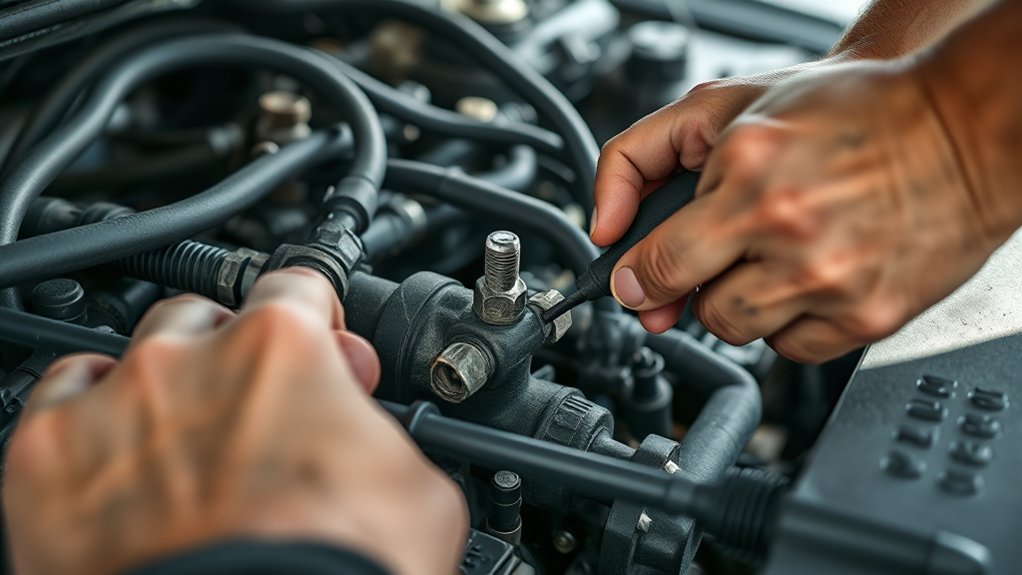
While repair costs can vary, you can generally expect to pay between $150 and $500 to fix a vacuum leak. This range covers common repairs like replacing hoses or gaskets, which usually take an hour or two. Labor typically accounts for the bulk of the expense since mechanics need to locate the leak accurately and guarantee it’s fully sealed.
Parts are often inexpensive, but if the leak involves more complex components, costs can rise. You might also face extra charges if diagnostic tests are needed to pinpoint the problem. Being aware of this typical price range helps you budget and avoid surprises when you take your vehicle in.
How Your Vehicle’s Make and Model Affect Repair Prices
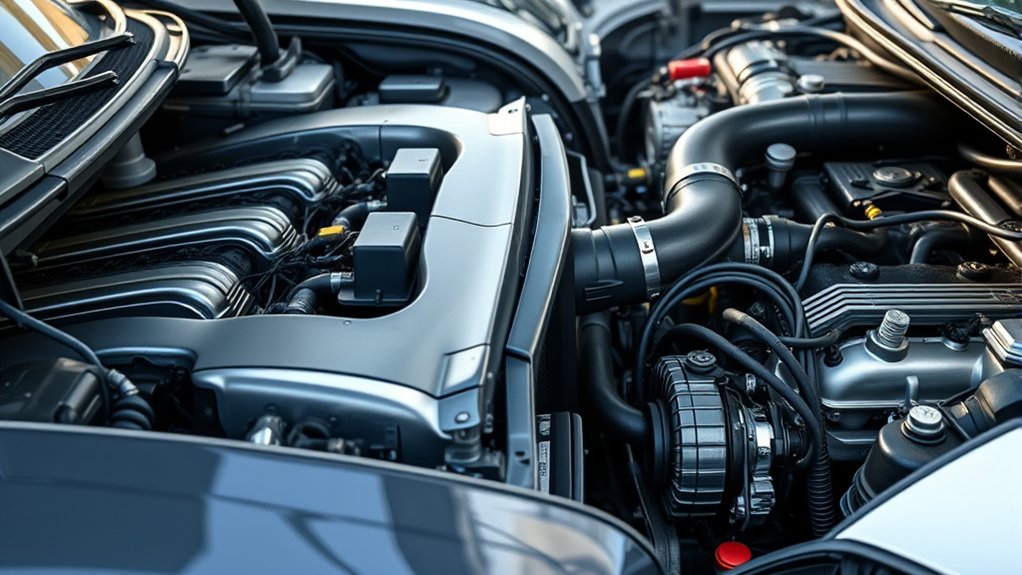
Because different vehicles have unique designs and parts, your car’s make and model can considerably impact vacuum leak repair costs. Some vehicles use specialized components that are pricier to replace, while others have easier-to-access engine parts, which can reduce labor time. Luxury or imported cars often need specific tools and expertise, driving up costs.
Additionally, the availability of parts varies—common models usually have readily available parts, lowering expenses. When you understand how your vehicle fits into these factors, you can better anticipate repair costs.
Consider how these aspects affect your repair price:
- Availability of OEM vs. aftermarket parts
- Complexity of engine design
- Labor time required for your model
- Dealer vs. independent mechanic pricing
- Specific diagnostic tools needed for your vehicle
How Leak Location and Severity Change Repair Costs
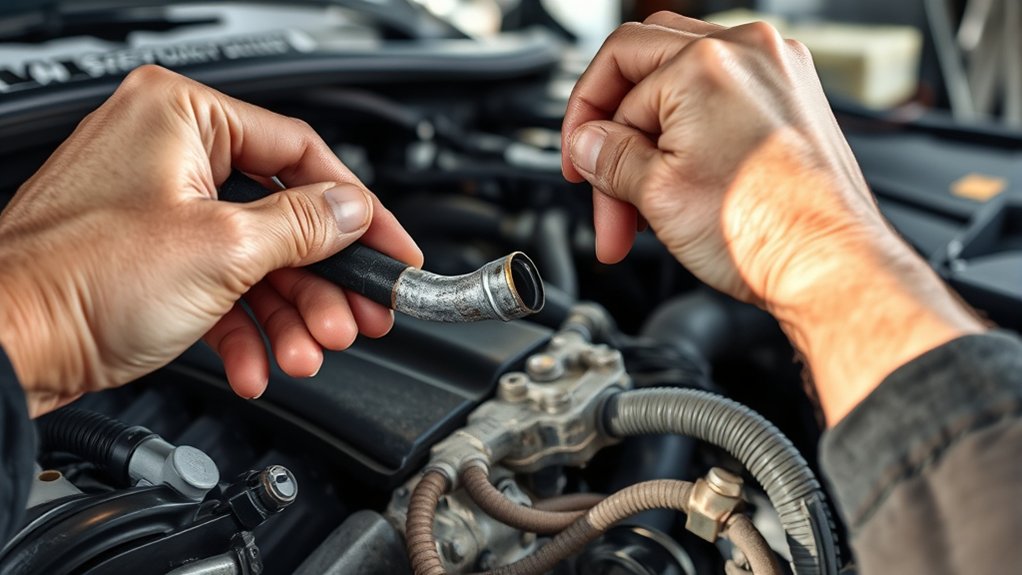
Where the vacuum leak occurs and how severe it is can considerably influence your repair costs. Leaks in accessible areas like hoses usually cost less to fix than leaks deep in the intake manifold. The severity matters too—small cracks might only need a quick patch, while large leaks could require part replacements.
Here’s a quick overview:
| Leak Location | Severity Level | Estimated Cost Range |
|---|---|---|
| Vacuum hoses | Minor | $50 – $150 |
| Vacuum hoses | Major | $150 – $300 |
| Intake manifold | Minor | $200 – $400 |
| Intake manifold | Major | $400 – $700 |
Knowing this helps you anticipate repair expenses more accurately.
How Diagnostic Time Influences Vacuum Leak Repair Expenses
You’ll find that the time spent identifying the vacuum leak directly affects your repair costs. The more complex the diagnostic process, the longer it takes, increasing labor expenses.
Understanding this can help you anticipate how thorough inspections impact your final bill.
Time Spent Identifying Leak
Although vacuum leaks can sometimes be easy to spot, diagnosing the exact source often requires careful inspection and testing. The time spent identifying the leak directly affects the overall repair cost. When mechanics spend more time pinpointing the issue, labor charges increase.
You should be aware that the following factors can extend diagnostic time:
- Multiple potential leak points to check
- Use of specialized diagnostic tools
- Accessibility of vacuum lines and components
- Intermittent or subtle leak symptoms
- Need for smoke testing or pressure tests
Complexity of Diagnostic Process
The time spent diagnosing a vacuum leak often depends on how complex the process is. If the leak is in an easily accessible area, pinpointing it can be straightforward. However, when the leak is hidden deep within the engine or involves multiple components, you’ll face a more intricate diagnostic process.
You might need specialized tools or multiple tests to accurately identify the source. This complexity means the technician must spend extra time and effort, which can influence the overall repair cost. Understanding this helps you see why some vacuum leak repairs take longer and may cost more upfront.
You’ll appreciate knowing that a thorough diagnosis guarantees the problem is fixed correctly the first time, avoiding recurring issues later.
Impact on Labor Costs
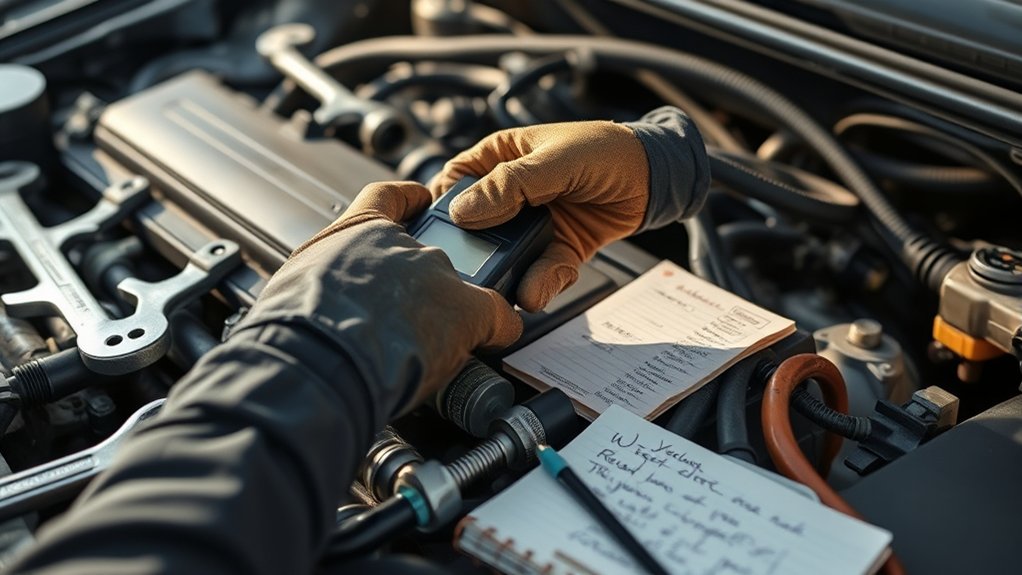
Since diagnosing a vacuum leak can take varying amounts of time, labor costs often reflect this effort directly. When your mechanic spends more time pinpointing the leak, you’ll notice a higher labor charge. The complexity of the leak and the tools required influence how long the diagnosis takes.
You can expect labor costs to increase if the leak is hidden or intermittent, making it tougher to detect. Here are key factors that affect labor costs during diagnosis:
- Difficulty locating the vacuum leak
- Need for specialized diagnostic equipment
- Time spent removing parts for inspection
- Intermittent leaks requiring multiple tests
- Technician’s experience and hourly rate
Understanding these factors helps you anticipate the labor portion of your vacuum leak repair bill.
When Gaskets or Hoses Increase Vacuum Leak Repair Costs
When gaskets are made from higher-quality materials, you’ll likely pay more for the repair. If the hoses are hard to reach or in poor condition, it can also drive up your costs.
Understanding these factors helps you see why some vacuum leak repairs cost more than others.
Gasket Material and Quality
Although you might not always notice, the type and quality of gaskets or hoses play a big role in how much your vacuum leak repair will cost. Higher-quality materials usually last longer but come with a higher price tag. Cheaper gaskets might save you money upfront but could lead to more frequent replacements.
When selecting gasket materials, consider these factors:
- Durability and resistance to heat and chemicals
- Manufacturer specifications for your vehicle model
- Compatibility with engine components
- Brand reputation and warranty coverage
- Availability of OEM (original equipment manufacturer) vs. aftermarket parts
Choosing the right gasket material assures a reliable seal and reduces the chance of costly repeat repairs, ultimately affecting your repair expenses.
Hose Accessibility and Condition
Gasket quality sets the foundation for a solid seal, but the condition and accessibility of hoses can considerably impact your vacuum leak repair costs. If hoses are brittle, cracked, or swollen, you’ll need replacements, which adds to the expense. Sometimes, hoses are tucked deep within the engine bay or routed behind other components, making access difficult.
This complexity means mechanics spend more time laboring, driving up labor fees. Additionally, if your vehicle uses specialized or hard-to-find hoses, expect higher part costs. By ensuring your hoses are in good shape and accessible, you can avoid steep repair bills.
Regular inspections help catch hose wear early, preventing costly leaks and complicated repairs down the line. Taking simple preventative steps can save you both time and money.
How Labor Rates Affect What You Pay for Vacuum Leak Repairs
Since labor costs vary widely between repair shops and regions, they play a crucial role in determining how much you’ll pay for vacuum leak repairs. Your final bill depends largely on how much the mechanic charges per hour and how long the repair takes.
Here are factors that influence labor rates:
- Location: Urban areas typically have higher labor rates than rural ones.
- Shop Type: Dealerships often charge more than independent garages.
- Technician Experience: Certified or specialized mechanics may bill higher rates.
- Complexity: Difficult-to-access leaks require more labor time, increasing costs.
- Time of Service: Emergency or after-hours repairs usually cost more.
Understanding these can help you anticipate labor expenses and choose the best repair option for your budget.
How Additional Engine Damage Raises Repair Costs
If your vacuum leak has caused further engine damage, expect the repair to take longer and cost more. You’ll face higher labor charges as mechanics handle a larger scope of repairs.
Plus, replacing damaged parts will add to your overall expenses.
Impact on Repair Scope
When additional engine damage occurs alongside a vacuum leak, you’ll see repair costs rise considerably. That’s because the repair scope expands beyond just fixing the leak. You’ll need more parts replaced or repaired, which drives up expenses.
Plus, the complexity of the job increases, requiring a thorough inspection to identify all affected components. Here’s what typically broadens the repair scope:
- Replacing damaged intake manifolds or gaskets
- Repairing or replacing sensors affected by the leak
- Fixing hoses or connectors compromised by engine issues
- Addressing related engine misfires or performance problems
- Testing and recalibrating engine control systems
Increased Labor Time
Expanding the repair scope means mechanics will spend more time diagnosing and fixing the issues caused by the vacuum leak and the resulting engine damage. This extra labor directly increases your repair costs since more hours on the job translate to higher bills. When vacuum leaks cause problems like rough idling or misfires, mechanics must perform detailed inspections and tests, adding to the labor time.
| Task | Estimated Additional Labor Time |
|---|---|
| Diagnosing engine misfires | 1-2 hours |
| Inspecting intake manifold | 0.5-1 hour |
| Repairing related damages | 2-4 hours |
| Testing and tuning engine | 1-2 hours |
Understanding these time demands helps you anticipate the impact on your repair costs.
Replacement Part Costs
Several replacement parts may be necessary as vacuum leaks lead to further engine damage, substantially increasing your repair costs. When a vacuum leak persists, it can cause components to wear out or fail prematurely, meaning you might need more than just a simple seal fix.
Here are common parts that often require replacement:
- Intake manifold gasket
- Vacuum hoses
- Throttle body
- Engine sensors (e.g., MAP sensor)
- PCV valve
Each of these parts carries its own price tag, and combined with labor, the total repair cost can add up quickly. Addressing the vacuum leak early helps prevent this domino effect, saving you money and avoiding extensive engine damage.
Don’t delay repairs if you want to keep costs manageable.
Dealership vs. Independent Mechanic: Vacuum Leak Repair Costs Compared
Choosing between a dealership and an independent mechanic can considerably impact the cost of repairing a vacuum leak. Dealerships often charge higher labor rates because they use brand-specific parts and have specialized training for your vehicle. While this can guarantee quality and warranty compliance, it usually means a steeper bill.
Independent mechanics, on the other hand, tend to offer more affordable labor rates and might use aftermarket parts, cutting costs without sacrificing reliability. However, quality can vary, so you’ll want to check reviews and certifications. If you’re looking to save money without compromising too much on expertise, an independent mechanic is often your best bet.
Ultimately, the choice depends on your budget, the vehicle’s requirements, and how much peace of mind you want.
How Warranty and Insurance Can Lower Your Repair Bill
If your vehicle is still under warranty or you have the right insurance coverage, you can substantially reduce the cost of repairing a vacuum leak. Warranties often cover parts and labor, so you might pay little to nothing out of pocket. Insurance policies, especially those with mechanical breakdown coverage, can also help offset repair expenses.
To make the most of your warranty or insurance, consider:
- Confirming coverage details before repairs
- Using authorized service centers to avoid claim issues
- Keeping maintenance records to support claims
- Understanding deductibles and limits on coverage
- Checking if rental car expenses are included during repairs
How Season and Location Affect Vacuum Leak Repair Prices
Because repair shops often experience higher demand during certain times of the year, the season can influence how much you’ll pay to fix a vacuum leak. For example, in colder months, vacuum leaks may become more noticeable, increasing repair requests and driving prices up. Conversely, during slower seasons, you might find better deals or discounts.
Location also plays a key role. If you live in a big city, labor and parts costs tend to be higher compared to rural areas, which means you’ll likely pay more for the same repair. Additionally, shops in regions with higher living costs usually charge more.
Knowing how season and location affect prices can help you time your repair or shop around for better rates, saving you money.
Frequently Asked Questions
How Can I Tell if My Vacuum Leak Is Affecting Fuel Efficiency?
You can tell if your vacuum leak’s affecting fuel efficiency by noticing rough idling, increased fuel consumption, or engine misfires.
If your gas mileage drops suddenly, it’s a strong sign your vacuum leak needs attention.
What Are Common Symptoms of a Vacuum Leak in a Car?
You’ll notice rough idling, engine stalling, or a high idle RPM. Your car might hesitate during acceleration, trigger the check engine light, or show poor fuel efficiency.
These are common vacuum leak symptoms you shouldn’t ignore.
Can a Vacuum Leak Cause My Check Engine Light to Turn On?
Yes, a vacuum leak can trigger your check engine light. It causes rough idling, poor fuel economy, and increased emissions.
When your engine detects these issues, it sets off the light to alert you immediately.
Are DIY Vacuum Leak Repairs Safe and Effective?
You can safely fix some vacuum leaks yourself if you have basic tools and knowledge. Just be careful to identify the exact leak and avoid damaging hoses or connectors.
Otherwise, a professional’s help is safer and more effective.
How Often Should Vacuum Hoses Be Inspected or Replaced?
Think of your vacuum hoses like the lifelines of your engine’s breath. You should inspect them every six months and replace them every two years to keep your car running smoothly and avoid unexpected breakdowns.
Conclusion
Fixing a vacuum leak is like patching a small hole in a sail—if you act fast, you’ll keep your engine running smoothly without sinking costs. Remember, your car’s make, the leak’s location, and even the season can stir the repair price pot. By choosing the right mechanic and checking your warranty, you can steer your budget clear of rough waters.
Stay informed, and you’ll navigate repairs with confidence and ease. Understanding the factors affecting how much a vacuum leak repair costs helps you plan better. This way, you avoid unexpected expenses and keep your vehicle in top shape.