How Does a Vacuum Flask Work Step by Step
You’ll find a vacuum flask works by creating a vacuum layer between double walls, effectively cutting off heat transfer via conduction and convection. This vacuum layer is key to maintaining the temperature of your beverage, whether hot or cold.
Its reflective inner coating bounces heat radiation back into your drink, helping to keep it hot or cold for longer periods.
The narrow neck and tight seal prevent air exchange, which also helps in maintaining the temperature inside the flask.
Materials like glass or stainless steel reduce heat flow further, enhancing insulation.
Additionally, the flask’s shape limits surface exposure to the external environment, minimizing heat loss.
Keep going, and you’ll uncover how these parts come together to expertly preserve your beverage’s temperature, making the vacuum flask a reliable and efficient thermal container.
Key Takeaways
- A vacuum flask has double walls with a vacuum layer that eliminates conduction and convection heat transfer.
- The reflective coating inside the flask bounces radiant heat back into the contents.
- The narrow neck and rounded body minimize surface area for heat exchange with the environment.
- Tight seals prevent air exchange, maintaining the vacuum and insulation integrity.
- Low thermal conductivity materials in the inner and outer walls resist heat absorption and loss.
What Is a Vacuum Flask and Why It Matters
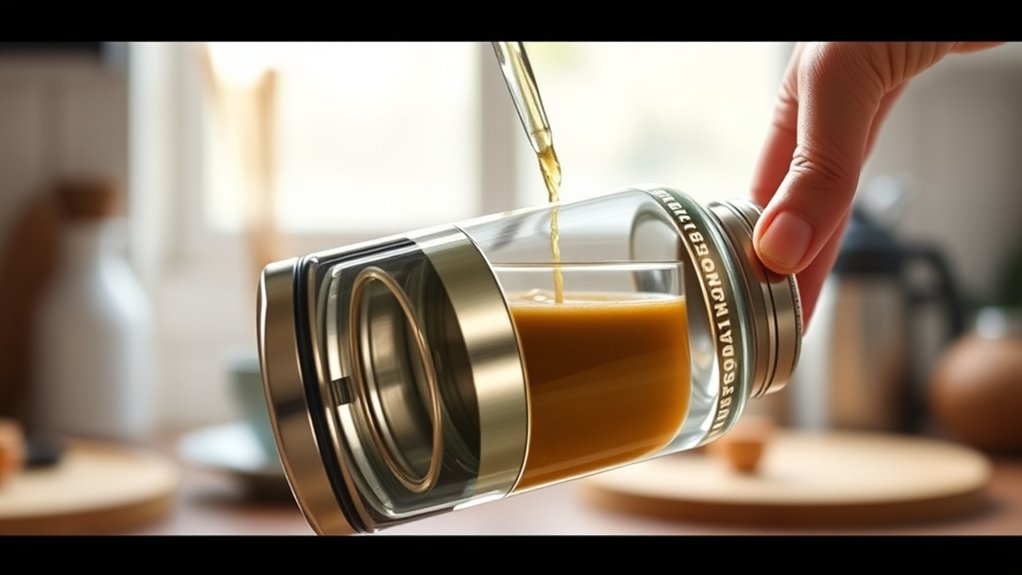
Although you might take it for granted, a vacuum flask plays an essential role in keeping your drinks hot or cold for hours. You rely on it during chilly mornings or long trips to enjoy beverages at just the right temperature. A vacuum flask, also known as a thermos, consists of two walls with a vacuum in between, which helps reduce heat exchange.
It matters because it preserves the taste and temperature of your drink without needing external power or insulation materials. Whether you’re carrying coffee, tea, or iced water, this simple device ensures your drink remains enjoyable. Understanding what a vacuum flask is and why it matters helps you appreciate its convenience and efficiency in everyday life.
How a Vacuum Flask Stops Heat Transfer Through Its Design
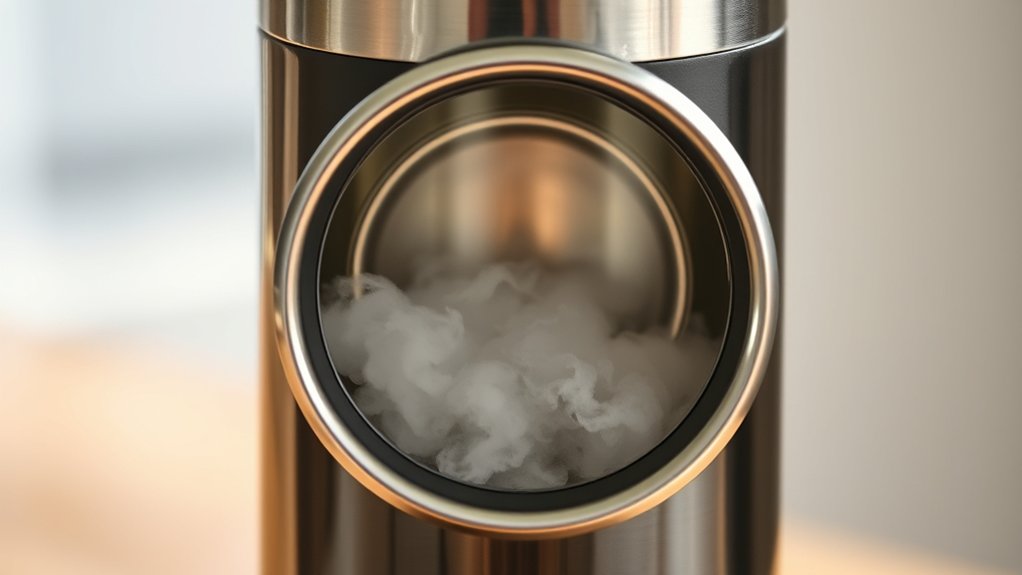
Now that you know what a vacuum flask is and why it matters, let’s look at how its design actually stops heat from escaping or entering. The flask uses a double-walled structure with a narrow gap between the walls. This design minimizes heat transfer by conduction and convection because air—or any other material—can’t easily move or carry heat across the gap.
The inner surface often has a reflective coating, which reduces heat loss through radiation by reflecting infrared energy back into the flask. The tight seal at the top prevents heat exchange with the outside environment by stopping air from flowing in or out. Altogether, these features work together to keep your drink hot or cold by blocking the main ways heat usually travels.
How the Vacuum Layer Prevents Heat Loss
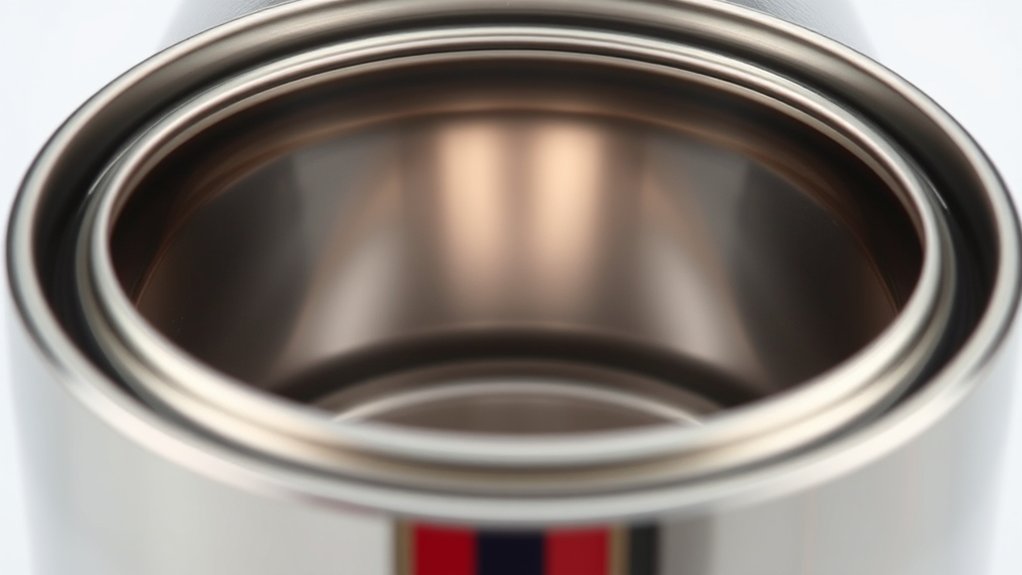
Two key factors make the vacuum layer in a flask so effective at preventing heat loss: the absence of air and the lack of material to conduct heat. Without air, there’s no medium for heat to transfer by convection or conduction. Since the vacuum space contains almost no particles, heat can’t move through it easily, keeping your drink’s temperature steady.
Here’s how the vacuum layer blocks heat transfer:
| Heat Transfer Mode | Effect in Vacuum Layer | Reason |
|---|---|---|
| Conduction | Prevented | No material to conduct heat |
| Convection | Prevented | No air to circulate heat |
| Radiation | Reduced | Vacuum doesn’t absorb heat |
| Heat Flow | Minimized | Lack of particles |
| Temperature Loss | Greatly slowed | Insulation by vacuum |
You’ll notice the vacuum layer is essential for maintaining temperature inside the flask.
Why Reflective Coatings Block Heat Radiation
While the vacuum layer stops most heat from moving through conduction and convection, radiation can still carry energy across the empty space. That’s where reflective coatings come in. These coatings, usually made of shiny metals like aluminum, reflect infrared radiation—the main form of heat energy—back toward its source.
When heat tries to radiate from the hot liquid inside the flask, the reflective surface bounces it right back, preventing energy loss. On the flip side, if the flask holds something cold, the coating stops external heat radiation from getting in. By reflecting this invisible heat energy, the coatings help maintain your drink’s temperature longer.
How a Vacuum Flask’s Shape Helps Keep Drinks Hot or Cold
Because heat transfer depends on surface area and exposure, the shape of a vacuum flask plays a crucial role in maintaining your drink’s temperature. Its design minimizes the surface area exposed to the outside environment, reducing heat loss or gain. You’ll notice the flask’s narrow neck and rounded body aren’t just for style—they help control temperature effectively.
Here’s how the shape helps:
- Narrow neck limits the area where heat can escape or enter.
- Rounded body reduces surface area relative to volume.
- Compact design limits exposure to cooler or warmer air.
- Smooth curves prevent heat-trapping corners.
- Balanced shape fits well in your hand, encouraging less frequent opening.
Together, these features keep your hot drinks hot and cold drinks cold for longer.
How Conduction and Convection Are Minimized Inside a Vacuum Flask
You’ll notice that conduction and convection are the main ways heat escapes from your drink. A vacuum flask minimizes these by creating an insulating layer that stops heat from moving through solid materials or air currents.
Let’s see how this clever design keeps your drink’s temperature steady.
Heat Transfer Prevention
Since heat moves through conduction and convection, a vacuum flask uses design features that effectively block these processes to keep your drinks hot or cold. You’ll notice the flask has two walls with a vacuum gap between them, which prevents heat transfer by conduction because there’s no medium for heat to travel through. Additionally, the vacuum stops convection currents from forming, so heat can’t circulate inside the flask.
You’ll also find that:
- The flask’s inner surface is often coated with reflective material to reduce heat radiation.
- The narrow neck limits air movement, further cutting down convection.
- Materials with low thermal conductivity are used for the flask’s stopper.
- The stopper fits tightly, preventing heat loss through air exchange.
- The flask’s design minimizes direct contact points, reducing conduction paths.
These features work together to preserve your drink’s temperature effectively.
Insulation Mechanisms
Although heat naturally tries to move from hot to cold areas, the vacuum flask’s design cleverly interrupts this flow by minimizing conduction and convection inside. You’ll notice the flask has a double-walled structure with a vacuum between the walls. This vacuum acts as an excellent insulator because it contains almost no air, preventing heat transfer through conduction—since conduction needs particles to collide and transfer energy.
Additionally, convection can’t occur because there’s no fluid or gas inside the vacuum to circulate heat. The reflective coating on the inner surfaces further reduces heat loss by reflecting infrared radiation. By combining these features, the flask maintains your drink’s temperature for hours, stopping heat from sneaking out via conduction or convection.
Step-by-Step: How a Vacuum Flask Keeps Hot Drinks Hot
When you pour hot liquid into a vacuum flask, the design immediately starts working to preserve the temperature. The flask minimizes heat loss through conduction, convection, and radiation so your drink stays hot longer. Here’s how it works step-by-step:
Pouring hot liquid into a vacuum flask triggers its design to instantly preserve temperature and minimize heat loss.
- The double walls create an insulating barrier.
- The vacuum between walls eliminates air, stopping heat transfer by conduction and convection.
- The reflective inner surface bounces heat back into the liquid, reducing radiation loss.
- The tight-sealing cap prevents heat escape and air entry.
- The flask’s materials resist absorbing heat, maintaining internal warmth.
Step-by-Step: How a Vacuum Flask Keeps Cold Drinks Cold
You want your cold drink to stay chilled, and a vacuum flask makes that happen by cutting down heat transfer. Its insulation mechanism stops outside warmth from sneaking in.
Let’s look at how this process works step by step.
Insulation Mechanism Explained
Because a vacuum flask relies on several layers of insulation, it effectively slows down heat transfer and keeps your cold drinks cold for hours. You benefit from these key insulation features:
- Double-walled glass or stainless steel creates a barrier between your drink and the outside air.
- Vacuum layer between the walls eliminates air, reducing heat conduction and convection.
- Reflective coating on the inner wall reflects radiant heat away from your drink.
- Tight-sealing stopper or lid prevents warm air from entering and cold air from escaping.
- Protective outer casing adds durability and further insulation.
Each layer works together, maintaining your drink’s temperature by blocking the main ways heat could get in or out. This clever design keeps your beverage cool and invigorating.
Minimizing Heat Transfer
How exactly does a vacuum flask keep your cold drinks invigorating for hours? It minimizes heat transfer through three main methods: conduction, convection, and radiation.
First, the vacuum between the flask’s inner and outer walls eliminates conduction and convection because there’s no air or matter to carry heat.
Second, the reflective coating on the inner surface reduces heat transfer by radiation, bouncing heat away from your drink. Third, the flask’s tight seal prevents warm air from sneaking in and cold air from escaping.
Materials Used in Vacuum Flask Insulation and Construction
Although vacuum flasks come in various designs, their insulation and construction rely on a few key materials that work together to minimize heat transfer. You’ll find these materials carefully chosen to block heat conduction, convection, and radiation efficiently.
Here are the main materials used in vacuum flask insulation and construction:
- Glass: Often used for the inner container due to its low thermal conductivity and inert nature.
- Stainless Steel: Common in durable flasks, offering strength and moderate insulation.
- Silver Coating: Applied to inner surfaces to reflect radiant heat.
- Plastic or Rubber: Used for the outer cap and seals to prevent air entry and maintain vacuum.
- Vacuum Layer: The space between inner and outer walls, devoid of air, drastically reduces heat transfer.
These materials combine to keep your drinks hot or cold for hours.
How to Care for Your Vacuum Flask to Maintain Its Insulation
To keep your vacuum flask working efficiently, you need to clean it properly without damaging the inner surfaces. Avoid exposing it to extreme temperatures that could weaken its insulation. Also, store it safely to prevent dents or cracks that might reduce its effectiveness.
Proper Cleaning Techniques
Since your vacuum flask relies on a sealed vacuum to maintain insulation, keeping it clean is essential to preserve its performance. Dirt and residue can affect the seal and reduce efficiency. Here’s how to clean your flask properly:
- Rinse with warm water immediately after use to prevent buildup.
- Use a soft bottle brush and mild dish soap to clean the interior gently.
- Avoid abrasive cleaners or scrubbers that could damage the inner surface.
- Rinse thoroughly to remove any soap residue that might affect taste or insulation.
- Let it air dry completely with the lid off to prevent moisture buildup and odors.
Following these steps regularly helps maintain your flask’s insulation and ensures your drinks taste fresh every time.
Avoiding Extreme Temperatures
When you expose your vacuum flask to extreme temperatures, you risk damaging its insulation and overall performance. Avoid leaving your flask in a freezing car or under direct sunlight for hours. Sudden temperature changes can cause the glass inner lining to crack or the vacuum seal to weaken.
If you fill your flask with boiling water, let it cool slightly first to prevent thermal shock. Likewise, don’t pour ice-cold liquids immediately after hot ones without rinsing. Maintaining a stable temperature range preserves the vacuum layer that keeps your drinks hot or cold.
Safe Storage Practices
Keeping your vacuum flask in good shape goes beyond avoiding extreme temperatures. To maintain its insulation, you need to store it properly and handle it with care. Here’s how you can do that effectively:
- Clean the flask thoroughly and dry it completely before storing to prevent mold and odors.
- Store it with the lid off to allow air circulation and avoid stale smells.
- Keep your flask upright to prevent any remaining liquid leaks.
- Avoid dropping or banging it, as dents can compromise the vacuum seal.
- Store it in a cool, dry place away from direct sunlight or heat sources.
How to Test If Your Vacuum Flask Is Working Properly
Although vacuum flasks are designed to retain temperature for hours, you can quickly check if yours is working properly with a few simple tests. First, fill your flask with hot water and seal it tightly. After about an hour, touch the exterior—if it feels warm, the vacuum insulation might be compromised.
Next, try the cold test by filling it with ice water and waiting an hour; if condensation forms outside or the flask feels cold, the vacuum seal may be broken. Finally, listen for any rattling sounds when you gently shake the flask; loose parts inside can indicate damage.
If your flask fails any of these tests, it’s best to replace it to guarantee your drinks stay at the desired temperature.
Frequently Asked Questions
Who Invented the Vacuum Flask and When?
You should know Sir James Dewar invented the vacuum flask in 1892. He designed it to keep liquids hot or cold by creating an insulating vacuum layer, which prevents heat transfer effectively.
Can Vacuum Flasks Be Used for Storing Solids or Only Liquids?
You can stash both liquids and solids in a vacuum flask, like a treasure chest guarding warmth or chill. It keeps your soups, stews, or snacks fresh, sealing flavors tight until you’re ready to enjoy them.
Are Vacuum Flasks Safe for Storing Carbonated Beverages?
You shouldn’t store carbonated beverages in vacuum flasks because pressure builds up inside, risking leaks or explosions.
It’s safer to use containers designed for carbonation to avoid accidents and keep your drink fresh and secure.
How Long Can a Vacuum Flask Keep Liquids Hot or Cold?
You can keep liquids hot or cold in a vacuum flask for about 6 to 24 hours, depending on the flask’s quality and insulation. Just don’t open it too often, or heat and cold will escape faster.
Can Vacuum Flasks Be Recycled or Are They Environmentally Friendly?
Sure, you can totally recycle a vacuum flask—if you enjoy disassembling metal, glass, and plastic like a mad scientist. Otherwise, they’re not exactly eco-friendly superheroes, but you can reuse them to save some waste!
Conclusion
Now that you know how a vacuum flask works, you might wonder if it truly stops all heat transfer. While it’s not magic, the vacuum layer and reflective coating markedly reduce heat loss by conduction, convection, and radiation.
You can test this yourself by comparing how long drinks stay hot or cold in different containers. So yes, the science holds up—your flask really does keep your drinks just right.
This proves that clever design and the principles of heat transfer in a vacuum flask beat guesswork every time.