Can You Vacuum Mouse Poop?
You shouldn’t vacuum mouse poop directly because it can release harmful dust and pathogens like hantavirus into the air, putting your health at risk. Vacuuming mouse droppings can spread dangerous particles, making cleanup unsafe without proper precautions.
Instead, it’s crucial to follow safe methods for handling and disposing of mouse feces to protect yourself and your home.
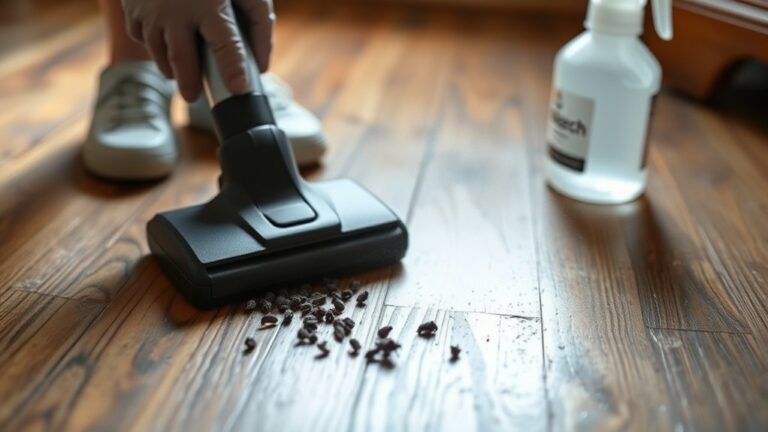
Instead, spray the droppings with disinfectant to dampen them before careful removal using gloves and paper towels. This helps prevent dust from becoming airborne.
If you do vacuum, wait until the area is dry and ventilated, and use a HEPA-filter vacuum to trap contaminants safely.
To protect yourself and your home, it’s important to follow proper cleanup steps and safety measures outlined ahead. Taking these precautions reduces health risks associated with mouse droppings and ensures thorough sanitation.
Key Takeaways
- Vacuuming mouse poop directly can aerosolize harmful particles, increasing the risk of inhaling dangerous pathogens.
- Always dampen droppings with disinfectant before cleanup to reduce airborne dust and contamination.
- Use a vacuum with a HEPA filter only after the area is disinfected and well-ventilated to safely trap fine particles.
- Wear protective gear like gloves and masks when handling mouse droppings or cleaning contaminated areas.
- Avoid regular vacuums and dry sweeping, as they can spread contaminants instead of removing them safely.
Can You Vacuum Mouse Poop?
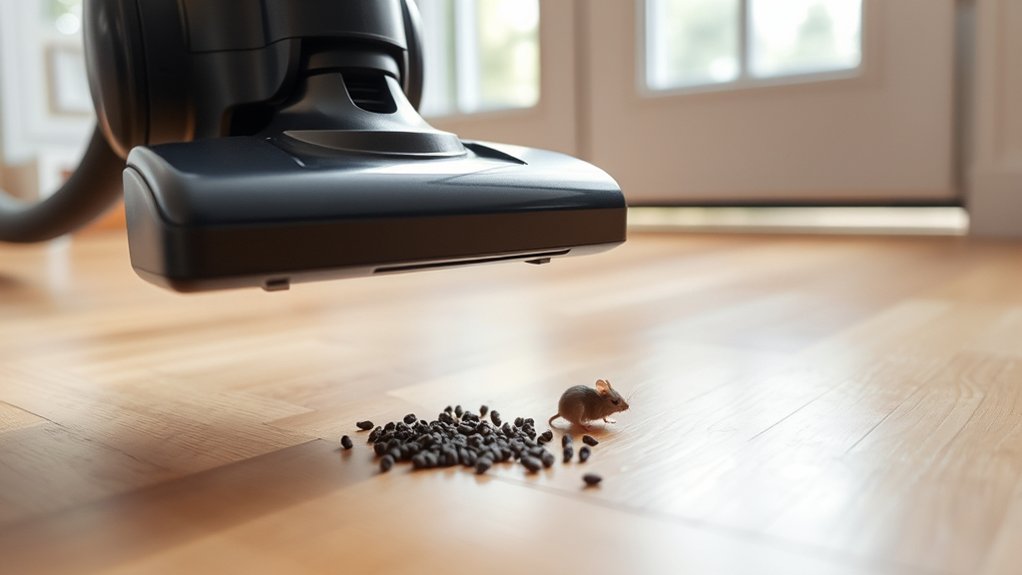
Although it might seem convenient, you shouldn’t vacuum mouse poop directly. Doing so can scatter harmful particles into the air, making the area less safe. Instead, you should dampen the droppings with a disinfectant or bleach solution first.
This helps to prevent dust and particles from becoming airborne when you clean. Use disposable gloves and a paper towel or cloth to pick up the droppings carefully. After disposing of the waste in a sealed bag, you can vacuum the area safely.
Make sure your vacuum has a HEPA filter to trap tiny particles and allergens. Following these steps ensures you reduce the risk of spreading contaminants while keeping your home clean and safe.
What Are the Risks of Vacuuming Mouse Poop?
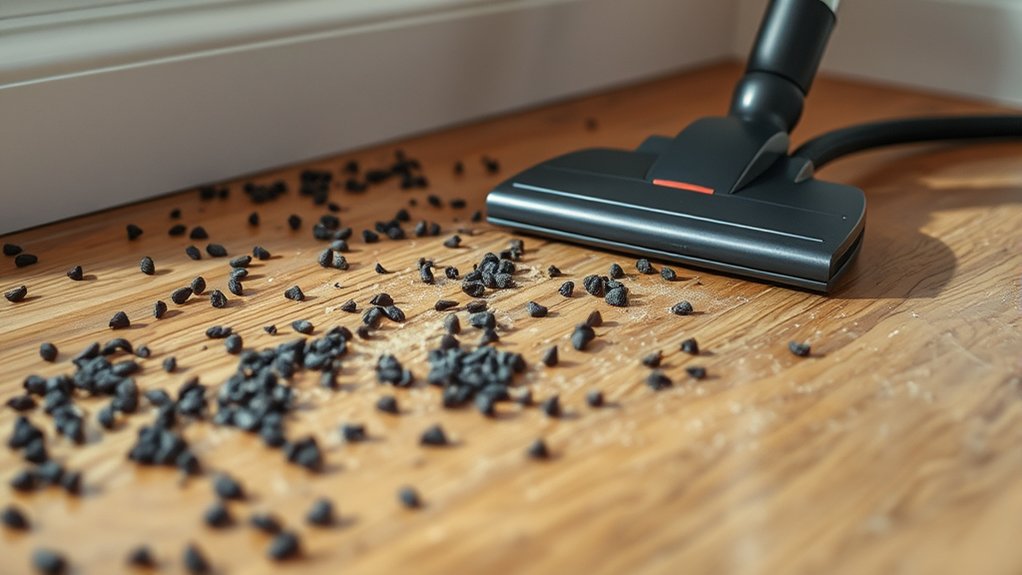
When you vacuum mouse poop without proper precautions, you risk spreading harmful particles into the air, which can lead to serious health issues. The vacuum’s suction can aerosolize tiny contaminated dust particles, making it easier for you to inhale them. This increases the chance of respiratory irritation and exposure to pathogens.
Additionally, your vacuum cleaner can become contaminated, spreading bacteria or viruses to other areas when used again. If you don’t clean or dispose of the vacuum bag or filter properly afterward, you might unknowingly reintroduce these contaminants into your living space. Using a regular vacuum without a HEPA filter simply isn’t safe for this kind of cleanup.
Taking the wrong approach can turn a simple cleanup into a bigger health hazard than you expect.
What Health Hazards Do Mouse Droppings Pose?
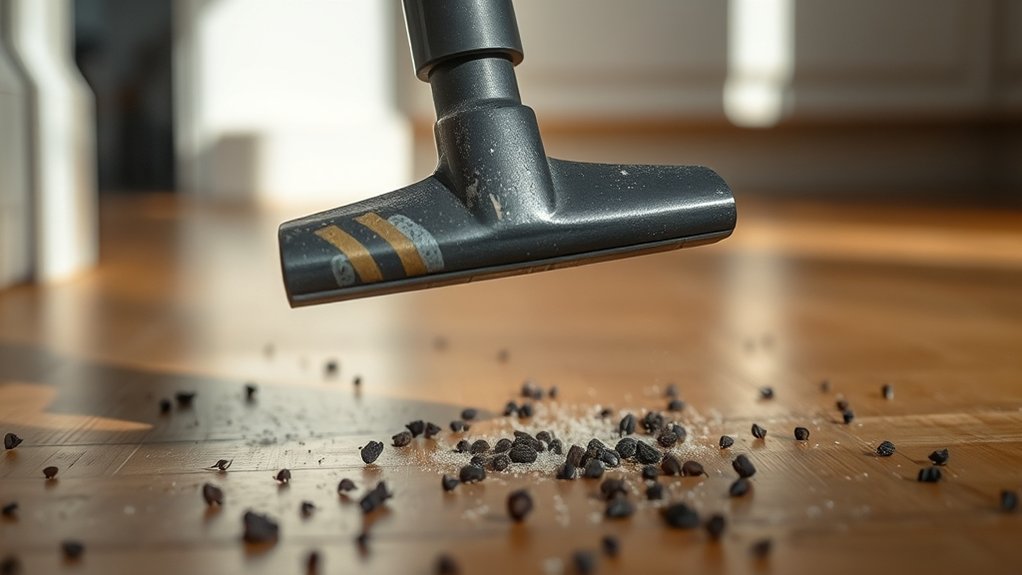
You need to be careful because mouse droppings can carry diseases that affect your health. Breathing in dust from the droppings may cause respiratory irritation or trigger allergies.
Plus, the contamination can spread germs throughout your home if not handled properly.
Disease Transmission Risks
Why should you be concerned about mouse droppings? Because they can carry harmful diseases that pose real risks to your health. Mouse droppings may contain pathogens like hantavirus, salmonella, and leptospirosis bacteria.
When you come into contact with these droppings or disturb them, you risk spreading these pathogens to yourself and others. Handling or cleaning up mouse poop without proper precautions can lead to infections. You might accidentally ingest or inhale particles carrying viruses or bacteria, causing serious illness.
That’s why it’s essential to approach cleanup carefully, using protective gear and safe methods. Ignoring these risks or using improper cleaning tools, like a vacuum, can increase your chance of disease transmission and put your household at risk.
Respiratory Irritation Concerns
Beyond the risk of spreading serious diseases, mouse droppings can also trigger respiratory irritation. When you disturb dried droppings, tiny particles become airborne and can irritate your lungs and airways. This can cause coughing, wheezing, or shortness of breath, especially if you have asthma or other respiratory conditions.
It’s important to avoid stirring up dust by vacuuming or sweeping dry droppings. Instead, you should dampen the area with a disinfectant solution to keep particles down before cleaning. Taking these precautions helps protect your respiratory health and prevents unnecessary exposure to harmful irritants.
Contamination and Allergens
Although mouse droppings might seem like a minor nuisance, they carry significant health risks due to contamination and allergens. When you come into contact with their droppings, you risk exposure to harmful bacteria and viruses, including hantavirus, salmonella, and leptospirosis. These pathogens can cause serious illnesses, especially if droppings become airborne during cleaning.
Additionally, mouse droppings contain proteins that act as allergens, triggering allergic reactions or asthma attacks in sensitive individuals. You should handle any cleanup carefully to avoid spreading these contaminants. Wearing gloves, a mask, and ventilating the area are essential steps.
Avoid vacuuming dry droppings, as this can disperse particles into the air, increasing your risk. Instead, dampen droppings before removal to minimize airborne allergens and pathogens.
How Does Vacuuming Spread Harmful Particles?
When you vacuum areas contaminated with mouse droppings, the device can stir up tiny particles and dust into the air. These particles may carry harmful pathogens like hantavirus, which you can inhale, risking respiratory issues. The vacuum’s suction and brush action break up dried droppings, spreading contaminants beyond the immediate area.
Additionally, without a proper HEPA filter, your vacuum might release particles back into the environment instead of trapping them.
| Particle Type | Source | Risk Level |
|---|---|---|
| Dust and debris | Floor and droppings | Moderate |
| Pathogens (e.g., hantavirus) | Mouse urine/feces | High |
| Allergens | Mouse dander | Moderate to High |
Vacuuming without precautions can amplify exposure to these dangers.
When Is It Safe to Vacuum Mouse Poop?
You can safely vacuum mouse poop only if you take specific precautions to minimize the risk of airborne contaminants. First, guarantee the area is dry; never vacuum fresh or damp droppings since moisture increases particle release. Only vacuum after thoroughly airing out the space for at least 30 minutes with windows open.
Use a vacuum equipped with a HEPA filter to trap fine particles effectively. Avoid vacuuming if you’re unsure about exposure risks, especially in poorly ventilated or heavily infested areas. If the droppings are scattered lightly and the environment is well-ventilated, vacuuming can be a safe cleanup method.
Otherwise, consider alternative cleaning methods to reduce health hazards. Always assess the situation carefully before deciding to vacuum mouse poop.
How Do You Protect Yourself While Cleaning Mouse Poop?
When cleaning mouse poop, you need to wear protective gear like gloves and a mask to avoid harmful exposure. Make sure to ventilate the area well before you start.
Also, use safe cleaning methods to prevent spreading any contaminants.
Wear Protective Gear
Although cleaning up mouse droppings might seem straightforward, it’s crucial to protect yourself properly to avoid health risks. Mouse droppings can carry harmful pathogens, so wearing the right protective gear reduces your exposure.
Make sure you:
- Wear disposable gloves to avoid direct contact with droppings and contaminated surfaces.
- Use a mask, preferably an N95 respirator, to prevent inhaling dust or particles.
- Put on goggles to protect your eyes from any dust or debris that might become airborne.
- Wear long sleeves and pants to minimize skin exposure and reduce the chance of carrying contaminants away on your clothes.
Ventilate The Area
How can you reduce the risk of inhaling harmful particles while cleaning mouse droppings? Start by ventilating the area thoroughly. Open all windows and doors to create a strong cross-breeze that will help disperse airborne contaminants.
If possible, turn on fans to push fresh air inside and force stale air out. Avoid using central air systems during cleanup, as they can spread dust and particles throughout your home. Ventilation lowers the concentration of any airborne viruses or bacteria released when disturbing droppings.
Before you begin cleaning, keep the space open for at least 30 minutes to an hour. This simple step considerably improves air quality and protects your lungs. Remember, good ventilation is your first line of defense against inhaling dangerous particles during cleanup.
Use Safe Cleaning Methods
Since mouse droppings can carry harmful pathogens, you need to protect yourself by using safe cleaning methods. Avoid stirring up dust or particles by never sweeping or vacuuming droppings directly. Instead, follow these steps to clean safely:
- Wear disposable gloves and a mask to prevent contact and inhalation of contaminants. Spray the droppings with a disinfectant or a bleach solution and let it soak for at least 5 minutes. Use paper towels to carefully pick up the droppings and dispose of them in a sealed plastic bag.
- Clean the area thoroughly with disinfectant afterward and wash your hands even if you wore gloves.
This approach minimizes health risks and keeps you safe while handling mouse waste.
Which Vacuums Work Best for Mouse Poop Cleanup?
When dealing with mouse poop cleanup, choosing the right vacuum makes a big difference in both safety and effectiveness. You want a vacuum that prevents dust and particles from escaping, minimizing health risks. HEPA-filter vacuums are your best bet since they trap tiny contaminants.
Avoid regular vacuums without sealed systems because they can spread harmful particles. Handheld vacuums can work well in tight spots but guarantee they have proper filtration. Here’s a quick comparison to help you pick:
| Vacuum Type | Filtration Level | Best Use Case |
|---|---|---|
| HEPA Vacuum | High | Whole room cleanup |
| Handheld HEPA | High | Tight spaces |
| Regular Vacuum | Low | Not recommended |
| Shop Vacuum | Medium | Hard floors, garages |
| Robot Vacuum | Low | Not suitable |
How Do You Prepare Your Vacuum for Cleanup?
Choosing the right vacuum is just the first step; you also need to get it ready to handle mouse poop safely and effectively. Preparing your vacuum properly minimizes health risks and guarantees efficient cleanup.
Start by following these steps:
- Check and replace filters to ensure your vacuum traps fine particles and prevents airborne contaminants.
- Empty the dustbin or bag before starting to avoid overflow during cleanup.
- Attach a HEPA filter if possible to capture harmful dust and allergens.
- Seal any cracks or loose parts on your vacuum to avoid leaks.
How Do You Vacuum Mouse Poop Safely?
Before you start vacuuming mouse poop, make sure you prepare the area by ventilating the space and wearing protective gear. Choose a vacuum with a HEPA filter to trap harmful particles effectively.
After vacuuming, clean your vacuum and yourself thoroughly to prevent any health risks.
Preparing The Area
Although vacuuming mouse poop might seem straightforward, you need to take specific precautions to protect yourself from harmful dust and pathogens. Before you start, preparing the area is essential to minimize health risks. First, ventilate the space by opening windows and doors to allow fresh air in.
Second, wear protective gear such as gloves, a mask, and long sleeves to avoid direct contact with droppings. Third, dampen the droppings and surrounding area with a disinfectant spray to prevent particles from becoming airborne. Finally, clear the area of any pets or children to keep them safe from exposure.
Taking these steps guarantees a safer cleaning process and reduces the chance of spreading contaminants when you vacuum.
Choosing The Right Vacuum
When dealing with mouse droppings, you’ll want to pick a vacuum that minimizes the risk of spreading harmful particles into the air. Opt for a vacuum equipped with a HEPA filter because it traps tiny particles, including dust and allergens, preventing them from escaping back into your room. Avoid using regular vacuums without sealed systems—they can blow contaminated dust around, increasing health risks.
A vacuum with strong suction will also help you pick up droppings efficiently. Consider using a vacuum with a disposable bag or an easy-to-clean canister to contain waste safely. Make sure to wear gloves and a mask while vacuuming to protect yourself further.
Choosing the right vacuum is key to safely removing mouse droppings without compromising your indoor air quality.
Post-Vacuum Cleaning Steps
Since vacuuming mouse droppings can stir up harmful particles, you need to follow careful post-vacuum cleaning steps to protect yourself and your home. After you finish vacuuming, don’t rush to put the vacuum away or touch your face. Instead, follow these steps:
- Carefully remove the vacuum bag or empty the canister outside to avoid spreading contaminants indoors.
- Seal the waste in a plastic bag and dispose of it in an outdoor trash bin immediately.
- Wash your hands thoroughly with soap and warm water for at least 20 seconds.
- Disinfect the vacuum and any surfaces you cleaned using a bleach solution or disinfectant spray.
These steps help minimize health risks and keep your environment safe and clean.
What Are Alternatives to Vacuuming Mouse Poop?
If you want to avoid vacuuming mouse poop, you can use safer and more effective methods to clean it up. First, put on disposable gloves and a mask to protect yourself from harmful particles. Then, gently spray the droppings with a disinfectant or a mixture of bleach and water to dampen them—this prevents dust and particles from becoming airborne.
Use paper towels to carefully pick up the softened droppings and dispose of them in a sealed plastic bag. Avoid sweeping or dry dusting, as this can spread contaminants. Finally, wipe down the area with disinfectant to remove any residue.
These steps help you clean mouse droppings safely without risking inhaling dangerous particles, making vacuuming unnecessary.
How Do You Disinfect Areas After Cleanup?
Although cleaning up mouse droppings is important, disinfecting the area afterward is essential to eliminate any lingering bacteria or viruses. You want to make certain the space is safe and clean to prevent health risks like hantavirus.
Here’s how you disinfect properly:
- Wear disposable gloves and a mask to protect yourself.
- Use a disinfectant spray or a bleach solution (1 part bleach to 10 parts water).
- Spray the affected area thoroughly and let it sit for at least 5 minutes.
- Wipe the area with paper towels, then dispose of them in a sealed plastic bag.
Following these steps helps guarantee that you effectively sanitize the space after cleanup.
How Can You Prevent Future Mouse Droppings?
To keep your home free from mouse droppings, you need to take proactive steps that make it less inviting for rodents. Start by sealing entry points, keeping food stored securely, and maintaining cleanliness.
Regularly inspect your home to catch issues early.
| Prevention Step | Description |
|---|---|
| Seal Entry Points | Use steel wool or caulk to block holes |
| Secure Food Storage | Store food in airtight containers |
| Maintain Cleanliness | Remove crumbs and clutter promptly |
Frequently Asked Questions
How Can You Identify Mouse Poop in Your Home?
You can identify mouse poop by looking for small, dark, pellet-shaped droppings, usually about 1/8 to 1/4 inch long.
You’ll often find them near food, in cabinets, or along walls where mice travel.
What Attracts Mice to Specific Areas?
You’re attracted to specific areas because they offer food, water, and shelter. Clutter, crumbs, and accessible entry points make your space inviting, so mice settle where they find easy resources and safe hiding spots to thrive.
How Long Do Mouse Droppings Remain Infectious?
How long do you think mouse droppings stay infectious? They can remain hazardous for up to two years if dried and undisturbed.
Can Pets Be Affected by Mouse Droppings?
Yes, your pets can be affected by mouse droppings. They might inhale harmful particles or ingest contaminated materials, risking diseases like hantavirus.
Always clean droppings carefully to protect your furry friends and keep your home safe.
What Are Common Signs of a Mouse Infestation?
Did you know mice can squeeze through holes as small as a dime? You’ll spot signs like droppings, gnaw marks, scratching noises, and nesting materials.
Keep an eye out, so you can act quickly and protect your home.
Conclusion
You might be tempted to vacuum mouse poop, but it’s not always the best move—it can stir up harmful particles and make matters worse. Instead, take precautions like wearing gloves and masks, or consider safer cleanup methods.
Remember, an ounce of prevention is worth a pound of cure, so seal entry points and keep your space clean to stop those pesky droppings before they start.
To safely handle mouse droppings, avoid vacuuming and focus on proper cleanup techniques. Stay safe and stay vigilant when dealing with mouse poop.