What Is Pre Wash in a Washing Machine?
Pre wash in a washing machine is a useful feature designed to tackle heavily soiled clothes by soaking and gently agitating them before the main wash cycle begins. This process helps loosen dirt, grease, and tough stains, giving detergent a head start for better cleaning results.
Understanding what pre wash is and how it works can help you decide when to use it effectively.
Pre wash is particularly beneficial for stubborn stains and rugged fabrics that need extra care. However, it uses additional water, energy, and detergent, so it’s not ideal for everyday laundry.
If you want to know when and how to use pre wash effectively, there’s more helpful information ahead.
Key Takeaways
- Pre wash is a washing machine cycle that soaks and gently agitates heavily soiled clothes before the main wash.
- It loosens dirt, grease, and stains to improve detergent effectiveness during the main wash.
- Pre wash uses extra water, energy, and detergent, making it best for tough, heavily stained laundry.
- This cycle is ideal for muddy sports gear, greasy work clothes, and white or light-colored fabrics.
- Pre washing delicate fabrics is not recommended due to potential damage; gentler cleaning methods are preferred.
What Is Pre Wash in a Washing Machine?
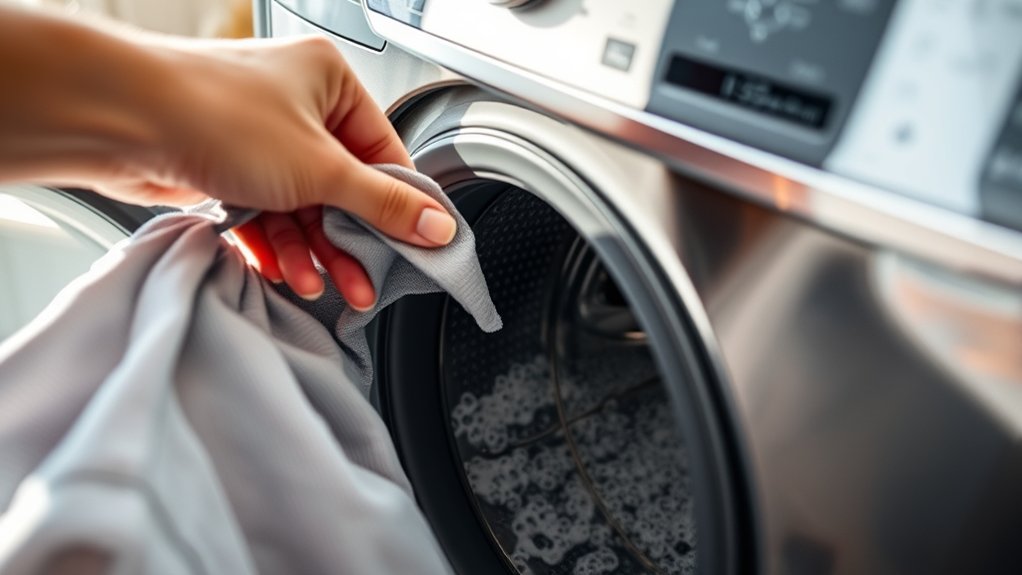
Although not every laundry load needs it, the pre wash cycle in a washing machine helps you tackle heavily soiled clothes by soaking and lightly agitating them before the main wash. When you select the pre wash option, your machine runs a short cycle that loosens dirt, grime, and stains, making the main wash more effective.
You’ll find this feature especially useful for items like muddy sports gear, greasy work clothes, or anything with stubborn stains. By using the pre wash, you give your detergent a head start, allowing it to penetrate deeper. Keep in mind, though, that this cycle uses extra water and energy, so you’ll want to reserve it for those tough loads rather than everyday laundry.
How Does the Pre Wash Cycle Work?
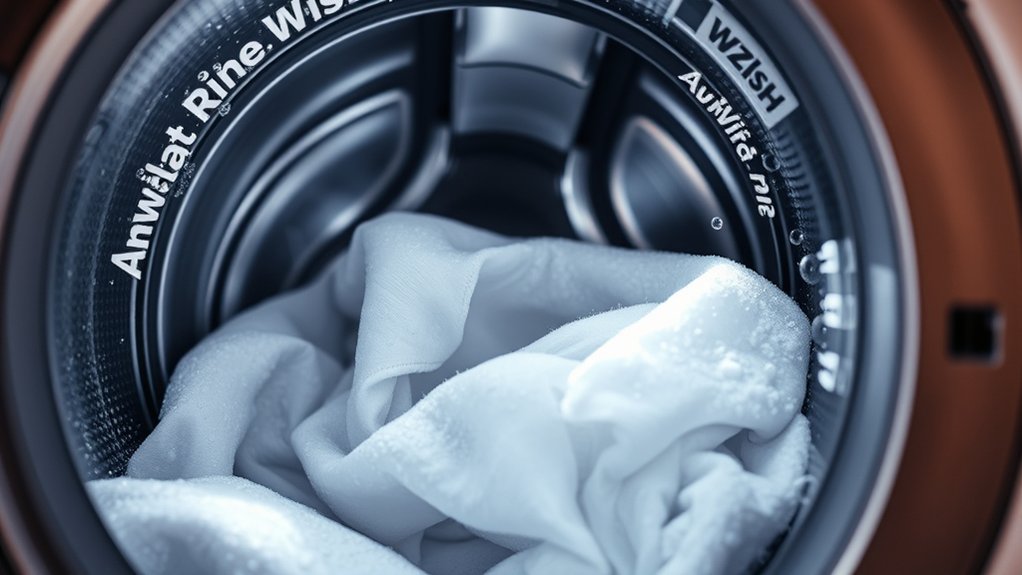
When you select the pre wash cycle, your washing machine starts by soaking your clothes in water mixed with detergent or a stain remover. This initial soak loosens dirt, grease, and tough stains, making them easier to remove during the main wash. After soaking, the machine agitates the clothes gently, helping to break down grime without setting stains.
Then, the washer drains the dirty water, removing loosened particles. Once the pre wash is complete, the machine refills with clean water for the main wash cycle, where thorough cleaning happens. This two-step process guarantees better stain removal and cleaner laundry, especially for heavily soiled items.
You’ll notice your clothes come out fresher and more thoroughly cleaned compared to skipping pre wash.
When Should You Use the Pre Wash Cycle?
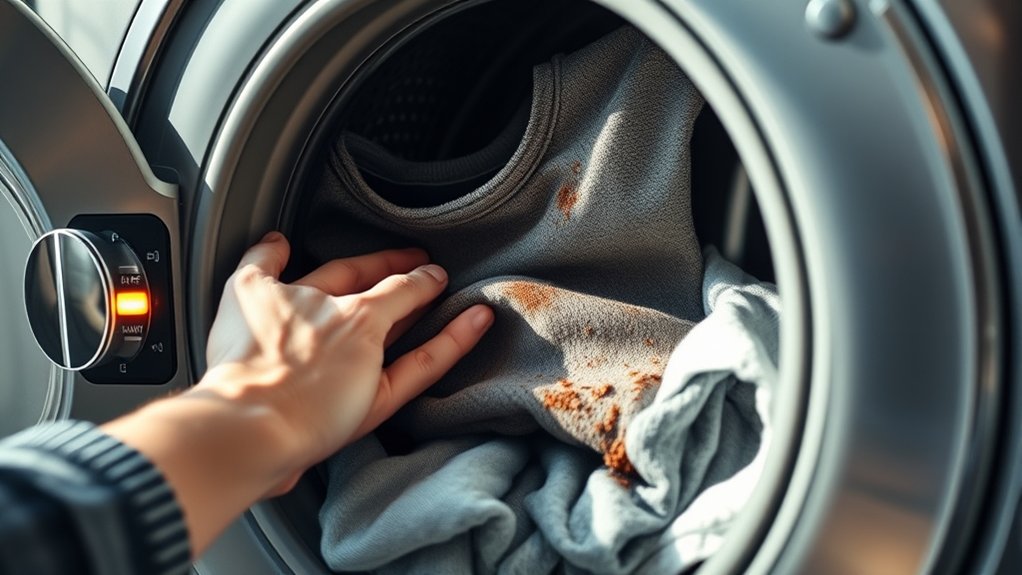
You should use the pre wash cycle when dealing with heavy stains or extra dirty laundry that needs extra attention. It acts like a pre-treatment to loosen dirt before the main wash.
This step can make a big difference in how clean your clothes come out.
Heavy Stain Removal
Wondering how to tackle stubborn stains that just won’t budge? Using the pre wash cycle can make a huge difference. When you have heavy stains like mud, grease, or food spills, the pre wash prepares your clothes by soaking and loosening dirt before the main wash.
This extra step helps prevent stains from setting in, making them easier to remove. Simply add detergent to the pre wash compartment and select the cycle before your regular wash. You don’t need to scrub or soak your clothes manually—your washing machine does the work.
Just remember, pre wash is best for genuinely tough stains; for lighter dirt, the regular cycle usually does the job. Using pre wash smartly saves you time and keeps your clothes looking cleaner.
Extra Dirty Laundry
How do you decide if your laundry needs a pre wash cycle? You’ll want to use it when clothes are heavily soiled or covered in mud, grease, or food stains. Pre washing loosens dirt before the main wash, improving cleaning efficiency.
Here’s a quick guide to help you decide:
| Laundry Type | Soil Level | Use Pre Wash? |
|---|---|---|
| Sportswear | Muddy or sweaty | Yes |
| Work uniforms | Greasy or oily | Yes |
| Everyday clothes | Lightly dirty | No |
| Baby clothes | Food stains | Yes |
If your laundry matches the “Yes” criteria, pre wash can save you from rewashing or poor cleaning results. Use it wisely!
Pre-Treatment Benefits
Although skipping the pre wash cycle might save time, using it can considerably boost your laundry’s cleanliness, especially for tough stains and heavy soil. The pre wash cycle acts as a pre-treatment, loosening dirt and grime before the main wash, making your clothes fresher and cleaner.
You should consider using the pre wash cycle when:
- Clothes are heavily soiled with mud, grease, or food stains
- You’re dealing with stubborn stains like grass or oil
- Laundry includes items worn during outdoor activities
- Washing white or light-colored fabrics that easily show dirt
- You want to extend the life of your garments by thorough cleaning
Which Clothes Benefit Most From the Pre Wash Cycle?
You’ll want to use the pre wash cycle for heavily soiled fabrics that need extra cleaning power. Clothes prone to stains, like kids’ playwear or workout gear, also benefit from this step.
Just make sure the material is durable enough to handle the extra wash time without damage.
Heavily Soiled Fabrics
When should you use the pre wash cycle for your laundry? It’s best when your clothes are heavily soiled and need extra care before the main wash. The pre wash loosens dirt and grime, improving cleaning results markedly.
You’ll want to activate this cycle for items like:
- Sports uniforms covered in mud and sweat
- Work clothes stained with grease or oil
- Children’s play clothes with dirt and grass stains
- Kitchen towels and rags soaked in food residue
- Outdoor gear caked with soil or sand
Using the pre wash on these fabrics helps avoid stubborn stains and reduces wear from scrubbing. It’s a simple step that ensures your heavily soiled laundry comes out fresh and clean every time.
Stain-Prone Clothing Types
Which clothes benefit most from a pre wash cycle? You’ll want to use it for garments that often attract tough stains. Think about your kids’ school uniforms, sportswear, or work clothes that get dirt, grass, or grease on them.
Whites and light-colored fabrics also benefit since pre wash helps prevent stains from setting and keeps colors bright. Clothes with food stains, like tomato sauce or chocolate, respond well to pre washing, too. If you wear denim or cotton frequently, a pre wash helps tackle embedded grime before the main wash.
Using the pre wash cycle on these stain-prone fabrics improves cleaning results and extends the life of your clothes by removing stubborn dirt early. It’s a smart step to take when you want clothes truly fresh and stain-free.
Durable Material Suitability
Beyond stain-prone fabrics, the pre wash cycle works best with durable materials that can handle extra agitation and water exposure. If you want to get your heavily soiled clothes truly clean, focus on items built to withstand a tougher wash. These fabrics won’t get damaged during the pre wash and will benefit from the thorough rinse.
Here are some durable materials that suit the pre wash cycle:
- Denim jeans and jackets
- Thick cotton towels and bathrobes
- Heavy canvas workwear
- Sportswear made from polyester blends
- Sturdy bed linens like duvet covers and pillowcases
Using pre wash on these helps remove ground-in dirt and sweat before the main wash, giving you fresher, cleaner results without risking wear and tear.
How Does Pre Wash Help Remove Tough Stains?
Although tough stains can be stubborn, pre wash cycles give your washing machine a head start by loosening dirt and grime before the main wash. This initial rinse softens dried-on messes, making them easier to remove later.
You’ll find that pre washing prevents stains from setting deeper, increasing the overall cleaning efficiency.
Here’s how pre wash tackles tough stains:
| Step | Action Taken | Result |
|---|---|---|
| 1. Water Soak | Clothes soak in water | Softens hardened dirt |
| 2. Agitation | Gentle drum movement | Loosens trapped particles |
| 3. Dirt Suspension | Dirt lifts off fabric | Prevents re-deposition |
| 4. Rinse | Removes loosened grime | Prepares fabric for main wash |
| 5. Drain | Clears dirty water | Avoids spreading stains |
Using pre wash helps you get a cleaner, fresher load.
Adding Detergent for the Pre Wash Cycle
How much detergent should you add during the pre wash cycle? Generally, you’ll want to use less detergent than you do for the main wash. The pre wash is meant to loosen dirt and stains before the full cleaning, so a small amount is sufficient.
Here’s how to add detergent effectively for pre wash:
- Use about one-third to half the usual detergent amount.
- Choose a detergent suitable for pre wash or a mild one.
- Add detergent to the pre wash compartment, not the main wash.
- Avoid using fabric softener during pre wash.
- Check your machine’s manual for specific detergent recommendations.
Pre Wash vs. Soak: What’s the Difference?
What sets a pre wash cycle apart from soaking your clothes? Pre wash is an active, machine-driven process that agitates clothes with water and detergent to loosen dirt before the main wash. Soaking, on the other hand, is a passive method where you let clothes sit in water and detergent to soften stains.
Here’s a quick comparison:
| Feature | Pre Wash |
|---|---|
| Process | Machine agitates clothes |
| Detergent Use | Yes, added for pre wash |
| Purpose | Loosen dirt before main wash |
| Feature | Soak |
| Process | Clothes sit in water |
| Detergent Use | Sometimes, manually added |
| Purpose | Softens stains for easier removal |
Both help with tough stains but work differently.
How Pre Wash Affects Wash Time and Energy Use
When you choose a pre wash cycle, you add extra time and energy to your laundry routine because the machine runs an additional cycle before the main wash. This step helps loosen heavy dirt but impacts your wash in several ways:
- Increases total washing time by 15 to 30 minutes or more
- Uses more water, as the machine fills again for the pre wash
- Consumes extra electricity due to longer motor and heater use
- May slightly raise detergent use if added during pre wash
- Improves cleaning results for heavily soiled clothes
You should weigh these factors when deciding if pre wash is necessary. For lightly soiled loads, skipping it saves energy and time without sacrificing cleanliness.
Can Pre Wash Damage Delicate Fabrics?
You’ll want to think about how sensitive your fabrics are before using a pre wash cycle. Since pre wash cycles can be intense, they might harm delicate materials.
Instead, you could try gentler cleaning methods to protect those fragile items.
Fabric Sensitivity Considerations
Although pre washing can boost cleaning efficiency, it may harm delicate fabrics if not done carefully. You should always consider the fabric type before opting for a pre wash cycle, as some materials are more sensitive to extra agitation and water exposure.
Keep these fabric sensitivity considerations in mind:
- Avoid pre wash for silk, lace, or wool to prevent damage.
- Use gentle detergents if you must pre wash delicate items.
- Check garment labels for washing instructions.
- Separate delicate fabrics from heavy or rough items.
- Choose shorter pre wash cycles when possible.
Pre Wash Cycle Intensity
How intense should a pre wash cycle be to clean effectively without harming delicate fabrics? You want a cycle gentle enough to loosen dirt yet mild enough to avoid fabric damage. Pre wash cycles typically use lower agitation and cooler water, which helps protect delicate fibers.
However, if the cycle is too aggressive—high spin speeds or hot water—it can cause stretching, pilling, or weakening of your clothes. To prevent damage, always check your garment’s care label and select a pre wash setting designed for sensitive materials. If your machine allows, choose a light or delicate pre wash option.
Alternative Gentle Cleaning Methods
While pre wash cycles can help remove stubborn dirt, they may still pose risks to delicate fabrics if not used carefully. If you want to protect your delicate clothes, consider these alternative gentle cleaning methods instead:
- Hand wash with mild detergent to avoid harsh agitation.
- Use cold water to prevent fabric shrinkage and color fading.
- Select a gentle or delicate cycle on your washing machine.
- Opt for mesh laundry bags to shield delicate items during wash.
- Spot clean stains with a soft cloth and gentle stain remover.
Pre Wash Settings on Common Washing Machine Brands
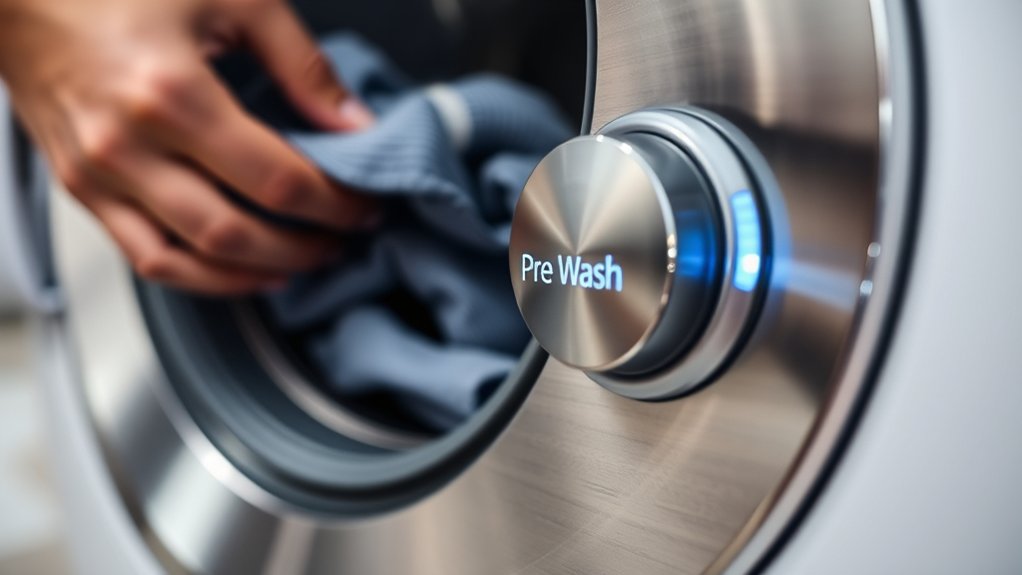
When you select the pre wash setting on popular washing machine brands like Samsung, LG, or Whirlpool, you’ll find it helps loosen tough stains before the main cycle begins. Samsung machines often label this option as “Pre Wash” or “Soak,” letting you customize time and water levels.
LG washers include a “Pre Wash” button that activates a gentle rinse to tackle dirt upfront. Whirlpool models offer a “Pre Wash” cycle that agitates clothes briefly, especially useful for heavily soiled loads.
These brands design the pre wash to work seamlessly with detergents and fabric types, making it easy for you to add this step when needed. By understanding how your machine’s pre wash functions, you can better prepare your laundry for a thorough clean.
Tips for Getting the Best Results With Pre Wash
To get the best results with pre wash, you should start by sorting your laundry according to fabric type and soil level. This helps the machine tackle stains effectively without damaging delicate clothes. Here are some tips to maximize pre wash benefits:
- Use pre wash only on heavily soiled clothes to save water and energy.
- Add the right amount of detergent specifically designed for pre wash cycles.
- Avoid overloading the machine so water and detergent circulate properly.
- Select the appropriate temperature; warm water works best on greasy stains.
- Check care labels and avoid pre wash for delicate fabrics unless absolutely necessary.
Following these steps ensures your clothes come out cleaner and fresher without extra wear or wasted resources.
Frequently Asked Questions
Can Pre Wash Cycles Be Used With Cold Water?
Yes, you can use pre wash cycles with cold water. It helps loosen dirt without using extra energy.
Just check your machine’s settings to make certain cold water is available for the pre wash option.
Does Pre Wash Work With All Types of Detergents?
Of course, your fancy detergent won’t work with pre wash—just kidding! Most detergents, whether powder, liquid, or pods, work fine during pre wash.
Just avoid fabric softeners; they’re not invited to this party.
How Often Should You Use the Pre Wash Option?
You should use the pre wash option only when clothes are heavily soiled or stained. For regular loads, it’s usually unnecessary.
Save it for tough dirt to avoid wasting water and energy.
Is Pre Wash Effective for Removing Pet Hair?
Pre wash can help loosen pet hair, but it’s not fully effective alone. You should combine it with a thorough rinse and maybe a pet hair remover brush before washing to get the best results.
Can Pre Wash Cycles Be Skipped Safely on Lightly Soiled Clothes?
Yes, you can skip pre wash cycles on lightly soiled clothes safely. It saves time and energy since the main wash is usually enough to clean them effectively without extra rinsing or soaking.
Skipping the pre wash helps reduce water and detergent usage, making your laundry routine more eco-friendly. However, for heavily soiled or stained clothes, pre wash cycles are still recommended. This ensures a deeper clean and better stain removal.
Conclusion
When you choose the pre wash cycle, imagine your clothes soaking in a gentle rain before a fresh, powerful rinse. It’s like giving tough stains a head start, loosening dirt and grime so your main wash can work its magic.
While it adds a bit of time and energy, the extra care helps your clothes come out cleaner and fresher. Just remember to skip it for delicate fabrics to keep them safe and soft.
In conclusion, using the pre wash cycle in your washing machine can be a great way to tackle stubborn stains and ensure a deeper clean. However, always consider fabric care and energy use when deciding to include pre wash in your laundry routine.