How Long Does Vacuum Packed Sausage Last in the Fridge
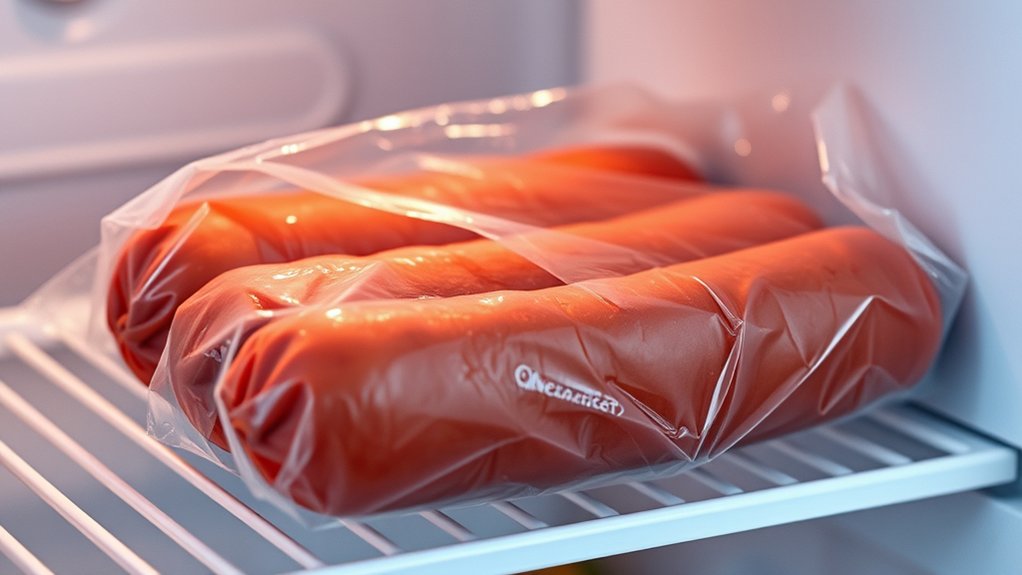
You can keep vacuum packed sausage in your fridge for about 1 to 2 weeks if you store it properly at or below 40°F (4°C). Proper refrigeration is key to extending the shelf life of vacuum packed sausage and ensuring it stays safe to eat.
Once opened, use the sausage within a few days to maintain freshness and avoid spoilage.
Make sure the packaging isn’t damaged, and watch for any sour smells or discoloration. These signs can indicate that the sausage has gone bad.
Keeping your fridge organized and maintaining the right temperature helps preserve the sausage’s quality.
If you want to know how to get the most out of your sausage and spot spoilage early, keep exploring these tips. Proper storage and awareness of changes in smell or color are essential for food safety.
Key Takeaways
- Vacuum packed sausage typically lasts 1-2 weeks in the fridge when stored at or below 40°F (4°C).
- Opened vacuum packs should be consumed within a few days for optimal freshness and safety.
- Proper storage away from fridge doors, in airtight containers, maintains quality and extends shelf life.
- Signs of spoilage include discoloration, sour smell, slimy texture, or swollen packaging, requiring immediate discarding.
- Freezing vacuum packed sausage can extend shelf life up to 6 months by halting bacterial growth.
How Long Does Vacuum Packed Sausage Last in the Fridge?
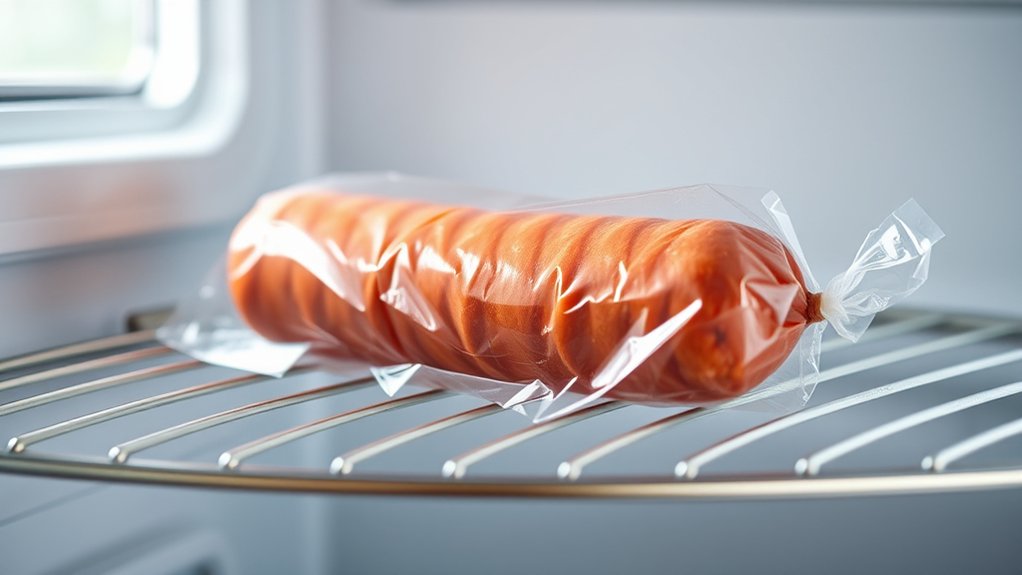
Although vacuum sealing extends its shelf life, vacuum packed sausage typically lasts about 1 to 2 weeks in the fridge when stored properly. You should keep it at or below 40°F (4°C) to maintain freshness. If you open the vacuum pack, use the sausage within a few days to avoid spoilage.
Make sure the packaging stays intact and check for any signs of spoilage like off smells, sliminess, or discoloration before cooking. If you notice any of these, it’s best to discard the sausage. Remember, even vacuum packed sausage has a limited fridge life, so plan your meals accordingly to enjoy it at its best quality and safety.
Proper storage and timely use are key to avoiding waste and foodborne illness.
Why Vacuum Packing Keeps Your Sausage Fresh Longer
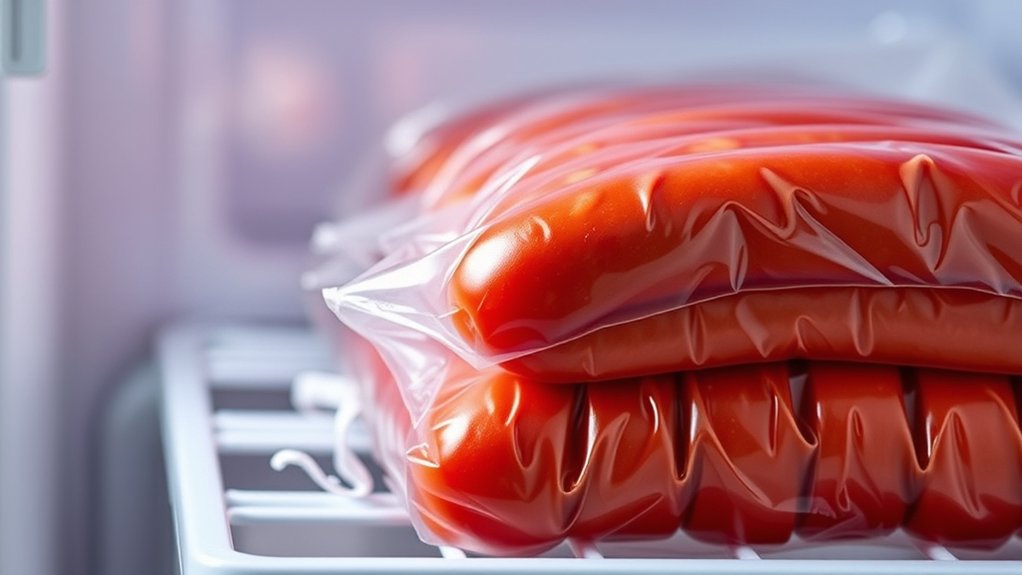
You’ll notice vacuum packing keeps your sausage fresh by cutting down oxygen exposure, which slows spoilage. It also locks in moisture, preventing your sausage from drying out.
These factors work together to extend its fridge life.
Oxygen Exposure Reduction
Since oxygen fuels the growth of spoilage bacteria and mold, removing it from the environment slows down the sausage’s deterioration. When you vacuum pack your sausage, you create a nearly oxygen-free zone around it. This lack of oxygen limits bacterial activity, keeping your sausage fresher longer.
Without oxygen, harmful microbes can’t thrive, so spoilage is delayed, and the sausage’s quality stays intact.
Here’s why reducing oxygen exposure matters:
- Prevents aerobic bacteria from multiplying
- Stops mold growth on the sausage surface
- Maintains the sausage’s color and texture
- Inhibits oxidation that causes rancidity
- Extends the safe refrigeration period
Moisture Retention Benefits
When vacuum packing traps moisture around your sausage, it prevents the meat from drying out and losing flavor. You’ll notice that the sausage stays juicy and tender longer because the sealed environment keeps natural juices locked in. This moisture barrier also helps maintain the sausage’s texture, so it doesn’t become tough or rubbery over time.
Fresh, Cooked, and Cured Sausage: Fridge Shelf Life Differences

Although all sausages are preserved by vacuum packing, their fridge shelf life varies depending on whether they’re fresh, cooked, or cured. You’ll notice fresh sausages spoil quicker since they lack preservatives. Cooked sausages last longer because heat kills bacteria during preparation.
Vacuum packing preserves all sausages, but their fridge life depends on whether they’re fresh, cooked, or cured.
Cured sausages have the longest shelf life due to added salts and nitrates that inhibit microbial growth. Here’s a quick guide to help you manage storage:
- Fresh sausage: 1-2 weeks
- Cooked sausage: 2-3 weeks
- Cured sausage: up to 4 weeks
- Always check expiration dates on packaging
- Store at consistent fridge temperatures (below 40°F/4°C)
Knowing these differences helps you avoid waste and ensures you enjoy your sausages safely.
How Fridge and Freezer Storage Affect Vacuum Packed Sausage Life
Proper storage dramatically impacts how long vacuum packed sausage stays fresh and safe to eat. When you store it in the fridge, the vacuum seal slows bacterial growth by limiting oxygen exposure, extending its shelf life compared to non-vacuum packed sausage. However, it still has a limited fridge lifespan—usually up to two weeks—before quality and safety decline.
If you freeze vacuum packed sausage, you *greatly* prolong its shelf life, often up to six months or more, because freezing halts bacterial activity and slows enzymatic changes. Just remember to keep the vacuum seal intact and avoid temperature fluctuations in both fridge and freezer, as these can compromise the sausage’s freshness and safety, causing spoilage or freezer burn faster than proper storage would.
Ideal Fridge Temperature for Storing Vacuum Packed Sausage
To keep vacuum packed sausage fresh and safe, you need to maintain your fridge at the right temperature. Ideally, your fridge should be set between 34°F and 40°F (1°C to 4°C). Temperatures above this range increase the risk of bacterial growth, while colder settings close to freezing can affect the sausage’s texture and flavor.
Here’s what you should remember about fridge temperature:
- Keep the temperature steady; fluctuations encourage spoilage.
- Use a fridge thermometer to monitor the exact temperature.
- Store sausage away from the door where temperature varies more.
- Avoid overpacking the fridge to allow proper air circulation.
- Regularly check and adjust the fridge settings as needed.
This ensures your vacuum packed sausage stays fresh longer and safe to eat.
How to Store Vacuum Packed Sausage After Opening
Maintaining the right fridge temperature helps keep vacuum packed sausage fresh, but once you open the package, storing it correctly becomes just as important.
You should tightly wrap the sausage in plastic wrap or place it in an airtight container to limit exposure to air and bacteria. Label it with the date so you can track freshness. Store it on a fridge shelf, not the door, for consistent temperature.
| Step | Method | Tip |
|---|---|---|
| Wrap | Plastic wrap | Guarantee no air pockets |
| Container | Airtight container | Use glass or BPA-free plastic |
| Label | Date of opening | Helps monitor freshness |
| Placement in fridge | Shelf (not door) | Avoid temperature fluctuations |
Can You Extend Vacuum Packed Sausage Life by Freezing?
Although vacuum packed sausage stays fresh longer in the fridge, freezing it can considerably extend its shelf life. When you freeze vacuum packed sausage, you’ll lock in freshness and slow bacterial growth, keeping it safe to eat for months. To get the best results, freeze the sausage as soon as possible after purchase or opening.
Use airtight packaging or reseal the vacuum pack tightly to prevent freezer burn. When ready to use, thaw it slowly in the fridge to maintain quality.
- Freezing can extend sausage life up to 1-2 months or more
- Avoid repeated thawing and refreezing
- Label packages with date before freezing
- Use freezer-safe storage for best protection
- Thaw in fridge, not at room temperature
Signs Your Vacuum Packed Sausage Has Gone Bad
Freezing vacuum packed sausage helps preserve it, but once you bring it back to the fridge or open the package, you’ll want to watch for signs that it’s no longer safe to eat. Check the color first—if the sausage has turned gray or greenish, that’s a red flag.
Next, give it a sniff; a sour or off smell means bacteria may have taken over. Feel the texture too—if the sausage feels slimy or sticky, don’t risk it.
Also, if the vacuum seal is broken or the package is swollen, discard it immediately. Trust your senses—if anything seems unusual, it’s better to be safe and throw it out rather than risk food poisoning.
Common Storage Mistakes That Spoil Vacuum Packed Sausage
You might be spoiling your vacuum packed sausage without realizing it by setting your fridge temperature too high or ignoring damaged packaging. Always check for tears or holes that let air in and make sure to keep an eye on the expiry dates.
These simple mistakes can cut your sausage’s shelf life short and affect its safety.
Improper Temperature Settings
When vacuum packed sausage isn’t stored at the right temperature, bacteria can multiply quickly, ruining the meat and risking your health. You need to keep your fridge at or below 40°F (4°C) to prevent spoilage. Warmer temperatures encourage harmful bacteria growth, even in vacuum sealed packs.
Avoid frequently opening the fridge door, as temperature fluctuations can spoil your sausage faster. Also, don’t store the sausage near the fridge door, where temperatures vary more than the back.
To maintain proper temperature settings, remember:
- Set fridge temperature to 40°F (4°C) or below
- Avoid overloading your fridge, allowing air circulation
- Check the fridge thermometer regularly
- Store sausage away from fridge door and vents
- Minimize fridge door openings to keep temperature stable
Damaged Packaging Issues
Although vacuum sealing extends sausage’s shelf life, damaged packaging can quickly spoil it by exposing the meat to air and bacteria. If you notice any tears, holes, or leaks in the vacuum pack, don’t disregard them. These flaws break the airtight seal, allowing moisture and contaminants in, which accelerates spoilage.
Handling the sausage roughly or storing it near sharp objects increases the risk of punctures, so always place it carefully in your fridge. Also, avoid repackaging the sausage in flimsy bags that can easily rip. If the packaging is compromised, it’s best to consume the sausage quickly or freeze it to prevent waste.
Keeping the packaging intact ensures the sausage stays fresh longer and safe to eat.
Overlooking Expiry Dates
Keeping vacuum packaging intact helps maintain sausage freshness, but even a perfectly sealed pack won’t protect the meat if you ignore the expiry date. When you overlook expiry dates, you risk consuming spoiled sausage, which can cause foodborne illnesses. The date is there for a reason—it’s the manufacturer’s guarantee of safety and quality.
Don’t assume vacuum sealing extends the sausage’s life indefinitely. Always check the date before buying and before cooking. Here’s what to avoid:
- Using sausage past the expiration date
- Relying solely on smell or appearance to judge freshness
- Storing sausage too long even if vacuum sealed
- Forgetting to rotate stock, placing new packs behind old ones
- Ignoring manufacturer’s storage instructions
Respect expiry dates to enjoy sausage safely and at its best.
How to Tell If Vacuum Packed Sausage Is Safe to Eat
If you want to make sure your vacuum packed sausage is safe to eat, start by checking its appearance and smell. Look for any discoloration, such as gray or green spots, which indicate spoilage. The packaging should remain intact without swelling or leaks.
A sour or off smell is a clear warning sign that the sausage has gone bad. Also, feel the texture—if the sausage is slimy or sticky, it’s best to discard it. Even if the expiration date hasn’t passed, trust your senses.
If anything seems off, don’t take the risk. Properly stored vacuum packed sausage can last longer, but safety always comes first. When in doubt, throw it out to avoid foodborne illness.
Best Tips for Buying Vacuum Packed Sausage to Maximize Freshness
Knowing how to spot signs of spoilage helps you avoid buying sausage that won’t last long. When shopping for vacuum-packed sausage, always check the packaging for any tears or leaks, as these can let air in and spoil the meat faster.
Spot packaging damage on vacuum-packed sausage to prevent spoilage and ensure longer freshness.
Look for a firm texture and avoid packages with excess liquid, which might indicate aging. Pay attention to the sell-by or use-by date to guarantee maximum freshness. Finally, buy from stores with proper refrigeration to keep the sausage cold until you get home.
- Inspect vacuum seals for damage or air pockets
- Choose sausages with firm texture and no discoloration
- Avoid packages with excess moisture or liquid
- Check sell-by or use-by dates carefully
- Shop at stores that maintain consistent refrigeration
How to Plan Meals Around Vacuum Packed Sausage Shelf Life
Since vacuum-packed sausage has a limited shelf life in the fridge, you’ll want to plan your meals carefully to use it before it spoils. Start by checking the expiration date and aim to cook the sausage within a few days of purchase. Consider prepping dishes that can be frozen, like casseroles or pasta sauces, so you can extend the sausage’s usability.
If you buy several packs, rotate them so you use the oldest first. Incorporate sausage into meals early in the week, reserving fresher ingredients for later days. Also, think about quick recipes like stir-fries or breakfast scrambles that use sausage efficiently.
Frequently Asked Questions
Can Vacuum Packed Sausage Be Stored in the Pantry?
You shouldn’t store vacuum packed sausage in the pantry because it needs refrigeration to stay safe. Keep it in the fridge to prevent spoilage and bacteria growth, ensuring it stays fresh and delicious longer.
Does Vacuum Packing Affect the Sausage’s Flavor?
Vacuum packing usually preserves your sausage’s flavor by reducing exposure to air and slowing spoilage. However, if stored too long, you might notice slight changes in taste or texture, so use it within recommended timeframes.
Are There Specific Sausage Types Better Suited for Vacuum Packing?
Certain sausages, like hardier cured or smoked varieties, play nicer with vacuum packing.
You’ll find fresh sausages a bit more delicate, so you might want to enjoy them sooner rather than later for the best experience.
Can Vacuum Packed Sausage Be Microwaved Directly?
You shouldn’t microwave vacuum-packed sausage directly. The packaging isn’t microwave-safe and can melt or release harmful chemicals.
Always remove the sausage from the packaging before heating it in the microwave to stay safe and enjoy your meal.
How Does Vacuum Packing Impact Sausage Nutrition?
Imagine your sausage’s nutrients frozen in time—vacuum packing locks in vitamins and minerals by reducing oxidation.
Conclusion
Vacuum-packed sausage is your fridge’s secret weapon, extending freshness like a time capsule for flavor. Keep it chilled at the right temperature, avoid common pitfalls, and trust your senses to know when it’s time to say goodbye.
By understanding its shelf life—from fresh to cooked—you’ll always have tasty, safe sausage ready to spark your meals. Treat it well, and your sausage will be the star of your kitchen’s story.
In conclusion, knowing how long vacuum packed sausage lasts in the fridge helps you maintain quality and safety. Proper storage and timely use ensure your sausage stays delicious and fresh. Always check for signs of spoilage to enjoy your vacuum-packed sausage at its best.