How to Safely Vacuum Fleas Off Your Dog
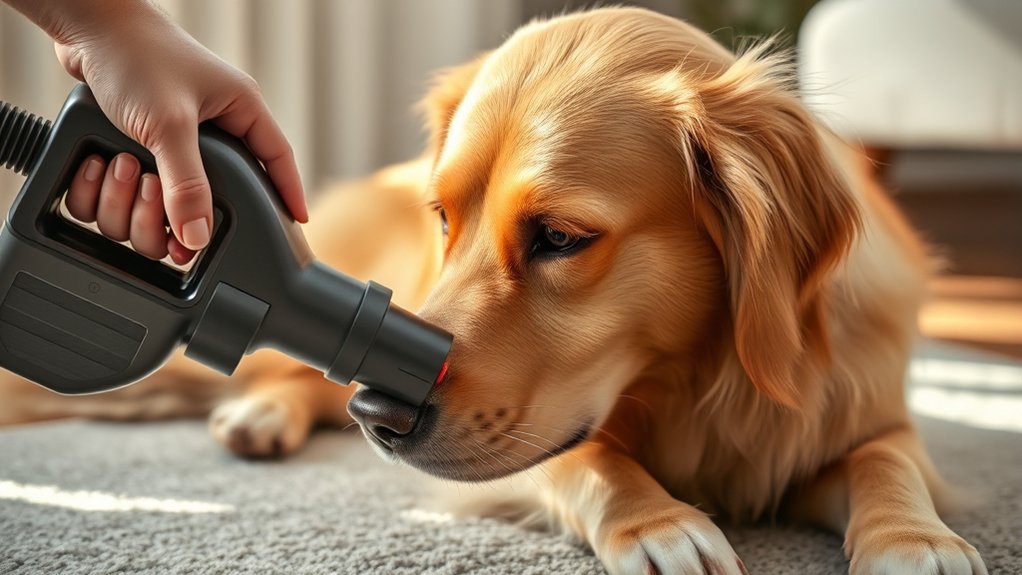
You can safely vacuum fleas off your dog by using a vacuum with strong suction and a soft brush attachment to avoid skin irritation. Flea removal on dogs requires gentle care and patience to ensure your pet stays comfortable throughout the process. Vacuuming is an effective part of flea control that helps reduce flea populations without harsh chemicals.
Start in a calm environment, letting your dog get used to the vacuum. Use low suction to gently target flea hotspots like the neck and ears. Vacuum regularly during flea season for best results.
Always empty the vacuum outside immediately to prevent fleas from escaping back indoors. Combining vacuuming with other flea treatments will improve overall effectiveness. Keep going, and you’ll discover more effective flea control tips.
Key Takeaways
- Use a vacuum with strong suction, a HEPA filter, and soft brush attachments to safely remove fleas without harming your dog’s skin.
- Introduce the vacuum calmly in a quiet space, allowing your dog to sniff it before gently brushing to remove loose fur.
- Set the vacuum to low suction and slowly vacuum flea-prone areas like the neck, ears, and under the legs.
- Immediately empty vacuum contents into a sealed bag outside to prevent fleas from escaping back indoors.
- Vacuum your dog 2-3 times weekly during flea season, combining with other flea control methods for best results.
Why Vacuuming Is a Safe Way to Remove Fleas
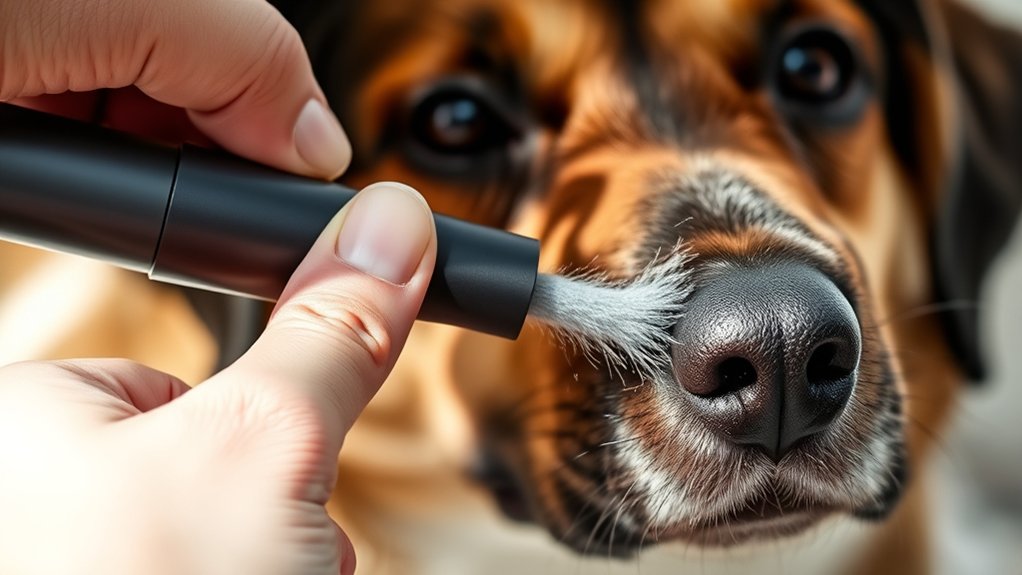
Although many flea treatments involve chemicals, vacuuming offers a non-toxic alternative that’s safe for both you and your dog. You don’t have to worry about exposing your pet to harsh substances or risking allergic reactions. Vacuuming physically removes fleas, eggs, and larvae from your dog’s coat and surrounding areas, breaking their life cycle effectively.
It’s a quick method that targets fleas without causing discomfort or stress to your furry friend. Plus, you avoid chemical residues on your dog’s skin, which is especially important for puppies, older dogs, or pets with sensitive skin. By vacuuming regularly, you control infestations gently and efficiently, making it a smart, safe choice to keep your dog flea-free without using potentially harmful products.
Picking the Best Vacuum for Flea Removal
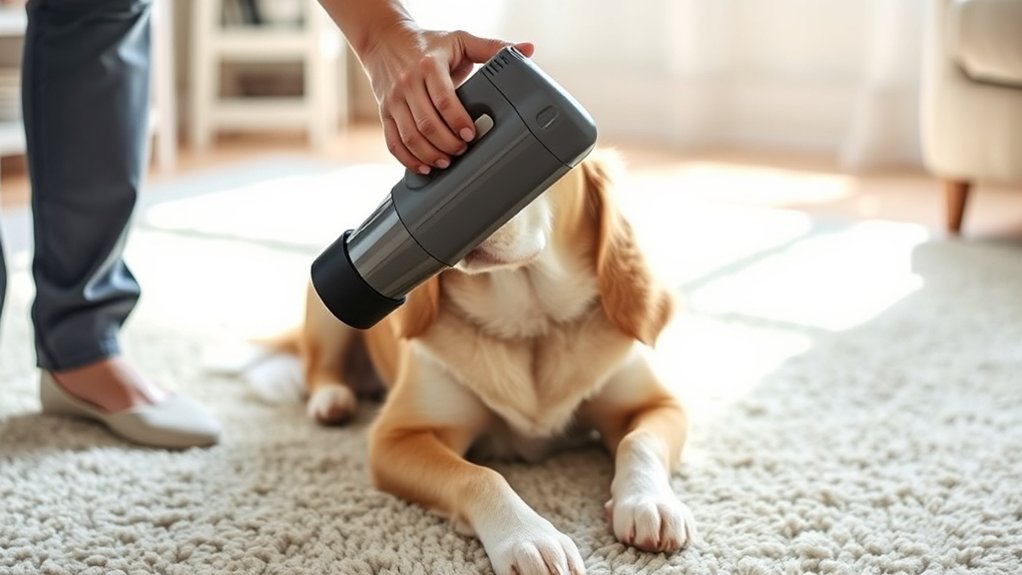
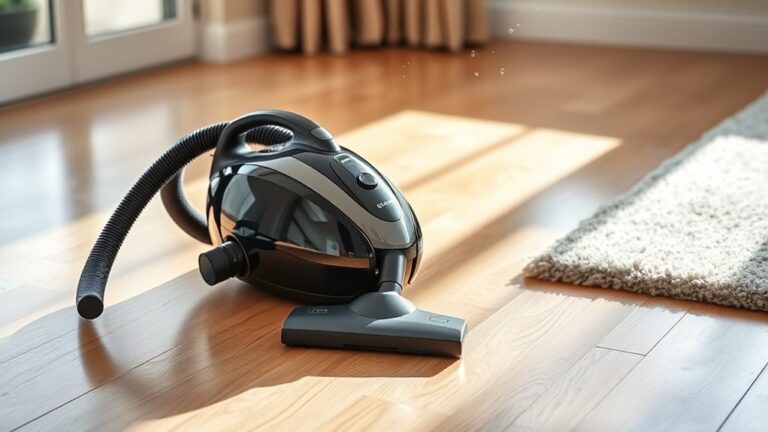
When picking a vacuum for flea removal, focus on features like strong suction and a sealed system to trap pests. You’ll also want a model that’s quiet and comfortable to handle so your dog stays calm during the process.
Choosing the right vacuum makes the whole experience easier for both you and your pet.
Vacuum Features For Fleas
What features should you look for in a vacuum to effectively remove fleas from your dog and home? First, you want strong suction power to pull fleas, eggs, and larvae from carpets, pet hair, and upholstery. A vacuum with a HEPA filter is essential; it traps tiny flea particles and prevents them from escaping back into your environment.
Finally, consider a vacuum with specialized attachments, like a brush or pet hair tool, designed to reach deep into fur and fabrics.
- Powerful suction to remove fleas at all life stages
- HEPA filtration to capture allergens and flea debris
- Pet-specific attachments for thorough cleaning on your dog and home
Choosing these features ensures you effectively reduce flea populations safely and efficiently.
Noise Levels And Comfort
Selecting a vacuum with strong suction and helpful attachments is just part of the process—you also need to contemplate noise levels and comfort. Your dog’s comfort is key; loud, high-pitched vacuums can scare them, making flea removal stressful for both of you. Look for vacuums labeled “quiet” or designed specifically for pet use.
These models run at lower decibel levels, reducing anxiety in your dog. Additionally, choose a vacuum that’s lightweight and easy to maneuver so you can clean your dog without struggling. Comfort for you matters just as much—ergonomic handles and easy controls let you work efficiently without fatigue.
How to Prepare Your Dog for Vacuuming Fleas
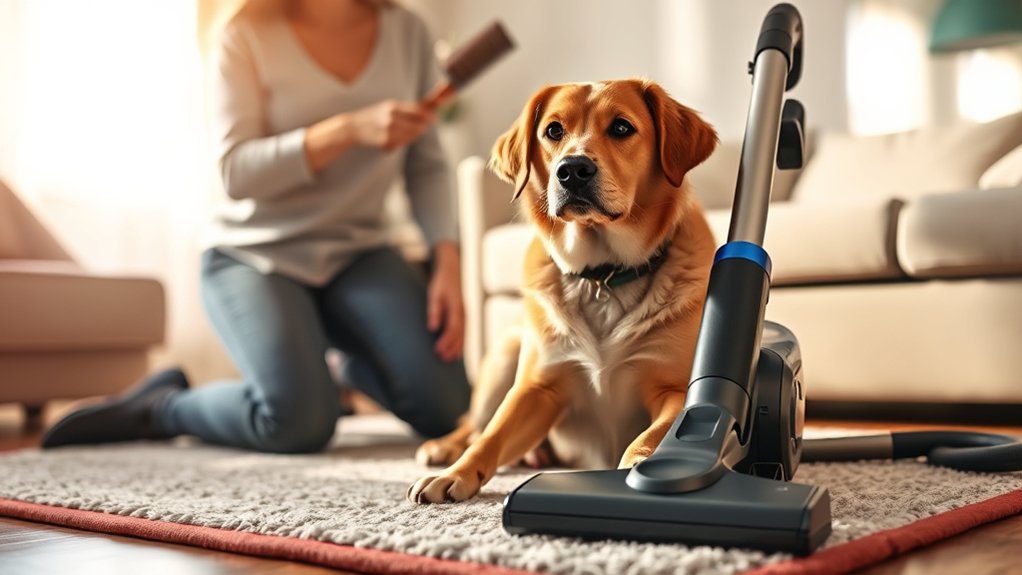
Before you start vacuuming fleas off your dog, you’ll need to create a calm environment to keep your pet comfortable and cooperative. Preparation helps prevent stress and makes the process smoother for both of you. Begin by choosing a quiet room with minimal distractions.
Create a calm, quiet space to keep your dog relaxed and cooperative before vacuuming fleas.
Set up your vacuum cleaner and flea attachment nearby but turned off. Let your dog explore the area and sniff the vacuum so they get used to its presence.
Here are three key steps to prepare your dog:
- Brush your dog gently to remove loose fur and tangles before vacuuming.
- Check for any skin irritations or wounds that might need special care.
- Have treats ready to reward your dog before and after the vacuuming session.
This preparation sets a positive tone and ensures safety.
Tips to Keep Your Dog Calm While Vacuuming Fleas
Once your dog is comfortable with the vacuum and you’ve completed the initial preparation, keeping them calm during the process is the next step. Start by speaking softly and reassuring your dog throughout vacuuming. Offer treats intermittently to create positive associations.
Use a gentle tone and avoid sudden movements that might startle them. Keep the vacuum on a low setting to reduce noise and vibrations. If your dog shows signs of stress, pause and give them a break before continuing.
Distract your dog with a favorite toy or chew to focus their attention away from the vacuum. Remember, patience is key—stay calm yourself, as dogs pick up on your energy. These tips will help make the experience less stressful for both of you.
Step-by-Step Guide to Vacuum Fleas Off Your Dog
Before you start vacuuming fleas off your dog, make sure they’re calm and comfortable. You’ll want to prepare your dog properly and use the right vacuuming techniques to avoid causing stress or harm.
Let’s walk through these important steps to keep the process safe and effective.
Preparing Your Dog
A calm and cooperative dog makes vacuuming fleas much easier and safer. Before you start, help your dog feel comfortable with the process to reduce stress and resistance. Begin by gently petting your dog and speaking in a soothing tone.
Let them sniff the vacuum cleaner while it’s turned off so they don’t get frightened.
To prepare your dog effectively:
- Brush your dog thoroughly to remove loose fur and locate flea hotspots.
- Choose a quiet, familiar space where your dog feels secure.
- Reward your dog with treats and praise to create a positive association.
Vacuuming Techniques
With your dog calm and comfortable, you can start vacuuming to remove fleas effectively. Begin by attaching the vacuum’s hose or a soft brush attachment to avoid hurting your dog’s skin. Turn the vacuum on to a low setting to prevent startling your pet.
Gently run the vacuum over your dog’s fur, focusing on areas fleas love—around the neck, behind the ears, under the legs, and near the tail. Move slowly and steadily, ensuring you cover all parts without causing discomfort. Pay extra attention to thick fur where fleas might hide.
After vacuuming, immediately empty the vacuum bag or canister into a sealed plastic bag and dispose of it outside to prevent fleas from escaping. Repeat this process regularly for the best results.
How Often to Vacuum Your Dog to Control Fleas
Though vacuuming your dog might seem unusual, doing it regularly can drastically reduce flea populations. To keep fleas under control, aim to vacuum your dog about 2 to 3 times a week during peak flea season. Consistency is key to interrupting their life cycle and preventing infestations.
If you notice fleas more frequently, increase vacuuming to daily until the problem eases.
Keep these tips in mind:
- Vacuum before applying any flea treatments to remove eggs and larvae.
- Focus on areas where fleas hide, like behind ears and under the legs.
- Use a vacuum with gentle suction to avoid stressing your dog.
How to Clean Your Vacuum to Stop Fleas From Spreading
Vacuuming your dog regularly helps reduce fleas, but if you don’t clean your vacuum properly, you risk spreading those pests around your home. After each use, immediately empty the vacuum bag or canister outside to prevent fleas from escaping indoors.
Wash or replace vacuum filters regularly, as fleas and eggs can hide there. Wipe down the vacuum’s brush roll, hose, and attachments with a damp cloth or disinfectant to remove any lingering flea debris. If your vacuum has a washable filter, rinse it thoroughly and let it dry completely before reinserting.
Pay special attention to cracks or crevices where fleas might hide. Maintaining your vacuum clean ensures you trap fleas effectively and prevents re-infestation throughout your living space.
Other Flea Control Methods to Use Alongside Vacuuming
Because vacuuming alone may not eliminate all fleas, you should combine it with other control methods to protect your dog and home effectively. Fleas can hide in hard-to-reach places, so a multi-pronged approach works best.
Here are some additional methods to use alongside vacuuming:
- Topical Treatments: Apply spot-on flea treatments recommended by your vet to kill fleas on your dog quickly.
- Flea Combs: Regularly comb your dog’s fur with a fine-toothed flea comb to catch and remove fleas manually.
- Environmental Sprays: Use pet-safe flea sprays or powders on carpets, bedding, and furniture to target flea eggs and larvae.
Frequently Asked Questions
Can Vacuuming Fleas Harm My Dog’s Skin or Fur?
Vacuuming fleas won’t harm your dog’s skin or fur if you’re gentle and use a vacuum designed for pets. Avoid strong suction and keep the nozzle moving to prevent irritation or discomfort during the process.
Being cautious helps ensure your dog stays comfortable throughout. Always monitor your dog’s reaction to the vacuuming. If they seem stressed, take breaks or try other flea control methods.
Is Vacuuming Effective on All Flea Life Stages?
You might think vacuuming catches all fleas, but it mainly removes adults and some larvae. Eggs and pupae hide in your dog’s fur, so you’ll need additional treatments to fully control the flea lifecycle effectively.
Can I Vacuum Fleas off Puppies or Elderly Dogs Safely?
You can vacuum fleas off puppies or elderly dogs, but you need to be extra gentle and use a low suction setting. Always monitor their comfort closely, and avoid vacuuming near sensitive areas like their face or ears.
Be cautious to ensure the vacuum does not frighten or stress them. Using a pet-specific vacuum attachment can help reduce discomfort. If your pet shows any signs of distress, stop immediately and try alternative flea treatments.
How Do I Prevent My Vacuum From Getting Clogged With Fleas?
To prevent pesky pests from piling up, you should regularly remove and empty the vacuum bag or canister. Use a vacuum with strong suction and a pet hair attachment to keep fleas from clogging your cleaner.
Make sure to clean the vacuum filters frequently to maintain optimal performance. This will help avoid buildup that can cause blockages.
Additionally, consider vacuuming in multiple directions to capture more fleas and debris. Replace vacuum bags or empty canisters promptly to prevent overflow.
Are There Any Flea Repellents Safe to Use After Vacuuming?
Yes, you can use natural flea repellents like diluted apple cider vinegar or essential oils such as lavender and cedarwood after vacuuming.
Just make sure to dilute them properly and avoid sensitive areas on your dog.
Conclusion
Think of vacuuming fleas off your dog like sailing a small boat through a stormy sea. With the right vacuum as your sturdy vessel and calm patience as your steady hand, you’ll navigate the waves of discomfort and chaos.
Regular trips keep the waters clear, while cleaning your gear prevents new storms. Combined with other flea-fighting tools, this approach guarantees smooth sailing for both you and your furry co-captain.
By safely vacuuming fleas off your dog and maintaining a consistent routine, you effectively reduce flea populations. This method, paired with proper flea control treatments, ensures a comfortable and healthy environment for your pet.