Why Is My AC Barely Blowing Air?
If your AC is barely blowing air, it’s important to understand the common causes of low airflow in air conditioning systems. Poor airflow can result from blocked vents, clogged air filters, or dirty evaporator coils, all of which restrict the movement of air through your unit.
Additionally, duct problems such as leaks or poor design can significantly reduce air delivery.
Mechanical issues like a failing blower motor or a bad fan capacitor also contribute to weak airflow.
Refrigerant leaks that cause the evaporator coil to freeze further worsen the problem by obstructing air passage.
Identifying these issues early can help you restore your AC’s performance.
Keep reading to learn how to spot these airflow blockages and mechanical problems, and discover practical solutions to fix them.
Key Takeaways
- Clogged air filters restrict airflow, causing the AC to blow weak or barely noticeable air through vents.
- Failing blower motors or bad fan capacitors reduce fan speed and air volume, weakening airflow output.
- Refrigerant leaks can freeze evaporator coils, blocking airflow and diminishing cooling efficiency.
- Blocked, closed, or poorly designed ducts increase resistance, limiting the amount of air reaching rooms.
- Worn internal parts like bearings and windings can stall the blower fan, resulting in reduced air delivery.
How to Tell If Your AC Is Blowing Less Air Than It Should
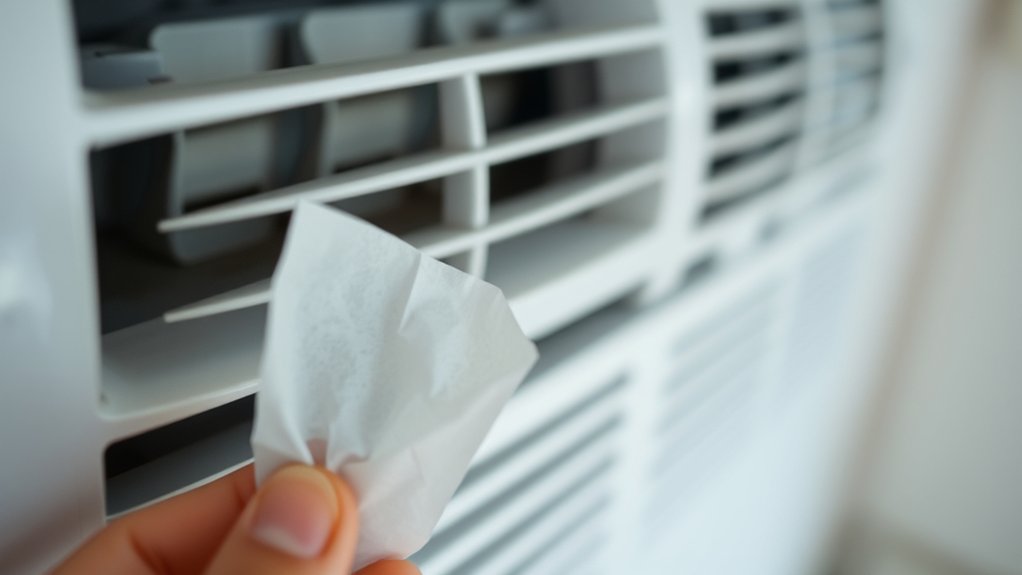
If your AC isn’t cooling your home like it used to, you might be dealing with reduced airflow. To tell if your AC is blowing less air than it should, start by feeling the vents. Check several rooms—do they feel weak or barely noticeable compared to before?
Next, listen for unusual sounds like whining or rattling, which could indicate a problem restricting airflow. You can also test the airflow by holding a piece of tissue or paper near the vent; if it barely moves, airflow is likely compromised. Another sign is uneven cooling—some rooms might feel stuffy while others stay cooler.
If you notice these symptoms, it’s time to investigate further or call a professional to diagnose the issue before it worsens.
Why a Clogged Air Filter Cuts AC Airflow
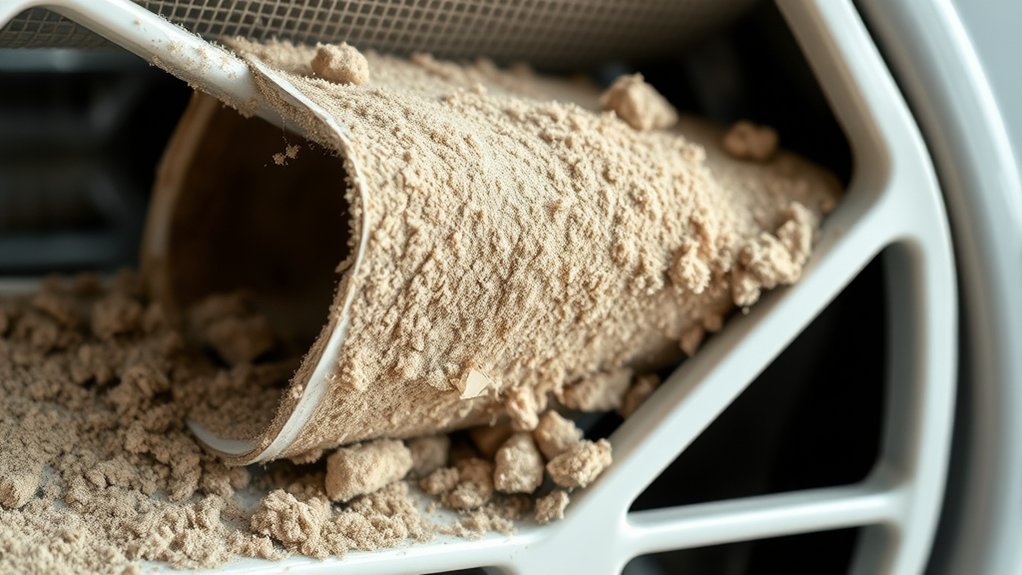
Because your air filter traps dust and debris to protect your AC system, it can quickly become clogged, restricting airflow. When the filter gets dirty, less air passes through it, forcing your AC to work harder to push air into your home. This reduced airflow not only makes your rooms feel warmer but also strains the system, potentially leading to higher energy bills and premature wear.
If you notice your AC blowing weakly, checking the filter is a simple first step. Replacing or cleaning a clogged air filter restores proper airflow, improving your AC’s efficiency and cooling power. Regularly maintaining your air filter helps keep your system running smoothly and guarantees you enjoy consistent, strong airflow all season long.
How a Dirty Evaporator Coil Reduces AC Airflow
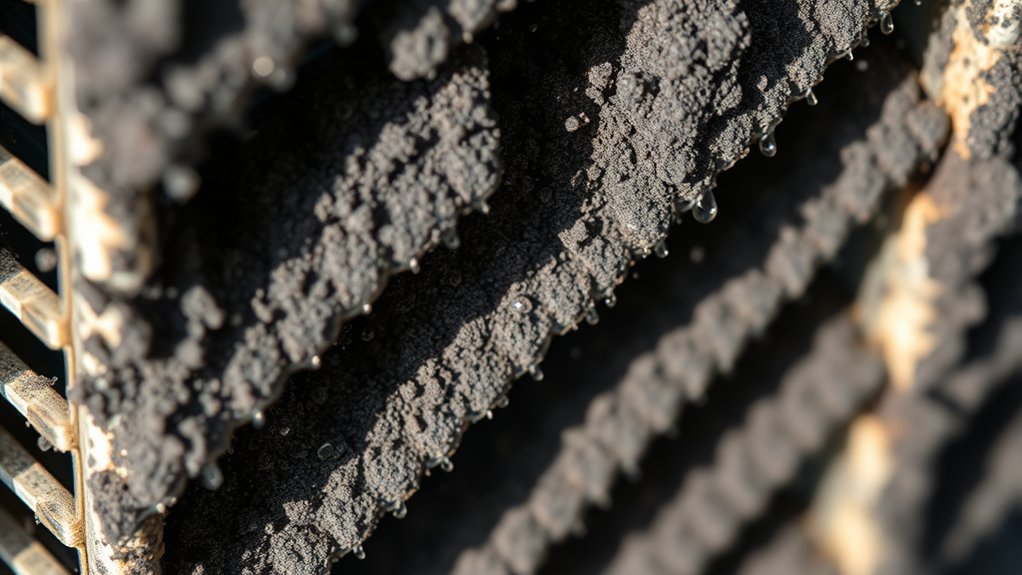
When dirt builds up on your evaporator coil, it blocks the airflow passing through your AC. This obstruction makes your system work harder, reducing how well it cools your home.
You’ll notice less air coming out and a drop in overall efficiency.
Coil Dirt Accumulation
Although you might not notice it right away, a dirty evaporator coil can considerably reduce your AC’s airflow. When dirt, dust, and debris build up on the coil’s surface, they create a barrier that restricts heat exchange. This forces your AC system to work harder, lowering its efficiency and causing weaker airflow through the vents.
The coil’s fins can become clogged, reducing the surface area available for cooling the air. Over time, this accumulation limits the coil’s ability to absorb heat, causing the system to struggle and your home to feel less comfortable.
Regularly cleaning or replacing air filters and scheduling professional coil maintenance can prevent dirt buildup, helping your AC maintain strong airflow and peak performance.
Airflow Obstruction Effects
If your evaporator coil gets clogged with dirt and debris, it directly blocks the airflow inside your AC system. This buildup acts like a barrier, restricting the amount of air that can pass through the coil. When airflow is limited, your AC’s fan struggles to push cool air into your living spaces, making your vents feel weak or barely blowing.
The reduced airflow also forces your system to work harder, putting extra strain on components like the blower motor. Over time, this can lead to uneven cooling and potential mechanical issues. To keep your AC running smoothly, it’s essential to clean the evaporator coil regularly and guarantee nothing obstructs the air moving through it.
This simple step helps maintain strong airflow and comfort.
Cooling Efficiency Decline
Because a dirty evaporator coil hinders heat transfer, your AC’s cooling efficiency drops markedly. When dust and grime build up on the coil, it acts as an insulator, preventing the coil from absorbing heat effectively. As a result, your AC has to work harder to cool the air, which reduces the volume of cold air it produces.
You’ll notice weaker airflow because the system struggles to maintain the desired temperature. This inefficiency not only lowers comfort but also increases energy use and puts extra strain on your unit, potentially leading to breakdowns. Regularly cleaning or replacing filters and scheduling coil maintenance can restore your AC’s airflow and cooling power, keeping your system efficient and your home comfortable.
Why Blocked or Closed Vents Cut Off AC Airflow
When vents are blocked or closed, your AC system struggles to push air through the ducts, which reduces overall airflow and cooling efficiency. This restriction forces your AC to work harder, leading to uneven cooling and potential wear on the system.
Here’s why blocked or closed vents cut off your AC airflow:
- Air pressure builds up in the ductwork, limiting movement.
- Reduced airflow causes some rooms to stay warm.
- The blower fan faces added strain, risking damage.
- Energy use spikes as the system compensates.
- Dust and debris can accumulate around closed vents, worsening airflow.
To keep your AC running smoothly, make sure all vents stay open and unobstructed.
How Ductwork Problems Cause Weak AC Airflow
If your AC feels weak, your ductwork might be the culprit. Leaky seals, blocked passages, or poor design can all restrict airflow before it reaches your rooms.
Let’s look at how these issues cut down your AC’s efficiency.
Leaky Duct Seals
Leaky duct seals can seriously reduce the airflow from your AC, making your home feel warmer than it should. When ducts aren’t properly sealed, cooled air escapes before reaching your rooms, causing your system to work harder and less efficiently. You might notice uneven cooling or higher energy bills.
Here’s what happens with leaky ducts:
- Air pressure drops, weakening airflow.
- Cooled air escapes into unconditioned spaces.
- Your AC runs longer to compensate.
- Dust and debris can enter the ducts.
- Rooms far from the unit get less cooling.
To fix this, you’ll want to inspect and reseal duct joints and connections. Proper sealing guarantees your AC delivers the airflow your home needs to stay comfortable.
Blocked Air Passages
Blocked air passages in your ductwork can considerably reduce the airflow from your AC, making it struggle to cool your home effectively. Dust, debris, or even pests can clog the ducts, restricting the air that reaches your rooms. When air can’t flow freely, your AC works harder, raising energy bills and risking system damage.
You might notice hot spots or weak vents throughout your home, signaling blockages. Regular inspection and cleaning are essential to prevent these issues.
| Feeling Frustrated | Feeling Uncomfortable | Feeling Helpless |
|---|---|---|
| AC barely cools | Rooms stay warm | Don’t know why |
| High energy costs | Uneven airflow | Overwhelmed |
| Need quick fix | Want comfort back | Need guidance |
Addressing blocked ducts can restore your AC’s performance and your comfort.
Improper Duct Design
Why does your AC struggle to push enough air even when the ducts look clear? The answer often lies in improper duct design. If your ductwork isn’t planned or installed correctly, it can restrict airflow and reduce your AC’s efficiency.
Common issues include:
- Ducts that are too narrow for your system’s capacity
- Excessive bends or sharp turns creating resistance
- Leaks or gaps causing air to escape before reaching rooms
- Poorly sealed joints allowing air loss
- Ducts running through unconditioned spaces, losing cooled air
These design flaws make your AC work harder, leading to weak airflow. Fixing or redesigning your duct system ensures your AC can deliver air effectively and maintain comfort throughout your home.
How a Failing Blower Motor Reduces AC Airflow
When your blower motor starts to fail, it can’t push air through the vents as effectively, which directly cuts down the airflow from your AC. You might notice weaker airflow or uneven cooling throughout your home. The motor’s internal parts—like bearings and windings—wear out over time, causing it to slow down or stall.
If the motor struggles to spin the fan at the right speed, less air circulates through the ductwork, reducing comfort. Ignoring a failing blower motor can also lead to overheating or complete motor failure, leaving your AC useless. If you hear unusual noises or feel less air coming from your vents, it’s best to have a technician inspect and possibly replace the blower motor to restore proper airflow.
How a Bad Fan Capacitor Affects AC Airflow
How does a bad fan capacitor impact your AC’s airflow? The fan capacitor provides the initial jolt of energy to start the fan motor and keeps it running smoothly. When it fails, your AC’s airflow suffers significantly.
You might notice:
- The fan struggles to start or doesn’t start at all
- Reduced fan speed, leading to weaker airflow
- Unusual humming or buzzing sounds from the unit
- Overheating of the fan motor due to increased strain
- Frequent tripping of circuit breakers or blown fuses
Since the fan is essential for moving air through your system, a faulty capacitor means your AC can’t circulate cool air efficiently. Addressing this quickly can prevent further damage and restore proper airflow.
How Refrigerant Leaks Reduce AC Airflow
A faulty fan capacitor can definitely hinder your AC’s airflow, but issues with refrigerant levels also play a major role. When your AC has a refrigerant leak, it loses the essential coolant needed to absorb heat from your indoor air. Without enough refrigerant, the system can’t properly cool the air, causing the evaporator coil to freeze up.
This ice buildup blocks airflow, making your AC barely blow air. Additionally, low refrigerant forces the compressor to work harder, which can lead to mechanical failures and reduced efficiency. You might notice your home isn’t cooling like it used to, or the unit runs longer than usual.
If you suspect a leak, it’s important to get a professional to locate and repair it quickly to restore proper airflow and cooling.
How to Check Electrical Issues Affecting AC Airflow
First, check your circuit breaker to see if it’s tripped or off, which can cut power to your AC. Then, test your thermostat to make sure it’s working correctly and set to the desired temperature.
These simple checks can help you identify electrical issues that reduce your AC’s airflow.
Inspect Circuit Breaker Status
If your AC is barely blowing air, you should check the circuit breaker next, since electrical issues often cause airflow problems. A tripped breaker can cut power to your AC unit, limiting its function. Here’s what to do:
- Locate your home’s main electrical panel.
- Identify the breaker labeled for the AC or HVAC system.
- Look for a breaker that’s in the “off” position or between “on” and “off.”
- Flip the breaker fully to “off” then back to “on” to reset it.
- If the breaker trips again immediately, avoid resetting and call a professional.
Test Thermostat Functionality
After ensuring the circuit breaker isn’t the problem, check your thermostat next. Start by setting it to “cool” and lowering the temperature below the current room temperature to trigger the AC. If the fan doesn’t kick on or the AC barely blows air, the thermostat might be malfunctioning.
Inspect the thermostat for loose wires or damaged components, which can disrupt the signal to your AC unit. You can also remove the thermostat from the wall and test it with a multimeter to verify continuity and proper voltage. If you find any electrical issues or the thermostat is old, consider replacing it.
A faulty thermostat can cause your AC to underperform, so addressing this can restore proper airflow quickly and efficiently.
When to Call a Professional for Low AC Airflow Problems
When your AC struggles to push air despite basic troubleshooting, it’s time to call a professional. Handling airflow issues can get complex quickly, and experts have the right tools and knowledge to diagnose and fix problems safely. You should reach out for help if you notice:
Struggling airflow after basic checks signals it’s time to call a professional for safe, expert diagnosis and repair.
- Persistent weak airflow after checking filters and vents
- Strange noises coming from the unit
- Uneven cooling in different rooms
- Visible ice buildup on coils or refrigerant lines
- Your AC cycles on and off frequently without cooling properly
Ignoring these signs can lead to bigger, costlier repairs. A professional will guarantee your system runs efficiently, improving comfort and saving energy. Don’t wait—getting expert help early can prevent further damage and extend your AC’s life.
Frequently Asked Questions
Can Low AC Airflow Cause Increased Energy Bills?
Yes, low AC airflow can increase your energy bills because your system works harder to cool the space. Fixing airflow issues helps your AC run efficiently, saving you money and preventing unnecessary wear and tear.
Does Outdoor Temperature Affect AC Airflow?
Oh sure, the outdoor temperature totally throws a party and decides your AC’s airflow! When it’s scorching, your AC struggles more, so you’ll notice weaker airflow as it fights the heat like a tired gladiator.
How Often Should AC Vents Be Cleaned?
You should clean your AC vents at least once a year to maintain good airflow and indoor air quality.
If you have pets or allergies, consider cleaning them every six months to keep your system running efficiently.
Can Pets Impact AC Airflow?
You might not know, but pet dander can clog up to 30% of your AC’s airflow. If you’ve got furry friends, their hair and skin flakes can seriously reduce how well your system breathes.
Is Low Airflow Dangerous for My AC Unit?
Yes, low airflow can be dangerous for your AC unit. It forces the system to work harder, causing overheating and potential damage.
You’ll want to fix it quickly to avoid costly repairs and maintain efficiency.
Conclusion
If your AC is barely blowing air, don’t ignore it—over 50% of airflow problems stem from simple issues like clogged filters or blocked vents. By regularly checking these, you can restore airflow quickly and avoid costly repairs.
Remember, small fixes often make a big difference in comfort and efficiency. But if problems persist, calling a professional is your best bet to keep your home cool and your system running smoothly.
To maintain optimal performance, always address airflow issues promptly. Proper maintenance and timely repairs will ensure your AC blows air efficiently and keeps your home comfortable.