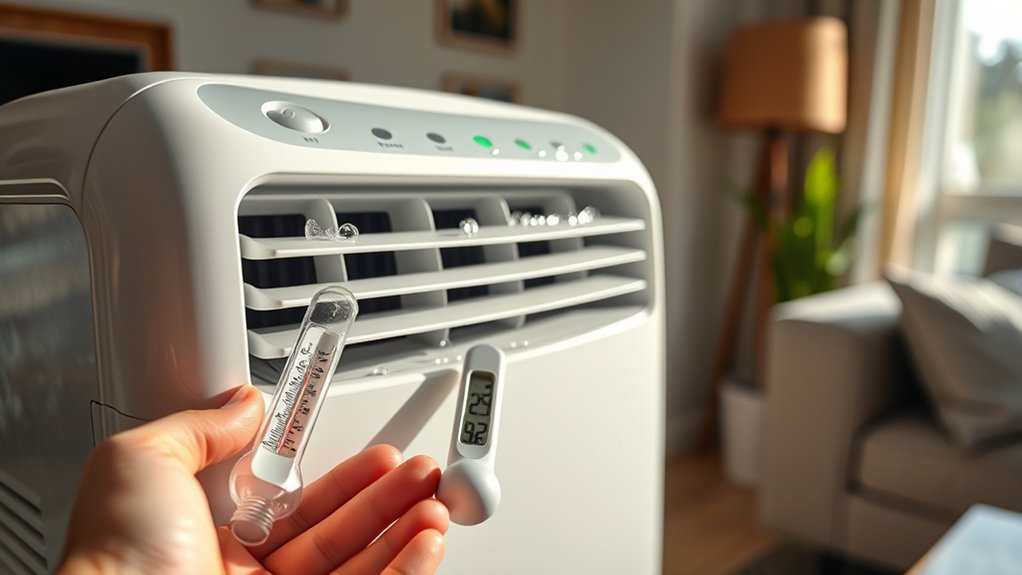
Why Is My Portable AC Not Cooling and How Can I Fix It?
Your portable AC might not be cooling effectively due to common issues like clogged filters, blocked vents, or refrigerant leaks. These problems restrict airflow and reduce the unit’s efficiency, causing poor cooling performance. Ensuring proper maintenance is key to restoring your AC’s cooling power.
Check and clean the filters regularly to prevent dust buildup. Clear any obstructions from the vents to allow smooth airflow. Make sure the exhaust hose is properly connected and not kinked.
Verify that the unit’s placement is away from heat sources and direct sunlight, which can affect cooling. Inspect for drainage problems or malfunctioning fans.
Fixing these common issues will improve cooling, and you can find additional tips to keep your portable AC running smoothly and efficiently.
Key Takeaways
- Clean or replace dirty air filters regularly to ensure proper airflow and maintain cooling efficiency.
- Verify that vents are open and unobstructed, and remove any blockages from the exhaust hose or drainage system.
- Check for refrigerant leaks by looking for warm air, hissing sounds, or ice buildup, and seek professional repair if needed.
- Position the portable AC near a window or vent away from heat sources for optimal exhaust and cooling performance.
- Drain condensation regularly and inspect fan blades and motor for debris or unusual noises affecting operation.
How to Check and Clean Your Portable AC’s Air Filter
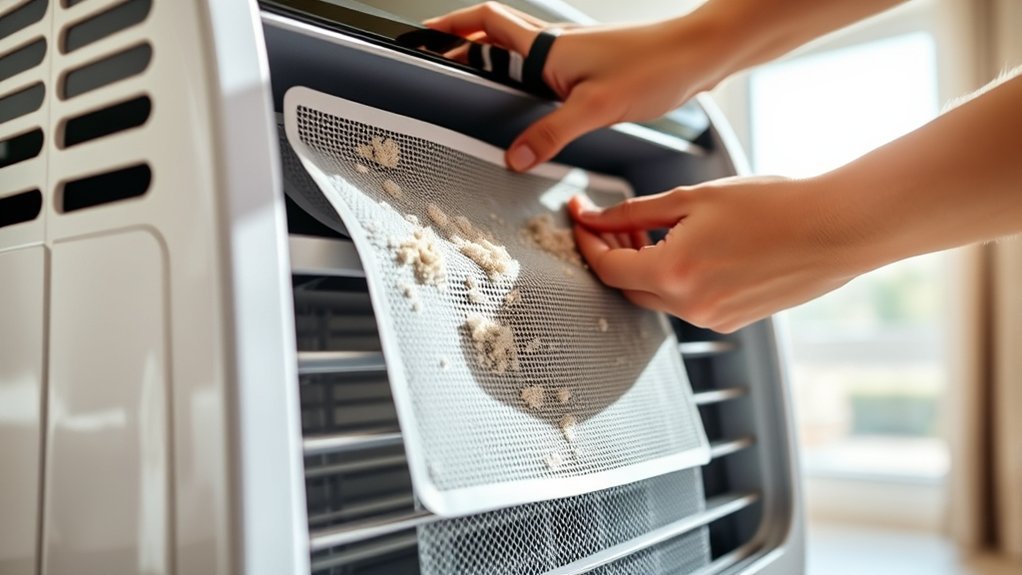
How often have you checked your portable AC’s air filter? If it’s clogged with dust and debris, your unit won’t cool effectively. Start by turning off and unplugging the AC.
Regularly checking your portable AC’s air filter prevents dust buildup and ensures efficient cooling.
Locate the air filter, usually behind a panel or grille. Gently remove it and inspect for dirt buildup. If it looks dirty, rinse it under lukewarm water and use a soft brush to clear stubborn particles.
Avoid using harsh detergents or hot water, which can damage the filter. Let the filter dry completely before reinstalling it. Cleaning your air filter regularly—ideally once every two weeks during heavy use—ensures proper airflow and boosts cooling performance.
Keeping the filter clean helps your portable AC run efficiently and saves energy.
How to Fix Blocked or Closed Vents to Improve Portable AC Cooling
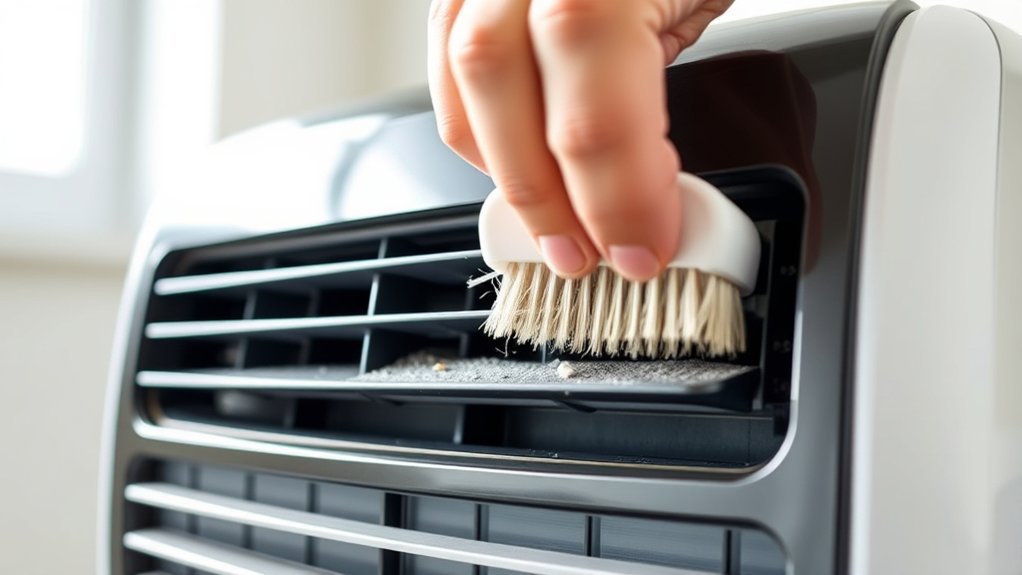
Even if your portable AC is working properly, blocked or closed vents can prevent cool air from circulating effectively. First, check all the vents on your unit and in the room to verify they’re open and unobstructed. Move any furniture, curtains, or objects that might be blocking airflow.
Next, clean the vents with a vacuum or a soft brush to remove dust buildup that can reduce air passage. If you notice any vent covers are closed or partially shut, open them fully to maximize airflow. Additionally, make sure the exhaust hose is connected properly and not kinked or crushed, as this can restrict airflow.
How to Spot and Repair Refrigerant Leaks in Your Portable AC
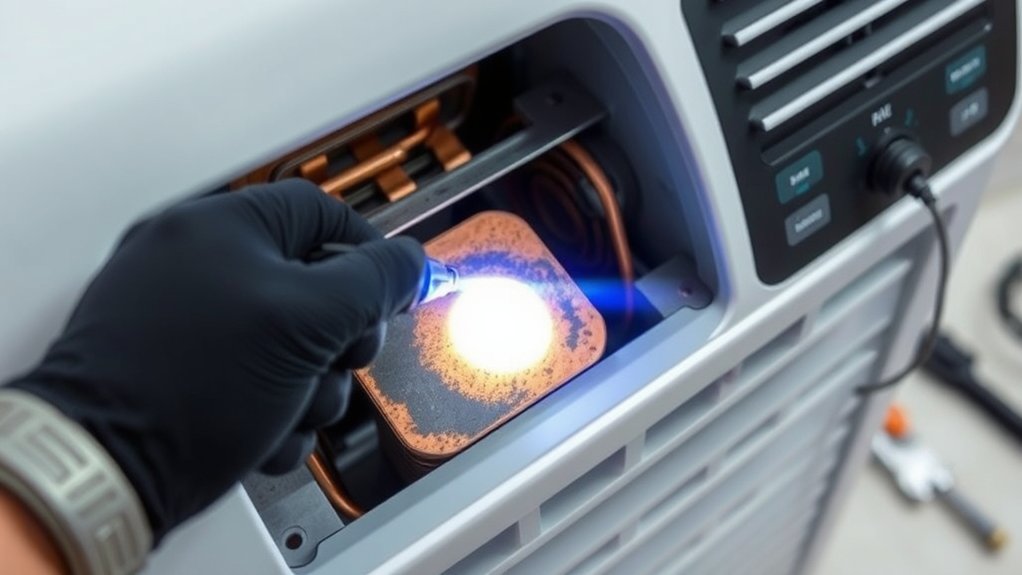
If your portable AC isn’t cooling properly, you might have a refrigerant leak. Look for signs like hissing sounds, oily spots, or reduced cooling performance.
You can try simple DIY fixes like sealing small leaks or topping off refrigerant, but serious issues may need a professional.
Identifying Refrigerant Leak Signs
Because refrigerant is vital for your portable AC’s cooling function, any leaks can quickly reduce its efficiency. To identify leaks, watch for these clear signs:
- Warm Air Output – If your AC blows warm or less cold air despite running constantly, refrigerant could be escaping.
- Hissing or Bubbling Sounds – Listen near the unit; unusual sounds often indicate escaping gas or pressure issues.
- Ice Formation on Coils – Check the evaporator coils for frost or ice buildup, a common symptom of low refrigerant levels.
If you notice one or more of these signs, it’s essential to address the leak promptly. Ignoring it can damage your AC and increase energy bills.
Next, you’ll learn how to safely repair these leaks yourself.
DIY Leak Repair Methods
While repairing refrigerant leaks can seem intimidating, you can tackle some minor issues yourself with the right tools and precautions. First, inspect the coils and connections for oily residue or hissing sounds, which often indicate leaks. Use a leak detection spray or soapy water to spot bubbles forming around suspect areas.
Once you identify a small leak, turn off and unplug your portable AC. Clean the area, then apply a sealant specifically designed for refrigerant leaks, following the product instructions carefully. Keep in mind, DIY fixes are temporary and best for minor leaks only.
If the leak persists or is large, call a professional technician to avoid damaging your unit or exposing yourself to harmful chemicals.
The Best Place to Position Your Portable AC for Maximum Cooling
Choosing the right spot for your portable AC can dramatically boost its cooling efficiency. You want to maximize airflow and minimize heat exposure.
Here’s how to position it for the best results:
- Near a window or vent: Place your unit close to a window or vent to easily direct hot air outside through the exhaust hose. This prevents hot air from recycling back into the room.
- Away from heat sources: Keep the AC away from direct sunlight, lamps, or electronics that generate heat. This helps the unit cool the space rather than battle extra warmth.
- Central location: Position the AC in a central area with unobstructed airflow to ensure even cooling throughout the room.
How Clogged Drainage Problems Reduce Your Portable AC’s Cooling Power
If your portable AC isn’t cooling well, a clogged drainage system might be to blame. When water can’t drain properly, it builds up and forces the unit to work harder, reducing its cooling power.
You can fix this by regularly checking and clearing any blockages in the drainage hose or pan.
Drainage Blockage Effects
Because your portable AC relies on proper drainage to function efficiently, a clogged drainage system can seriously reduce its cooling power. When the drainage is blocked, water builds up inside the unit, causing several problems that impact performance:
- Frozen Coils – Excess moisture can freeze on the evaporator coils, reducing cooling efficiency.
- Overheating – Water accumulation forces the AC to work harder, leading to overheating and potential damage.
- Reduced Airflow – Standing water can cause mold or mildew, obstructing airflow and lowering cooling output.
These effects combine to make your portable AC struggle to cool the room properly. Addressing drainage blockages is essential to restore your unit’s cooling efficiency and avoid long-term damage.
Clearing Drainage Issues
When your portable AC’s drainage system gets clogged, it directly hinders its ability to cool effectively. Water buildup inside the unit can lead to reduced airflow and cause the compressor to work harder, lowering cooling efficiency.
To clear drainage issues, start by unplugging the unit and locating the drain plug or hose. Remove any visible debris or blockages carefully. Next, use a small brush or compressed air to clean the drain pan and channels.
If your model has a drain hose, make sure it’s not kinked or clogged. Regularly empty any collected water to prevent overflow. By keeping the drainage system clear, you’ll restore proper function and improve your portable AC’s cooling power.
Don’t ignore drainage problems—they directly impact performance.
How to Troubleshoot and Fix Your Portable AC’s Fan Issues
Although your portable AC may seem fine on the surface, its fan can sometimes fail to operate correctly, causing poor cooling performance. To troubleshoot and fix fan issues, follow these steps:
- Check for Obstructions: Make certain nothing blocks the fan blades. Clean any dust or debris that may prevent the fan from spinning freely.
- Inspect the Fan Motor: Listen for unusual noises or vibrations. If the motor sounds weak or doesn’t run, it might need lubrication or replacement.
- Test the Controls and Wiring: Verify the fan settings on the control panel. Examine wiring connections for damage or loose parts that could disrupt power to the fan.
Addressing these points can restore proper fan function and improve your AC’s cooling efficiency.
Knowing When to Call a Professional for Portable AC Repairs
Fan problems are often something you can handle yourself by checking for obstructions, inspecting the motor, or testing the controls. However, if your portable AC still isn’t cooling properly despite your troubleshooting, it’s time to call a professional.
Situations like refrigerant leaks, electrical faults, or compressor failures require specialized tools and expertise. Don’t try to fix complex issues on your own—this could cause further damage or void your warranty.
Complex issues like refrigerant leaks or compressor failures need expert repair to avoid damage or voiding your warranty.
Also, if your unit makes unusual noises, emits a burning smell, or frequently shuts off, a technician should inspect it. Recognizing when a problem is beyond basic fixes helps you avoid costly repairs and ensures your portable AC runs efficiently and safely.
When in doubt, professional help is the best choice.
Essential Maintenance Tips for Long-Lasting Portable AC Cooling
To keep your portable AC running efficiently and extend its lifespan, regular maintenance is key. Neglecting upkeep can lead to poor cooling and costly repairs. Here are essential tips to help you maintain your unit:
- Clean or replace filters monthly – Dirty filters restrict airflow and reduce cooling efficiency.
- Check and clean the exhaust hose – Ensure there are no kinks or blockages that could trap hot air inside.
- Drain the water reservoir regularly – Prevent mold buildup and sustain maximum performance by emptying collected condensation.
Frequently Asked Questions
Can a Portable AC Cool Multiple Rooms Effectively?
No, a portable AC usually can’t cool multiple rooms effectively because it’s designed for one space. You’ll get better results by closing doors and using fans to help circulate the cool air where you need it most.
How Much Electricity Does a Portable AC Consume?
Imagine running a 10,000 BTU portable AC; it typically uses about 1,000 watts per hour.
You’ll see your electricity bill rise if you run it constantly, so try to use timers or energy-saving modes.
Are Portable AC Units Environmentally Friendly?
Portable AC units aren’t very environmentally friendly since they consume a lot of electricity and often use refrigerants with high global warming potential. You can reduce impact by choosing energy-efficient models and using them sparingly.
What Is the Average Lifespan of a Portable AC?
Like a trusty sidekick, your portable AC usually sticks around for about 8 to 12 years. If you keep up with regular maintenance, it’ll keep cooling your space without turning into a hot mess.
Can a Portable AC Be Used in Winter Heating Mode?
Yes, you can use your portable AC in winter heating mode if it has a heat function. Just switch to heating, guarantee proper ventilation, and keep the unit maintained for efficient warmth during cold months.
Conclusion
If your portable AC isn’t cooling, don’t let it feel like you’re stuck in a Victorian parlor without a breeze. Check the air filter, vents, and drainage first—they’re often the culprits. Fix any refrigerant leaks and guarantee the fan’s working properly.
Position your unit wisely to maximize airflow. Remember, regular maintenance keeps things running smoothly. And if problems persist, don’t hesitate to call a professional—modern comfort deserves modern care.
By addressing these common issues, you can ensure your portable AC cools efficiently. Proper maintenance and timely repairs are key to avoiding cooling problems. When in doubt, professional portable AC repair and maintenance services can restore your unit’s performance.