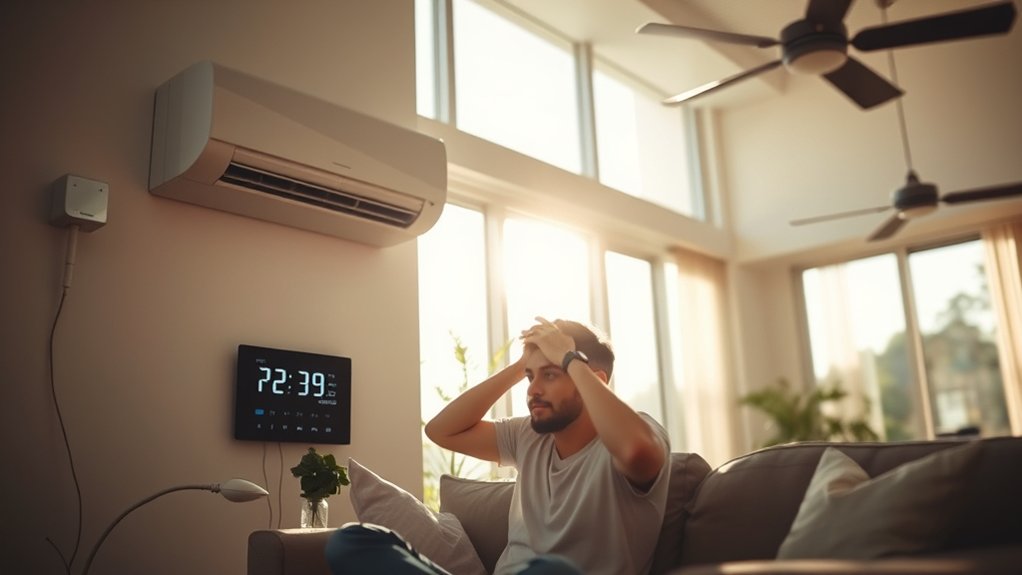
Why Is My AC Taking So Long to Cool My Home?
Your AC takes longer to cool your home when dirty filters restrict airflow or low refrigerant slows heat absorption. Clogged condenser coils and blocked ducts reduce heat exchange, while poor thermostat settings and leaks let warm air in.
High indoor humidity and frequent cycling also make your system work harder, delaying cooling.
Regular maintenance is key to fixing these issues and speeding up your AC. Keeping filters clean and checking refrigerant levels ensures optimal performance. Addressing duct leaks and thermostat problems can also improve cooling efficiency.
By understanding these common causes, you can take steps to restore your AC’s cooling speed. Keep exploring to uncover more causes and solutions for faster cooling.
Key Takeaways
- Dirty air filters or clogged condenser coils restrict airflow and heat exchange, significantly slowing cooling performance.
- Low refrigerant levels reduce heat absorption, causing longer cooling cycles and inefficient temperature drops.
- Incorrect thermostat settings or poor placement delay cooling by causing improper system operation and frequent adjustments.
- An undersized AC unit or poor home insulation lets warm air in, making it harder and slower to cool the space.
- High indoor humidity and frequent short cycling reduce cooling efficiency and prolong the time needed to reach comfort.
How Your AC Cools Your Home
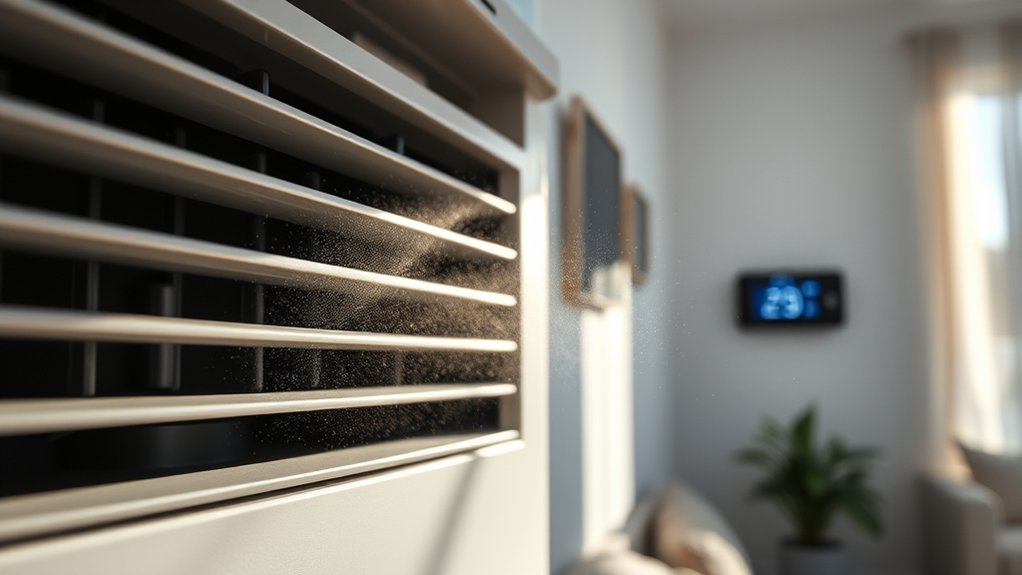
How exactly does your AC cool your home? Your air conditioner works by removing heat from inside and releasing it outside. It uses a refrigerant that absorbs heat as it evaporates inside the indoor coils.
A fan blows warm indoor air over these coils, cooling the air before it circulates back into your rooms. Meanwhile, the refrigerant carries the absorbed heat to the outdoor unit, where it releases it as the refrigerant condenses. This cycle repeats, steadily lowering your home’s temperature.
Your thermostat senses the room temperature and signals the AC to run or stop accordingly. Understanding this process helps you see why your AC needs all parts working well—like fans, coils, and refrigerant—to cool your home efficiently.
How Dirty Air Filters Cause Slow AC Cooling
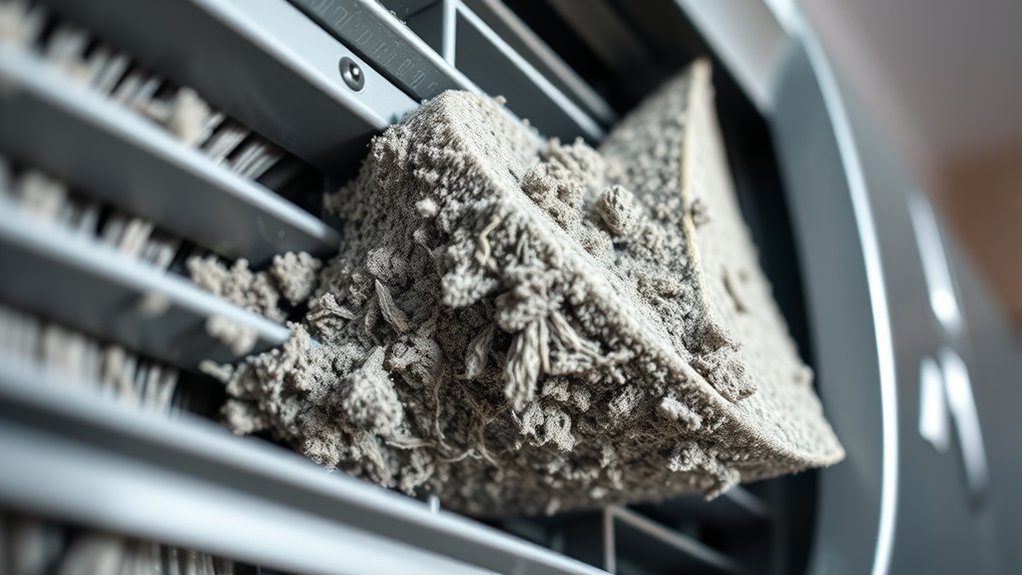
When your air filters get clogged with dust and debris, your AC struggles to pull enough air through the system. This restriction forces the unit to work harder and longer to cool your home, making the process slower and less efficient.
Dirty filters limit airflow over the evaporator coil, reducing heat absorption and causing the coil to freeze. When the coil freezes, your AC’s cooling ability drops markedly, extending the time it takes to lower indoor temperatures.
Additionally, restricted airflow increases energy consumption and puts extra strain on your system, potentially leading to breakdowns. By regularly checking and replacing your air filters, you guarantee proper airflow, maintain efficient cooling, and help your AC cool your home faster without unnecessary wear or wasted energy.
How Low Refrigerant Levels Affect Cooling Speed
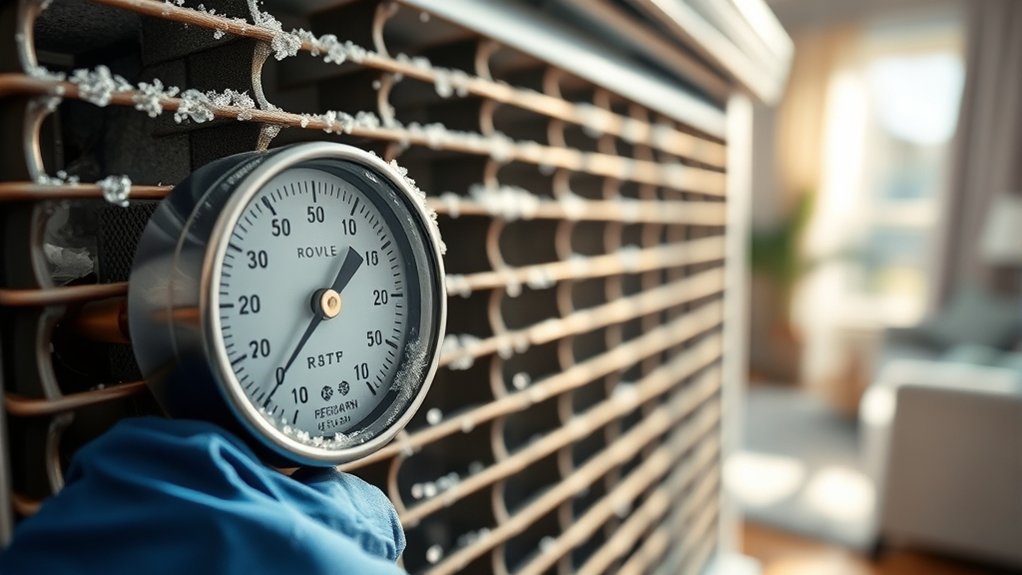
Your AC relies on refrigerant to absorb heat and cool your home efficiently. If the refrigerant levels are low, you might notice weaker cooling and longer run times.
This not only slows down how fast your AC cools but also drives up your energy bills.
Refrigerant’s Role In Cooling
Because refrigerant is essential for absorbing and releasing heat, low levels can considerably slow down your AC’s cooling process. Refrigerant is the substance inside your AC that cycles between liquid and gas, pulling heat from your home’s air and releasing it outside. When refrigerant is at the right level, it efficiently absorbs heat, helping your AC cool your home quickly.
If the refrigerant level drops, your system can’t absorb enough heat, forcing it to work harder and longer to reach your desired temperature. This inefficiency not only delays cooling but can also strain your AC components. Understanding refrigerant’s role helps you realize why maintaining proper levels is key to faster, more effective cooling in your home.
Signs Of Low Refrigerant
Low refrigerant levels don’t just slow down your AC—they also trigger several clear signs that something’s off. When your system lacks refrigerant, it struggles to absorb heat efficiently, making your home take longer to cool.
You might notice these symptoms:
- Warm Air from Vents: Instead of crisp, cold air, your vents blow lukewarm or even warm air.
- Longer Cooling Cycles: Your AC runs longer than usual but still can’t reach the desired temperature.
- Ice Formation on Coils: Low refrigerant causes coils to freeze up, reducing airflow and cooling capacity.
If you spot these signs, it’s essential to check refrigerant levels promptly. Ignoring them can worsen cooling delays and eventually damage your AC unit.
Impact On Energy Efficiency
When refrigerant levels drop, your AC has to work much harder to cool your home, which directly impacts energy efficiency. Low refrigerant means your system struggles to absorb heat effectively, forcing the compressor to run longer and strain other components. This increased workload leads to higher energy consumption, driving up your utility bills.
You might notice your AC cycling on and off more frequently as it tries to keep up, but it won’t cool your space as quickly or efficiently. Ignoring low refrigerant not only wastes energy but also risks damaging your AC, leading to costly repairs. To keep your system running efficiently and cool your home faster, have a professional check and recharge your refrigerant if necessary.
How Clogged Condenser Coils Slow Down Your AC
If your condenser coils are clogged, your AC can’t release heat efficiently, making it work harder to cool your home. This extra strain slows down the cooling process and drives up your energy bills.
You’ll want to keep those coils clean to help your system run smoothly and save money.
Reduced Heat Exchange Efficiency
How does a clogged condenser coil affect your AC’s cooling speed? When debris builds up on the coils, it reduces their ability to transfer heat efficiently. This means your AC struggles to release the heat it’s pulled from inside your home, slowing down the entire cooling process.
Here’s what happens when heat exchange efficiency drops:
- The condenser coil can’t cool the refrigerant properly.
- The system takes longer to reach the desired temperature.
- Your energy use goes up as the AC works harder without cooling faster.
Keeping your condenser coils clean ensures your AC cools quickly and runs smoothly, saving you time and energy. Don’t let dirt block the heat exchange—regular maintenance keeps your home comfortable.
Increased System Strain
Because clogged condenser coils restrict airflow and heat transfer, your AC has to work much harder to cool your home. This added strain forces the compressor and other components to operate under increased pressure, which can lead to overheating and premature wear.
When your system struggles like this, it doesn’t just slow down the cooling process—it risks breaking down more frequently. You might notice your AC running longer cycles or cycling on and off erratically as it tries to compensate for the reduced efficiency.
Over time, this strain can shorten your unit’s lifespan and lead to costly repairs. Regularly cleaning or servicing the condenser coils helps prevent this increased system strain, ensuring your AC cools your home quickly and runs smoothly.
Higher Energy Consumption
Why does your energy bill spike when your AC struggles to cool? The culprit often lies in clogged condenser coils. When these coils are dirty, your AC unit has to work harder to release heat, which slows down the cooling process and forces the system to consume more electricity.
Here’s how clogged coils cause higher energy use:
- Reduced heat transfer efficiency makes your AC run longer cycles.
- Increased compressor workload leads to greater power consumption.
- Overheating risks cause the system to operate inefficiently.
How Blocked or Leaky Ducts Reduce AC Efficiency
If your AC takes forever to cool your home, blocked or leaky ducts could be the culprit. When ducts are clogged with dust, debris, or even mold, airflow gets restricted, making it harder for cool air to reach every room. This forces your system to work overtime, extending the cooling time.
On the other hand, leaks in the ductwork allow cooled air to escape into unconditioned spaces like attics or crawl spaces. That lost air never cools your living areas, reducing overall efficiency. You might notice uneven temperatures or rooms that never feel fully comfortable.
Sealing leaks and cleaning ducts guarantees that the air your AC produces actually makes it to where you need it, speeding up cooling and lowering energy waste.
How Outdoor Unit Problems Cause Slow AC Cooling
When your outdoor unit struggles to function properly, your AC won’t cool your home efficiently. The outdoor unit is essential because it dissipates heat from your home. If it’s compromised, the cooling process slows down.
Here are common outdoor unit problems that might be causing your slow AC cooling:
Common outdoor unit issues can significantly slow down your AC’s cooling performance.
- Dirty or clogged condenser coils: Dirt buildup reduces heat exchange, making your AC work harder and less effectively.
- Blocked airflow: Leaves, debris, or plants around the unit restrict airflow, causing the system to overheat and cool slowly.
- Faulty fan motor: If the fan isn’t spinning correctly, it can’t blow heat away from the coils, reducing cooling efficiency.
Check these issues regularly to keep your AC running smoothly and cool your home faster.
How Incorrect Thermostat Settings Affect Cooling
How exactly do thermostat settings impact your AC’s cooling speed? If your thermostat isn’t set correctly, your AC might take longer to cool your home. For example, setting the temperature just a few degrees lower than the current room temperature can cause your system to run inefficiently, struggling to reach that target.
Also, using a heat mode instead of cool by mistake or setting a schedule that conflicts with your cooling needs can delay proper cooling. Make sure your thermostat is on “cool” mode and set to a temperature comfortably lower than the room’s current temperature. Additionally, avoid constantly adjusting the thermostat, as this forces your AC to repeatedly start and stop, which slows down the overall cooling process.
Proper settings help your AC work efficiently and cool faster.
How an Undersized AC Struggles to Cool Quickly
Because an undersized AC unit lacks the capacity to cool your entire home efficiently, it often takes much longer to lower the temperature. Your unit struggles to keep up, running almost constantly without reaching your set comfort level. This continuous operation can wear out your system faster and increase energy bills.
Here’s why an undersized AC slows down cooling:
- It can’t remove enough heat quickly, leaving rooms warmer longer.
- The compressor cycles frequently, reducing efficiency and lifespan.
- Airflow may be insufficient to circulate cooled air effectively throughout your space.
If you notice your AC runs non-stop but your home stays warm, it might be time to evaluate if your unit’s size matches your cooling needs.
How Poor Insulation Leads to Slow AC Cooling
If your home isn’t well insulated, your AC has to work overtime to maintain a cool temperature. Poor insulation allows warm air to seep in through walls, ceilings, and floors, making it harder for your AC to keep the indoor temperature steady. As a result, your system runs longer and struggles to cool your space efficiently.
Gaps around windows, doors, and in the attic are common culprits that let heat sneak inside. This not only slows down cooling but also increases energy bills. By improving insulation—sealing leaks and adding proper materials—you’ll reduce heat transfer, letting your AC cool your home faster and more effectively.
Proper insulation makes a noticeable difference in your cooling speed and overall comfort.
How High Indoor Humidity Slows Your AC
When indoor humidity levels rise, your AC has to work harder to remove excess moisture from the air before it can effectively lower the temperature. High humidity makes your home feel warmer, so your AC runs longer to achieve the desired coolness. This extra workload can slow down the cooling process and increase energy consumption.
Here’s how high humidity impacts your AC’s efficiency:
- Moist air requires more energy to cool because your AC must dehumidify it first.
- Excess moisture can cause your AC coils to freeze, reducing airflow and cooling capacity.
- High humidity can make your home feel sticky, so you might lower the thermostat, making your AC run even longer.
Managing indoor humidity is key to faster, more efficient cooling.
How Frequent AC Cycling Prevents Fast Cooling
Although frequent AC cycling might seem like your system is working hard to cool your home quickly, it actually prevents fast and consistent cooling. When your AC turns on and off repeatedly, it doesn’t have enough time to reach its peak efficiency. This constant stopping and starting wastes energy and slows down the cooling process.
Here’s why frequent cycling hurts your comfort:
| Issue | Effect |
|---|---|
| Short run times | Less effective cooling |
| Increased wear | More breakdowns |
| Energy waste | Higher electricity bills |
| Inconsistent temps | Hot and cold spots in your home |
| Reduced dehumidifying | Higher indoor humidity |
To cool your home efficiently, your AC needs longer, steady cycles rather than frequent stops and starts.
Why Regular AC Maintenance Speeds Up Cooling
Because dust and debris build up over time, skipping regular AC maintenance can slow down your system’s cooling ability. When you neglect upkeep, your AC struggles to function efficiently, which means it takes longer to cool your home.
Regular maintenance keeps your system in top shape and helps it cool faster by:
- Cleaning or replacing dirty air filters that block airflow
- Clearing debris from condenser coils to improve heat exchange
- Checking refrigerant levels and fixing leaks to guarantee proper cooling
How to Troubleshoot and Fix Slow AC Cooling
Start by checking your air filter—if it’s dirty, it can block airflow and slow cooling. Next, inspect refrigerant levels, since low refrigerant can reduce your AC’s efficiency.
These simple steps can help you identify common issues causing slow cooling.
Check Air Filter
How often do you check your AC’s air filter? A dirty or clogged filter restricts airflow, making your system work harder and slowing down cooling. You should inspect and replace it regularly to keep your AC running efficiently.
Here’s what to do: Locate the filter, usually found in the return air duct or blower compartment. Remove the filter and hold it up to a light source; if you can’t see light through it, it’s time to replace. Replace with the correct size and type recommended for your unit.
Regular maintenance of your air filter improves airflow, reduces strain on your AC, and helps your home cool faster. Neglecting this simple step often causes slow cooling and higher energy bills.
Inspect Refrigerant Levels
After ensuring your air filter is clean, the next step is to check your AC’s refrigerant levels. Low refrigerant can cause your system to struggle, making it take longer to cool your home. You won’t be able to check the levels yourself unless you have the proper gauges, so it’s best to call a professional HVAC technician.
They’ll measure the pressure and detect leaks if any exist. If the refrigerant is low, they’ll recharge the system to the correct level. Avoid trying to add refrigerant on your own, as improper handling can damage your AC or cause safety risks.
Regularly inspecting and maintaining refrigerant levels helps your AC run efficiently and cool your home faster.
Frequently Asked Questions
Can Extreme Outdoor Temperatures Affect My Ac’s Cooling Time?
Yes, extreme outdoor temperatures can slow your AC’s cooling time because it has to work harder to remove heat. When it’s very hot outside, your unit struggles more, making your home take longer to cool down.
This extra effort means the cooling process isn’t as quick or efficient. Your AC needs more time to reach the desired indoor temperature. As a result, you might notice longer wait times for a comfortable environment.
Does the Age of My AC Unit Impact How Fast It Cools?
Think of your AC like an old horse—when it’s young, it gallops swiftly, but with age, it slows. Yes, your AC’s age impacts cooling speed; older units struggle, so expect longer wait times as it wears down.
How Do Ceiling Fans Influence My Ac’s Cooling Efficiency?
Ceiling fans help your AC cool more efficiently by circulating cool air evenly throughout rooms. They make you feel cooler, so you can set your thermostat higher and save energy while still staying comfortable.
Can Closed or Open Windows Affect the Cooling Speed of My AC?
Did you know open windows can increase your AC’s workload by up to 50%? Closing them helps your AC cool faster by preventing warm air from entering, so keep windows shut to boost cooling speed and efficiency.
Does the Color of My Roof or Walls Impact Home Cooling Time?
Yes, darker roof and wall colors absorb more heat, making your home warmer and slowing cooling. Lighter colors reflect sunlight, helping your AC cool faster and reducing energy use.
Choosing light shades can improve cooling efficiency.
Conclusion
If your AC takes longer than 20 minutes to cool your home, you’re not alone—many face this frustrating wait. Regular maintenance can boost efficiency by up to 30%, cutting cooling time considerably. By keeping air filters clean, refrigerant levels right, and ducts sealed, you’ll feel the difference fast.
Don’t let small issues drag out your comfort—tackle them early, and your AC will cool your space quickly, saving energy and money. Proper care and timely repairs are key to preventing your AC from taking too long to cool your home. Prioritize regular upkeep to ensure your air conditioning performs at its best.