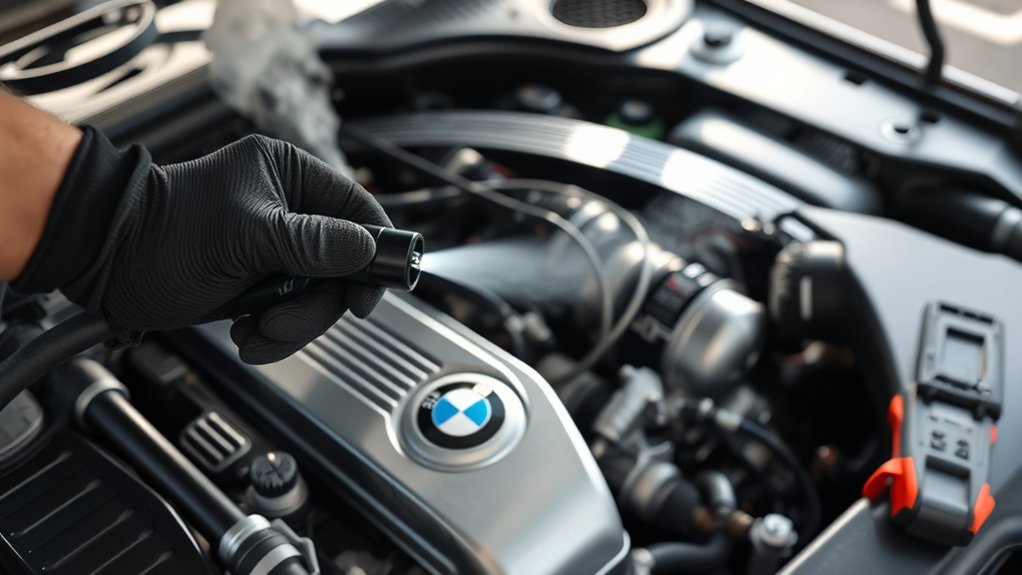
7 Steps to Test BMW 328i for Vacuum Leaks
To test your BMW 328i for vacuum leaks effectively, start by gathering essential tools such as a vacuum gauge, a smoke machine, and soapy water.
Identifying vacuum leaks in your BMW 328i is crucial for maintaining optimal engine performance and fuel efficiency. This step-by-step guide will help you pinpoint common leak points and use the right techniques to detect even hidden leaks.
Begin by locating typical leak areas like vacuum hoses and the intake manifold gasket. Perform a thorough visual inspection for any cracks, loose connections, or damaged components. Using a smoke machine can reveal leaks that are not easily seen.
Next, spray carb cleaner on vacuum lines while the engine is running. Watch for any changes in RPM, which indicate a possible leak.
After repairs, retest the system and monitor your engine’s performance to ensure the issue is resolved. Keep reading for detailed steps and helpful tips.
Key Takeaways
- Ensure the engine is off, cooled, and gather tools like a vacuum gauge, soapy water, and a smoke machine for testing.
- Inspect vacuum hoses, intake manifold gasket, and brake booster for cracks, loose connections, or wear.
- Use a vacuum gauge to measure intake manifold vacuum and observe for fluctuations indicating leaks.
- Apply soapy water or smoke to suspected areas and watch for bubbles or escaping smoke that reveal leaks.
- Repair or replace damaged components, retest vacuum levels, clear codes, and verify smooth engine performance.
Gather Essential Tools to Test BMW 328i Vacuum Leaks
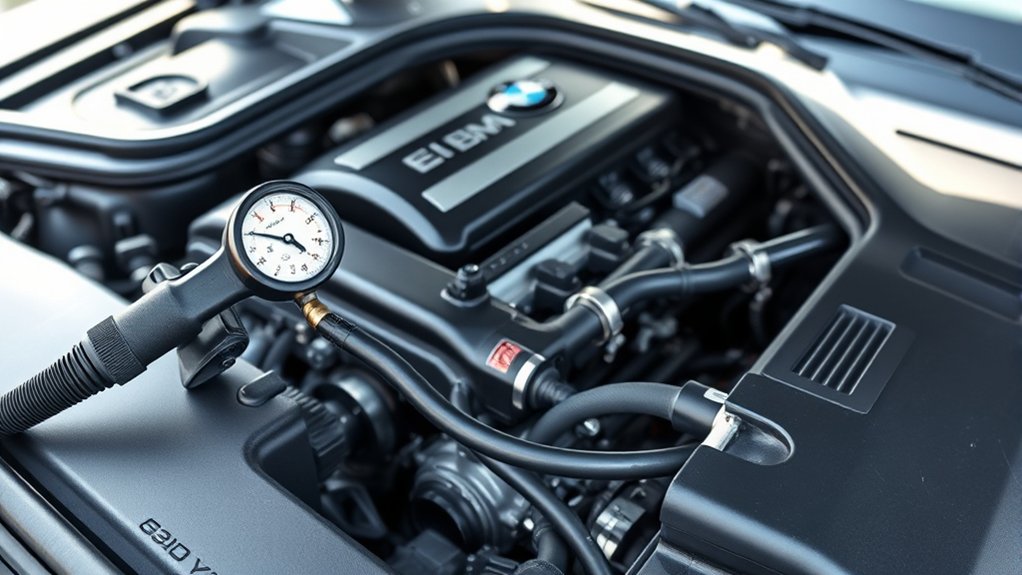
Before you begin testing for vacuum leaks on your BMW 328i, make sure you have all the necessary tools on hand. You’ll need a few key items to make the process smooth and effective. Start with a basic flashlight to illuminate tight engine spaces.
Grab a can of carburetor cleaner or brake cleaner, which helps detect leaks when sprayed on suspect areas. A vacuum gauge is essential for measuring manifold vacuum levels accurately. You should also have a set of screwdrivers and pliers to remove any covers or clamps blocking access.
Ultimately, a smoke machine can be invaluable if you want a more precise leak detection method. Having these tools ready will save time and help you pinpoint issues efficiently.
Find Common Vacuum Leak Points on Your BMW 328i
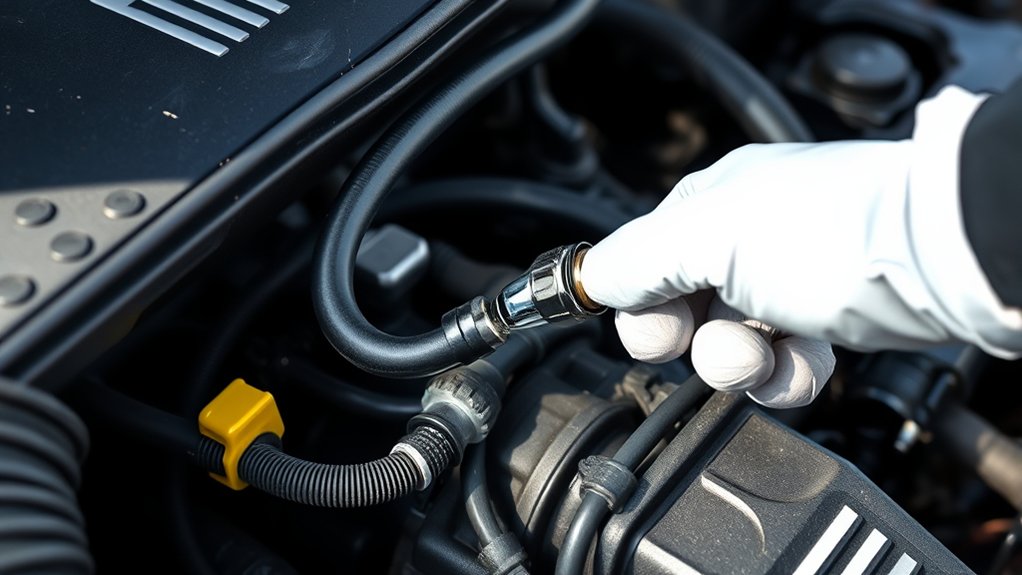
Start by checking typical leak locations like vacuum hoses, intake manifold gaskets, and the brake booster. You’ll want to closely inspect hoses for cracks, loose connections, or brittleness that can cause leaks.
Knowing where these vulnerabilities are will help you pinpoint the problem faster.
Typical Leak Locations
When diagnosing vacuum leaks on your BMW 328i, you’ll want to focus on specific areas where leaks commonly occur. Start by checking the intake manifold gasket, as its seal can deteriorate over time. Inspect the vacuum hoses connected to the brake booster and the intake system; cracks or loose fittings here often cause leaks.
Don’t overlook the PCV valve and its associated hoses, since they’re frequent leak points. The intake boot between the air filter and throttle body is another spot to examine for splits or loose clamps. Finally, look around the throttle body gasket and any vacuum-operated components like the EGR valve.
Identifying Hose Vulnerabilities
Although vacuum leaks can originate from various points, hoses on your BMW 328i often present the most vulnerable spots due to wear, heat exposure, and movement. You should carefully inspect hoses for cracks, brittleness, or loose connections.
Focus on areas near the intake manifold, vacuum pump, and brake booster, as these spots commonly develop leaks.
Here’s a quick reference to help you identify high-risk hose areas:
| Hose Location | Common Issue |
|---|---|
| Intake manifold | Cracks, splits |
| Vacuum pump outlet | Loose fittings |
| Brake booster hose | Hardened, brittle |
| PCV valve hose | Disconnections |
Checking these vulnerable hoses can save you time and avoid further engine performance problems.
Visually Inspect Hoses for Cracks and Loose Connections
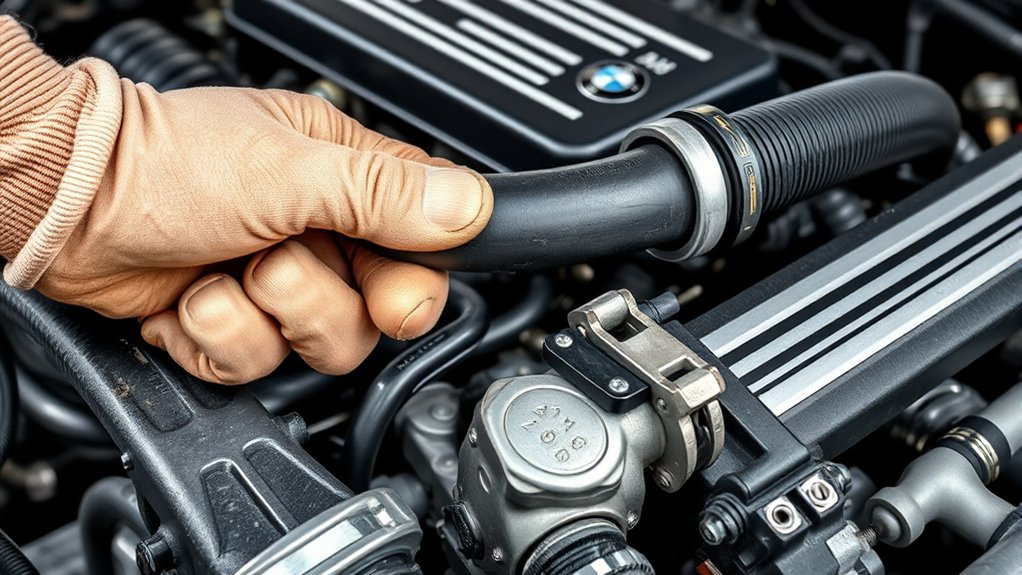
Start by checking your hoses for common signs of damage like cracks, splits, or hardening. Make sure each hose is firmly connected and hasn’t loosened over time.
Tighten any loose clamps or replace damaged hoses to prevent vacuum leaks.
Common Hose Damage Signs
Since vacuum hoses endure constant heat and pressure, they often develop cracks or become loose over time. When inspecting your BMW 328i, look closely for visible cracks, brittleness, or soft spots on the hoses.
Pay attention to areas where hoses bend or connect, as these spots are prone to damage. Also, check for any oil contamination, which can weaken the rubber. Loose connections may cause hissing sounds or engine performance issues.
| Damage Sign | What to Look For |
|---|---|
| Cracks & Splits | Fine lines or breaks on hose surface |
| Brittle or Soft Hose | Loss of flexibility, hardened spots |
| Loose Connections | Gaps, movement, or disconnected hose |
Spotting these signs early helps prevent vacuum leaks and engine problems.
Secure Hose Connection Tips
Noticing cracks, brittleness, or loose connections on your vacuum hoses means it’s time to secure them properly to prevent leaks. Start by visually inspecting each hose carefully, paying close attention to areas near clamps and fittings. If you spot any cracks or hardened sections, replace the hose immediately.
For loose connections, remove the hose, clean the fitting, and firmly reconnect it. Use quality hose clamps to tighten connections, ensuring they’re snug but not overly tight to avoid damaging the hose. Double-check for any movement by gently wiggling the hoses after securing them.
Properly seated and tightened hoses maintain vacuum integrity and prevent air leaks that can affect engine performance. Regular inspections help catch issues early, so make this a routine part of your maintenance.
Detect Hard-to-Spot Vacuum Leaks Using a Smoke Machine
When you can’t find a vacuum leak through visual inspection or simple tests, a smoke machine becomes an invaluable tool. It helps you spot leaks hidden deep within the intake system by filling it with harmless smoke. Here’s how to use it effectively:
- Connect the smoke machine to the intake manifold or vacuum line.
- Turn on the machine and let smoke fill the system under low pressure.
- Watch carefully for smoke escaping from cracked hoses, loose fittings, or damaged gaskets.
- Mark any leak spots you find for repair.
This method gives you a clear visual cue, making it easier to detect leaks that are otherwise impossible to locate. Using a smoke machine saves you time and guarantees your BMW 328i runs smoothly.
Spot Vacuum Leaks by Spraying Carburetor Cleaner on Lines
If the smoke machine doesn’t reveal all the leaks, spraying carburetor cleaner on vacuum lines can help pinpoint smaller or less obvious issues. Simply start the engine and carefully spray the carburetor cleaner along the vacuum hoses, connections, and intake manifold areas. The cleaner’s flammable vapors cause the engine’s idle to change if they’re sucked into a leak.
Pay close attention to any sudden rise or drop in RPM, which indicates a leak nearby. Make sure you hold the spray can at a safe distance to avoid damaging rubber components. Work in a well-ventilated area, and avoid spraying near hot engine parts to prevent fire hazards.
This quick and effective method helps you isolate leaks that might have escaped the smoke test.
Test Engine Response When Revving and Idling for Leaks
Since vacuum leaks often affect engine performance, you’ll want to observe how your BMW 328i responds while revving and idling. Start by warming up the engine to normal operating temperature. Then, follow these steps:
Observe your BMW 328i’s behavior at idle and revving to detect potential vacuum leaks early.
- Let the engine idle and listen for any irregular sounds like hissing or rough idling.
- Slowly rev the engine up to about 3,000 RPM and watch for fluctuations or hesitation.
- Pay attention to changes in engine speed—if it stumbles or surges, a vacuum leak might be the cause.
- Release the throttle quickly and note if the idle speed drops erratically or stalls.
This hands-on test helps pinpoint leaks affecting air intake, giving you clues before moving on to repairs.
Confirm Repairs and Monitor Your BMW 328i for New Leaks
After checking your BMW 328i’s engine response for signs of vacuum leaks, the next step is to verify that your repairs have fixed the problem. Start the engine and listen closely for any hissing sounds or irregular idling, which could indicate remaining leaks. Use a smoke machine or spray soapy water around repaired areas to catch bubbles that reveal leaks.
Take your car for a short drive, paying attention to performance issues like rough acceleration or stalling. Keep monitoring your BMW over the next few days, as some leaks might develop slowly due to worn hoses or clamps. If you notice any symptoms returning, inspect those areas again and tighten or replace parts as needed.
Staying vigilant ensures your vacuum system stays sealed and your engine runs smoothly.
Frequently Asked Questions
What Are the Symptoms of a Vacuum Leak in a BMW 328I?
You’ll notice rough idling, poor acceleration, and a check engine light.
Your BMW 328i might also stall, have increased fuel consumption, or a hissing sound under the hood when there’s a vacuum leak.
Can Vacuum Leaks Affect Fuel Efficiency on a BMW 328I?
You know what they say, “a stitch in time saves nine.” Yes, vacuum leaks can hurt your BMW 328i’s fuel efficiency by causing rough idling and unbalanced air-fuel mix, making your engine work harder and guzzle more gas.
How Often Should I Check My BMW 328I for Vacuum Leaks?
You should check your BMW 328i for vacuum leaks at least once a year or whenever you notice rough idling, decreased fuel efficiency, or engine performance issues.
Regular checks keep your car running smoothly and efficiently.
Are Vacuum Leaks Covered Under Bmw’s Warranty?
Imagine your BMW’s engine whispering secrets—vacuum leaks aren’t always covered under warranty.
You’ll want to check your specific warranty terms since wear-and-tear items like leaks often fall outside coverage,
leaving you responsible for repairs.
Can a Vacuum Leak Cause the Check Engine Light to Come On?
Yes, a vacuum leak can cause the check engine light to come on. When your engine detects unmetered air, it triggers the light to warn you about potential issues affecting performance and emissions.
Conclusion
Just like a detective hunting for clues, you’re piecing together the mystery of your BMW 328i’s vacuum leaks. Remember, even a tiny crack can be the culprit behind rough idling or poor fuel economy—studies show vacuum leaks can reduce MPG by up to 15%.
By following these steps, you’ll not only solve the puzzle but keep your engine running smoothly, turning frustration into satisfaction every time you hit the road.
Performing a thorough vacuum leak test on your BMW 328i is essential for maintaining optimal engine performance and fuel efficiency. With these 7 steps to test BMW 328i for vacuum leaks, you can confidently identify and fix issues, ensuring your vehicle runs at its best.