How AC Works in EVs Step-by-Step Guide
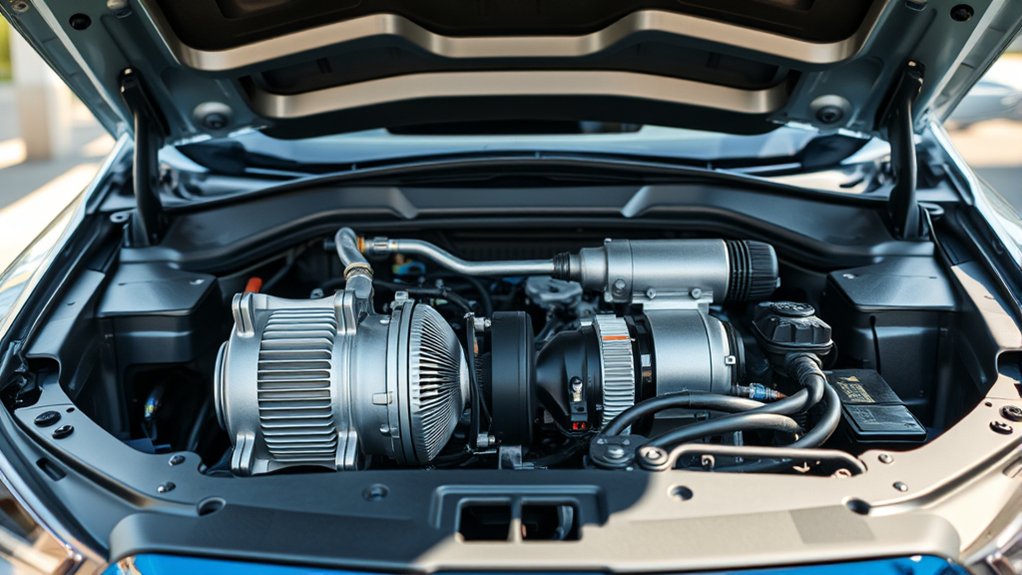
In your EV, the air conditioning system works differently from traditional vehicles. The AC uses an electric compressor powered directly by the battery, allowing it to cool the cabin even when the car is stopped. This efficient setup ensures continuous comfort without relying on the engine.
Refrigerant circulates through a cycle involving compressing, condensing, expanding, and evaporating to remove heat from the interior.
Heat pumps enhance this process by capturing outside and waste heat, significantly boosting energy efficiency.
Smart controls help balance your comfort with battery life, while regenerative braking contributes to saving energy.
Keep reading to learn how to troubleshoot common AC issues and maximize your electric vehicle’s climate system performance.
Key Takeaways
- EV AC systems use electric compressors powered by the battery to provide consistent cooling independent of the motor’s operation.
- The refrigerant cycle compresses, condenses, expands, and evaporates refrigerant to absorb cabin heat and release it outside.
- Heat pumps transfer heat efficiently by extracting outside heat and recycling battery/motor waste heat for heating and cooling.
- Smart climate controls optimize energy use by adjusting settings based on sensors, occupancy, and user preferences to extend driving range.
- Pre-conditioning during charging, recirculation mode, and moderate temperature settings enhance AC efficiency and preserve battery life.
How AC Systems in EVs Differ From Traditional Cars
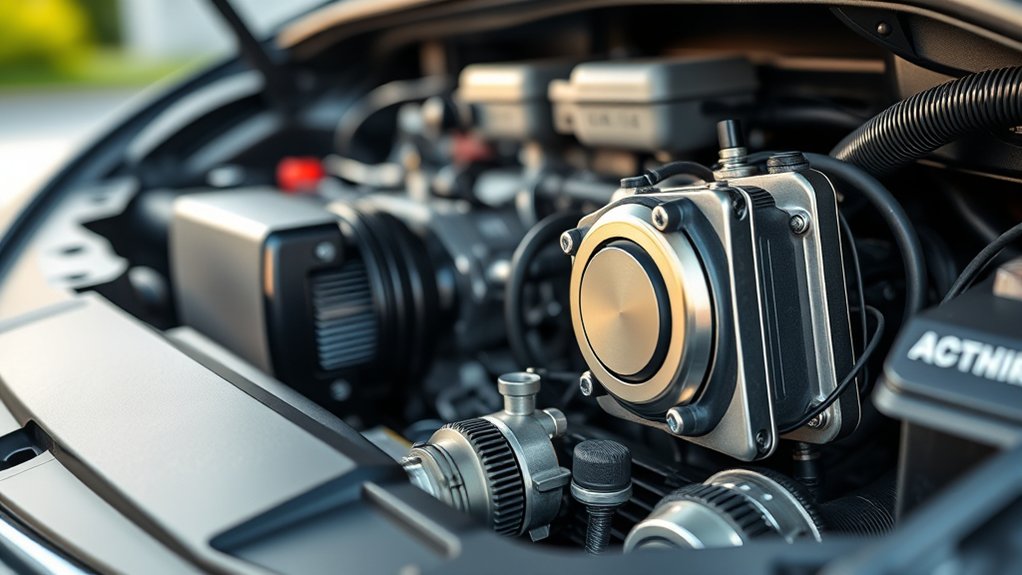
Although both electric vehicles (EVs) and traditional cars use air conditioning to keep you comfortable, the way their AC systems operate is quite different. In traditional cars, the AC relies on the engine’s belt-driven compressor, which only runs when the engine is on. That means when you idle or stop, the cooling might drop.
EVs, however, don’t have an engine running constantly, so they use electric compressors powered by the battery. This lets your AC work independently from the motor’s status, providing consistent cooling even when the car is stationary or driving at low speeds. Plus, EV AC systems are designed to be more energy-efficient, helping preserve battery life while keeping you cool.
How the Electric Compressor Keeps Your EV Cool
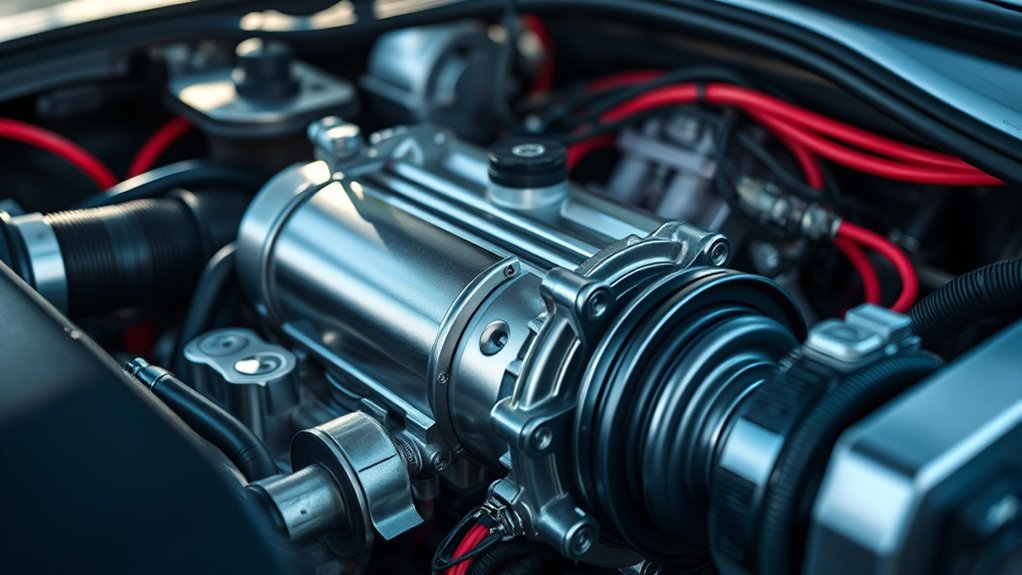
How exactly does the electric compressor keep your EV cool? Unlike traditional compressors driven by an engine belt, the electric compressor in your EV runs on electricity from the battery. It compresses the refrigerant gas, increasing its pressure and temperature, which allows the AC system to circulate the refrigerant efficiently.
This process removes heat from the cabin air and cools the interior. Because it operates independently of the engine, it can run whenever you need cooling, even when the car is stationary. The electric compressor adjusts its speed based on cooling demand, optimizing energy use and preserving your battery life.
This makes your EV’s cooling system more responsive and energy-efficient, ensuring you stay comfortable on every drive.
How the Refrigerant Cycle Works Without a Traditional Engine

You might wonder how the refrigerant cycle keeps working without a traditional engine driving it. In EVs, the electric compressor takes over, pushing refrigerant through the system to absorb and release heat.
Let’s look at how this flow path functions to keep your cabin cool.
Refrigerant Flow Path
Ever wondered how the refrigerant cycle functions in an electric vehicle without relying on a traditional engine? Here’s how the refrigerant flows through the system. Starting as a low-pressure gas, the refrigerant moves into the condenser, where it releases heat and turns into a high-pressure liquid.
Next, it travels to the expansion valve, which reduces its pressure and temperature before entering the evaporator. Inside the evaporator, the cold refrigerant absorbs heat from the cabin air, cooling it down while the refrigerant evaporates back into a low-pressure gas. From there, the cycle repeats.
This continuous flow lets your EV’s AC system cool the cabin efficiently, all without needing engine-driven components, relying instead on electric systems to manage temperature control seamlessly.
Electric Compressor Role
Where does the refrigerant get the push it needs without a traditional engine? In electric vehicles, the electric compressor takes on this vital role. Instead of relying on a belt-driven compressor powered by an engine, the electric compressor uses electricity directly from the EV’s battery.
This means it can operate independently of the motor’s speed, allowing precise control over the refrigerant flow. When you switch on the AC, the electric compressor pressurizes and circulates the refrigerant through the system, enabling heat exchange to cool the cabin. Because it’s electric, it runs quietly and efficiently, optimizing energy use and extending driving range.
How Heat Pumps Improve EV AC Cooling and Heating
How exactly do heat pumps enhance the cooling and heating efficiency in electric vehicles? They cleverly transfer heat rather than generate it, making the process much more energy-efficient. By doing this, heat pumps reduce the load on your EV’s battery, extending its driving range.
Here’s how they improve your EV’s climate control:
- Extract heat from outside air even in cold weather
- Recycle waste heat from the battery and motor
- Switch between heating and cooling modes seamlessly
- Use less electrical energy compared to traditional resistive heaters
With a heat pump, your EV stays comfortable in all seasons while conserving energy. This smart technology ensures you get effective cooling and heating without draining your battery quickly.
How EV AC Uses Battery Power Efficiently
You depend on intelligent battery energy management to keep your EV’s AC running without draining power quickly. Effective power conversion guarantees the energy from your battery is used efficiently for cooling and heating.
Plus, thermal regulation strategies help maintain ideal performance while preserving battery life.
Battery Energy Management
Ever wondered what keeps your EV’s air conditioning running without draining the battery too quickly? Battery energy management plays an essential role in balancing comfort and efficiency. It monitors and optimizes how much power the AC system pulls from the battery, ensuring you get cool air without sacrificing range.
The system uses smart algorithms to adjust the AC load based on driving conditions and battery status. Here’s how it works:
- Continuously monitors battery charge and temperature
- Regulates AC power draw to prevent excessive depletion
- Prioritizes battery health by limiting high current spikes
- Adjusts cooling output for maximum energy use
With efficient battery energy management, your EV keeps you comfortable while maximizing battery life and driving range.
Efficient Power Conversion
Although the battery supplies the power, the EV’s air conditioning system relies on efficient power conversion to make the most of that energy. You’ll find that the AC unit uses inverters and DC-DC converters to transform the battery’s direct current into the alternating current needed by the compressor motor. This process minimizes energy loss, ensuring the AC runs smoothly without draining your battery quickly.
Advanced electronics monitor and adjust power flow in real time, maintaining ideal efficiency. By converting power efficiently, your EV’s AC system balances cooling performance with energy conservation, helping you extend driving range. So, when you use the AC, it’s not just about comfort—it’s about smart energy use that keeps your EV running longer between charges.
Thermal Regulation Strategies
When managing your EV’s air conditioning, smart thermal regulation strategies play a vital role in using battery power efficiently. These strategies balance comfort and energy consumption by controlling how and when the AC system cools or heats the cabin.
You’ll find that modern EVs use a combination of sensors and adaptive controls to optimize performance. Key approaches include:
- Pre-conditioning: Cooling or heating the cabin while the car is still plugged in to save battery.
- Heat pump systems: Efficiently transfer heat instead of generating it, reducing energy use.
- Thermal insulation: Minimizes heat exchange to maintain interior temperature longer.
- Zoned climate control: Cools only occupied areas, preventing wasted energy.
How Regenerative Braking Improves EV AC Efficiency
Since regenerative braking recovers energy that would otherwise be lost, it plays a crucial role in boosting the efficiency of an EV’s air conditioning system. When you brake, the system converts kinetic energy into electrical energy, which recharges the battery.
This extra energy reduces the load on the main battery, allowing the AC to run longer without draining power quickly.
Here’s how regenerative braking impacts EV AC efficiency:
| Aspect | Without Regenerative Braking | With Regenerative Braking |
|---|---|---|
| Energy Recovery | None | Recovers kinetic energy |
| Battery Drain | Higher | Lower |
| AC Runtime | Shorter | Extended |
| Overall Efficiency | Reduced | Improved |
How Smart Climate Controls Manage Your EV’s Cabin Temperature
Even as outside temperatures fluctuate, smart climate controls keep your EV’s cabin comfortable by automatically adjusting settings to match your preferences and conditions. These systems use sensors and algorithms to monitor both the interior and exterior environment, ensuring ideal temperature and humidity levels. You don’t have to constantly tweak the controls because the system handles it seamlessly.
Here’s how smart climate controls manage your cabin temperature:
- Detect cabin occupancy to avoid wasting energy cooling or heating an empty car
- Adjust airflow and temperature based on real-time sensor data
- Learn your preferred settings over time for personalized comfort
- Integrate with battery management to optimize energy use and extend driving range
With this technology, you enjoy a consistently pleasant cabin without compromising your EV’s efficiency.
Common EV AC Issues and How to Troubleshoot Them
Smart climate controls make your EV’s cabin comfortable, but sometimes the AC system can face issues that affect performance.
If you notice weak airflow, strange noises, or inconsistent cooling, troubleshooting can help you pinpoint the problem quickly.
| Issue | Possible Cause | Troubleshooting Step |
|---|---|---|
| Weak airflow | Clogged cabin filter | Check and replace the filter |
| Strange noises | Compressor or fan fault | Inspect compressor, listen to fan |
| Inconsistent cooling | Low refrigerant level | Check refrigerant, recharge if needed |
| AC not turning on | Electrical issue | Examine fuses and wiring |
Tips to Maximize Your EV’s AC Performance and Range
To get the most out of your EV’s AC system without sacrificing range, you’ll want to manage its use thoughtfully. Efficient AC use helps keep your cabin comfortable while preserving battery life. Here are some tips to maximize performance and range:
- Pre-cool or pre-heat your EV while it’s still charging to reduce AC load during your drive.
- Use the recirculation mode to cool the cabin faster and prevent outside heat from entering.
- Set the temperature moderately; extreme cold settings draw more power.
- Park in shaded areas or use sunshades to minimize heat buildup inside the vehicle.
Frequently Asked Questions
What Type of Refrigerant Is Used in EV Air Conditioning Systems?
You’ll find that EV air conditioning systems typically use R-1234yf refrigerant because it’s eco-friendly and has low global warming potential. This refrigerant keeps your cabin cool while minimizing environmental impact effectively.
How Often Should the EV AC System Be Serviced?
They say, “An ounce of prevention is worth a pound of cure.” You should service your EV’s AC system every 12 months or 12,000 miles to keep it running efficiently and avoid costly repairs down the road.
Can EV AC Systems Operate in Extreme Cold Weather?
Yes, your EV’s AC system can operate in extreme cold, but its efficiency may drop. It often switches to heating mode using a heat pump or resistive heater to keep you comfortable despite freezing temperatures.
This ensures the cabin remains warm even when outside conditions are harsh. However, the energy consumption might increase during this time. Overall, the system is designed to adapt to varying weather conditions efficiently.
Are EV AC Systems Louder Than Traditional Car AC Systems?
Imagine you’re cruising silently in a Tesla, then turn on the AC—it’s quieter than many gas cars. EV AC systems usually run smoother and quieter because they lack noisy engines and compressors found in traditional vehicles.
Do EV AC Systems Affect the Vehicle’s Warranty?
No, EV AC systems typically don’t affect your vehicle’s warranty as long as you use approved parts and services.
Always check your warranty terms to avoid voiding coverage by unauthorized modifications or repairs.
Conclusion
While traditional car AC systems rely on engine power, your EV’s AC cleverly uses electric compressors and smart tech to keep you cool without burning fuel. This shift not only saves energy but transforms how climate control works, blending efficiency with innovation.
By understanding these differences and managing your EV’s AC wisely, you’re not just staying comfortable—you’re driving smarter, greener, and more confidently into the future. Efficient energy use, advanced electric compressors, and intelligent climate control systems are key to optimizing your EV experience.
Embracing these technologies in your electric vehicle helps reduce environmental impact while enhancing comfort and performance.