How to Fix a Vacuum Cleaner With No Suction in 7 Easy Steps
To fix your vacuum cleaner with no suction, start by emptying the dustbin and checking for blockages in the hose and attachments. These common issues often cause loss of suction and are easy to address.
Cleaning or replacing filters is essential to ensure airflow isn’t restricted.
Next, remove hair or debris from the brush roll for better floor contact. Inspect the vacuum belt for wear and replace it if necessary to maintain optimal performance.
Double-check suction settings and seals for airtight connections to prevent air leaks.
Following these steps will quickly restore suction and improve your vacuum’s efficiency. You’ll also find detailed tips to keep your vacuum performing at its best and extend its lifespan.
Key Takeaways
- Empty the dustbin and remove blockages in the hose, wand, and attachments to restore airflow and suction power.
- Clean or replace filters regularly to maintain airflow and prevent suction loss.
- Inspect and replace worn or broken belts to ensure the brush roll spins properly for effective cleaning.
- Remove debris from the brush roll and replace it if bristles are damaged or worn down.
- Check and secure all hose connections, seals, and attachments to prevent air leaks and improve suction efficiency.
Empty the Dustbin to Restore Vacuum Suction

Why does your vacuum lose suction? One common reason is a full dustbin. When the dustbin fills up, airflow gets blocked, reducing suction power.
A full dustbin blocks airflow, causing your vacuum to lose suction power.
You should empty the dustbin regularly to keep your vacuum working efficiently. Don’t wait until it’s completely full—empty it when it reaches the max fill line or when you notice a drop in suction.
To do this, detach the dustbin carefully, avoiding dust spills, then dispose of the debris properly. After emptying, check for any clogged areas around the dustbin opening and clean them if necessary.
Putting the dustbin back securely ensures an airtight seal, which is essential for strong suction. Keeping the dustbin clean and empty helps restore and maintain your vacuum’s performance.
Clean Vacuum Filters for Better Suction

You’ll want to check the type of filter your vacuum uses since cleaning methods vary. Regularly rinsing or tapping out filters can boost suction, but some need replacement over time.
Knowing when and how to clean or swap filters keeps your vacuum working efficiently.
Types Of Vacuum Filters
How often have you checked the filters in your vacuum cleaner? Knowing the types of vacuum filters helps you maintain suction effectively. Most vacuums use one or more of these filters: foam, HEPA, and cartridge filters.
Foam filters trap larger dust particles and are washable, so you can reuse them. HEPA filters capture tiny allergens and improve air quality, but they usually need replacing periodically. Cartridge filters combine layers for better filtration and require careful handling.
Some vacuums also have exhaust filters that prevent dust from escaping back into the air. Identifying your vacuum’s filter type lets you choose the right cleaning or replacement method, keeping your vacuum running smoothly and maintaining strong suction power.
How To Clean Filters
Since clogged filters reduce your vacuum’s suction, cleaning them regularly is essential for peak performance. You’ll want to keep your filters free from dust and debris to maintain strong airflow.
Here’s how to clean your vacuum filters effectively:
- Remove the filter carefully according to your vacuum’s manual to avoid damage.
- Rinse the filter under lukewarm water until the water runs clear; don’t use soap unless recommended.
- Let the filter air dry completely—usually 24 hours—before reinstalling it to prevent mold and damage.
Cleaning your filters this way guarantees your vacuum runs efficiently and prolongs its life. Avoid using harsh chemicals or drying with heat, as these can ruin the filter material and reduce suction power.
When To Replace Filters
Even with regular cleaning, vacuum filters don’t last forever and need timely replacement to keep your vacuum running efficiently. If you notice reduced suction despite cleaning, visible damage, or a persistent odor, it’s time to swap the filter.
Replace filters according to your vacuum’s manual, usually every 3 to 6 months, or sooner if you use it heavily.
| Sign to Replace | What to Check |
|---|---|
| Reduced suction | Test vacuum performance |
| Filter discoloration | Look for dark or clogged filters |
| Persistent odor | Smell for trapped dust |
| Visible damage | Check for tears or holes |
| Usage frequency | Consider replacement timeline |
Check for Blockages in the Hose and Attachments

You’ll want to inspect the hose carefully for any debris that might be blocking airflow. Make sure to clear out all attachments thoroughly, as even small clogs can reduce suction.
Taking these steps can quickly restore your vacuum’s performance.
Inspect Hose for Debris
Before assuming a major problem with your vacuum, check the hose and attachments for debris that might be blocking airflow. A clogged hose can drastically reduce suction power.
Follow these steps to inspect it:
- Detach the hose from the vacuum and attachments. Look through the hose for visible blockages or dirt buildup.
- Shine a flashlight inside the hose to spot any stubborn debris stuck further in.
- Gently use a long, flexible object, like a broomstick or a straightened wire hanger, to dislodge any blockages.
Make sure you don’t force anything that could damage the hose. After clearing, reconnect everything and test the suction.
If the problem persists, you might need to investigate other parts or clean the attachments thoroughly.
Clear Attachments Thoroughly
After checking the hose for debris, turn your attention to the vacuum attachments. Detach each piece—brushes, wands, and nozzles—and inspect them carefully. Look inside for any clogs like hair, dust, or small objects that might be blocking airflow.
Use a long, flexible brush or a straightened wire hanger to gently push out stubborn blockages. Rinse washable attachments with warm water and let them dry completely before reattaching. Don’t forget to check the connection points where attachments meet the hose or vacuum body, as dirt can accumulate there too.
Clearing these blockages will restore proper suction and improve your vacuum’s performance. Regularly cleaning attachments prevents future clogs, so make this a routine part of your vacuum maintenance.
Remove Hair and Debris From the Brush Roll
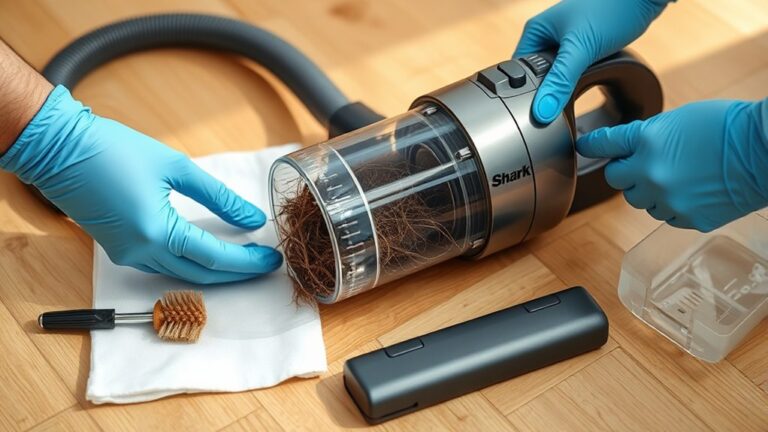
How often do you check the brush roll for tangled hair and debris? Clogged brush rolls reduce suction and cleaning efficiency. To keep your vacuum working well, remove any buildup regularly.
Follow these steps:
- Turn off and unplug your vacuum for safety.
- Access the brush roll by removing the bottom plate or cover, depending on your model.
- Use scissors or a seam ripper to carefully cut away hair, threads, and debris wrapped around the roll. Pull out all loosened material to ensure the brush spins freely.
Keeping the brush roll clean prevents blockages and maintains strong suction, helping your vacuum perform at its best every time.
Test and Replace the Vacuum Belt If Worn
If your vacuum’s suction remains weak despite cleaning the brush roll, the belt might be worn or broken. First, unplug the vacuum and remove the brush roll cover. Slide out the brush roll to access the belt.
Check if the belt is loose, cracked, or stretched. A worn belt won’t spin the brush roll effectively, reducing suction. To test it, try stretching the belt gently; it should be firm but flexible.
If it feels brittle or overly loose, it’s time to replace it. Purchase a replacement belt specific to your vacuum model. Install the new belt by looping it around the motor shaft and the brush roll.
Reassemble the vacuum, then plug it in and test the suction. Replacing the belt often restores proper brush roll rotation and improves suction.
Check Suction Settings and Inspect Air Seals
Replacing a worn vacuum belt often improves brush roll rotation, but weak suction can still persist if your vacuum’s settings aren’t correct or if air leaks are present. To fix this, first check your vacuum’s suction settings—many models have adjustable controls for different floor types. If set too low, suction suffers.
Replacing a worn belt helps, but weak suction often stems from incorrect settings or air leaks.
Next, inspect all air seals and gaskets. Air leaks reduce suction power by letting air escape. Look for cracks, loose fittings, or damaged seals around the hose, dustbin, and filter compartments.
Finally, guarantee attachments are securely connected; loose parts can cause leaks too. Follow these steps:
- Adjust suction controls to the recommended setting for your floor type.
- Examine seals and replace any damaged or cracked parts.
- Secure all hose and attachment connections tightly.
Replace Worn Parts to Boost Vacuum Suction
Since worn parts can considerably reduce your vacuum’s suction, you’ll want to inspect and replace components like belts, filters, and brush rolls regularly. Check the belt for cracks or looseness; a worn belt can cause the brush roll to stop spinning properly. Replace it promptly to restore power.
Clean or swap out filters according to your vacuum’s manual—clogged filters block airflow. Don’t forget the brush roll: remove hair and debris wrapped around it, and if the bristles are worn down, replace the brush roll for better floor agitation. Using genuine replacement parts guarantees compatibility and longevity.
Frequently Asked Questions
Can Vacuum Suction Issues Be Caused by Electrical Problems?
Yes, vacuum suction issues can be caused by electrical problems. You might notice the motor isn’t running properly or the vacuum won’t power on.
Check the power cord, switches, and motor connections for faults.
How Often Should I Service My Vacuum Cleaner Professionally?
You should service your vacuum cleaner professionally at least once a year to keep it running efficiently. If you use it heavily or notice performance drops, consider servicing it every six months to avoid bigger issues.
Does Using the Wrong Vacuum Bags Affect Suction Power?
Yes, using the wrong vacuum bags reduces suction, clogs filters, and limits airflow.
You’ll lose cleaning power, damage your vacuum, and waste time.
Always choose the right bags to keep your vacuum running strong and efficient.
Can Weather or Humidity Impact Vacuum Suction?
Yes, humidity can affect your vacuum’s suction by causing dust and debris to clump, which clogs filters and hoses. You’ll want to clean or replace parts regularly, especially in damp weather, to maintain strong suction.
Are Cordless Vacuums Less Powerful Than Corded Ones?
Cordless vacuums are often like a sprint compared to a marathon—they’re less powerful than corded ones but offer more convenience. You’ll sacrifice some suction strength for portability and easy maneuvering around your home.
This trade-off means cordless models are great for quick cleanups and smaller spaces. However, for deep cleaning or large areas, corded vacuums might be more effective. Ultimately, the choice depends on your cleaning needs and lifestyle.
Conclusion
By following these seven simple steps, you can breathe new life into your vacuum cleaner and banish that frustrating loss of suction.
Think of your vacuum as a loyal companion—show it a little care, and it’ll reward you with powerful cleaning every time.
Don’t let a clogged hose or worn belt hold you back; tackle the issue head-on, and soon your floors will be spotless again, just like magic.
Remember, fixing a vacuum cleaner with no suction is easier than you think.
Regular maintenance and timely repairs ensure your vacuum cleaner runs efficiently.
With these tips, your vacuum will maintain strong suction power and keep your home clean effortlessly.