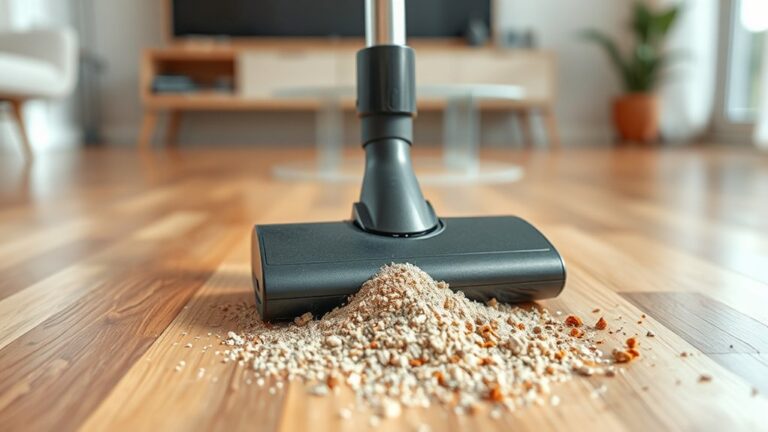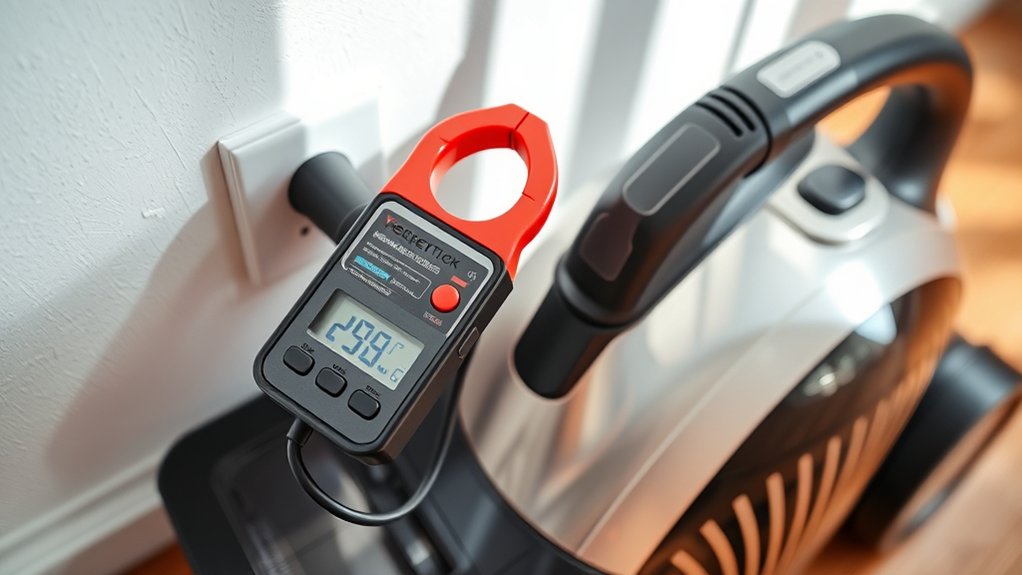
How Many Amps Does a Vacuum Use?
Your vacuum typically uses between 6 and 12 amps, depending on its size and type. Heavy-duty models can draw up to 15 amps, making them more powerful but also increasing electricity consumption.
Understanding how many amps a vacuum uses is essential for balancing cleaning performance and energy efficiency.
Higher amps usually mean more power but also higher electricity use and potential heat buildup. However, amp ratings don’t directly measure suction strength.
A well-designed vacuum with lower amps can still clean effectively.
Knowing the amp rating helps you manage energy costs and safety while choosing the right vacuum for your needs.
Keep exploring to find out how amps impact your vacuum’s efficiency and care.
Key Takeaways
- Most household vacuums draw between 6 and 12 amps, with lightweight models using around 6 amps and heavy-duty models up to 15 amps. Amp ratings indicate electrical current draw, not suction power or cleaning effectiveness. Higher amps generally mean stronger motors and increased power consumption but do not guarantee better cleaning.
- Wattage and amps are related; higher wattage vacuums typically draw more amps and consume more energy. Always check vacuum labels or manuals for amp ratings to compare models and ensure safe electrical use.
What Does “Amps” Mean for Vacuum Cleaners?
Although you might not think about it often, the amps rating on a vacuum cleaner tells you how much electrical current the motor draws while running. This rating helps you understand the power consumption of your vacuum. The higher the amps, the more electricity the vacuum uses at that moment.
It doesn’t directly measure suction power, but it gives you a clue about the motor’s workload. When you see a vacuum rated for 10 amps, for example, it means it pulls 10 amperes of current from your home’s electrical supply. Knowing this can help you compare models and estimate energy use.
It also plays a role in ensuring your home’s circuit breakers handle the load safely when the vacuum operates.
How Many Vacuum Amps Does a Typical Model Use?
Understanding the amps rating helps you get a sense of a vacuum cleaner’s electrical demand, but you might wonder how many amps a typical model actually uses. Most household vacuums draw between 6 and 12 amps when running, depending on their design and motor size. Lightweight or cordless vacuums usually pull closer to 6 amps, while more powerful upright or canister models often reach 10 to 12 amps.
Some commercial or heavy-duty vacuums can draw even more, sometimes up to 15 amps. Keep in mind, the amp rating reflects current draw, not necessarily cleaning effectiveness. When shopping, you’ll typically find the amps listed on the vacuum’s label or in the manual, which helps you estimate electricity use and confirm compatibility with your home’s electrical circuits.
How Do Amps Impact Your Vacuum’s Power and Performance?
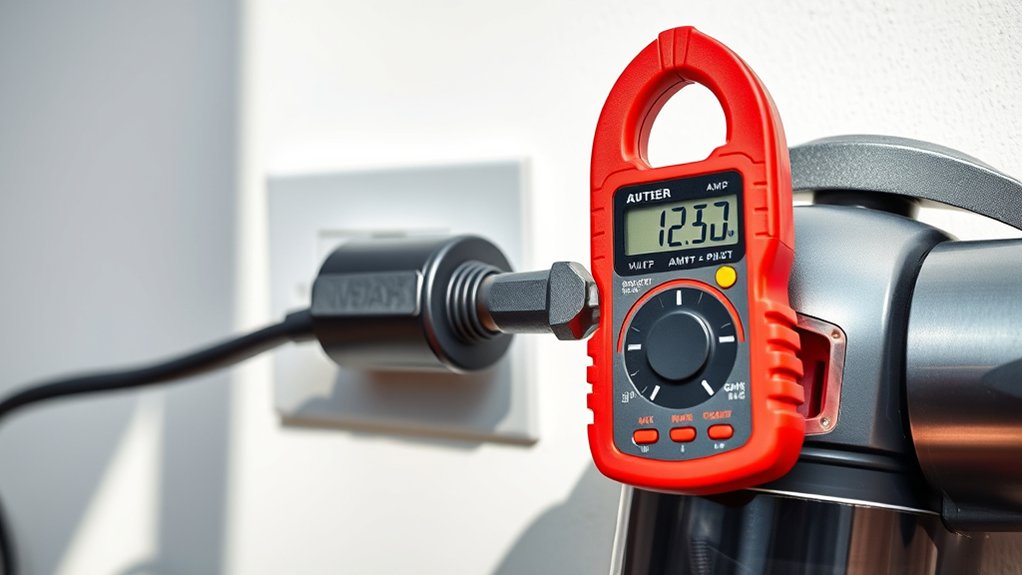
Because amps measure the electrical current your vacuum uses, they directly influence its motor strength and suction power. When your vacuum draws more amps, its motor typically runs stronger, creating better suction to pick up dirt and debris efficiently. If the amps are too low, the vacuum might struggle with heavy dirt or thick carpets.
However, higher amps don’t always mean better performance; the vacuum’s design and motor quality also play key roles. You’ll notice that vacuums with higher amps often handle tougher cleaning jobs faster and more effectively.
Can High Amps Damage Your Home Electrical System?
While higher amps can boost your vacuum’s cleaning power, they also demand more from your home’s electrical system. If your vacuum draws more amps than your circuit can handle, it risks overloading the wiring. This overload can cause breakers to trip or, worse, damage electrical components over time.
You might not notice immediate harm, but repeated high-amp use strains your system, potentially leading to costly repairs. To avoid this, check your circuit’s amp rating and guarantee your vacuum’s amp draw stays within safe limits. Using multiple high-amp appliances on the same circuit simultaneously increases the risk, so be mindful of what’s plugged in.
Keeping amps within safe boundaries protects your home and keeps your vacuum running smoothly.
Why Does Your Vacuum’s Amp Rating Matter for Safety and Cost?
Since your vacuum’s amp rating indicates how much electrical current it draws, it directly impacts both your safety and energy costs. If you use a vacuum with a high amp rating on a circuit not designed for it, you risk overloading your electrical system, which can cause breakers to trip or, worse, start a fire.
On the cost side, a vacuum that pulls more amps consumes more electricity, increasing your utility bill. By knowing the amp rating, you can choose a vacuum that balances powerful cleaning with efficient energy use. It also helps you avoid plugging it into incompatible outlets or extension cords, reducing hazards.
Paying attention to the amp rating keeps your home safer and your expenses lower.
How Do You Find Your Vacuum’s Amp Rating?
You can usually find your vacuum’s amp rating on a label attached to the machine or in the user manual. If those aren’t handy, check the manufacturer’s website for detailed specs.
Knowing where to look makes it easy to confirm the exact amp draw of your vacuum.
Check Vacuum Label
Where can you quickly find your vacuum’s amp rating? The easiest place is the vacuum label, often located on the back or bottom of the unit. This label contains valuable info like model number, voltage, wattage, and amps.
Checking this saves time and gives you an immediate answer without guesswork.
Here’s what you might see on the label:
| Label Info | Example |
|---|---|
| Model Number | VCM1234 |
| Voltage (V) | 120V |
| Wattage (W) | 1200W |
| Amp Rating (A) | 10A |
| Serial Number | SN987654321 |
Spotting the “Amp Rating” or “A” value here tells you exactly how many amps your vacuum uses.
Refer User Manual
A user manual often holds the key to finding your vacuum’s amp rating. When you can’t locate the amp information on the vacuum label, the manual usually provides detailed electrical specifications, including amps. Look in sections like “Technical Specifications,” “Product Details,” or “Electrical Requirements.”
If you’ve misplaced the physical copy, check the box it came in—sometimes manuals are tucked inside. The manual may also explain how amp usage relates to your vacuum’s power settings, helping you understand variations.
Use Online Specifications
Wondering how to find your vacuum’s amp rating without the manual? You can easily check online specifications. Start by visiting the manufacturer’s website and entering your vacuum’s model number in the search bar.
Most brands list detailed product specs, including the amp rating, under the product description or technical details section. If that doesn’t work, try online retailers like Amazon or Home Depot, which often provide full specs in the product listing.
You can also look for PDF manuals or spec sheets available for download on third-party sites. Just make sure the information matches your exact model to get an accurate amp rating. Using online sources saves time and helps you understand your vacuum’s power consumption quickly and reliably.
How Do Vacuum Types Compare by Amp Draw?
When comparing vacuum types, you’ll notice upright models usually draw more amps than canister ones. Corded vacuums tend to have higher amp ratings compared to their cordless counterparts. Understanding these differences can help you pick the right vacuum for your power needs.
Upright Vs. Canister
Although both upright and canister vacuums serve the same basic purpose, they differ noticeably in how much power they draw. Upright vacuums typically consume more amps, often ranging between 8 to 12 amps, because they combine suction, brush roll, and motorized components in one unit. This design demands higher power to maintain performance, especially on carpets.
Canister vacuums, on the other hand, usually draw fewer amps, often between 6 to 9 amps, since their motor and suction mechanisms are separated from the cleaning head, which relies less on brush rolls. When choosing between the two, consider your cleaning needs: uprights offer stronger power for deep carpet cleaning but use more electricity, while canisters provide sufficient suction with generally lower amp draw, ideal for hard floors and versatile cleaning tasks.
Corded Vs. Cordless Amps
Comparing upright and canister vacuums gives you a clear idea of how power usage varies by design, but the difference between corded and cordless models brings another layer to contemplate. Corded vacuums typically draw more amps, often between 6 to 12 amps, because they rely directly on household electricity. This means you get consistent suction power without worrying about battery life.
Cordless vacuums, however, usually have lower amp draws since they run on rechargeable batteries. Their motor amps often range from 1 to 3 amps, which limits runtime but offers portability and convenience. When choosing, you’ll need to balance power needs with flexibility—corded models excel in strength, while cordless ones prioritize ease of use and mobility, often trading off some suction strength for battery efficiency.
How Does Vacuum Wattage Affect Amp Draw?
How does the wattage of your vacuum cleaner influence its amp draw? Simply put, wattage directly impacts the amount of current your vacuum pulls from the outlet. Higher wattage means more power consumption and a higher amp draw.
Wattage determines how much current your vacuum draws—higher wattage means greater power use and amp draw.
Here’s why it matters to you:
- Performance: Higher wattage vacuums often deliver stronger suction, making cleaning faster and more effective.
- Electricity Use: More watts mean more amps, which can increase your electricity bill if you’re not careful.
- Circuit Safety: Knowing the amp draw helps prevent overloading your home’s circuits, avoiding tripped breakers or electrical hazards.
Understanding this relationship helps you choose a vacuum that balances power and energy efficiency, keeping your home clean without surprises in your electric bill or safety risks.
How Do You Calculate Your Vacuum’s Energy Use?
Knowing the amp draw of your vacuum gives you a good starting point to figure out its energy use. To calculate energy consumption, multiply the vacuum’s wattage by the hours you use it, then divide by 1,000 to convert to kilowatt-hours (kWh), the unit your electric company bills you for.
You can also estimate cost by multiplying kWh by your electricity rate.
Here’s a simple guide:
| Parameter | Example Value |
|---|---|
| Vacuum Wattage | 1200 watts |
| Amp Draw | 10 amps |
| Usage Time | 0.5 hours |
| Energy Consumption | (1200 x 0.5) / 1000 = 0.6 kWh |
| Cost (at $0.13/kWh) | 0.6 x 0.13 = $0.078 |
This helps you see how usage impacts your electric bill.
What Tips Help You Choose a Vacuum by Amps and Power?
When choosing a vacuum, you’ll want to understand its amp rating to gauge how much power it uses. Keep in mind that higher amps don’t always mean better cleaning, so balance power with efficiency.
This way, you can pick a vacuum that performs well without wasting energy.
Understanding Amp Ratings
Although amps indicate a vacuum’s electrical current, they don’t tell the whole story about cleaning power. You might assume higher amps mean better suction, but that’s not always true. When choosing a vacuum, consider these tips to understand amp ratings better:
- Don’t rely solely on amps: Some vacuums use advanced motor technology to get strong suction with lower amps, saving energy without sacrificing performance.
- Check for airflow and suction power: These measurements often give a clearer picture of cleaning effectiveness than amps alone.
- Consider the vacuum’s design: Efficient airflow paths and quality filters can enhance performance regardless of amp rating.
Balancing Power And Efficiency
Since vacuums with higher amps often draw more electricity, you’ll want to balance power with energy efficiency to avoid high utility bills. When choosing a vacuum, consider both the amp rating and the actual cleaning power. More amps don’t always mean better performance; look for models with efficient motor design and good suction.
Also, check for features like adjustable power settings to save energy while cleaning different surfaces.
| Tip | Why It Matters |
|---|---|
| Choose moderate amps | Saves electricity without losing suction |
| Look for energy-efficient motors | Reduces power consumption |
| Opt for adjustable settings | Tailors power use to your needs |
Balancing amps and efficiency helps you get effective cleaning without wasting energy.
How Do Amp Ratings Affect Vacuum Efficiency?
Understanding how amp ratings affect vacuum efficiency helps you choose a model that balances power and energy use. Higher amps usually mean stronger suction, but that doesn’t always translate to better cleaning. Here’s what you should consider:
- Power vs. Energy Cost: A vacuum with high amps might clean well but can spike your electricity bill.
- Motor Heat and Durability: More amps generate extra heat, potentially shortening your vacuum’s lifespan if not well designed.
- Efficiency in Design: Some vacuums use technology to maximize suction without needing high amps, saving energy while maintaining performance.
Knowing this helps you pick a vacuum that cleans effectively without wasting power or wearing out quickly.
What Are Common Myths About Vacuum Amps?
Many people believe that a vacuum’s amp rating directly reflects its cleaning power, but that’s not always true. Amps measure electrical current, not suction strength or efficiency. You might think higher amps mean better cleaning, but design and motor quality matter more.
Another myth is that vacuums with low amps use less power; however, some low-amp models can be inefficient and take longer to clean. Ultimately, many assume all vacuums with the same amp rating perform similarly, but that’s misleading since features and technology vary widely.
| Myth | Reality | Why It Matters |
|---|---|---|
| Higher amps = better power | Suction and design matter more | Choose based on performance, not amps |
| Low amps always save energy | Efficiency depends on design | Check energy ratings, not amps |
| Same amps means same power | Motor quality and tech differ | Compare models carefully |
How Can You Reduce Your Vacuum’s Electricity Use?
If you want to cut down on your vacuum’s electricity use, start by choosing the right model for your needs. Opt for energy-efficient vacuums that have a good balance between power and consumption.
Next, maintain your vacuum regularly to keep it running smoothly and efficiently. Finally, adjust your vacuuming habits to save energy without sacrificing cleanliness.
Here are three simple ways you can reduce electricity use:
- Use your vacuum only when necessary—spot clean to avoid overuse.
- Keep filters and brushes clean to improve suction and reduce strain.
- Vacuum in shorter, targeted sessions instead of long, continuous runs.
Frequently Asked Questions
How Often Should I Replace My Vacuum Cleaner’s Filter?
You should replace your vacuum cleaner’s filter every 3 to 6 months, depending on usage.
If you notice reduced suction or visible dirt buildup, it’s time to change it to keep your vacuum working efficiently.
What Maintenance Is Needed to Keep My Vacuum Running Efficiently?
Think of your vacuum like a car—regular oil changes keep it smooth. You’ll want to clean or replace filters monthly, empty the dustbin often, and check for blockages to keep it running efficiently every time you use it.
Are Cordless Vacuums Less Powerful Than Corded Ones?
Yes, cordless vacuums are generally less powerful than corded ones because their batteries limit motor strength. However, they’re more convenient and improving fast, so you’ll find many models that balance power and portability quite well.
Can Vacuum Noise Levels Indicate Electrical Issues?
Think of your vacuum like a whispering forest—when it suddenly howls or groans, you know something’s off. Yes, unusual noise levels can signal electrical issues, so you should check it before the storm worsens.
What Accessories Improve Vacuum Cleaning on Carpets?
You’ll want a motorized brush roll or beater bar to agitate carpet fibers deeply. Additionally, using a crevice tool and upholstery brush helps reach edges and furniture, improving your vacuum’s carpet cleaning efficiency considerably.
Conclusion
When you pick up your vacuum, amps and power dance together like a well-choreographed routine. You’ll see that higher amps don’t always mean better cleaning, just like louder music isn’t always better.
By understanding amps, you protect your home’s wiring and save on bills—like catching two birds with one stone. So, as you vacuum, remember: balancing amps means smarter cleaning and safer, cost-effective power use every time.
Keeping an eye on how many amps your vacuum uses helps ensure efficient operation while preventing electrical issues. This awareness leads to better maintenance, lower energy consumption, and a longer-lasting appliance. Ultimately, knowing how many amps a vacuum uses is key to safer, smarter, and more economical cleaning.