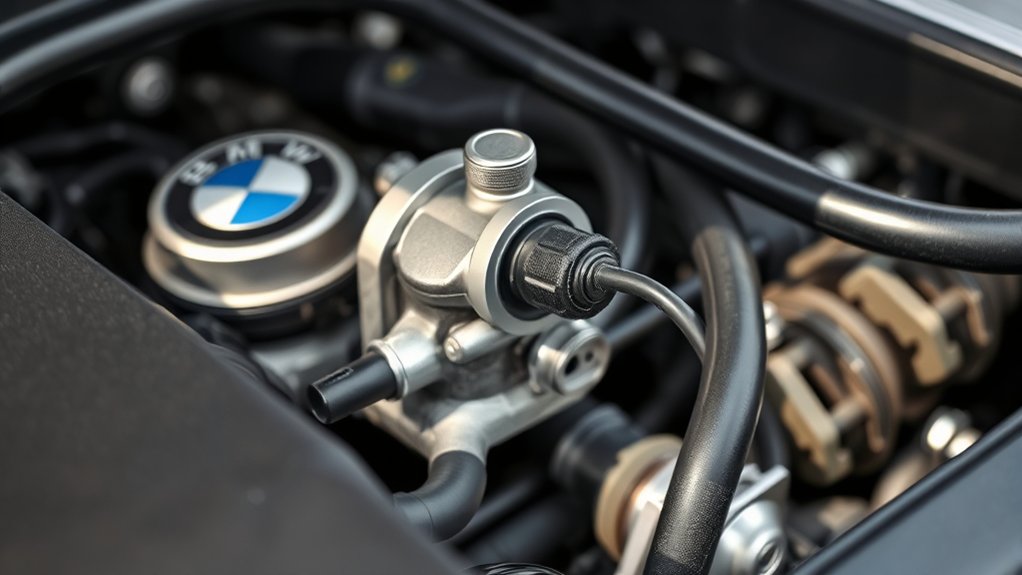
Do BMW DISA Valves Have a Vacuum Connection?
BMW DISA valves, especially modern ones, don’t have a vacuum connection. These valves are designed to optimize airflow within the intake manifold, improving engine performance and efficiency.
Instead of vacuum hoses, they use electric actuators controlled by your car’s engine management system to adjust airflow precisely. This means you won’t find vacuum hoses linked to these valves, ensuring smoother operation and less maintenance.
The electric control allows for more accurate adjustments compared to older vacuum-operated systems. If your BMW’s DISA valve malfunctions, it can cause rough idling and reduced power.
Understanding how these valves work and how to spot issues is important for maintaining your BMW’s performance. Keep exploring for more details on diagnosing and fixing DISA valve problems.
Key Takeaways
- Electric BMW DISA valves do not have a vacuum connection and operate solely through electrical signals from the ECU.
- Vacuum DISA valves use engine vacuum to mechanically shift an internal flap for airflow control.
- Modern BMWs primarily use electric DISA valves, eliminating vacuum line dependency.
- Vacuum hoses are unrelated to the functioning of electric DISA valves in BMW engines.
- Electric DISA valves provide more precise control without relying on vacuum pressure, reducing maintenance needs.
What Is a BMW DISA Valve and What Does It Do?
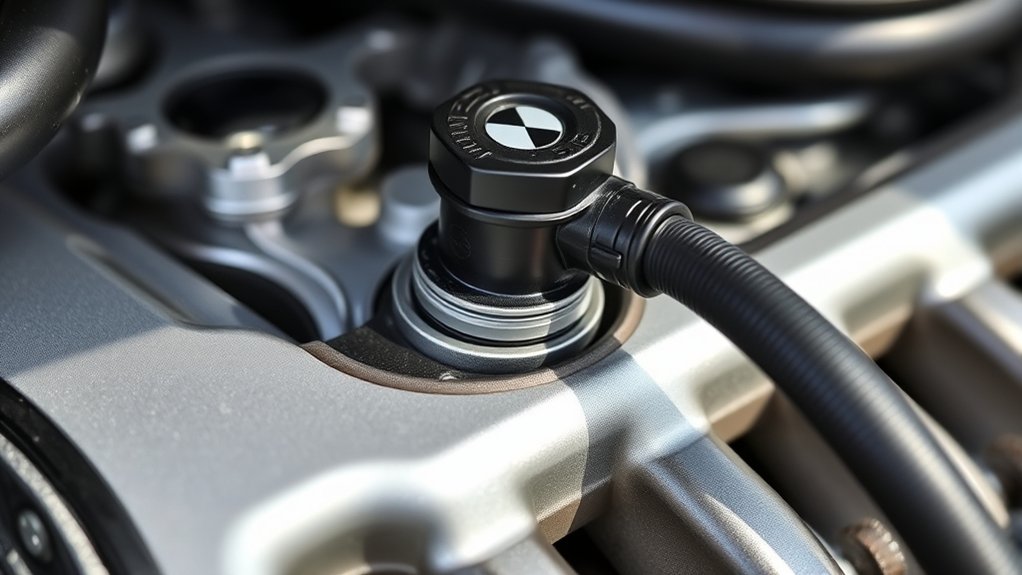
What exactly is a BMW DISA valve, and why should you care about it? The DISA valve, short for “Differentiated Intake System Actuator,” controls the airflow inside your BMW’s intake manifold. It adjusts the path air takes before entering the engine, switching between different channels to optimize airflow based on driving conditions.
This adjustment helps balance torque and power, ensuring your engine runs smoothly at various speeds. You’ll find the DISA valve acting as a key component in managing how your engine breathes, influencing efficiency and responsiveness. If the valve malfunctions, it can lead to rough idling or decreased performance.
Understanding what it does helps you recognize why maintenance matters and why keeping the DISA valve in good shape is vital for your BMW’s overall health.
How the BMW DISA Valve Improves Engine Performance
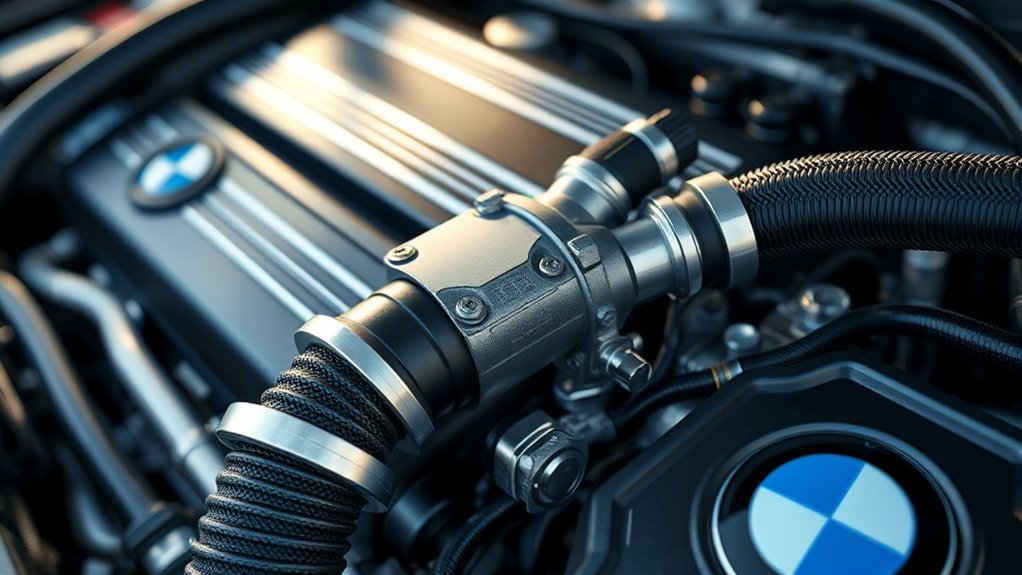
You’ll notice the BMW DISA valve optimizes airflow dynamics to boost engine efficiency. It also enhances torque delivery, giving you smoother acceleration when you need it most.
Plus, it helps reduce engine emissions, making your ride cleaner and more eco-friendly.
Optimizing Airflow Dynamics
How does the BMW DISA valve enhance your engine’s performance? It improves airflow dynamics by adjusting the intake manifold’s geometry, ensuring your engine breathes efficiently across different RPM ranges. This adjustment balances air velocity and volume, improving combustion and power delivery.
You’ll notice smoother shifts and better throttle response because the DISA valve directs airflow to match engine demands precisely.
Here’s how it enhances airflow dynamics:
- Alters intake runner length to suit engine speed
- Maintains ideal air velocity for efficient combustion
- Reduces turbulence for smoother airflow
- Enables variable intake geometry for improved engine breathing
Enhancing Torque Delivery
By optimizing airflow dynamics, the BMW DISA valve directly impacts your engine’s torque delivery. It adjusts the intake manifold’s runner length to match engine speed, ensuring ideal air velocity and mixture. At low RPMs, the valve directs airflow through a longer path, boosting low-end torque by improving cylinder filling.
As RPMs climb, it switches to a shorter path, allowing more air for increased power at higher speeds. This seamless changeover enhances throttle response and smooths power curves, so you feel stronger acceleration without lag. The DISA valve’s precise control helps your engine operate efficiently across various driving conditions.
This gives you better performance whether you’re cruising or pushing hard. It’s a clever design that lets your BMW deliver robust torque exactly when you need it.
Reducing Engine Emissions
Although it focuses on boosting performance, the BMW DISA valve also plays a crucial role in reducing engine emissions. By enhancing airflow within the intake manifold, it helps your engine run cleaner and more efficiently. The DISA valve adjusts the air path to guarantee complete combustion, which lowers harmful exhaust gases.
This means you get better fuel economy and reduced pollutants.
Here’s how it helps reduce emissions:
- Improves air-fuel mixture consistency
- Enhances combustion efficiency
- Reduces unburned hydrocarbons
- Supports essential catalytic converter function
Does the BMW DISA Valve Have a Vacuum Connection?
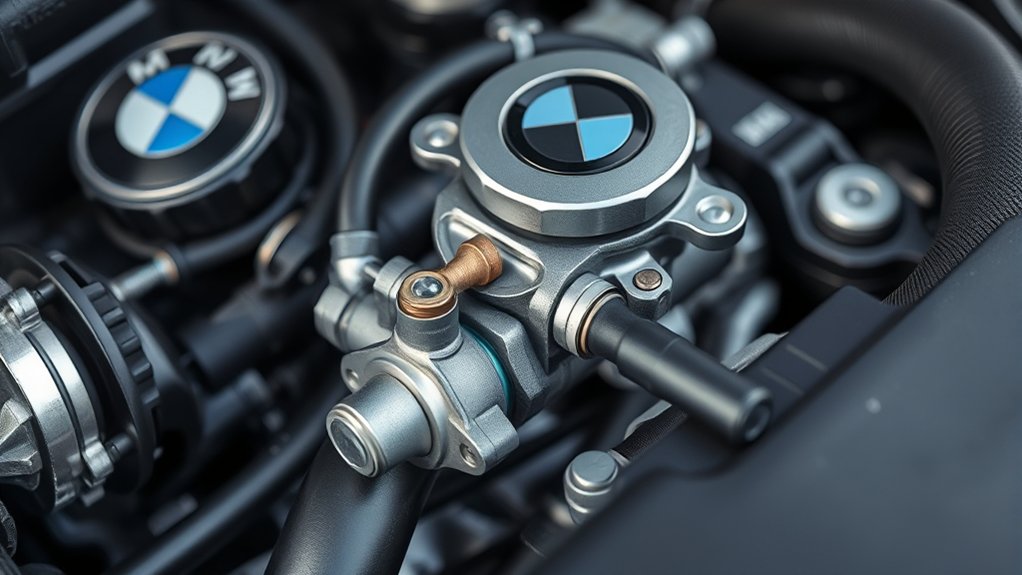
Does the BMW DISA valve rely on a vacuum connection to function properly? No, it doesn’t. Unlike some other engine components, the DISA valve operates using an electric motor or actuator instead of vacuum pressure.
This design provides more precise control over the intake manifold’s airflow, enhancing performance and efficiency.
Here’s a quick comparison to help you understand:
| Feature | Vacuum-Operated Valve | BMW DISA Valve |
|---|---|---|
| Control Method | Vacuum pressure | Electric actuator |
| Response Time | Slower | Faster |
| Precision | Limited | High |
| Maintenance | Frequent vacuum checks | Less frequent |
| Common Issues | Vacuum leaks | Electrical faults |
Knowing this helps you troubleshoot and maintain your BMW’s intake system better.
How the BMW DISA Valve Works Without a Vacuum Line
You might wonder how the DISA valve operates without a vacuum line. It uses an electric actuator to control the flap inside the intake manifold precisely. This vacuum-free design lets your engine adjust airflow efficiently for better performance.
DISA Valve Operation Mechanism
Because the BMW DISA valve doesn’t rely on a vacuum line, it uses an electric motor to control the flap inside the intake manifold. This motor receives signals from the engine control unit (ECU), adjusting the flap position based on engine speed and load. When you start the engine, the motor positions the flap to maximize airflow, enhancing torque and efficiency.
As conditions change, the motor continuously fine-tunes the flap angle for ideal performance.
Here’s how the operation mechanism works:
- The ECU commands the electric motor to rotate the flap.
- The flap changes the air path length in the intake manifold.
- Sensors provide feedback to the ECU for precise flap positioning.
- The motor’s action improves power delivery and fuel efficiency.
You get smooth engine response without vacuum dependency.
Vacuum-Free Actuation Explained
How exactly does the BMW DISA valve operate without a vacuum line? Instead of relying on vacuum pressure, the DISA valve uses an electric motor or actuator to control its position. When you start the engine, the ECU sends signals to this motor, which adjusts the valve’s flap inside the intake manifold.
This adjustment optimizes airflow and improves engine performance across different RPM ranges. Since the system depends on electrical control rather than vacuum, you won’t find any vacuum hoses connected to the DISA valve. This design offers more precise control and eliminates issues related to vacuum leaks.
Common Misconceptions About BMW DISA Valves and Vacuum Lines
Many BMW owners misunderstand how DISA valves and their vacuum connections function, leading to unnecessary repairs or overlooked issues. You might think the DISA valve uses vacuum lines for operation, but it actually relies on an electric motor. This misconception causes some to check or replace vacuum hoses unnecessarily.
Also, confusing the DISA valve with other vacuum-operated components can lead you astray. Remember, the DISA valve’s actuator doesn’t need vacuum, so a leaking or disconnected vacuum line won’t directly affect it.
- DISA valves are electrically controlled, not vacuum-operated
- Vacuum lines near the DISA valve serve other engine systems
- Checking vacuum hoses won’t fix a faulty DISA valve
- Don’t confuse DISA valve issues with vacuum leak symptoms
Symptoms of a Failing BMW DISA Valve
When your BMW’s DISA valve starts failing, you’ll notice changes in engine performance that can’t be ignored. You might experience rough idling or hesitation during acceleration as the valve struggles to regulate airflow properly. Your engine could feel less responsive, and you may detect a drop in power, especially at mid-range RPMs.
Sometimes, you’ll hear unusual noises from the intake manifold, like clicking or rattling, indicating the valve’s internal components are worn or stuck. Additionally, your check engine light may come on, signaling trouble with the valve’s operation. These symptoms often lead to reduced fuel efficiency and increased emissions.
Recognizing these signs early helps you avoid more severe engine issues and keeps your BMW running smoothly.
How to Test If Your BMW DISA Valve Is Working
If you’ve noticed signs like rough idling or unusual noises, it’s a good idea to check whether your DISA valve is functioning properly. Start by visually inspecting the valve for cracks or damage.
Next, listen for any unusual sounds when the engine is running, which could indicate a stuck or faulty valve. You can also perform a manual test by gently moving the valve flap to see if it moves freely.
Finally, use a diagnostic tool to check for error codes related to the DISA valve.
Here’s a quick checklist to test your BMW DISA valve:
- Inspect the valve for physical damage
- Listen for abnormal noises during engine operation
- Manually check the flap’s movement
- Scan for diagnostic trouble codes (DTCs)
Vacuum vs. Electric BMW DISA Valves: What’s the Difference?
You’ll notice that vacuum and electric DISA valves operate differently to control airflow in your BMW’s intake manifold. Vacuum DISA valves rely on engine vacuum to shift their position, while electric DISA valves use a motor for more precise control.
Understanding these differences helps you diagnose issues and choose the right replacement.
Vacuum DISA Valve Operation
How do vacuum DISA valves differ from their electric counterparts in BMW engines? Vacuum DISA valves rely on engine vacuum to operate the internal flap that adjusts airflow within the intake manifold. You’ll find that these valves have a direct vacuum line connected to them, which controls the flap’s position based on engine load and RPM.
When vacuum pressure changes, the valve moves, optimizing airflow for performance or efficiency.
Key points about vacuum DISA valve operation:
- Utilizes engine vacuum to control flap movement
- Mechanical response to vacuum changes, no electrical input
- Adjusts intake manifold runner length dynamically
- Vacuum line connection is essential for proper function.
This system is simpler but depends entirely on consistent vacuum supply to work correctly.
Electric DISA Valve Function
Although vacuum DISA valves depend on engine vacuum to adjust airflow, electric DISA valves use an actuator controlled by the engine management system to position the internal flap. This means you get more precise control over airflow, improving performance and efficiency.
Unlike vacuum valves, electric DISA valves don’t require a vacuum connection, reducing potential leak points.
Here’s a quick comparison:
| Feature | Electric DISA Valve |
|---|---|
| Control Method | Engine management system actuator |
| Vacuum Connection | None |
| Precision | High – real-time adjustments possible |
Step-by-Step BMW DISA Valve Replacement Guide
Before diving into the replacement process, gather all necessary tools and guarantee your engine is cool to prevent injuries. Start by disconnecting the negative battery terminal to avoid electrical issues. Then, remove the intake manifold cover to access the DISA valve.
Ensure your engine is cool and disconnect the negative battery terminal before accessing the DISA valve.
Unscrew the valve bolts carefully, noting their positions. Next, detach the old valve and replace it with the new one, ensuring the gasket sits properly to prevent leaks. Finally, reassemble everything in reverse order and reconnect the battery.
Here’s a quick checklist for your replacement:
- Negative battery terminal wrench
- Screwdrivers or socket set
- Replacement DISA valve with gasket
- Clean rag for wiping surfaces
Following these steps will help you swap your BMW DISA valve efficiently and safely.
Maintenance Tips to Extend Your BMW DISA Valve’s Life
To keep your BMW DISA valve functioning smoothly, you’ll want to perform regular maintenance and inspections. Start by checking for any vacuum leaks or cracks in the valve housing, as these can cause performance issues over time. Clean the valve periodically to remove carbon buildup and dirt, using a suitable cleaner designed for engine components.
Avoid using harsh chemicals that might damage the internal parts. Make sure the electrical connections are secure and free from corrosion. Also, inspect the actuator’s movement by manually operating it if possible, ensuring it moves freely without sticking.
Finally, follow your vehicle’s service schedule and replace the DISA valve at recommended intervals to prevent unexpected failures. These steps will help you extend your DISA valve’s lifespan effectively.
How a Faulty BMW DISA Valve Affects Engine Efficiency
When your BMW’s DISA valve malfunctions, you’ll notice a drop in engine efficiency that can affect performance and fuel economy. The DISA valve regulates airflow in the intake manifold, maximizing engine breathing at different RPMs. If it sticks or fails, your engine can’t get the right air mixture, causing issues such as rough idling and reduced power.
A malfunctioning DISA valve disrupts airflow, leading to rough idling and reduced engine power.
You might also experience increased fuel consumption and higher emissions. Essentially, your engine struggles to perform smoothly and efficiently.
Here’s how a faulty DISA valve affects your engine:
- Irregular air intake disrupts combustion balance
- Reduced torque and acceleration response
- Engine misfires or hesitation during acceleration
- Higher fuel usage due to inefficient air-fuel mix
Addressing this promptly helps maintain your BMW’s ideal engine performance.
When to Consult a Professional About BMW DISA Valve Issues
Wondering if your BMW’s DISA valve issues need professional attention? If you notice persistent rough idling, loss of power, or unusual noises despite basic checks, it’s time to see a mechanic. DIY fixes might not address internal valve damage or electrical failures.
Also, if your check engine light stays on after replacing the valve, a professional diagnostic can pinpoint the exact problem. Since the DISA valve directly impacts engine performance, ignoring symptoms can lead to more expensive repairs.
A certified BMW technician has the tools and expertise to test vacuum connections, electrical components, and valve operation thoroughly. Don’t wait—consult a professional early to keep your BMW running smoothly and avoid unnecessary damage.
Frequently Asked Questions
What BMW Models Commonly Use DISA Valves?
You’ll commonly find DISA valves in BMW models like the E46 3 Series, E39 5 Series, and E53 X5. These valves help optimize airflow for better performance and efficiency in many inline-six engines.
The DISA valve plays a crucial role in adjusting the intake manifold’s runner length. This adjustment enhances torque at lower RPMs while maintaining power at higher RPMs.
Models equipped with inline-six engines frequently benefit from this technology. It’s a key component in BMW’s approach to balancing performance and fuel economy.
Can DISA Valve Issues Trigger a Check Engine Light?
Yes, DISA valve issues can trigger your check engine light. When it malfunctions, your engine’s performance suffers, causing error codes that the ECU detects, which then turns on the warning light to alert you.
Are DISA Valves Covered Under BMW Warranties?
You might expect DISA valves to be covered, but it depends. If your BMW is still under the original warranty or an extended plan, you’re likely protected. Otherwise, repairs could be on you.
Always check your specific terms!
How Much Does a Typical DISA Valve Replacement Cost?
You’ll typically pay between $300 and $600 to replace a BMW DISA valve, including parts and labor. Prices vary by model and location, so getting a detailed quote from your mechanic is always a smart move.
Can You Drive a BMW Safely With a Faulty DISA Valve?
You can drive your BMW with a faulty DISA valve, but you shouldn’t. It may cause rough idling, reduced power, and poor fuel economy.
Fixing it promptly keeps your car running smoothly and safely.
Conclusion
Now that you know a BMW DISA valve doesn’t have a vacuum connection, you can avoid chasing ghosts under your hood like it’s the Wild West. This clever part adjusts airflow mechanically, improving your engine’s performance without any vacuum lines. Keep it well-maintained to guarantee smooth rides ahead.
If you spot issues, don’t hesitate to get a pro involved—your BMW deserves modern care, not an old-timey quick fix! Understanding that the BMW DISA valve operates without a vacuum connection is key to proper diagnosis and maintenance. This knowledge helps ensure your BMW runs efficiently and reliably.