How to Remove Baking Soda From Mattress Without a Vacuum
To remove baking soda from your mattress without a vacuum, it’s important to use gentle and effective methods that protect the fabric while thoroughly cleaning. Baking soda is a common cleaning agent for mattresses, but without a vacuum, removing it can be tricky.
Fortunately, there are simple alternatives to get rid of baking soda residue and keep your mattress fresh.
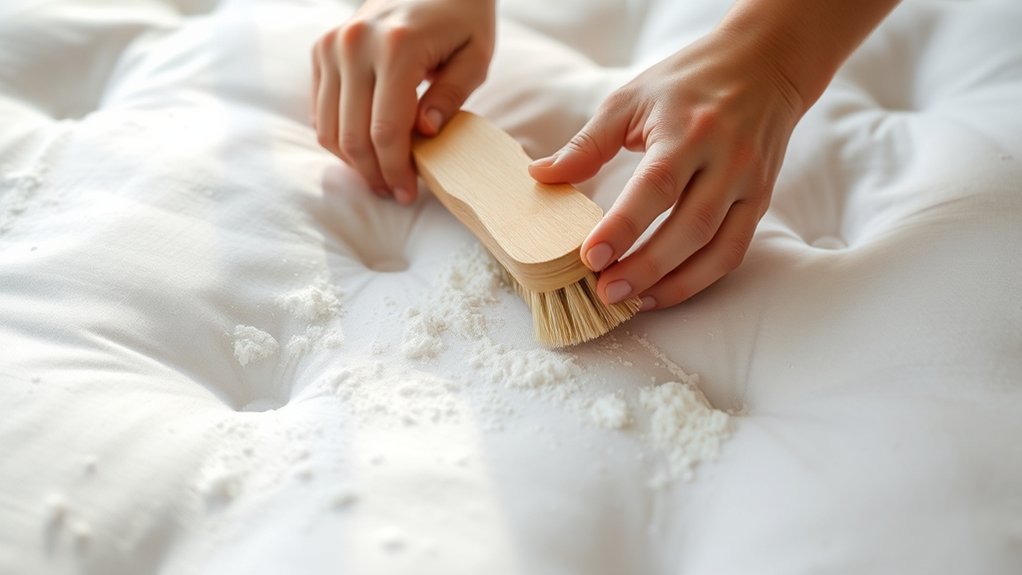
Start by gently shaking the mattress to loosen powder. Use a soft-bristle broom with light, one-directional strokes to sweep away larger particles.
Then, press sticky tape or a lint roller onto small, stubborn spots to lift fine powder without damaging fabric.
Finish with a damp cloth to pick up any residue, making sure not to soak the mattress. Keep the mattress well-ventilated to dry thoroughly.
For more tips on careful cleaning, you can explore additional methods.
Key Takeaways
- Gently shake the mattress to loosen and dislodge baking soda powder without spreading it further.
- Use a damp, clean cloth to carefully lift baking soda residue in small sections, avoiding soaking the mattress.
- Sweep the mattress surface with a soft-bristle broom using gentle, short strokes to remove baking soda effectively.
- Press strong adhesive tape or a lint roller onto affected areas to pick up fine baking soda particles.
- Finish by blotting any remaining residue with a slightly damp cloth and allow the mattress to air dry thoroughly.
How to Remove Baking Soda From Your Mattress Without a Vacuum
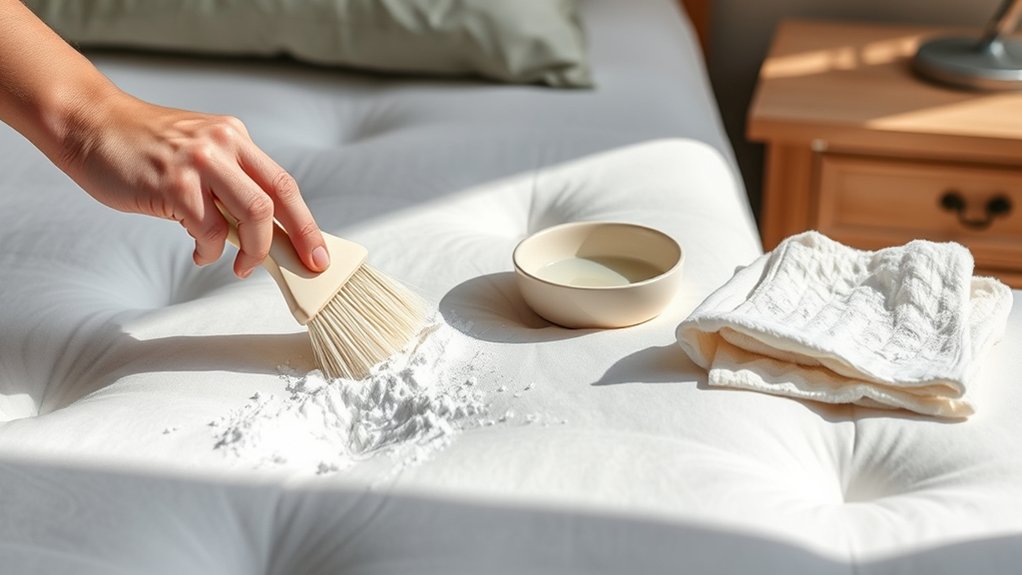
Although vacuums are the easiest way to remove baking soda from your mattress, you can still get the job done without one. Start by gently shaking the mattress to loosen the baking soda. Then, use a soft brush or a broom with soft bristles to sweep the powder off the surface.
Be careful not to press too hard, as this could push the baking soda deeper into the fabric. Next, grab a microfiber cloth or a damp sponge and blot the area to pick up any remaining residue. Avoid rubbing, which might spread the powder further.
Finally, let the mattress air out for a while to make sure it’s completely dry and fresh. With patience, you’ll remove the baking soda effectively.
How to Prep Your Mattress for Baking Soda Removal
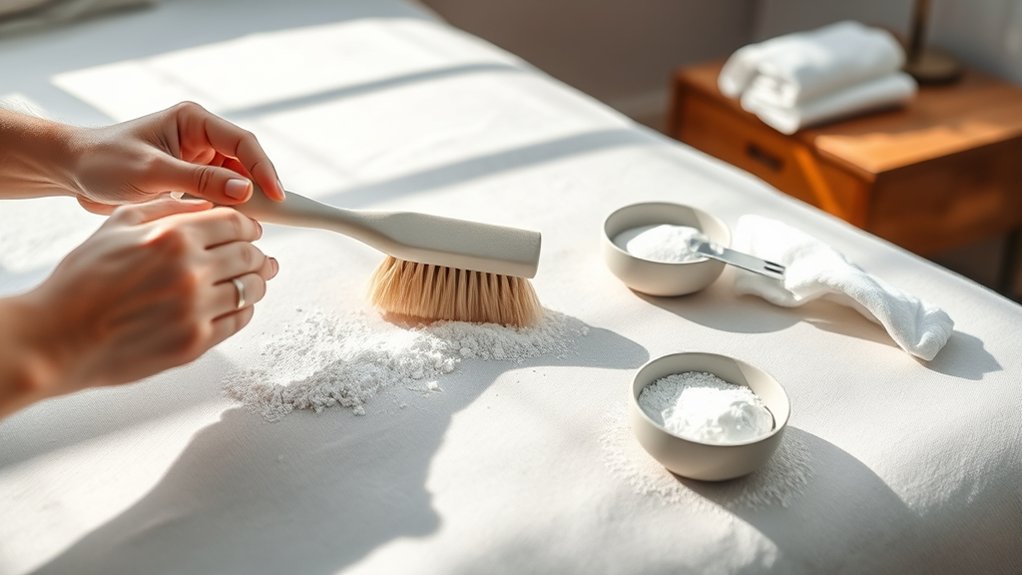
Before you start removing baking soda from your mattress, you’ll want to prepare the area and your mattress properly to make the process easier and more effective. Begin by clearing the surrounding space to avoid spreading baking soda elsewhere. Remove all bedding, pillows, and mattress covers to expose the surface fully.
If possible, open windows or turn on a fan to improve ventilation, which helps keep dust from settling back onto the mattress. Lightly mist the mattress with water using a spray bottle to reduce airborne particles during cleaning, but avoid soaking it. Finally, gather your cleaning tools like a hand brush or dustpan within reach.
Taking these steps guarantees you’re ready to tackle baking soda removal efficiently without making a mess.
Sweep Baking Soda Off Your Mattress With a Hand Brush
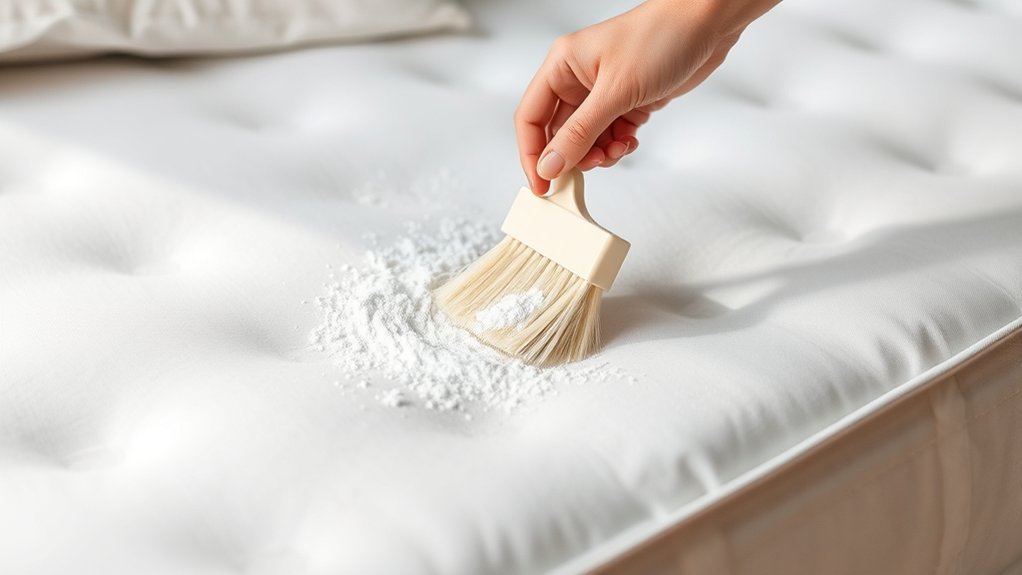
Choose a soft-bristled hand brush to avoid damaging your mattress while sweeping off the baking soda. Use gentle, short strokes to lift the powder without pressing it deeper into the fabric.
Taking care with your technique helps keep your mattress clean and intact.
Choosing The Right Brush
Selecting the right brush makes sweeping baking soda off your mattress much easier and more effective. You want a brush with soft to medium bristles that won’t damage your mattress fabric but can still gather the powder efficiently. Natural bristles, like those from boar or horsehair, are gentle and work well.
Avoid stiff or plastic bristles because they might scratch or push the baking soda deeper into the fibers. Also, choose a brush with a comfortable handle that gives you good control, so you can maneuver easily across the mattress surface. A hand brush designed for delicate fabrics or upholstery often fits these requirements perfectly.
Picking the right brush upfront helps you remove baking soda quickly without harming your mattress.
Gentle Sweeping Techniques
Once you have the right brush in hand, you can start gently sweeping the baking soda off your mattress. Use soft, controlled strokes to avoid pushing the powder deeper into the fabric.
Work in small sections, moving baking soda toward the mattress edges for easy collection. Keep the brush at a slight angle to lift particles effectively without agitation.
| Step | Action |
|---|---|
| 1 | Hold brush lightly |
| 2 | Sweep in one direction |
| 3 | Cover small areas thoroughly |
| 4 | Avoid pressing hard |
| 5 | Gather baking soda near edges |
These gentle sweeping techniques help you remove baking soda efficiently, keeping your mattress clean and fresh without a vacuum.
Avoiding Mattress Damage
While sweeping baking soda off your mattress with a hand brush, you need to be careful not to damage the fabric or padding. Use gentle, short strokes instead of vigorous scrubbing to prevent pushing the powder deeper or tearing the material. Choose a brush with soft bristles designed for delicate surfaces.
Avoid applying too much pressure, which can compress the mattress padding and shorten its lifespan. Work in small sections, brushing away the baking soda gradually to maintain control and minimize disturbance. If you notice any resistance or fabric pulling, stop and adjust your technique.
Taking these precautions helps keep your mattress in good condition while effectively removing baking soda without a vacuum.
Pick Up Fine Baking Soda With Sticky Tape
To pick up fine baking soda, grab some sticky tape with a strong adhesive that won’t leave residue behind. Press the tape gently onto the mattress surface and lift it to collect the powder without pushing it deeper.
If any sticky marks remain, use a damp cloth to carefully wipe them away.
Choosing The Right Tape
Although vacuuming removes most of the baking soda from your mattress, you’ll need a sticky tape to pick up the fine powder left behind. Choosing the right tape is vital to guarantee it grabs the baking soda without damaging your mattress fabric. Look for tapes with strong adhesion but gentle backing.
Here’s a quick guide to help you choose:
| Tape Type | Best For |
|---|---|
| Packing Tape | Strong stick, may leave residue |
| Masking Tape | Gentle, less sticky |
| Duct Tape | Very sticky, use cautiously |
Packing tape works well but might leave sticky marks. Masking tape is gentler on fabric but may require multiple passes. Duct tape grabs everything but can be too harsh for delicate materials.
Choose based on your mattress type and the tape’s stickiness.
Effective Taping Techniques
Since fine baking soda particles often cling stubbornly to mattress fibers, you’ll want to use precise taping techniques to lift them effectively. Begin by cutting a piece of sticky tape about 6-8 inches long. Fold it over so the sticky sides face outward, creating a double-sided sticky surface.
Press it gently but firmly onto the baking soda-covered areas, allowing the adhesive to grab the particles. Avoid pressing too hard, which can push the powder deeper into the fabric. Lift the tape slowly to pull away the trapped baking soda.
Repeat this process with fresh tape pieces until you see no more powder sticking. Focus on small sections at a time for thorough cleaning, ensuring you don’t miss stubborn spots hidden in the mattress fibers.
Removing Residue Carefully
Once you’ve lifted most of the baking soda using tape, some fine residue may still cling stubbornly to the mattress fibers. To tackle this, take a fresh strip of sticky tape and press it gently onto the affected areas. Peel it off carefully, lifting away the tiny particles without pushing them deeper.
Repeat this process, using new tape as needed, until the residue is gone. Avoid pressing too hard, as that can embed the powder further. If you notice any stubborn spots, try dabbing instead of dragging the tape across the surface.
This targeted approach helps pick up fine baking soda without damaging the mattress fabric. Taking your time here ensures a thorough clean without the need for a vacuum.
Remove Baking Soda From Mattress Fabric Using a Lint Roller
A lint roller can quickly lift baking soda particles from your mattress fabric without causing damage. Simply roll it over the affected areas, and the sticky sheets will pick up loose powder. Replace sheets as needed to maintain effectiveness.
This method is gentle and works well on delicate fabrics.
| Step Number | Action | Tip |
|---|---|---|
| 1 | Peel off a fresh sheet | Use a new sheet for best grip |
| 2 | Roll over baking soda | Apply light pressure |
| 3 | Dispose of used sheet | Prevent re-depositing |
| 4 | Repeat until clean | Focus on heavily covered areas |
Using a lint roller avoids fabric wear and cleans without moisture.
Lift Baking Soda Residue From Your Mattress With a Damp Cloth
Although a lint roller removes most of the baking soda, some fine residue may still cling to your mattress. To tackle this, lightly dampen a clean cloth with water—avoid soaking it. Gently press and lift the cloth over the affected areas, allowing it to pick up the remaining powder without pushing it deeper into the fabric.
Rinse and wring the cloth frequently to prevent spreading the residue. Work in small sections to maintain control and avoid over-wetting the mattress, which can lead to dampness and potential mildew. Afterward, use a dry towel to blot any excess moisture.
This method helps you efficiently lift leftover baking soda without a vacuum, leaving your mattress cleaner and ready for the next cleaning step.
Clean Large Mattress Areas With a Soft-Bristle Broom
When cleaning large mattress areas, choose a soft-bristle broom to avoid damaging the fabric. Use gentle sweeping motions to lift the baking soda without pushing it deeper. This careful approach helps protect your mattress while effectively removing residue.
Choosing The Right Broom
How do you guarantee effective removal of baking soda from your mattress without causing damage? Choosing the right broom is key. A soft-bristle broom gently sweeps away powder without harming delicate mattress fabrics.
Avoid stiff bristles that can snag or embed baking soda deeper. Also, consider broom size for coverage and handle comfort to reduce strain.
| Feature | Why It Matters |
|---|---|
| Soft Bristles | Prevent fabric damage |
| Wide Head | Covers large areas efficiently |
| Lightweight | Easier to maneuver |
| Adjustable Handle | Customizable for comfort |
| Durable Material | Long-lasting use |
Pick a broom that balances these features to assure you clean thoroughly and safely.
Gentle Sweeping Techniques
Selecting the right soft-bristle broom sets you up to clean your mattress effectively. Begin by gently sweeping in one direction to gather the baking soda without pushing it deeper into the fabric. Use light, deliberate strokes to avoid disturbing the mattress fibers.
Focus on small sections at a time, moving systematically to cover the entire surface. Avoid pressing too hard — your goal is to lift and collect the powder, not grind it in. After sweeping, gather the baking soda into a dustpan or onto a cloth for easy disposal.
Repeat if necessary, making sure you don’t miss any spots. This method guarantees you remove baking soda efficiently while keeping your mattress clean and intact.
Avoiding Mattress Damage
Although it might be tempting to rush, you should clean large mattress areas with a soft-bristle broom carefully to prevent damage. Use gentle, smooth strokes to avoid pushing baking soda deeper into the fabric or causing tears. Avoid applying too much pressure, which can weaken the mattress fibers over time.
Instead, work slowly and methodically, focusing on sections at a time. Make sure the broom is clean and free of debris that could scratch or stain the mattress. If you notice any stains or weak spots, skip those areas or handle them with extra care.
Taking these precautions will help you remove baking soda effectively without compromising your mattress’s integrity or comfort.
How to Air Out Your Mattress to Help Remove Baking Soda
Once you’ve vacuumed up the baking soda, letting your mattress air out is essential to remove any lingering powder and moisture. Start by placing your mattress in a well-ventilated room or near an open window. Fresh air helps lift any remaining baking soda particles and dries out damp spots, preventing mold or odors.
If possible, position a fan to circulate air across the mattress surface for faster drying. You can also stand the mattress upright to expose both sides to airflow. Allow your mattress to ventilate for several hours, preferably a full day, to ensure thorough drying.
This step refreshes your mattress and prepares it for regular use without leftover baking soda residue.
How to Spot-Clean Mattress Stains After Baking Soda Removal
After airing out your mattress to remove baking soda residue, you might notice some stains that need extra attention. Start by mixing a mild detergent with warm water. Dampen a clean cloth with the solution and gently blot the stained areas—avoid rubbing, as this can spread the stain.
For tougher spots, try a mixture of equal parts white vinegar and water; apply it lightly and blot again. After treating the stains, use a separate clean cloth dampened with plain water to remove any cleaning solution.
Finally, let the mattress air dry completely before putting on bedding. This method helps lift stains without soaking your mattress, preventing mold or mildew. Remember, spot-clean only the stained areas to avoid saturating the mattress unnecessarily.
How to Prevent Baking Soda Build-Up on Your Mattress
To keep your mattress fresh without dealing with baking soda build-up, you’ll want to apply it sparingly and evenly. Instead of dumping a large amount, sprinkle a thin layer over the surface. This helps the baking soda absorb odors without settling deeply into the fabric.
After letting it sit for 15-30 minutes, gently brush or shake off the excess before making your bed. Using a mattress protector can also minimize direct contact, making cleanup easier. Additionally, avoid frequent or daily applications—once a month or as needed is sufficient.
Regularly airing out your mattress and keeping it dry reduces odor buildup, so you won’t need to rely heavily on baking soda. These steps prevent residue buildup and keep your mattress clean and fresh.
Frequently Asked Questions
Is Baking Soda Safe to Use on All Mattress Types?
Yes, baking soda is generally safe for most mattress types, but you should test a small area first.
Avoid using it on memory foam or latex mattresses if you’re concerned about moisture absorption or residue buildup.
Can Baking Soda Remove Odors From Other Furniture?
Think of baking soda as a gentle rain washing away stubborn dirt. Yes, you can sprinkle it on your couches or chairs to absorb odors, then brush or shake it off, leaving freshness behind without any harsh chemicals.
How Long Should Baking Soda Sit on a Mattress Before Removal?
You should let baking soda sit on your mattress for at least 30 minutes to absorb odors and moisture effectively.
For stronger smells, leave it for up to a few hours before brushing or vacuuming it off.
Does Baking Soda Damage Mattress Memory Foam?
No, baking soda doesn’t damage memory foam mattresses. It’s gentle and safe to use for deodorizing and cleaning.
Just make sure you remove it thoroughly to avoid any residue that might affect the mattress’s feel or breathability.
Can I Use Baking Soda to Treat Bed Bug Infestations?
You can try baking soda to dry bed bugs, to absorb odors, and to freshen your mattress, but you shouldn’t rely on it to eliminate infestations.
Use professional treatments to effectively get rid of bed bugs.
Conclusion
Now that you’ve tackled removing baking soda without a vacuum, your mattress will feel fresh as a daisy. Remember, a little elbow grease goes a long way, so don’t rush the process.
Regularly airing out and spot-cleaning your mattress helps keep it in top shape, preventing build-up before it starts. With these simple steps, you’ll sleep soundly knowing your mattress is clean and cozy every night.
By mastering how to remove baking soda from a mattress without a vacuum, you ensure a fresher sleep environment. Consistent care and the right techniques make all the difference in maintaining mattress cleanliness and comfort.