10 Best Tips to Help You Vacuum Pack Lettuce
To vacuum pack lettuce effectively, choosing the right type and preparing it properly is essential. Firm varieties like Romaine work best because they hold up well during storage. Freshness and dryness are key factors to maintain crispness and flavor when vacuum sealing lettuce.
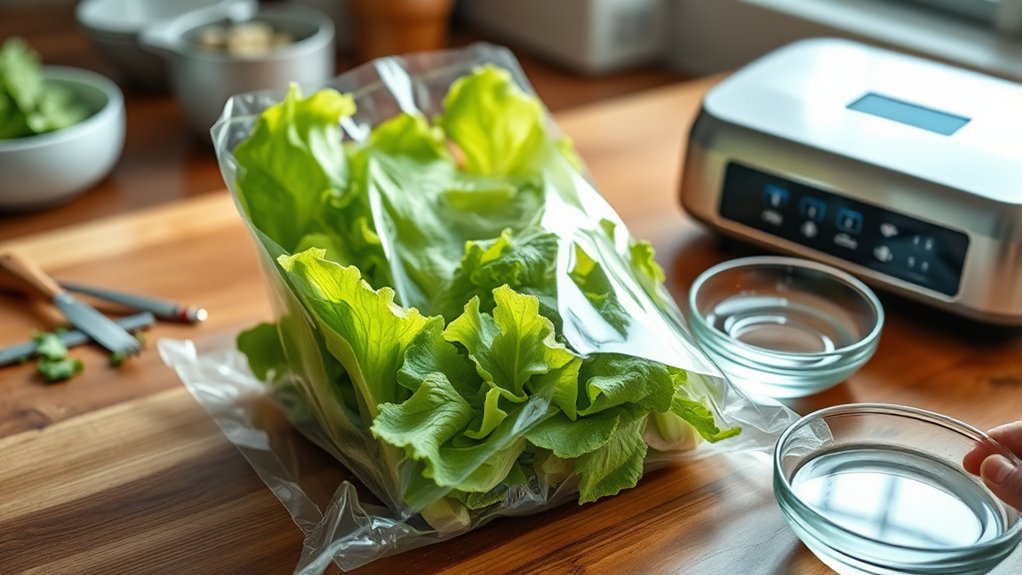
Start by washing the leaves thoroughly, then dry them completely using a spinner or towels. Pre-chill the leaves to help lock in freshness before packing. Use high-quality, size-appropriate vacuum bags to ensure an airtight seal without damaging the delicate leaves.
Opt for a sealer with gentle suction to avoid crushing the lettuce. Layer paper towels inside the bags to absorb excess moisture and keep the leaves crisp. Store the vacuum-packed lettuce flat in the coldest section of your refrigerator for optimal preservation.
Check seals regularly to maintain freshness and prevent spoilage. Following these tips will help you keep your lettuce fresher for longer and reduce food waste.
With practice, you’ll master the art of vacuum packing lettuce perfectly every time.
Key Takeaways
- Thoroughly dry lettuce using a salad spinner and paper towels before vacuum packing to prevent moisture-related spoilage and mold growth.
- Choose crisp, firm lettuce varieties like Romaine or Iceberg for better durability during vacuum sealing.
- Use vacuum sealers with adjustable suction to avoid crushing delicate leaves and maintain lettuce texture.
- Store vacuum-packed lettuce in the coldest fridge area, away from ethylene-producing fruits and strong odors.
- Regularly check vacuum bags for leaks or damage and reseal immediately to extend freshness and prevent spoilage.
Why Vacuum Pack Lettuce? Benefits and Basics
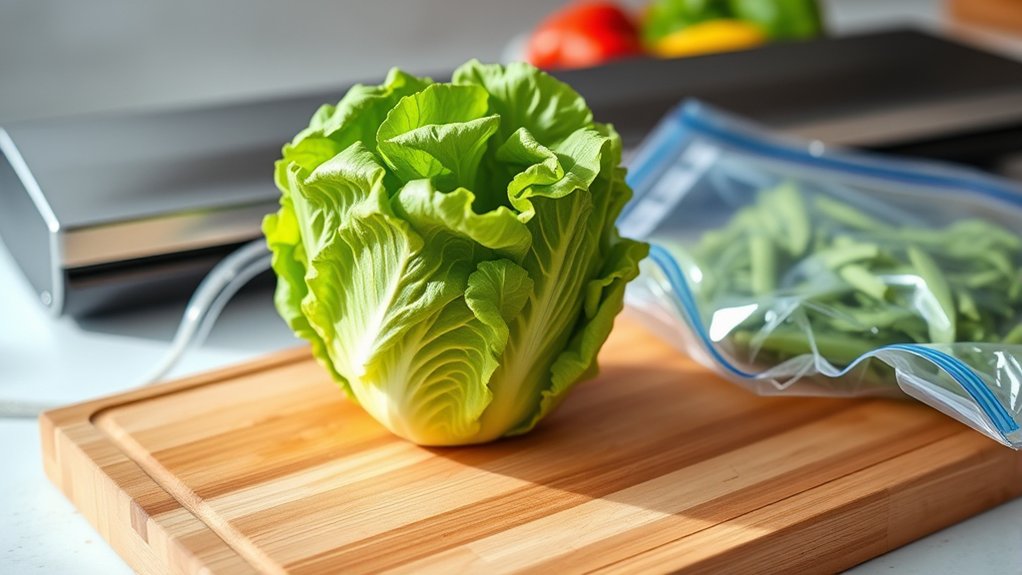
Why should you vacuum pack lettuce? Vacuum packing removes air and seals in freshness, which slows down spoilage and keeps your lettuce crisp longer. When you vacuum pack, you prevent oxidation and moisture loss, two common causes of wilted, brown leaves.
This method also reduces the risk of contamination by limiting exposure to bacteria and mold. You’ll save money by cutting down on food waste since your lettuce stays usable for more days. Plus, vacuum-packed lettuce takes up less space in your fridge, making storage more efficient.
It’s a simple step that preserves texture, color, and nutrients, so your salads always taste fresh. By understanding these benefits, you’ll appreciate why vacuum packing is a smart choice for extending your lettuce’s shelf life.
Choose the Right Lettuce for Vacuum Packing
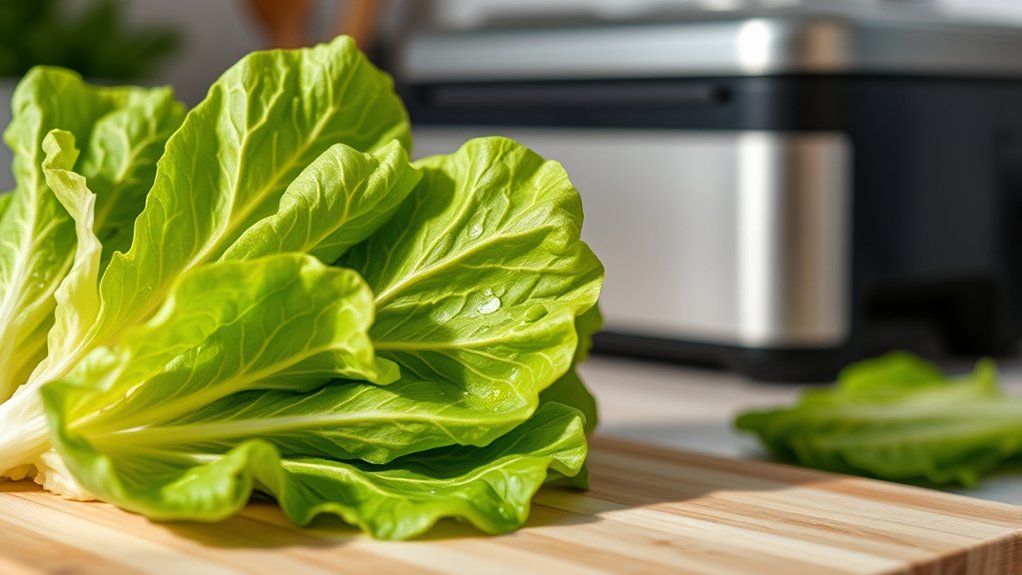
Knowing the benefits of vacuum packing sets the stage for selecting the best lettuce to store this way. You’ll want to choose crisp, firm varieties like Romaine, Butterhead, or Iceberg. These types hold up well under vacuum pressure and maintain their texture longer.
Avoid delicate lettuces such as leaf or mesclun mixes since they bruise easily and become limp after sealing. Also, pick fresh, unblemished heads without signs of wilting or browning. Make certain the lettuce is dry before vacuum packing because excess moisture can cause spoilage.
Pick the Right Vacuum Sealer and Bags for Lettuce
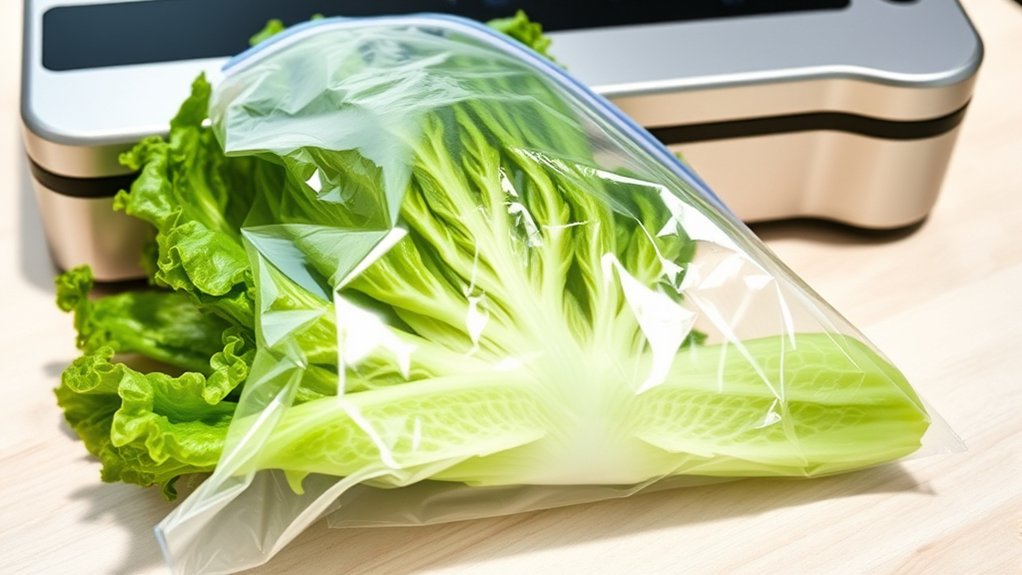
You’ll want to pick a vacuum sealer that works well with fresh produce like lettuce to keep it crisp. Choosing the right bag material is key—look for ones designed to prevent moisture buildup and crushing.
Also, make sure the bag size fits your lettuce without too much extra space or tightness.
Choosing Compatible Vacuum Sealers
When vacuum packing lettuce, selecting a compatible sealer and bags guarantees freshness and prevents wilting. You’ll want a vacuum sealer that offers gentle suction to avoid crushing the delicate leaves. Look for models with adjustable settings or a “pulse” function to control the vacuum strength.
Also, confirm the sealer works with the specific bag types you plan to use.
| Feature | Why It Matters | Recommended For |
|---|---|---|
| Adjustable Suction | Prevents damage to lettuce | Delicate leafy greens |
| Pulse Function | Allows controlled vacuuming | Avoids crushing produce |
| Bag Compatibility | Ensures airtight seal | Specific vacuum bag brands |
Choosing the right sealer will keep your lettuce crisp and fresh longer.
Selecting Suitable Bag Materials
How do you guarantee your lettuce stays fresh and crisp after vacuum packing? It starts with selecting the right bag materials. Go for bags made from high-quality, food-grade polyethylene or nylon; these materials prevent moisture loss and protect against air infiltration.
Avoid thin or low-quality bags that can easily puncture or tear, compromising freshness. Look for bags labeled “vacuum sealer compatible” to ensure a tight seal. Also, consider multi-layered bags—they offer better barrier protection, keeping your lettuce crisp longer.
If you plan to store lettuce in the freezer, pick freezer-safe bags that resist cracking at low temperatures. By choosing the right bags, you maintain the lettuce’s texture and flavor, making your vacuum packing efforts truly effective.
Considering Bag Size Options
Choosing the right bag materials sets the foundation, but selecting the proper bag size also plays a big role in keeping your lettuce fresh. You want a bag that’s just the right size — not too big, not too small. Oversized bags leave excess air inside, increasing the risk of spoilage.
Bags that are too small won’t seal properly or might crush the leaves, damaging their texture. Measure your lettuce portions before choosing bags, and opt for sizes that allow a little extra room for sealing without excess space. Also, check your vacuum sealer’s specifications to confirm compatibility with the bags you pick.
Using bags designed specifically for vegetables helps maintain freshness, so consider both size and material quality for the best results.
Wash and Dry Lettuce Thoroughly
You’ll want to wash your lettuce carefully to remove any dirt or bacteria that can spoil it faster. After washing, make sure to dry the leaves completely using a salad spinner or clean towels to prevent excess moisture.
Proper drying helps your vacuum sealer work better and keeps the lettuce fresh longer.
Importance of Clean Leaves
A crucial step before vacuum packing lettuce is ensuring the leaves are spotless and completely dry. Clean leaves help prevent bacteria growth and keep your lettuce fresh longer. If dirt or moisture remains, it can cause spoilage or affect the vacuum seal’s effectiveness.
By handling clean leaves, you reduce the risk of contamination and maintain the crisp texture you want.
Here’s why clean leaves matter:
- Remove soil, pesticides, and insects for safety
- Prevent mold and decay during storage
- Enhance the vacuum seal by avoiding moisture buildup
- Preserve the natural taste and crunch of lettuce
- Extend shelf life, reducing food waste
Take the time to clean and dry your lettuce thoroughly for the best vacuum packing results.
Effective Drying Techniques
Although washing lettuce is essential, drying it thoroughly is just as important to guarantee your vacuum pack stays fresh and crisp. Excess moisture can cause the leaves to wilt and spoil faster inside the bag.
To avoid this, use effective drying techniques like a salad spinner or clean kitchen towels. Pat the leaves gently, and make certain no water droplets remain. Proper drying helps maintain texture and flavor.
| Drying Method | Tips for Best Results |
|---|---|
| Salad Spinner | Use high speed, spin twice |
| Kitchen Towels | Blot gently, avoid rubbing |
| Air Dry on Rack | Spread leaves in single layer |
| Paper Towels | Replace if damp, use multiple |
| Clean Cloth Napkins | Soft fabric to prevent bruising |
Use Paper Towels to Absorb Excess Moisture
Since excess moisture can cause lettuce to wilt quickly, placing paper towels around the leaves before vacuum sealing helps absorb that dampness. You’ll want to gently pat the lettuce dry, then layer a few paper towels inside the vacuum bag. This simple step keeps your lettuce crisp by preventing sogginess and slowing decay.
Pat lettuce dry and add paper towels before vacuum sealing to keep it crisp and fresh longer.
When you use paper towels:
- Choose plain, unprinted paper towels to avoid chemicals.
- Don’t overstuff; just enough to soak moisture.
- Replace towels if they get too wet before sealing.
- Lay towels flat between lettuce layers for even absorption.
- Use fresh towels each time you pack to maintain freshness.
Cut Lettuce Into Manageable Portions
Keeping excess moisture in check sets the stage for longer-lasting lettuce, but how you prepare it before sealing matters just as much. Cutting your lettuce into manageable portions makes packing easier and helps maintain freshness. Instead of vacuum-packing a whole head, slice it into smaller, bite-sized pieces or leaves.
This way, you reduce the chance of bruising and make it easier to grab just what you need later. Smaller portions also allow the vacuum bag to conform better around the lettuce, minimizing air pockets that cause spoilage. Use a sharp knife or kitchen scissors to guarantee clean cuts, preventing unnecessary damage.
Pre-Chill Lettuce Before Packing
While many overlook this simple step, pre-chilling your lettuce before vacuum packing helps lock in freshness and crispness. Cooling the leaves slows down respiration and moisture loss, keeping your lettuce vibrant longer.
Before sealing, wash and dry the leaves thoroughly, then place them in the fridge for at least 30 minutes. This prepares the lettuce to withstand the vacuum process without wilting.
Here’s how to pre-chill effectively:
- Wash lettuce with cold water to remove dirt.
- Spin or pat dry to eliminate excess moisture.
- Spread leaves in a single layer on a tray.
- Refrigerate uncovered for 30-60 minutes.
- Pack immediately after chilling to maintain coolness.
Pre-chilling ensures your lettuce stays fresh, crisp, and ready for storage.
Avoid Crushing Lettuce When Vacuum Sealing
If you press too hard or pack too tightly, your lettuce will get crushed during vacuum sealing, ruining its texture and appearance. To prevent this, gently place the lettuce leaves in the bag without overcrowding. Leave enough space around the leaves so they maintain their natural shape.
Use a vacuum sealer with adjustable suction or a gentle mode if available, reducing the risk of crushing delicate leaves. Another trick is to wrap the lettuce loosely in a paper towel before sealing; it cushions the leaves and absorbs excess moisture. Avoid forcing the bag into the vacuum chamber—let the machine do the work.
Store Vacuum-Packed Lettuce Properly in the Fridge
Once you’ve vacuum-packed your lettuce, store it in the coldest part of your fridge to maintain freshness longer. This helps slow down spoilage and keeps the leaves crisp. Avoid placing the vacuum-sealed bags near the fridge door, where temperature fluctuates frequently.
Instead, opt for the back or bottom shelves. Also, keep the bags flat to prevent bruising and ensure even chilling.
Here are some quick tips for proper storage:
- Keep the vacuum-packed lettuce away from ethylene-producing fruits like apples.
- Store bags in a single layer to avoid crushing.
- Use a dedicated crisper drawer if possible.
- Maintain your fridge temperature between 32°F and 40°F (0°C to 4°C).
- Avoid storing lettuce near strong-smelling foods to prevent odor absorption.
Inspect Bags Regularly and Reseal to Extend Freshness
Because vacuum-sealed bags can develop small leaks or lose their seal over time, you should inspect them regularly to keep your lettuce fresh longer. Check for any signs of air inside the bag, moisture buildup, or damaged edges. If you notice a compromised seal, don’t hesitate to reseal the bag immediately.
Using your vacuum sealer again or a reliable heat sealer can restore the airtight environment, preventing spoilage. Regular inspections also help you spot potential issues before they affect your lettuce’s quality. By making this a routine, you’ll extend freshness and reduce waste.
Frequently Asked Questions
Can Vacuum-Packed Lettuce Be Frozen Without Losing Texture?
You can freeze vacuum-packed lettuce, but it’ll likely lose its crisp texture. Freezing causes ice crystals to form, making leaves limp when thawed.
Use frozen lettuce mainly for cooking, not fresh salads or wraps.
How Long Can Vacuum-Packed Lettuce Stay Fresh Outside the Fridge?
You shouldn’t leave vacuum-packed lettuce outside the fridge for more than two hours. Without refrigeration, bacteria multiply quickly, spoiling your lettuce and risking foodborne illness.
Is It Safe to Vacuum Pack Lettuce With Dressing or Seasoning?
You wouldn’t seal a letter soaked in ink, right? So, don’t vacuum pack lettuce with dressing or seasoning; it invites sogginess and spoilage.
Instead, keep them separate and combine just before you enjoy your crisp salad.
Can Vacuum Sealing Prevent Lettuce From Wilting After Opening?
Vacuum sealing can slow lettuce wilting after opening, but it won’t completely stop it.
You’ll still need to keep it cold and dry to maintain freshness and crunch for as long as possible.
What Are the Best Lettuce Varieties for Salads After Vacuum Packing?
You’ll want to choose crisp varieties like romaine, butterhead, and iceberg. These hold up well after vacuum packing, staying fresh and crunchy longer. Avoid delicate greens like arugula or spinach, which bruise easily.
Conclusion
If you don’t vacuum pack your lettuce the right way, you might as well say goodbye to crisp, fresh greens forever! Follow these tips, and you’ll keep your lettuce so fresh it’ll practically crunch louder than a thunderstorm. Imagine salads that stay vibrant for weeks—no more sad, wilted leaves!
Trust me, mastering vacuum packing will turn you into a lettuce-saving superhero in your kitchen. Don’t wait—your fridge (and taste buds) will thank you! By using these 10 best tips to help you vacuum pack lettuce, you’ll enjoy longer-lasting freshness and unbeatable crispness every time.