When Do You Put Softener in the Washing Machine in 7 Easy Steps
You put fabric softener into your washing machine during the rinse cycle, not the main wash. This timing ensures the softener works effectively to keep your clothes soft and fresh.
Using fabric softener correctly is key to maintaining your laundry’s quality and avoiding damage.
Use the designated dispenser if your machine has one; measure the right amount and avoid overfilling. If there’s no dispenser, add softener manually when rinsing starts or try alternatives like fabric softener balls or dryer sheets.
Keep your dispenser clean to prevent clogging.
Using softener properly keeps clothes soft and fresh—keep following, and you’ll get tips on avoiding common mistakes and troubleshooting issues.
Key Takeaways
- Add fabric softener during the rinse cycle, never during the main wash cycle, for best effectiveness.
- Use the washing machine’s designated softener dispenser to ensure correct timing and release.
- If no dispenser is available, manually pour diluted softener at the start of the rinse cycle.
- Measure the recommended amount based on load size and avoid overfilling the dispenser.
- Regularly clean the softener compartment to prevent clogs and ensure proper dispensing.
When to Add Fabric Softener in the Wash?
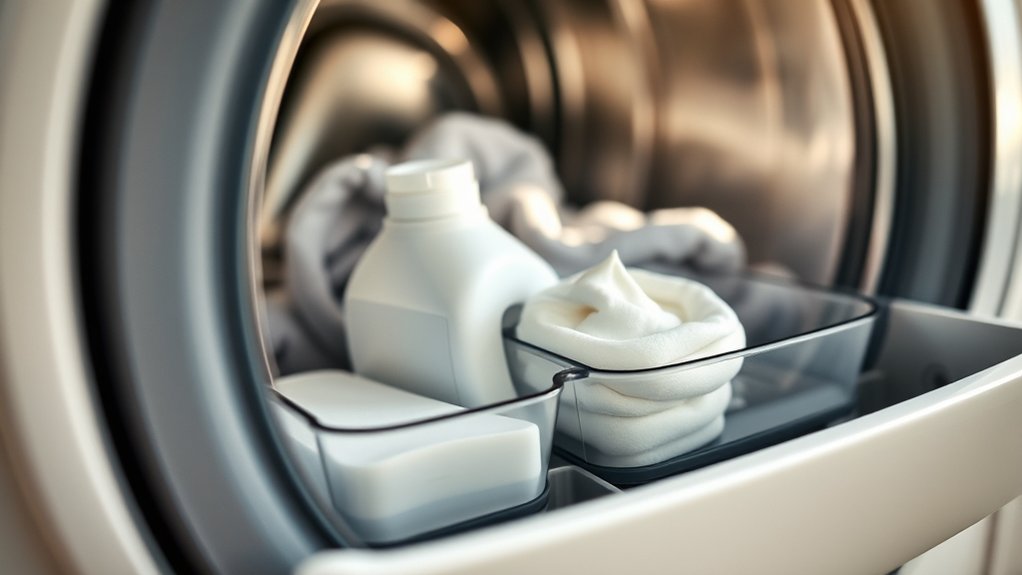
When should you add fabric softener during your laundry cycle? You should add it during the rinse cycle, not the wash cycle. If you add fabric softener too early, like during the main wash, it won’t work properly because the detergent and hot water can reduce its effectiveness.
The rinse cycle is ideal because it’s the last time water runs through your clothes, allowing the softener to coat fibers and leave them feeling soft and smelling fresh. If your machine doesn’t have a fabric softener dispenser, you can wait until the rinse cycle starts and then add the softener manually. Just be sure not to add it with the detergent to avoid any issues with cleaning or softening your clothes.
How to Use Your Fabric Softener Dispenser
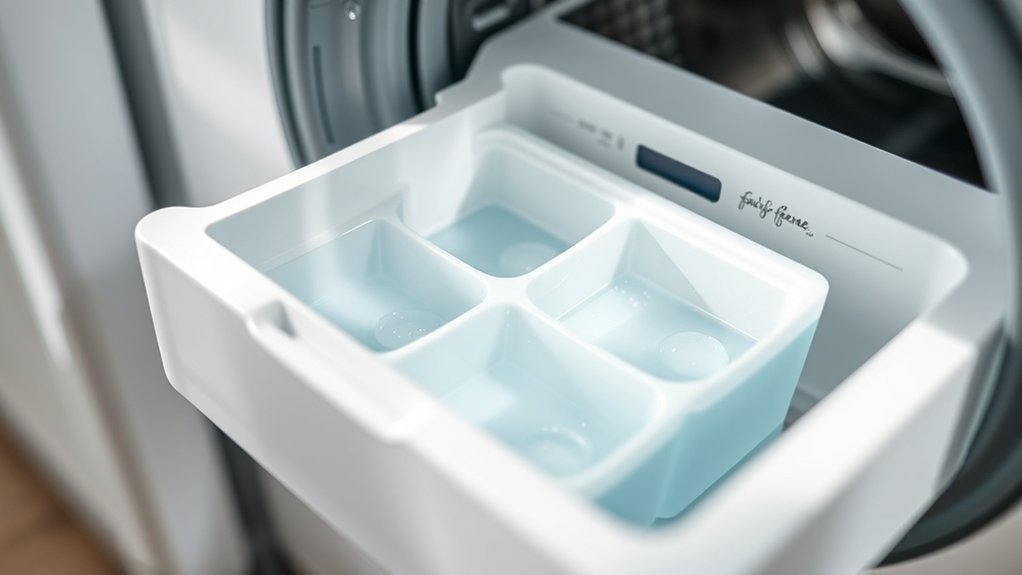
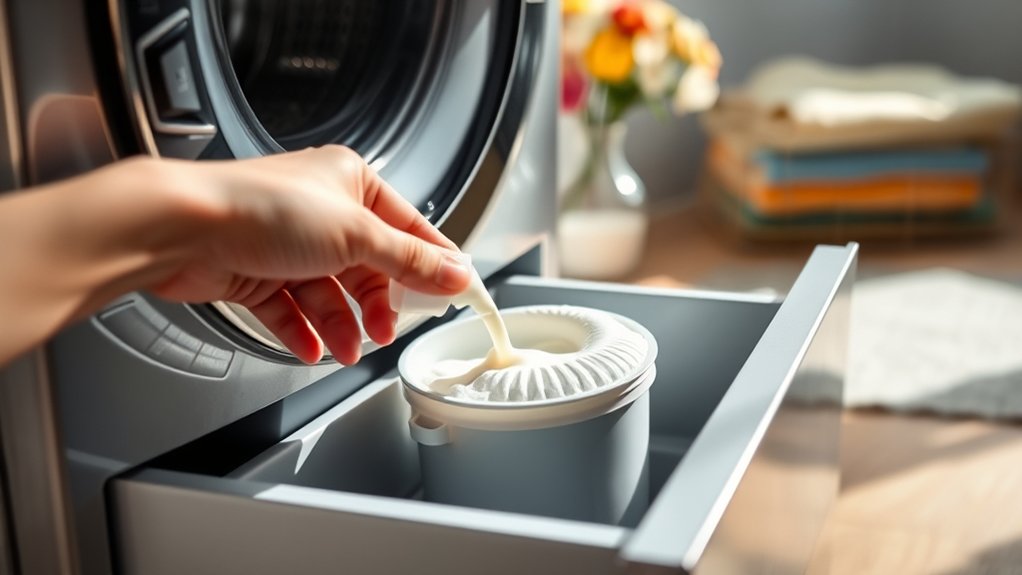
Although using a fabric softener dispenser might seem straightforward, knowing how to properly fill and maintain it guarantees your clothes get the best treatment every wash. Start by locating the softener compartment, usually marked and separate from detergent. Pour the recommended amount of softener into this compartment—avoid overfilling to prevent spills.
Close the dispenser gently to ensure it locks in place and releases at the right cycle. Finally, clean the dispenser regularly to prevent buildup that can clog the flow.
- Find the softener compartment easily.
- Measure the softener to avoid waste.
- Secure the dispenser to prevent leaks.
- Keep it clean for smooth operation.
Following these steps ensures your fabrics stay soft and fresh every time.
What to Do If Your Machine Has No Softener Compartment
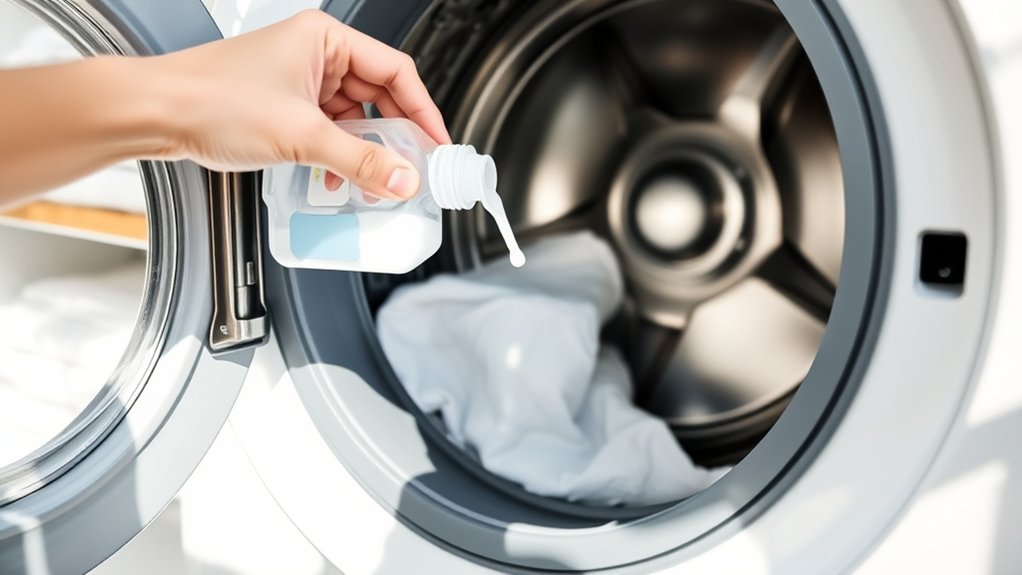
If your washing machine doesn’t have a softener compartment, don’t worry—you can still add fabric softener effectively. You can apply it manually during the rinse cycle or use pre-diluted softener mixed with water.
These alternatives help you get the same softening results without the built-in dispenser.
Alternative Softener Methods
Since some washing machines don’t come with a built-in softener compartment, you’ll need to find other ways to add fabric softener during your laundry cycle. Don’t worry—you’ve got options that make your clothes just as soft and fresh.
Here are four alternative softener methods to try:
- Add softener manually during the rinse cycle—timing is key to avoid residue.
- Use a fabric softener ball that releases liquid at the right time.
- Dilute softener in water and pour it evenly over clothes before the spin cycle.
- Opt for dryer sheets as a quick, no-fuss softening solution during drying.
These methods help you enjoy soft laundry even without a dedicated compartment.
Manual Softener Application
Wondering how to add fabric softener when your washing machine lacks a dedicated compartment? You can manually add it during the rinse cycle. Wait until the washing machine completes the wash cycle and starts filling with water for rinsing.
At this point, pause the machine, open the lid or door carefully, and pour the recommended amount of fabric softener directly into the drum. Then, close the lid and resume the cycle. This method guarantees the softener disperses evenly without being washed away too soon.
Just be sure to monitor the cycle closely so you add the softener at the right time. This simple step lets you enjoy the benefits of fabric softener even without a built-in dispenser.
Using Pre-Diluted Softener
Although your washing machine might not have a softener compartment, you can still enjoy the benefits of fabric softener by using a pre-diluted solution. This method lets you add softener directly during the rinse cycle, ensuring your clothes come out soft and fresh without any hassle.
Here’s how to do it:
- Mix fabric softener with water in a spray bottle (about 1 part softener to 3 parts water).
- Wait until the rinse cycle starts before applying the solution.
- Spray the diluted softener evenly over the clothes inside the drum.
- Close the door and let the cycle finish as usual.
This quick trick keeps your laundry soft, smelling great, and free from fabric softener buildup in your machine.
How Much Fabric Softener Should You Use
You’ll want to measure fabric softener carefully to avoid overuse. The right amount depends on your load size, fabric type, and water hardness.
Let’s look at how these factors affect how much softener you should add.
Measuring Fabric Softener Amount
Since using too much fabric softener can leave residue on your clothes and too little may not provide the desired softness, it’s important to measure the right amount carefully. Here’s how you can do it effectively:
- Check the cap – Most bottles have measurement lines; use these to pour the exact amount.
- Read the label – Follow the manufacturer’s guidelines tailored for your load size.
- Use a measuring cup – For precision, especially if your bottle lacks markings.
- Adjust for load size – Typically, a full cap is for a large load, half for medium, and less for small loads.
Factors Affecting Softener Quantity
When determining how much fabric softener to use, several factors come into play that can impact the effectiveness and safety of your laundry. You should consider the load size, fabric type, water hardness, and washing machine model. Using too much softener can leave residue, while too little won’t soften fabrics properly.
Adjust amounts based on these factors for ideal results.
| Factor | Impact on Softener Quantity |
|---|---|
| Load Size | Larger loads require more softener |
| Fabric Type | Delicate fabrics need less softener |
| Water Hardness | Hard water may need slightly more softener |
| Machine Model | High-efficiency machines use less softener |
Tailor your softener use accordingly to keep clothes soft and fresh without damage.
Which Clothes Are Safe for Fabric Softener?
Although fabric softener can make many garments feel softer and smell fresher, not all clothes benefit from its use. You’ll want to be selective to keep your wardrobe in top shape.
Here are four types of clothes that are safe for fabric softener:
- Cotton garments – They absorb the softener well, leaving them comfy and fresh.
- Polyester blends – Softener helps reduce static cling in these synthetic fibers.
- Towels – Fabric softener keeps them fluffy and gentle on your skin.
- Bed linens – They feel smoother and more inviting after softener use.
Common Fabric Softener Mistakes to Avoid
If you want your clothes to come out soft and fresh, you need to avoid common fabric softener mistakes that can ruin your laundry. Using too much softener or adding it at the wrong time can leave residues or damage fabrics.
Also, never apply softener directly to clothes, as it can cause stains or reduce absorbency.
| Mistake | Why to Avoid It |
|---|---|
| Overusing softener | Leaves residue, reduces fabric breathability |
| Adding too early | Softener washes away before rinse cycle |
| Applying directly on clothes | Causes stains and damage |
| Using on towels or activewear | Lowers absorbency and effectiveness |
Stay mindful of these mistakes to keep your laundry soft, vibrant, and long-lasting.
How to Troubleshoot Fabric Softener Problems
Since fabric softeners can sometimes leave unexpected residues or fail to soften your clothes properly, you’ll want to know how to identify and fix common issues. Here’s how you can troubleshoot fabric softener problems effectively:
- Residue on Clothes: Check if you’re adding softener to the right dispenser. Clean the dispenser regularly to prevent buildup.
- Clothes Still Stiff: Make sure you’re using the correct amount. Overloading the washer can also reduce softener effectiveness.
- Softener Not Dispensing: Inspect the dispenser for clogs or damage. Run a cleaning cycle if needed.
- Allergic Reactions or Irritation: Switch to a hypoallergenic or fragrance-free softener to avoid skin issues.
Frequently Asked Questions
Can Fabric Softener Cause Allergies or Skin Irritation?
Yes, fabric softener can cause allergies or skin irritation, especially if you have sensitive skin. You might experience redness, itching, or rashes.
Always test a small amount first or choose hypoallergenic options to avoid discomfort.
Is Fabric Softener Safe for Baby Clothes?
You want your baby’s clothes as gentle as a whisper, so choose fabric softeners labeled hypoallergenic and free of dyes or perfumes.
They’re usually safe, but always test a small patch to avoid irritation.
How Does Fabric Softener Affect Towel Absorbency?
Fabric softener can reduce your towel’s absorbency because it leaves a coating that repels water. If you want fluffy towels without losing absorbency, try using softener sparingly or skip it altogether for towels.
This way, you can maintain the softness while preserving the towel’s ability to soak up moisture effectively.
Can Fabric Softener Be Used in High-Efficiency Washers?
Using fabric softener in high-efficiency washers is like adding a splash of paint to a masterpiece—it’s possible but requires care.
You’ll want to use the designated softener compartment to avoid over-sudsing and maintain your washer’s performance.
What Are Natural Alternatives to Commercial Fabric Softeners?
You can use white vinegar, baking soda, or diluted aloe vera gel as natural fabric softeners. They soften clothes, reduce static, and smell fresh, all without the chemicals found in commercial softeners.
Give them a try!
Conclusion
Now that you know exactly when and how to add fabric softener, your laundry game just got softer and smarter. Remember, timing is everything—add it too early or too late, and you might miss that perfect touch of softness.
Like a magician’s final flourish, fabric softener transforms your clothes from ordinary to extraordinary. So, follow these steps, avoid common pitfalls, and enjoy that fresh, cozy feeling every time you wash.
By understanding when to put softener in the washing machine, you ensure your fabrics stay soft, fresh, and long-lasting. Mastering this simple step makes all the difference in your laundry routine. Softener in the washing machine is the key to perfectly conditioned clothes every time.