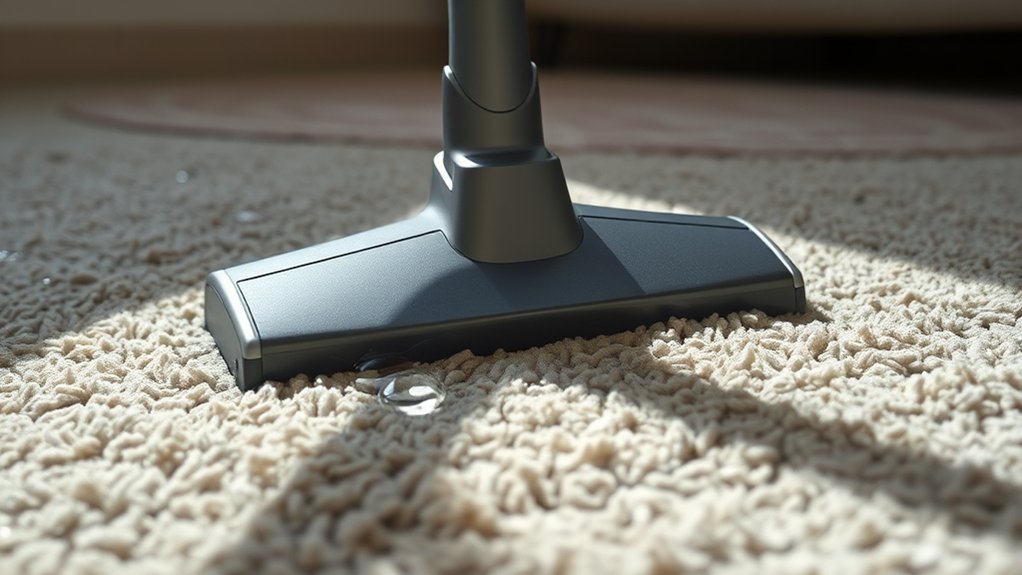
Can You Vacuum a Wet Carpet?
You shouldn’t vacuum a wet carpet with a regular vacuum because it can cause electrical hazards and damage your machine and carpet fibers. Using a standard vacuum on a damp or wet carpet is unsafe and may lead to malfunction.
Instead, remove excess water first using towels or a wet/dry vacuum designed for moisture.
Only vacuum once the carpet is mostly dry to avoid pushing dirt deeper or causing mold. Proper drying is key to preventing lasting damage.
If you want to know the best way to handle a damp carpet safely, keep exploring these tips.
Key Takeaways
- Vacuuming a wet carpet with a regular vacuum is unsafe and can damage the equipment and carpet fibers.
- Use a wet/dry vacuum or carpet extractor designed for moisture to safely clean wet carpets.
- Remove excess water and partially dry the carpet before vacuuming to prevent mold and fiber damage.
- Increase air circulation and use dehumidifiers to fully dry the carpet after vacuuming.
- Seek professional help if water damage is extensive, odors persist, or mold appears on the carpet.
Is It Safe to Vacuum a Wet Carpet?
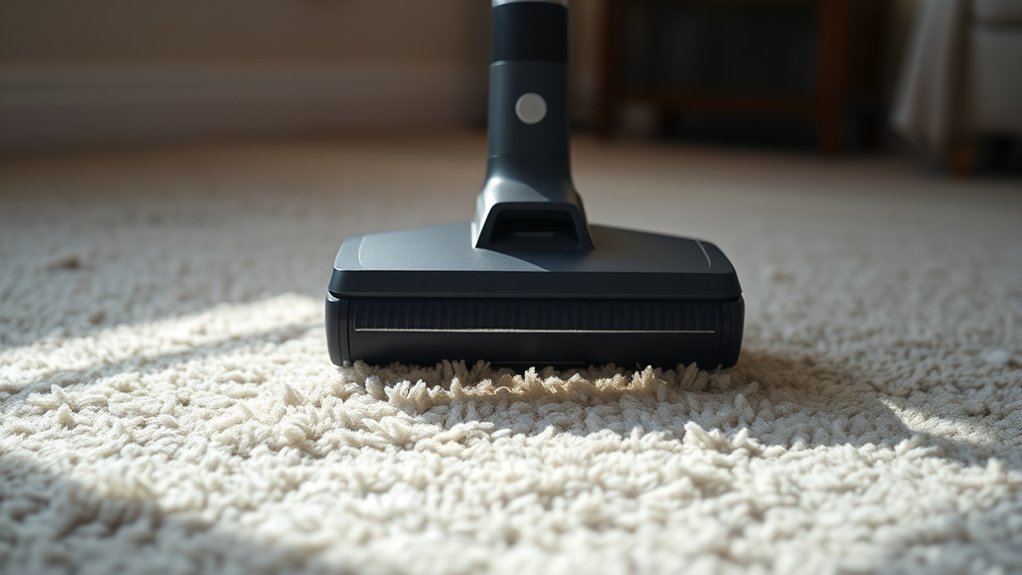
Although you might be tempted to vacuum a wet carpet to speed up drying, it’s generally not safe. When your carpet is wet, the moisture can interfere with the vacuum cleaner’s operation and potentially cause electrical hazards. You risk damaging the vacuum or even causing a short circuit.
Instead, focus on removing as much water as possible by blotting with towels or using a wet/dry vacuum designed specifically for liquids. You should also increase air circulation by opening windows or using fans to help your carpet dry faster. Vacuuming only becomes safe once the carpet is completely dry.
At that point, regular vacuuming can maintain cleanliness without risking damage to your appliance or carpet fibers. Always prioritize safety over convenience.
Why Regular Vacuums Can Damage Wet Carpets
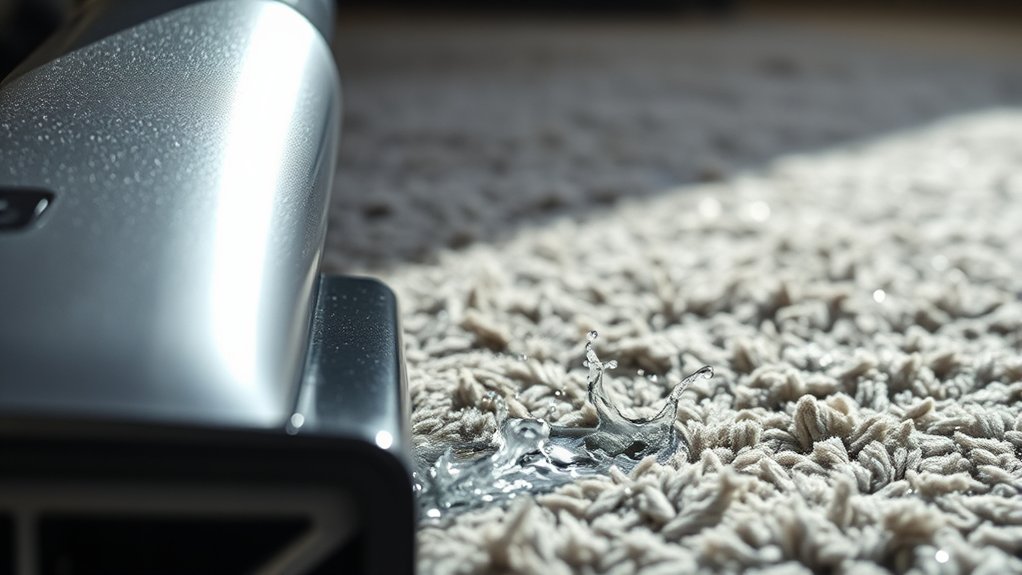
When you use a regular vacuum on a wet carpet, you risk damaging both the machine and the fibers. Regular vacuums aren’t designed to handle moisture. Water can seep into the motor, causing electrical shorts or corrosion that may permanently ruin the vacuum.
Additionally, wet carpet fibers are more fragile and prone to stretching or tearing under strong suction and rotating brushes. The vacuum’s brush roll can also get clogged with damp fibers, reducing its effectiveness and potentially damaging the carpet pile. Using a standard vacuum on wet carpet can push dirt deeper into the fibers instead of removing it, leading to mold and mildew growth.
To protect your carpet and vacuum, avoid using machines not built for wet conditions.
What Vacuums Work on Wet Carpets?
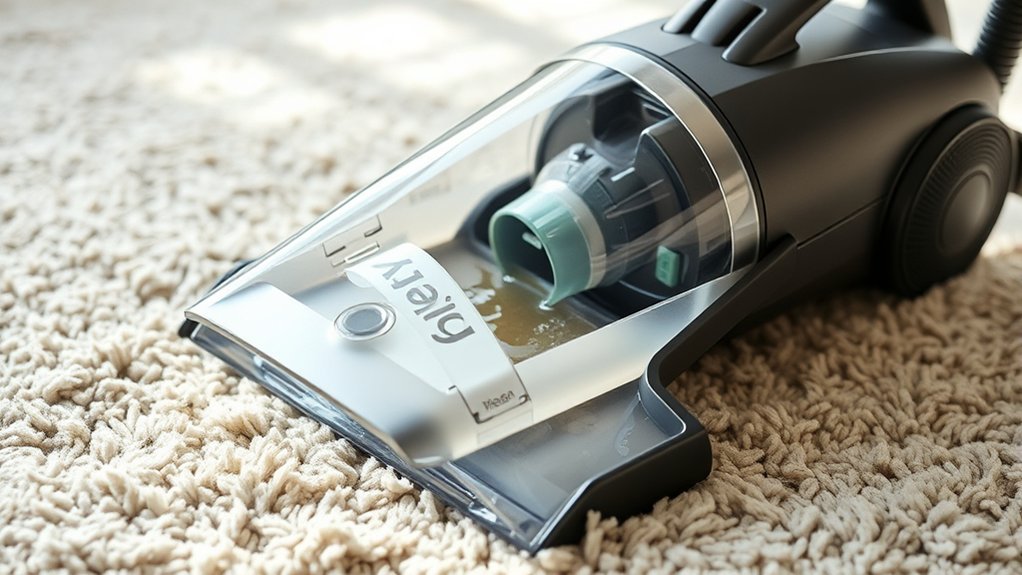
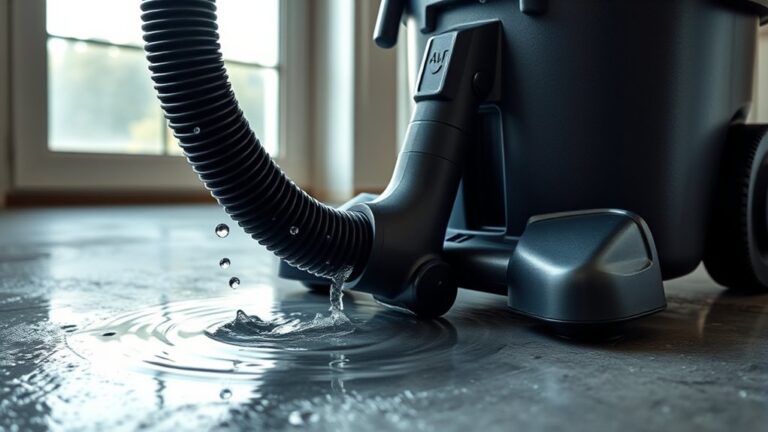
When dealing with wet carpets, you need a vacuum designed specifically for moisture. Wet/dry vacuums are your best bet because they handle both liquids and debris effectively.
Let’s explore the types of wet vacuums and how to choose the right model for your needs.
Types of Wet Vacuums
How do you choose the right vacuum for a wet carpet? You need a vacuum specifically designed to handle moisture without damaging the machine or your carpet. Regular vacuums aren’t built for this, so wet vacuums come in different types to suit various needs.
Here are the main types you can consider:
- Wet/Dry Vacuums: Versatile for both wet spills and dry debris.
- Carpet Extractors: Use water and cleaning solution to deep clean and extract moisture.
- Shop Vacs: Heavy-duty, often used for flooding or large water removal.
- Portable Wet Vacuums: Compact and handy for smaller wet carpet areas.
Each type handles wet carpet cleanup differently, making sure you can effectively remove moisture without causing further damage.
Choosing the Right Model
Which vacuum suits your wet carpet needs best? You’ll want a wet/dry vacuum designed specifically for handling moisture without damaging the motor or electrical components. Avoid regular carpet vacuums—they’re not built for water and risk short-circuiting.
Look for models with strong suction, large capacity tanks, and easy drainage systems. Portable options work well for small spills, while larger, heavier-duty vacuums tackle bigger wet areas efficiently. Consider features like detachable hoses and multiple nozzle attachments for better reach and cleaning versatility.
Also, check if the vacuum has a HEPA filter to trap mold spores and allergens. By choosing a vacuum made for wet carpets, you’ll clean effectively and protect your investment without hassle or risk.
How to Prepare a Wet Carpet for Vacuuming
Before you start vacuuming, check how wet your carpet really is to avoid damaging your vacuum. Use towels to soak up as much moisture as possible, then boost air circulation by opening windows or using fans.
Taking these steps will help your carpet dry faster and make vacuuming more effective.
Assess Carpet Moisture Level
Wondering if your carpet is too wet to vacuum? Before you start, you need to assess the moisture level carefully to avoid damaging your vacuum or carpet. First, press a dry cloth onto the carpet and check how much water it absorbs.
If it’s very wet, vacuuming might not be a good idea yet. Here’s how to assess moisture effectively:
- Feel the carpet fibers for dampness by touching them with your fingers.
- Look for visible pooling or saturated areas that indicate excess water.
- Use a moisture meter if you have one to get a precise reading.
- Check the carpet backing to see if water has soaked through to the underside.
This quick check helps you decide if your carpet is ready for vacuuming or needs drying first.
Use Towels For Drying
If your carpet feels too damp to vacuum safely, grabbing some towels is the next step to speed up drying. Lay absorbent towels flat on the wet areas and press down firmly to soak up moisture. Replace towels frequently as they become saturated to avoid spreading water.
This method quickly reduces surface dampness, making vacuuming safer and more effective.
| Towel Type | Absorbency Level | Best Use Case |
|---|---|---|
| Cotton Bath Towels | High | Large wet spots |
| Microfiber Towels | Very High | Small, stubborn dampness |
| Paper Towels | Moderate | Quick, light drying |
| Old T-Shirts | Moderate | Budget-friendly option |
| Terry Cloth Towels | High | Heavy moisture areas |
Use these towels strategically to prepare your carpet for vacuuming without damage.
Improve Air Circulation
Although towels can soak up much of the moisture, improving air circulation is essential to speed drying and prepare your carpet for vacuuming. Without proper airflow, your carpet stays damp longer, increasing the risk of mold and damage.
You can boost air circulation by focusing on the following:
- Open windows and doors to create a cross breeze.
- Use fans directed at the wet carpet area.
- Turn on your HVAC system or dehumidifier.
- Remove any furniture or obstacles blocking airflow.
How to Vacuum a Damp Carpet Step-by-Step
Before you start vacuuming a damp carpet, make sure your vacuum cleaner is suitable for handling moisture to prevent damage. Begin by removing any standing water with a wet/dry vacuum or towels.
Next, set your vacuum to the highest suction without the beater brush, which can damage damp fibers. Work in small sections, moving slowly to extract as much moisture and dirt as possible.
After vacuuming, increase air circulation to help the carpet dry faster.
| Step | Tip |
|---|---|
| Remove standing water | Use wet/dry vacuum or towels |
| Adjust vacuum settings | Turn off beater brush |
| Vacuum slowly | Maximize moisture removal |
Alternatives to Vacuuming a Wet Carpet
Vacuuming a damp carpet can help remove moisture and dirt, but it’s not always the best option depending on the carpet’s condition or the amount of water present. When vacuuming isn’t suitable, you can try other effective methods to dry and clean your carpet. Here are some alternatives to contemplate:
- Use a wet/dry vacuum designed specifically for water extraction.
- Apply absorbent towels or cloths to soak up excess moisture.
- Set up fans or a dehumidifier to speed up the drying process.
- Sprinkle baking soda to absorb moisture and neutralize odors before vacuuming once dry.
These alternatives help protect your carpet from damage and prevent issues like mold growth without risking further harm from inappropriate vacuuming.
Preventing Mold and Mildew After Carpet Water Damage
How quickly you act after water damage can make all the difference in preventing mold and mildew from taking hold in your carpet. First, remove as much water as possible using towels or a wet/dry vacuum designed for liquids.
Next, increase airflow by opening windows and using fans or dehumidifiers to speed drying. Avoid walking on the damp carpet to prevent dirt and spores from embedding deeper. If possible, lift the carpet edges to allow air underneath, reducing trapped moisture.
Keep the room temperature moderate since warmth can promote mold growth. Finally, monitor the carpet closely over the next few days for any musty odors or visible mold spots. Prompt, thorough drying is your best defense against mold and mildew after water damage.
When to Call a Professional for Wet Carpet Cleanup
If the water damage is extensive or the carpet remains soaked after your initial efforts, you should call a professional for wet carpet cleanup. Professionals have the right tools and expertise to thoroughly dry and sanitize your carpet, preventing mold and permanent damage.
You should also seek professional help if:
- The water is contaminated (e.g., sewage or chemicals)
- You notice a strong, unpleasant odor after drying attempts
- The carpet padding is saturated and won’t dry quickly
- You spot visible mold or mildew growth
Waiting too long can worsen damage and increase repair costs. Don’t hesitate to get expert help to guarantee your carpet is properly restored and your home remains safe and healthy.
Frequently Asked Questions
How Long Does It Take for a Wet Carpet to Dry Completely?
It usually takes 24 to 48 hours for a wet carpet to dry completely. You can speed it up by using fans, opening windows, or a dehumidifier to improve air circulation and reduce moisture quickly.
These methods help air move around the carpet, which aids in faster drying. Proper ventilation is key to preventing mold and mildew growth.
Using a combination of these techniques is often the most effective way to dry your carpet thoroughly and safely.
Can Vacuuming Wet Carpet Cause Electrical Hazards?
Would you risk your safety by vacuuming a wet carpet? You shouldn’t, because doing so can cause electrical hazards like shocks or short circuits.
Always wait until the carpet is dry before using your vacuum cleaner.
What Are the Signs of Mold Growth in Carpets?
You’ll notice a musty smell, discoloration, or dark spots on your carpet. It might feel damp or spongy, and you could see fuzzy growth.
If you spot these signs, act quickly to prevent mold spread.
Is It Safe to Use Household Cleaners on Wet Carpets?
You shouldn’t use household cleaners on wet carpets; 90% of mold growth occurs within 48 hours of moisture exposure. Using cleaners too soon can trap moisture, worsening mold risks.
Wait until the carpet’s dry to clean safely.
How Often Should Carpets Be Professionally Cleaned to Avoid Water Damage?
You should get your carpets professionally cleaned every 12 to 18 months to avoid water damage. Regular cleaning prevents mold and mildew buildup, keeping your carpet fresh and extending its lifespan. Don’t wait too long!
Conclusion
You might think vacuuming a wet carpet is a quick fix, but it often leads to more damage—like using the wrong tool in the wrong moment. Just as a rainstorm can unexpectedly soak your day, trying to vacuum moisture can soak your carpet deeper.
Instead, prepare it right or choose alternatives to avoid mold and mildew. Sometimes, the best step is calling a pro—because timing and care can turn a problem into a fresh start.
When dealing with damp carpets, using a wet vacuum cleaner or a carpet cleaner designed for moisture is crucial. Proper drying techniques prevent mold growth and keep your carpet fresh. Always prioritize carpet care to maintain a clean and healthy home environment.