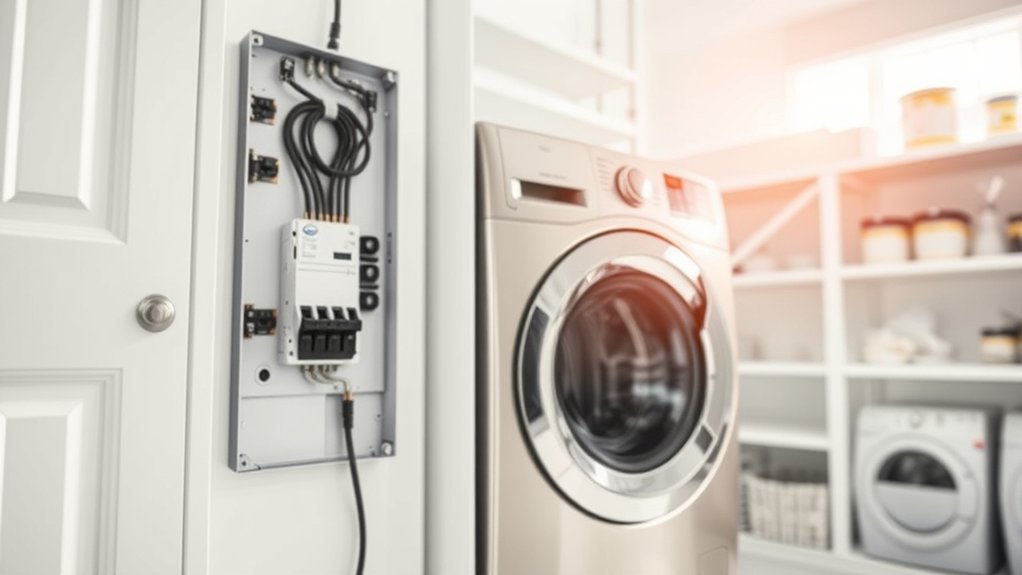
Does a Washing Machine Need a Dedicated Circuit?
Yes, your washing machine needs a dedicated circuit to guarantee it gets steady, reliable power without sharing the line with other devices. Having a dedicated washing machine circuit helps prevent breaker trips, electrical overloads, and potential damage to your appliance or home.
This is essential for maintaining the efficiency and longevity of your washing machine.
Following electrical codes ensures your setup is safe and compliant with regulations. If your circuit isn’t dedicated or trips often, it’s vital to address that promptly.
Proper wiring not only protects your washer but also enhances overall safety.
Keep exploring to uncover how a dedicated circuit and correct electrical setup benefit your washer’s performance and safety. Understanding these aspects helps you maintain a reliable laundry system.
Key Takeaways
- A washing machine typically requires a dedicated 15- or 20-amp circuit to prevent electrical overload and ensure stable power supply.
- Dedicated circuits reduce breaker trips and protect the washer from damage and fire hazards.
- Electrical codes, like the NEC, generally mandate a separate circuit for washing machines with proper grounding and GFCI protection where applicable.
- Shared circuits can cause performance issues and increase the risk of overloads, making dedicated wiring safer and more efficient.
- Consult an electrician if breaker trips occur often, wiring is outdated, or when installing or relocating the washing machine.
What Is a Dedicated Circuit for Your Washing Machine?
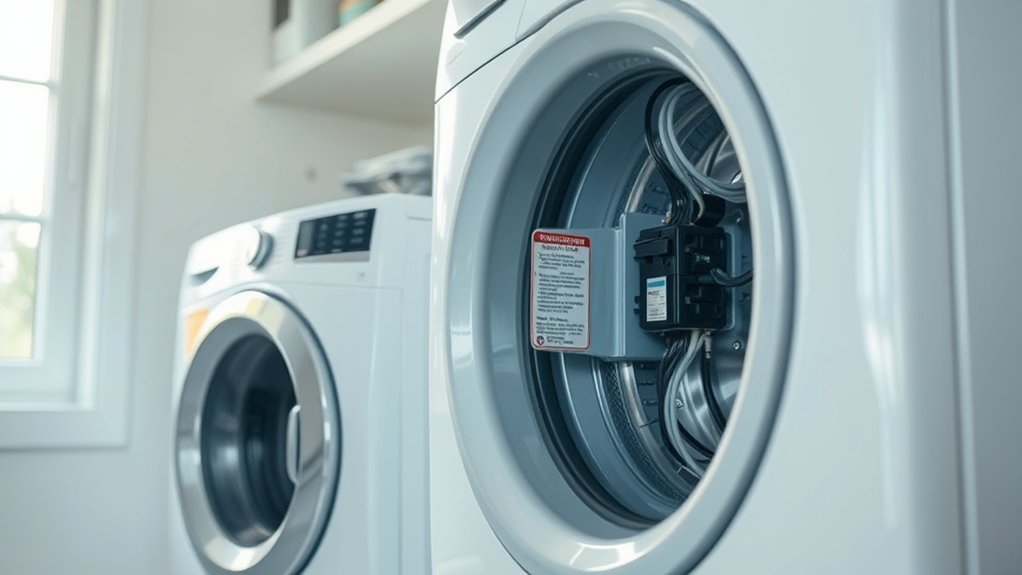
Although you might not realize it, your washing machine needs its own dedicated circuit to run safely and efficiently. A dedicated circuit means the washing machine has a separate electrical line connected directly to your home’s electrical panel. This setup guarantees that the machine draws power without sharing it with other appliances or outlets.
When you have a dedicated circuit, the wiring and circuit breaker are sized specifically for your washer’s electrical demands. This prevents overloading, reduces the risk of tripped breakers, and keeps electrical flow steady. You’ll typically see a 15 or 20-amp breaker assigned just for the washer.
Why Washing Machines Need Dedicated Circuits
Having a dedicated circuit for your washing machine guarantees it gets the power it needs without interruptions. Without one, you risk overloading your electrical system, causing breakers to trip and disrupting your laundry routine. This can damage your machine or even create fire hazards.
You want your washing machine to run smoothly, efficiently, and safely—something only a dedicated circuit can assure.
| Concern | Impact on You |
|---|---|
| Power Surges | Sudden stops, ruined clothes |
| Circuit Overload | Frequent breaker trips |
| Electrical Fires | Danger to your home and family |
| Appliance Damage | Costly repairs or replacements |
| Inefficient Washing | Longer cycles, poor cleaning |
A dedicated circuit safeguards your investment and peace of mind.
Power Requirements of Typical Washing Machines
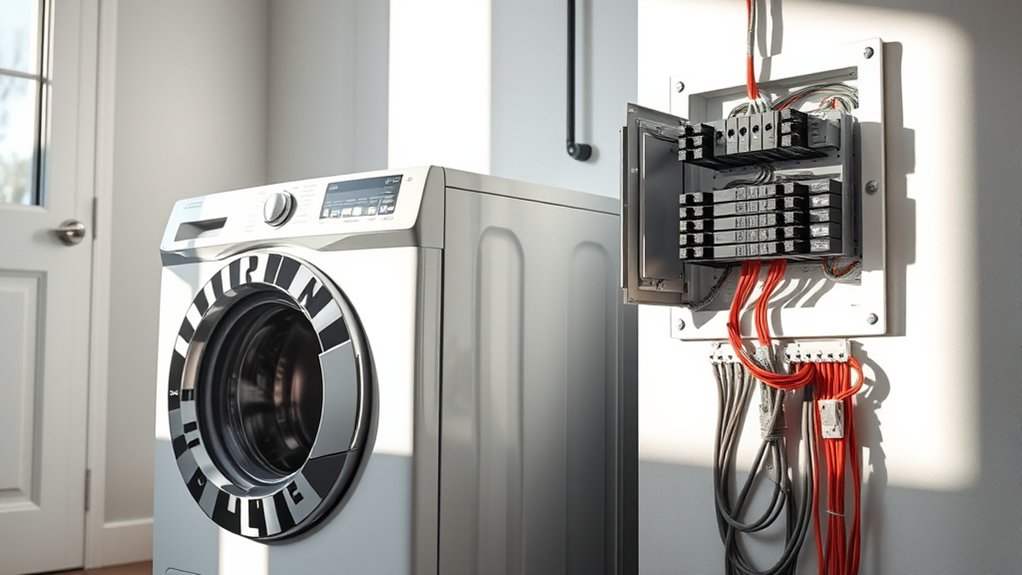
When you plug in a washing machine, it draws a specific amount of power that depends on its size and features. Most washing machines operate on standard household voltage, but the current they pull varies. This affects whether your circuit can handle the load safely.
Here’s what you need to know about typical power requirements:
- Most models use between 500 and 1500 watts during operation. Larger or high-efficiency machines may have higher power demands. Power spikes occur when the motor starts, requiring additional current briefly.
- Features like steam cleaning or extra spin cycles can increase energy use.
Understanding these factors helps you guarantee your electrical setup can support your washing machine reliably.
Electrical Code Requirements for Washing Machine Circuits
You need to follow the National Electrical Code guidelines when setting up your washing machine circuit to guarantee safety and compliance. Proper circuit capacity is essential to handle the washer’s power demands without risking overloads.
Let’s look at what these code requirements mean for your installation.
National Electrical Code Guidelines
Although installing a washing machine might seem straightforward, the National Electrical Code (NEC) sets specific requirements to guarantee safety and proper function. When you’re wiring a washing machine circuit, you need to follow these guidelines closely to avoid hazards and code violations.
Here’s what the NEC requires:
- A dedicated 120-volt, 15- or 20-amp circuit exclusively for the washing machine.
- Ground-fault circuit interrupter (GFCI) protection in certain areas, like garages or unfinished basements.
- Proper use of grounded outlets and wiring methods.
- Compliance with local amendments that may add specific installation rules.
Circuit Capacity And Safety
Meeting the National Electrical Code guidelines is just the start; guaranteeing the circuit can handle your washing machine’s power needs safely is equally important. Your washing machine typically requires a 20-amp, 120-volt circuit dedicated solely to it. This prevents overloads that could trip breakers or even cause electrical fires.
You should use the correct wire gauge—usually 12-gauge wire—to support this load safely. Also, make sure your circuit breaker matches the wire size to avoid overheating. Ground Fault Circuit Interrupters (GFCIs) aren’t usually required for washing machines but check local codes to be sure.
How to Check If Your Washer Has a Dedicated Circuit
When inspecting your laundry area, start by locating the circuit breaker panel to determine if your washer has a dedicated circuit. Open the panel and look for labels or markings indicating which breaker controls the washer. If the breaker is clearly labeled “Washer,” it’s likely dedicated.
Begin by finding the circuit breaker panel and identifying the washer’s dedicated breaker through labels or markings.
You can also check if the breaker is a single-pole or double-pole switch; most washers use a single-pole breaker. Next, see if other appliances or outlets share the same breaker—if they do, the washer doesn’t have a dedicated circuit.
Finally, use a circuit tester to verify which outlets or devices the breaker powers.
- Locate and open the circuit breaker panel
- Identify breakers labeled for the washer
- Check if other devices share the breaker
- Use a circuit tester for confirmation
Signs Your Washing Machine Is Overloading the Circuit
After checking if your washer has a dedicated circuit, you should watch for signs that it might be overloading the electrical system. If your circuit breaker trips frequently when the washing machine runs, it’s a clear warning. You might also notice flickering or dimming lights during wash cycles, indicating voltage drops.
A burning smell or warm outlets near the machine are serious red flags, signaling overheating wires. Additionally, if the washing machine struggles to start or stops mid-cycle, it could be due to insufficient power. Paying attention to these symptoms helps you act before damage occurs.
If you spot any of these signs, it’s time to consult an electrician to assess your circuit’s capacity and prevent potential hazards.
Risks of Sharing a Washing Machine Circuit With Other Appliances
Although it might seem convenient to share a circuit between your washing machine and other appliances, doing so can create serious electrical risks. When multiple devices draw power from the same circuit, you risk overloading it, which can lead to frequent tripped breakers or even electrical fires. Your washing machine requires consistent power, and sharing its circuit makes fluctuations more likely.
Here are key risks you face when sharing a washing machine circuit:
- Overheating wires due to excessive current flow
- Frequent breaker trips disrupting laundry cycles
- Increased wear on electrical components
- Potential fire hazards from overloaded circuits
To keep your home safe and your washer running smoothly, you should be cautious about combining loads on a single circuit.
Installing a Dedicated Circuit for Your Washer
Because your washing machine demands a stable and reliable power supply, installing a dedicated circuit is essential to guarantee peak performance and safety. To start, you’ll need a circuit breaker rated appropriately for your washer’s electrical load, usually 15 or 20 amps. Run a separate wire from your electrical panel directly to the washer’s outlet or hardwired connection, ensuring the wiring matches your breaker’s capacity.
Make sure the circuit uses the correct gauge wire—typically 12 or 14 gauge—to handle the current without overheating. Installing a dedicated circuit also involves placing a grounded outlet near your washer, following local electrical codes. If you’re unsure about handling electrical work, it’s best to hire a licensed electrician to ensure everything is up to code and safely installed.
Costs and Benefits of Dedicated Circuits
Understanding the costs and benefits of installing a dedicated circuit for your washing machine can help you make an informed decision. While the upfront expense might seem high, a dedicated circuit offers long-term advantages that can outweigh the initial investment. You’ll reduce the risk of electrical overloads, which protects both your appliance and home.
Plus, your washer will run more efficiently without competing for power with other devices.
Here’s what to contemplate:
- Cost: Installation fees and materials can add up.
- Safety: Lowers the chance of electrical hazards.
- Performance: Ensures stable power supply for ideal washer function.
- Compliance: Meets electrical codes, avoiding potential fines or insurance issues.
Weighing these factors will help you decide if a dedicated circuit is right for you.
Electrical Alternatives to Dedicated Circuits for Washing Machines
Installing a dedicated circuit for your washing machine offers clear benefits, but it isn’t the only option available. You can consider alternatives like sharing a circuit with other appliances or using a high-capacity outlet if your machine’s power needs are modest.
However, these alternatives come with limitations in safety and performance. Here’s a quick comparison:
| Alternative | Key Feature |
|---|---|
| Shared Circuit | Cost-effective but may overload |
| High-Capacity Outlet | Handles more load, less wiring needed |
| Circuit Breaker Upgrade | Improves safety on existing setup |
| GFCI Outlet | Adds protection against shocks |
| Power Management Devices | Prevents overload with smart control |
Each option has pros and cons, so assess your washing machine’s power needs carefully before deciding.
When to Call an Electrician for Washing Machine Wiring
If you’re unsure about the electrical requirements or safety of your washing machine wiring, it’s best to call a licensed electrician. Handling electrical work without proper knowledge can lead to serious hazards or code violations. An electrician guarantees your wiring meets local codes and safely supports your machine’s power needs.
You should call an electrician if you notice:
- Frequent circuit breaker trips when running the washer
- Outdated or damaged wiring and outlets
- Unclear or missing dedicated circuit for the washing machine
- Planning to install or relocate your washing machine
Frequently Asked Questions
Can a Washing Machine Damage My Home’s Electrical Panel?
Yes, a washing machine can damage your electrical panel if it overloads the circuit or causes frequent tripping.
You should make sure it’s on a properly rated circuit to prevent overheating and potential damage to your home’s electrical system.
How Long Does It Take to Install a Dedicated Circuit?
It usually takes a licensed electrician about 2 to 4 hours to install a dedicated circuit for your washing machine. Time varies depending on your home’s wiring and panel accessibility, but the process is generally quick and straightforward.
Are There Energy-Saving Washing Machines That Need Less Power?
You can find energy-saving washing machines that sip electricity like a cat lapping milk. These models use less power, helping you save on bills while keeping your clothes fresh and clean without draining your home’s energy.
Can a Surge Protector Help With Washing Machine Electrical Issues?
A surge protector can help protect your washing machine from voltage spikes, but it won’t fix underlying electrical issues. You should also guarantee proper wiring and a dedicated circuit to prevent damage and maintain safe operation.
What Should I Do if My Washing Machine Trips the Breaker Frequently?
If your washing machine trips the breaker frequently, check for overloaded circuits, inspect the machine’s wiring, reset the breaker, and call a professional.
Don’t ignore the issue, don’t delay repairs, and don’t risk electrical hazards.
Conclusion
If you’re wondering whether your washing machine needs a dedicated circuit, the answer is usually yes. About 70% of residential electrical codes require it to prevent overloads and guarantee safety. Having a dedicated circuit not only protects your appliances but also reduces the risk of electrical fires.
So, if you’re unsure, it’s a smart move to check your wiring or call an electrician—your safety and your washer depend on it. Ensuring your washing machine has a dedicated circuit is essential for proper electrical safety and appliance protection. Always prioritize a dedicated circuit for your washing machine to avoid electrical hazards and maintain efficient operation.