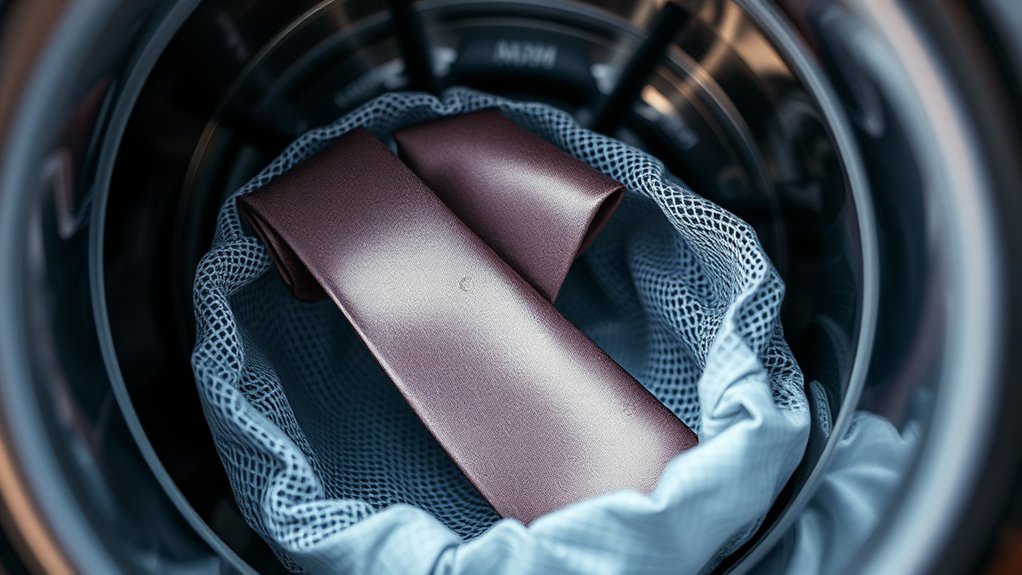
Can You Wash Ties in the Washing Machine?
You can wash some ties in the washing machine, but it requires caution to avoid damage. Understanding whether your ties are made of synthetic, cotton, silk, wool, or linen is essential before washing. Fabric type and care labels play a crucial role in determining if machine washing is safe.
Synthetic and cotton ties usually handle gentle cycles and mesh bags well. However, delicate fabrics like silk, wool, or linen risk damage, shrinking, and color loss if machine washed. Agitation and spinning can distort their shape and weaken stitching.
To protect your ties and keep them looking sharp, it’s important to follow proper washing techniques. Knowing when to hand wash or dry clean can help you avoid costly mistakes.
Key Takeaways
- Machine washing ties is generally not recommended due to potential damage to fabric, lining, and structure from agitation and spinning.
- Synthetic ties (polyester, microfiber) may tolerate machine washing on delicate cycles with a mesh bag, but natural fibers usually cannot.
- Silk, wool, and linen ties are delicate, prone to shrinking and color bleeding, and are best cleaned by hand or professionally.
- Use laundry bags and wash ties separately to reduce abrasion, twisting, and fabric distortion during machine washing.
- When in doubt or for valuable ties, opt for spot cleaning, hand washing, or professional dry cleaning instead of machine washing.
Can You Wash Ties in the Washing Machine Safely?
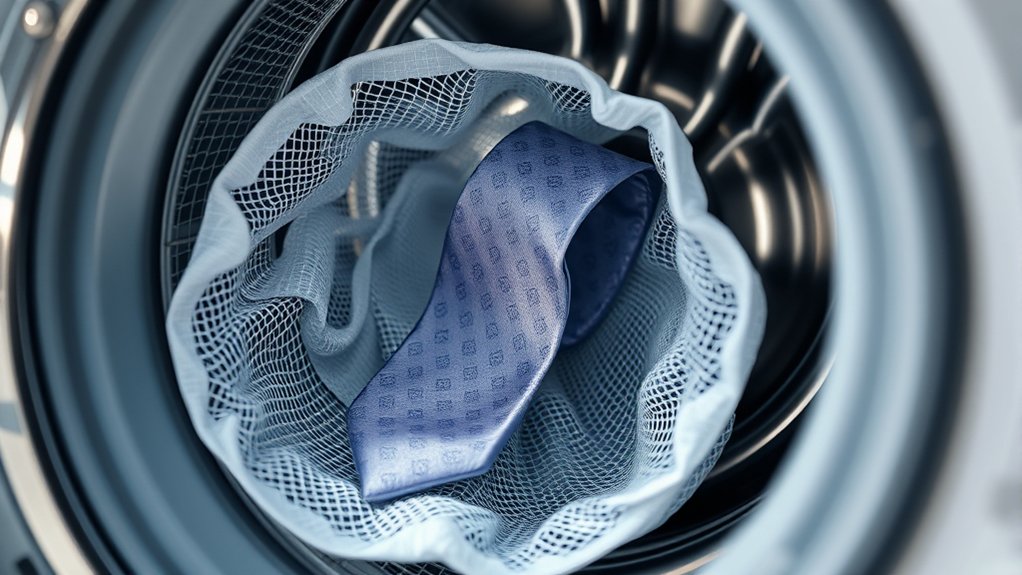
Although it might seem convenient, you shouldn’t wash ties in the washing machine if you want to keep them looking sharp. The agitation, water temperature, and spin cycle can damage the delicate fabric, causing wrinkles, stretching, or color fading. Your tie’s shape and structure depend on careful handling, which machines simply can’t provide.
Plus, the washing machine’s harsh environment can ruin any lining or stitching inside the tie. Instead, spot-clean stains or hand wash gently when necessary. If you’re unsure about cleaning, it’s best to take your tie to a professional cleaner.
Which Tie Fabrics Can You Machine Wash?
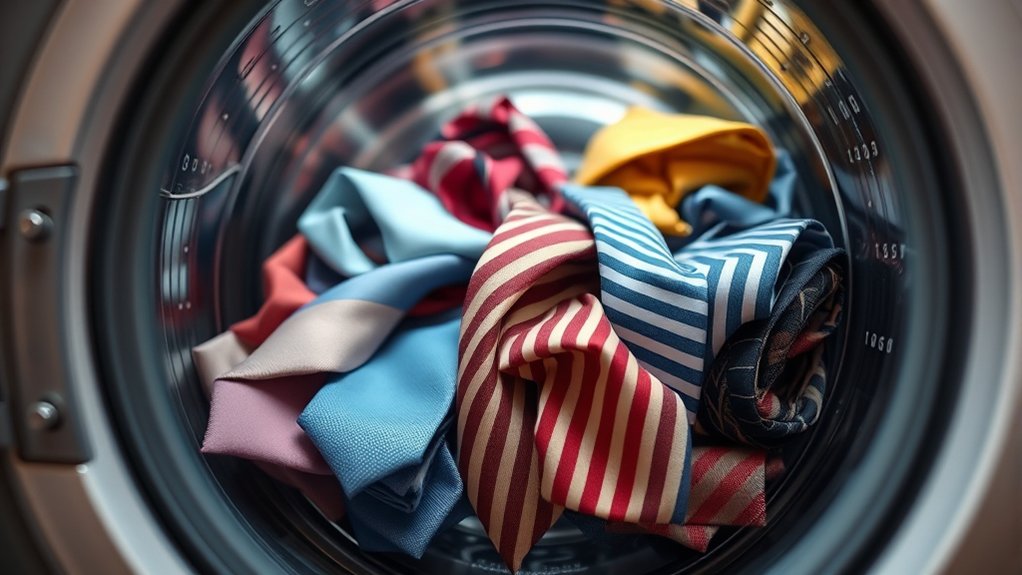
Which tie fabrics can you safely machine wash without risking damage? Generally, ties made from synthetic fibers like polyester, microfiber, and nylon can handle a gentle machine wash. These fabrics are more durable and less prone to shrinking or losing shape compared to natural fibers.
Cotton ties also tend to be more resilient, but you should still use a delicate cycle and put them in a mesh laundry bag. Avoid machine washing silk, wool, or linen ties, as these materials are delicate, prone to shrinking, and can easily be damaged by agitation and water exposure. When in doubt, it’s best to opt for hand washing or professional cleaning to protect the tie’s fabric and maintain its structure.
How to Read and Understand Your Tie’s Care Label
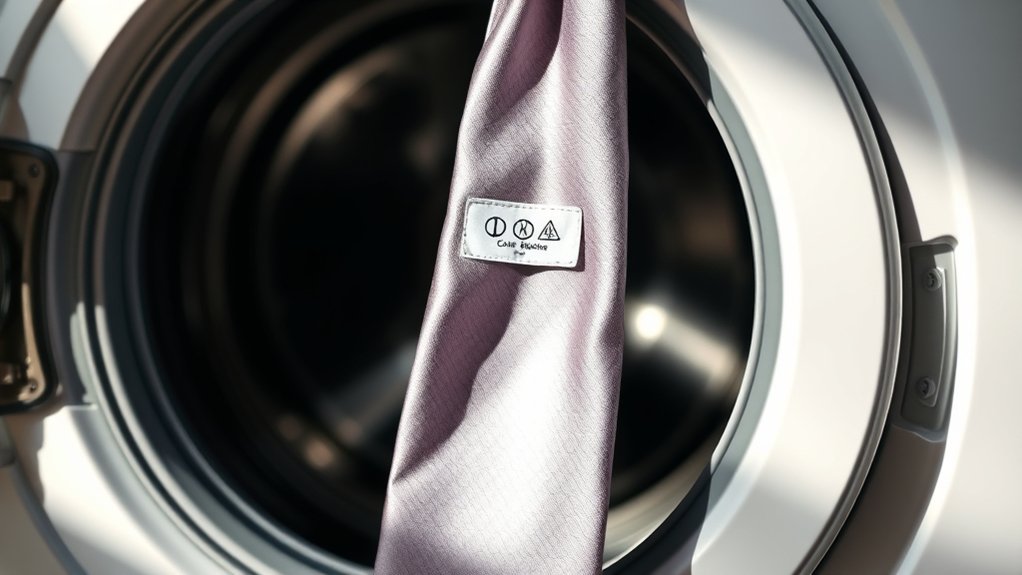
You’ll want to start by decoding the care symbols on your tie’s label to know exactly what’s safe.
Pay close attention to fabric-specific instructions, since materials like silk or wool need extra care.
Understanding these details helps you avoid damaging your tie when cleaning.
Decoding Care Symbols
When you check your tie’s care label, understanding the symbols can save you from damaging your favorite accessory. Look for icons indicating washing instructions—usually a tub symbol; if it’s crossed out, it means no machine washing. A triangle represents bleaching.
If it’s crossed out, avoid bleach at all costs. The square with a circle inside shows drying instructions; a crossed-out circle means no tumble drying. An iron symbol reveals if you can press your tie and at what temperature.
A circle stands for professional cleaning—if it has a letter inside, it specifies the type of solvent cleaners should use. By familiarizing yourself with these symbols, you’ll know exactly how to treat your tie, keeping it sharp without risking damage.
Fabric-Specific Washing Instructions
Although every tie may look similar, their fabrics require very different care to maintain quality. When you check your tie’s care label, focus on the fabric type first. Silk ties usually say “dry clean only,” so avoid washing them yourself—they’re delicate and can easily lose their shape or sheen.
Wool ties might allow gentle hand washing with cold water, but check for specific instructions. Polyester and cotton ties are more forgiving; some can handle machine washing on a gentle cycle, but it’s always safer to use a laundry bag. If the label advises against washing, stick to spot cleaning or professional care.
How Machine Washing Can Damage Your Ties
You might think tossing your tie in the washing machine saves time, but it can easily distort the fabric. The agitation and spinning can ruin the tie’s shape and texture.
Over time, this weakens the structural integrity, leaving your tie looking worn and damaged.
Fabric Distortion Risks
Since ties are often made from delicate fabrics like silk or wool, machine washing can easily distort their shape and texture. When you toss a tie into the washing machine, the agitation and spinning cause fibers to stretch or bunch up, ruining the smooth surface. You might notice wrinkles, puckering, or uneven fabric tension afterward.
The tie’s natural drape depends on its precise weave and finish, which machine washing disrupts. Even in a gentle cycle, water and mechanical motion can weaken the fabric’s structure, leading to unwanted creases that are tough to remove. To keep your ties looking sharp and maintain their original feel, it’s best to avoid machine washing altogether and opt for safer cleaning methods.
Structural Integrity Loss
When you machine wash ties, the constant agitation and tumbling can weaken their internal structure, causing threads to loosen and seams to strain. This damage compromises the tie’s shape and durability, making it lose its crisp, polished look. You might notice fraying edges, puckered seams, or even small tears after a wash cycle.
Over time, the fabric’s weave can break down, leading to permanent deformation. Protect your ties by avoiding machine washing to preserve their structural integrity.
Key risks include:
- Loosened threads weakening the fabric
- Strained or split seams
- Frayed edges and surface wear
- Loss of tie’s original shape
- Permanent fabric deformation
Machine washing isn’t worth the risk if you want your ties to last.
Can You Wash Silk Ties in the Machine?
Although silk ties are delicate and require careful handling, you might wonder if tossing them in the washing machine is a viable option. The truth is, machine washing silk ties is risky. The agitation and spinning can distort the fabric, ruin the shape, and cause color fading or bleeding.
Even on a gentle cycle with cold water, the constant movement can weaken the fibers. Most silk ties have a lining and stitching that won’t hold up well under machine stress. If you must clean a silk tie, machine washing isn’t your best bet.
Instead, consider spot cleaning or professional dry cleaning to preserve its appearance and structure. Machine washing silk ties often leads to damage you can’t easily fix.
How to Handwash Delicate Ties Safely
When handwashing delicate ties, you’ll want to pick a gentle detergent and use cool water to protect the fabric. Avoid harsh scrubbing and soaking for too long to keep the tie’s shape intact.
After rinsing, lay the tie flat to dry without wringing to prevent damage.
Choosing Gentle Detergents
Since delicate ties require extra care, choosing a gentle detergent is essential to preserve their fabric and shape. Harsh chemicals or strong detergents can damage silk, wool, or other sensitive materials, causing fading or weakening fibers. When selecting a detergent, look for one that’s specifically formulated for delicate fabrics.
Avoid bleach, brighteners, or heavy fragrances, as these can be too aggressive. You want a product that cleans effectively without stripping oils or altering the tie’s texture.
Consider these points when picking your detergent:
- Mild, pH-neutral formula
- Free from enzymes and bleach
- Designed for handwashing or delicate cycles
- Hypoallergenic and fragrance-free options
- Trusted brands with positive reviews
Using the right detergent helps keep your ties looking sharp and lasting longer.
Proper Water Temperature
To keep your delicate ties in top condition, you’ll want to use the right water temperature during handwashing. Lukewarm water, around 30°C (86°F), works best because it’s gentle enough to prevent fabric damage without sacrificing cleaning power. Hot water can weaken fibers and cause colors to fade or bleed.
Cold water might not effectively remove oils or stains. Fill a basin with lukewarm water and add a small amount of gentle detergent, then submerge your tie carefully. Avoid using water that’s too hot or too cold to preserve the tie’s shape and fabric integrity.
Drying Without Damage
How should you dry your tie to avoid damage after handwashing? Start by gently pressing the tie between two clean towels to remove excess water—never wring or twist it.
Then, lay your tie flat on a dry towel, reshaping it to its original form. Avoid hanging the tie, as this can stretch the fabric and ruin its shape. Keep it away from direct sunlight and heat sources, which can cause fading or shrinkage.
Patience is key; let your tie air dry naturally.
To dry your tie safely:
- Press out water gently with towels
- Lay flat on a dry towel
- Reshape while damp
- Avoid hanging or twisting
- Keep away from direct heat and sunlight
Following these steps helps preserve your tie’s quality and longevity.
How to Spot Clean Ties Without Washing Them
Wondering how to refresh your tie without throwing it in the washing machine? Spot cleaning is your best bet for small stains or spills. Start by blotting the stain gently with a clean cloth—never rub, as it can damage the fabric.
Use a mild detergent mixed with water, and dab the stain carefully. Always test on a hidden area first to avoid discoloration. Let the tie air dry flat.
| Stain Type | Recommended Cleaning Method |
|---|---|
| Oil-based | Dab with cornstarch, then brush |
| Water-based | Blot with mild detergent solution |
| Ink | Use rubbing alcohol sparingly |
Does Using a Laundry Bag Protect Your Ties When Washing?
If spot cleaning doesn’t fully remove a stain, you might consider machine washing your tie, but that comes with risks. Using a laundry bag can offer some protection, but it’s not a guarantee. The bag acts as a barrier, reducing direct friction and preventing the tie from tangling with other items.
Machine washing a tie is risky; a laundry bag helps protect it but doesn’t guarantee safety.
However, delicate fabrics like silk can still get damaged by water and detergent.
Here’s what a laundry bag can do for your tie during washing:
- Minimize fabric abrasion
- Prevent twisting and tangling
- Keep the tie separate from heavier clothes
- Reduce the chance of snags or pulls
- Allow gentler water flow around the tie
Still, proceed with caution and select the gentlest wash cycle.
How to Dry Ties Properly After Washing
Once you finish washing your tie, you’ll want to dry it carefully to maintain its shape and fabric quality. Start by gently pressing out excess water with a clean towel—never wring or twist the tie, as this can cause wrinkles and damage.
Lay the tie flat on a dry towel in a well-ventilated area, away from direct sunlight or heat sources like radiators, which can fade or shrink the fabric. If needed, you can roll the tie in a dry towel to absorb more moisture before laying it flat.
Avoid hanging the tie to dry, since this can stretch it out. Let it air dry completely before storing or wearing to keep your tie looking crisp and fresh.
When Should You Take Your Tie to a Professional Cleaner?
Properly drying your tie helps preserve its look, but some stains and damages go beyond what home care can handle. You should take your tie to a professional cleaner when:
- The fabric is delicate silk or has special finishes.
- Stains are old, set-in, or from substances like wine or ink.
- The tie shows signs of damage, such as fraying or discoloration.
- You’re unsure about the tie’s material or cleaning instructions.
- The tie holds sentimental or high monetary value and you want to avoid risks.
Professionals have the expertise and equipment to treat tough stains and maintain the tie’s structure and color. When in doubt, trusting a specialist prevents accidental damage and keeps your tie looking sharp for years to come.
Frequently Asked Questions
Can Tie Stains Be Removed With Household Products?
You can remove up to 90% of tie stains using household products like baking soda and vinegar. Just apply a paste, let it sit, then gently blot.
You’ll save your tie without harsh chemicals.
How Often Should You Clean Your Ties?
You should clean your ties only when they’re visibly stained or after heavy use. Over-cleaning can damage the fabric, so spot clean gently and reserve full cleaning for occasional deep care to keep them looking sharp.
Are Clip-On Ties Easier to Clean Than Regular Ties?
You might think clip-on ties are easier to clean, and you’d be right—they’re usually made from sturdier materials and don’t require delicate handling like regular ties.
Can You Iron a Tie After Washing?
Yes, you can iron a tie after washing, but you need to be careful. Use a low heat setting and place a cloth between the iron and the tie to avoid damage. Always iron gently to keep it looking sharp.
What Storage Methods Prevent Tie Wrinkles?
Like hanging your coat after a rainy day, you should store ties on a wide hanger or roll them gently. This keeps wrinkles at bay and preserves their sleek, sharp look, ready for your next big moment.
Conclusion
So, you want to toss your tie in the washing machine and hope for the best? Sure, if you enjoy ironing out ruined silk or wrestling with a misshapen mess. While some fabrics might survive the spin, your delicate ties probably won’t thank you.
Instead, spot clean or trust a professional cleaner—because nothing says “I care” like preserving your tie’s dignity, not turning it into a crumpled, washed-out memory. When considering can you wash ties in the washing machine, remember that proper care is key to maintaining their look and longevity. Always opt for gentle cleaning methods to keep your ties looking sharp and stylish.