What Does U E Mean on a Washing Machine and How to Fix It
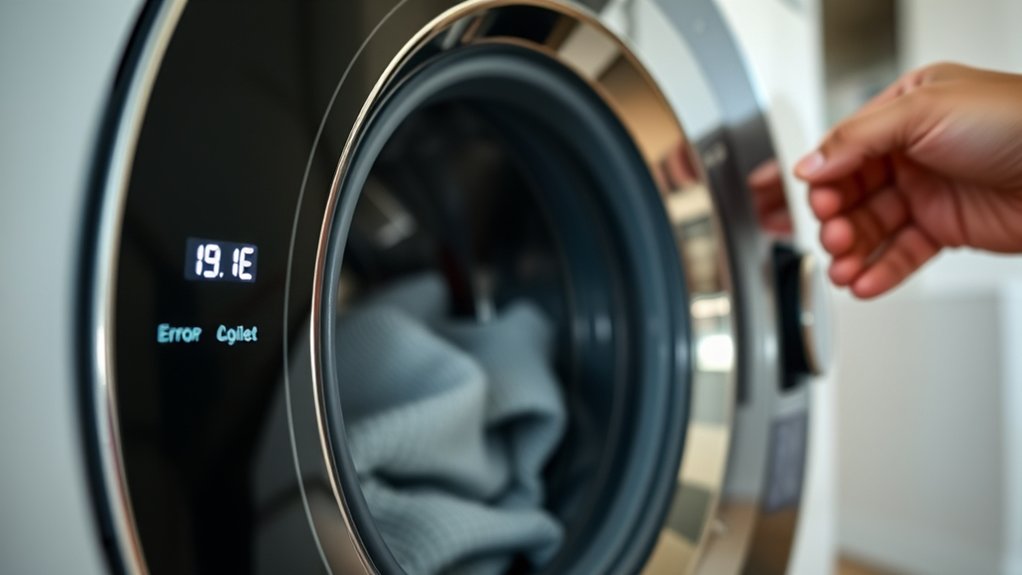
The U E error on your washing machine indicates that the appliance has detected an unbalanced load during the spin cycle. This error causes the spin cycle to pause in order to protect the drum from potential damage. Understanding what U E means on a washing machine is essential for effective troubleshooting and maintenance.
To fix the U E error, start by unplugging your washer. Then, redistribute the clothes evenly inside the drum, making sure to separate heavy items from lighter ones. Avoid overloading the machine, as this often causes imbalance during spinning.
After redistributing the laundry, restart the cycle and ensure that your washing machine is placed on a level surface. If the U E error continues to appear, it may be necessary to inspect the suspension parts for wear or damage.
Keep reading to discover more tips for preventing and troubleshooting this common issue.
Key Takeaways
- U E on a washing machine indicates an unbalanced load caused by unevenly distributed clothes inside the drum.
- To fix the U E error, redistribute clothes evenly, separating heavy and bulky items for better balance.
- Reset the washer by unplugging it for a minute, then restart to clear the error and resume normal operation.
- Inspect for foreign objects blocking the drum and ensure the washer is level to prevent persistent U E errors.
- If imbalance errors continue, check suspension springs and shock absorbers for wear or damage and replace if needed.
What Does the U E Error Code Mean on a Washing Machine?
What does the U E error code mean on your washing machine? This code usually signals an unbalanced load. When your washer detects that clothes aren’t distributed evenly inside the drum, it triggers the U E code.
This imbalance causes the drum to spin irregularly, which can lead to excessive vibrations and potential damage. Your machine uses sensors to monitor the load’s position and weight distribution. If the sensors spot a significant imbalance, the washer pauses the cycle to prevent problems.
Recognizing this code helps you understand why your machine stopped mid-cycle. It’s not a sign of a major malfunction but a prompt to check how your laundry is arranged. Knowing this keeps your washer running smoothly and extends its lifespan.
How to Fix an Unbalanced Load to Clear the U E Error
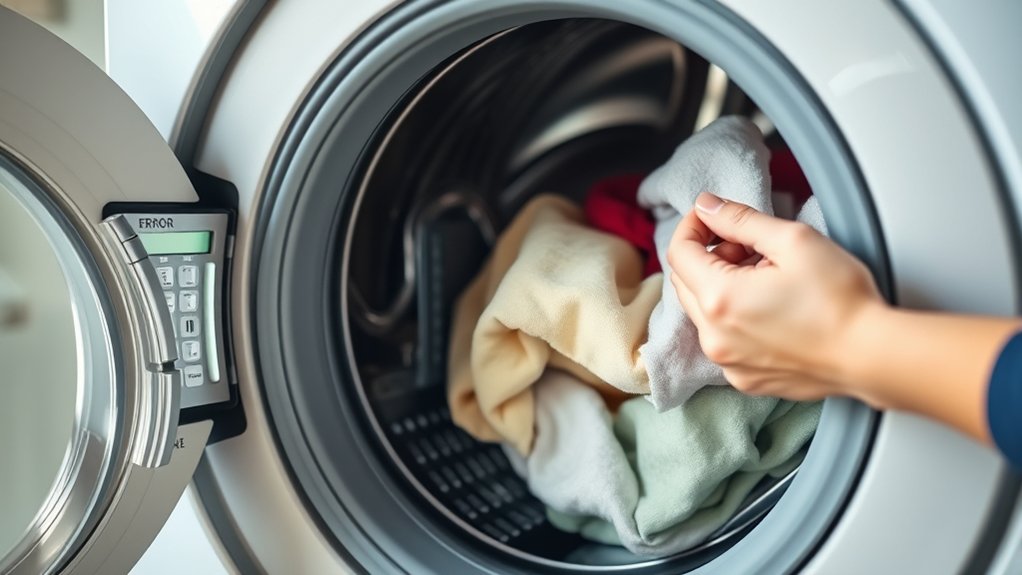
To fix the U E error, start by redistributing your laundry evenly inside the drum. Make sure your load isn’t too small or too large, as both can cause imbalance.
Adjusting the load size and spread will help the machine spin smoothly and clear the error.
Redistributing Laundry Evenly
When your washing machine shows the U E error, it usually means the load is unbalanced, causing the drum to wobble during the spin cycle. To fix this, open the washer and redistribute the laundry evenly around the drum. Avoid bunching all heavy items on one side.
Instead, spread clothes, towels, and heavier fabrics uniformly. If you have a bulky item like a blanket, place it apart from other clothes to prevent imbalance. After rearranging, close the lid and restart the spin cycle.
This simple step often clears the U E error by stabilizing the drum’s movement. Remember, balancing the load helps your machine run smoothly and prevents unnecessary wear and tear.
Adjusting Load Size
One common cause of the U E error is overloading or underloading your washing machine. To fix this, start by checking the load size. If your washer is overloaded, remove some items to lighten the load.
This helps the drum spin evenly without causing imbalance. On the flip side, if the load is too small, add a few more items to help distribute the weight better. Avoid washing just one heavy item alone, as it can cause the drum to wobble.
How to Check if Your Laundry Load Is Unbalanced
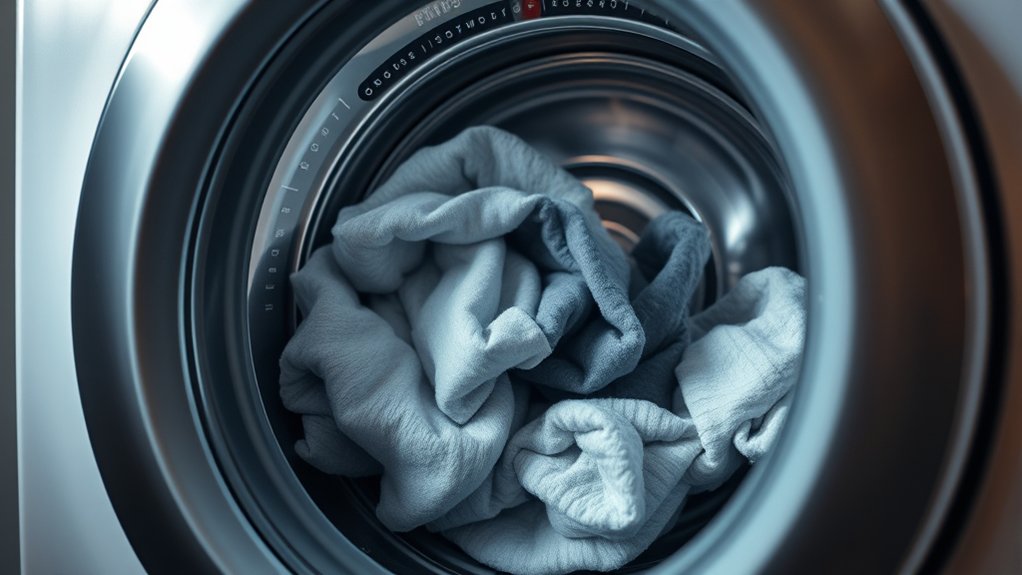
Although your washing machine might seem fine at first, an unbalanced laundry load can cause it to vibrate excessively or stop mid-cycle. To check if your load is unbalanced, open the door once the machine pauses and carefully observe the clothes inside. If items are all bunched up on one side or unevenly distributed, your load is likely unbalanced.
You can also gently press down on the drum; if it feels uneven or wobbles, that’s another sign. After the washer stops, listen for loud thumping or banging sounds, which often indicate imbalance. To fix this, redistribute the clothes evenly around the drum, mixing heavier and lighter items.
This simple check helps guarantee your washing machine runs smoothly without interruptions.
Why Does an Unbalanced Load Trigger the U E Error?
When your laundry isn’t evenly spread out, the washing machine’s sensors detect the imbalance and trigger the U E error. This happens because an uneven load can cause the drum to spin irregularly, risking damage to the machine.
Understanding how load distribution affects the spin cycle helps you prevent this error and keep your washer running smoothly.
Load Distribution Importance
Why does an unbalanced load trigger the U E error on your washing machine? It happens because proper load distribution is essential for your washer’s stability during the spin cycle. When clothes bunch up on one side, the drum becomes unevenly weighted.
This imbalance causes excessive vibration and prevents the drum from spinning smoothly. Your washing machine detects this and displays the U E error to protect itself from damage. If you want to avoid this, make sure to spread clothes evenly around the drum.
Mixing large and small items or redistributing the load by hand can help. By paying attention to load distribution, you’ll reduce the chances of the U E error and keep your washer running efficiently.
Sensor Detection Mechanism
Because your washing machine relies on sensors to monitor the drum’s motion, it can quickly detect when the load is unbalanced. These sensors measure the drum’s speed and vibrations, ensuring smooth operation. When the load shifts unevenly, the sensors pick up unusual vibrations or inconsistent drum rotation.
This triggers the U E error to prevent damage or inefficient spinning.
Here’s why the sensors react this way:
- They track drum speed to spot irregular rotation patterns.
- They sense vibrations that exceed normal thresholds.
- They detect sudden changes indicating heavy or lopsided loads.
- They communicate with the control board to pause or adjust the cycle.
Understanding this helps you address the U E error by evenly distributing your laundry before starting the wash.
Effects On Spin Cycle
The sensors’ detection of an uneven load directly impacts the spin cycle by causing the machine to stop or slow down to prevent damage. When your washer senses that clothes are clumped on one side, it can’t spin evenly. This imbalance puts extra stress on the drum and motor, risking mechanical failure.
To protect itself, the washer triggers the U E error and pauses the spin cycle. You’ll notice the drum either stops spinning or spins at a much slower speed. This interruption guarantees your machine doesn’t sustain damage from excessive vibrations or shaking.
Once you redistribute the load evenly, the sensor will detect balance, clearing the error and allowing the spin cycle to resume normally.
Can Overloading or Underloading Cause the U E Error?
Even if your washing machine seems to handle loads easily, overloading or underloading can trigger the U E error. This error usually indicates an unbalanced load, which happens when the weight inside the drum isn’t distributed properly. When you overload, clothes get packed tightly, making it hard for the drum to spin evenly.
Underloading, on the other hand, means there’s not enough weight to keep the drum balanced during spinning.
To avoid the U E error, keep these tips in mind:
- Don’t cram too many clothes in at once
- Avoid washing just one or two heavy items alone
- Distribute clothes evenly around the drum
- Mix different-sized items for balanced weight
Proper loading helps keep your washer running smoothly without errors.
How to Reset Your Washing Machine After Fixing the U E Error
Once you’ve addressed the cause of the U E error, you’ll need to reset your washing machine to clear the code. You can do this by either power cycling the machine or using the control panel reset function.
Both methods help your washer recalibrate and get back to normal operation.
Power Cycle Procedure
How do you reset your washing machine after fixing the U E error? The simplest way is to perform a power cycle. This process clears any residual error codes and resets the machine’s internal systems.
Here’s how you do it:
- Unplug the washing machine from the power outlet.
- Wait for about 5 minutes to allow the internal components to fully power down.
- Press and hold the Start/Pause button for 5 seconds to discharge any remaining power.
- Plug the machine back in and turn it on.
This power cycle procedure helps refresh the control board and often clears the U E error from the display. If the error persists, you might need to inspect the load balance or continue troubleshooting.
Control Panel Reset
Although performing a power cycle often clears the U E error, you may need to reset the control panel to fully restore your washing machine’s normal operation. To do this, first unplug your machine from the power source and wait about one minute. This pause lets the control board fully reset.
Next, plug the machine back in and press the “Start/Pause” button to wake the control panel. If your model has a reset button, press and hold it for three to five seconds. After that, select a simple wash cycle and start the machine to check if the error disappears.
If the U E error returns, repeat the reset or consult your user manual for model-specific instructions. This quick reset often resolves lingering control panel glitches.
Troubleshooting Persistent U E Errors After Load Adjustment
If the U E error keeps showing up even after you’ve adjusted the load, it means the washing machine still detects an imbalance during the spin cycle. You’ll want to troubleshoot further to pinpoint the issue. First, check for any heavy items clumped together causing uneven weight.
Next, inspect the drum to ensure nothing is stuck or blocking movement. Also, examine the suspension springs and shock absorbers for wear or damage that could prevent proper balancing. Finally, verify the washing machine is level on the floor since an uneven surface can trigger the error.
- Separate bulky and heavy garments before loading
- Remove any foreign objects inside the drum
- Check and replace faulty suspension components
- Use a spirit level to confirm the washer’s placement
These steps help resolve persistent U E errors efficiently.
How to Properly Distribute Clothes to Avoid the U E Error
When you distribute clothes evenly inside the drum, you reduce the chance of triggering the U E error. Start by separating heavy and light items to prevent unbalanced loads. Don’t overload the washer; leave enough space for clothes to move freely.
If you’re washing bulky items like blankets or jackets, balance them with smaller garments on the opposite side. Avoid bunching clothes together—spread them out evenly around the drum’s circumference. After loading, give the clothes a quick shake to help them settle properly.
This simple step prevents clumping, which can cause imbalance during spin cycles. By following these practices, you maintain proper load balance, minimize vibrations, and keep your washing machine running smoothly without the U E error interrupting your laundry routine.
When to Inspect Your Washer’s Suspension and Shock Absorbers for U E Issues
You should inspect your washer’s suspension and shock absorbers whenever the U E error persists despite properly balancing your load. These components help stabilize the drum during cycles, so worn or damaged parts can trigger the error. Check them if you notice excessive vibrations, loud banging noises, or uneven spinning.
Inspect suspension and shock absorbers if the U E error persists despite balanced loads.
Here’s when to take a closer look:
- Your washer shakes violently even with balanced loads
- You hear knocking sounds during the spin cycle
- The drum feels loose or moves excessively when you push it
- The U E error appears repeatedly after correcting load distribution
Addressing suspension and shock absorber issues promptly can save you from costly repairs and keep your washer running smoothly.
How Different Washing Machine Models Display the U E Error
Because washing machine brands and models vary in design, the way they display the U E error code can differ considerably. Some models show the exact code “U E” or “UE” directly on the digital display, making it straightforward to identify. Others might flash specific indicator lights or use a combination of blinking LEDs to signal the same problem without showing the letters.
For example, Samsung washers often display “UE” clearly, while LG machines may flash the door lock and spin cycle lights together. If your model lacks a digital screen, check the user manual to interpret flashing light patterns. Knowing how your specific washer signals the U E error helps you quickly diagnose and address unbalanced load issues, so you can get back to washing without delay.
Tips to Prevent U E Errors and Keep Your Washer Balanced
Although U E errors can be frustrating, taking simple steps to balance your washer load can prevent them from occurring. You want to avoid uneven weight distribution inside the drum, which triggers the error.
U E errors happen when your washer’s load is uneven—balancing clothes inside the drum helps prevent these issues.
Here are some tips to keep your washer balanced and running smoothly:
- Distribute clothes evenly around the drum, mixing heavy and light items.
- Avoid overloading or underloading your washer; follow the recommended load size.
- Shake out bulky items like blankets or towels before placing them inside.
- Use the washer’s “balance” or “spin” settings if available to help even out the load.
Frequently Asked Questions
Can Detergent Type Affect the U E Error on My Washing Machine?
Yes, using the wrong detergent can cause the U E error by creating excess suds or improper rinsing. You should use high-efficiency detergent and the right amount to keep your washing machine balanced and running smoothly.
Does the U E Error Impact the Washing Machine’s Water Usage?
Yes, the U E error can increase your washing machine’s water usage because it may cause the machine to repeat cycles or try to rebalance loads, using extra water each time.
You’ll want to fix it promptly.
Are There Specific Fabrics That Cause the U E Error More Often?
Yes, heavy fabrics like towels or blankets often cause the U E error because they can unbalance the load. You’ll want to mix lighter items evenly to avoid triggering the error and keep your machine running smoothly.
Can a Faulty Door Lock Trigger the U E Error Code?
Yes, a faulty door lock can trigger the UE error code. If the lock isn’t secure, the machine won’t spin properly.
You should check the door lock and replace it if it’s damaged or malfunctioning.
How Does the Washing Machine’s Spin Speed Relate to the U E Error?
Think of spin speed as your washing machine’s heartbeat; if it’s off balance or too slow, it triggers the U E error. You’ll need to adjust or repair the spin function to fix it and keep things smooth.
When the spin speed is not optimal, the machine struggles to maintain balance. This imbalance causes the U E error to appear on the display. Addressing spin speed issues is key to resolving this problem.
Conclusion
Dealing with the U E error on your washing machine might feel like trying to tame a wild beast, but it’s really just your washer begging for balance. Ignore it, and your laundry day could turn into a chaotic storm of clunks and stops.
So, take control—redistribute those clothes, avoid overloading, and check your suspension. With a little care, your machine will spin smoothly, saving you from a laundry disaster of epic proportions!
Understanding what does U E mean on a washing machine helps you address the issue quickly. By fixing this error promptly, you ensure your washer operates efficiently without interruptions. Proper maintenance and balance are key to preventing the U E error and enjoying hassle-free laundry days.