How to Clean Washing Machine Gasket in 7 Easy Steps
To clean your washing machine gasket effectively and keep it mold-free, follow these 7 easy steps. Regular cleaning of the washing machine gasket is essential to prevent mold, mildew, and unpleasant odors from developing. You’ll need supplies such as gloves, a cloth, a toothbrush, and a vinegar-baking soda solution for the best results.
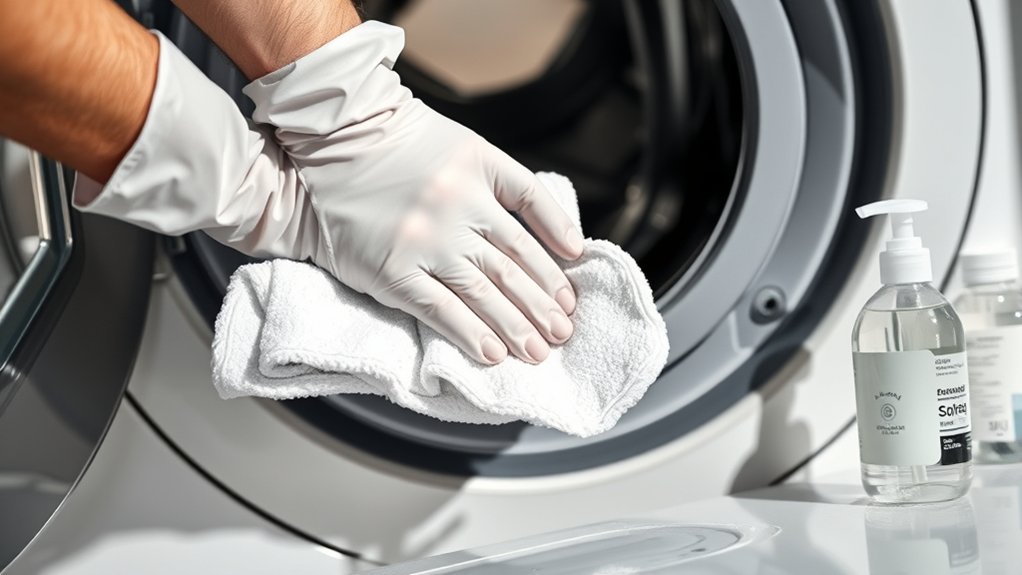
Start by inspecting the gasket carefully for any mold, debris, or damage. Pull back the gasket to apply your cleaning solution, scrubbing away grime and mold buildup. Wipe it thoroughly to remove loosened dirt and residue.
Next, dry all the folds of the gasket completely to stop moisture buildup and prevent mold growth. Leave the washing machine door open to allow the gasket to air out properly.
Maintaining this routine regularly will help keep your machine fresh and odor-free. Here’s how you can take care of it step-by-step.
Key Takeaways
- Inspect the gasket weekly for mold, mildew, debris, and damage before cleaning.
- Prepare a cleaning solution of equal parts water and white vinegar, adding baking soda for tough spots.
- Pull back the gasket and scrub hidden grime with a brush dipped in the vinegar solution.
- Apply baking soda paste on stubborn mold spots, let sit, then scrub and rinse with a damp cloth.
- Thoroughly dry the gasket folds and leave the washer door open to prevent moisture buildup and mold growth.
Why Cleaning Your Washing Machine Gasket Matters
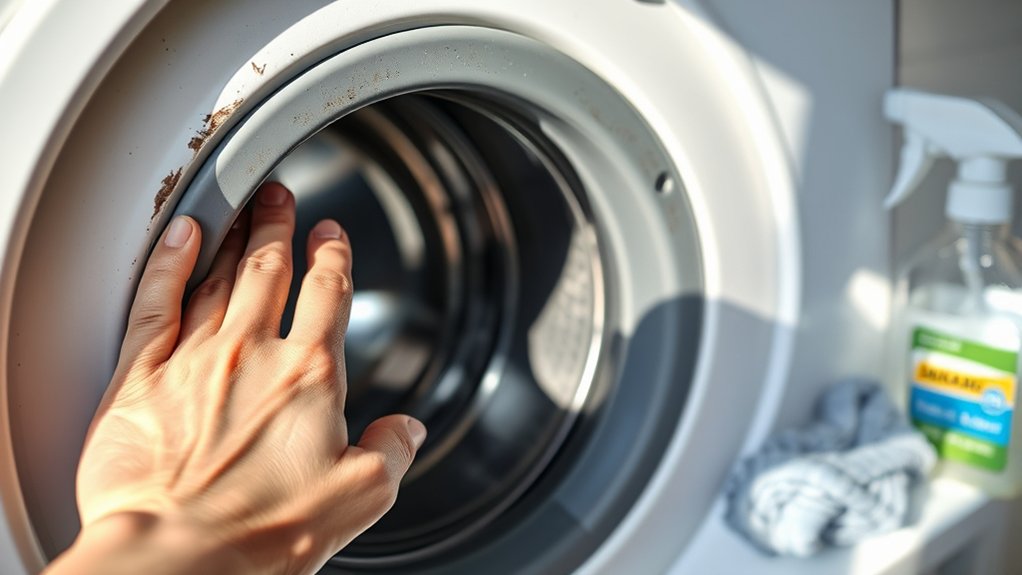
Although it’s easy to overlook, cleaning your washing machine gasket is essential because it prevents mold, mildew, and unpleasant odors from building up. The gasket is a hidden hotspot where moisture and detergent residue collect, creating the perfect environment for bacteria and grime to thrive. If you don’t clean it regularly, you’ll likely notice a musty smell that transfers to your clothes.
Over time, the mold can damage the gasket, leading to leaks and costly repairs. By keeping this rubber seal clean, you guarantee your machine runs efficiently and your laundry stays fresh. Taking a few minutes to wipe down the gasket not only improves hygiene but also extends your washer’s lifespan, saving you money and hassle in the long run.
Gather the Cleaning Supplies You’ll Need
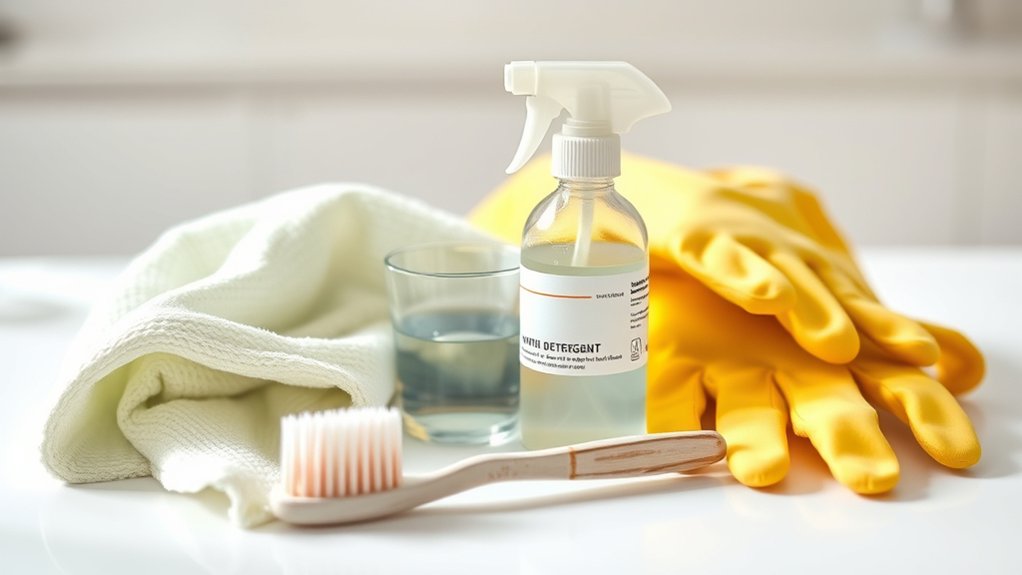
Before you start cleaning, make sure you have the right tools like a soft cloth, an old toothbrush, and a spray bottle. Choose safe cleaning solutions such as vinegar or mild detergent to avoid damaging the gasket.
Don’t forget to wear gloves to protect your hands from any harsh chemicals.
Essential Cleaning Tools
When you’re ready to clean your washing machine gasket, gather a few essential tools to make the job easier and more effective. You’ll need a soft cloth or microfiber towel to wipe away dirt and moisture without damaging the rubber. A small, soft-bristled brush, like an old toothbrush, helps reach tight crevices where grime hides.
Rubber gloves protect your hands from dirt and cleaning agents. Keep a spray bottle handy for applying your cleaning solution evenly. You might also want a cotton swab or toothpick to get into stubborn corners.
Finally, having a bucket or bowl nearby makes rinsing or soaking parts simple. With these tools ready, you’ll tackle the gasket cleaning efficiently and thoroughly.
Safe Cleaning Solutions
How do you choose the safest cleaning solutions for your washing machine gasket? You want something effective but gentle enough to avoid damaging the rubber. Start by gathering household staples that are both safe and powerful.
Here’s what you’ll need:
- White vinegar: Cuts through grime and kills mold naturally.
- Baking soda: Acts as a gentle abrasive to scrub away stubborn dirt.
- Mild dish soap: Breaks down grease without harsh chemicals.
- Hydrogen peroxide: Disinfects and removes mildew safely.
These options won’t harm your gasket or leave toxic residues. Using them ensures your cleaning is thorough, safe, and leaves your washing machine fresh. Keep these supplies handy, and you’ll be ready to tackle the gasket cleaning with confidence and care.
Protective Gear Needed
Although cleaning your washing machine gasket is straightforward, you’ll want to protect yourself with the right gear to avoid skin irritation from cleaning solutions and mold exposure. Start by putting on rubber gloves to shield your hands from harsh chemicals and grime. Wearing a mask is also smart, especially if you’re sensitive to mold spores or strong cleaning fumes.
Safety goggles can protect your eyes from splashes while you scrub. Dress in old clothes you don’t mind getting dirty or stained. Having a microfiber cloth or sponge ready will help you clean more effectively without spreading contaminants.
Inspect the Gasket for Mold and Debris
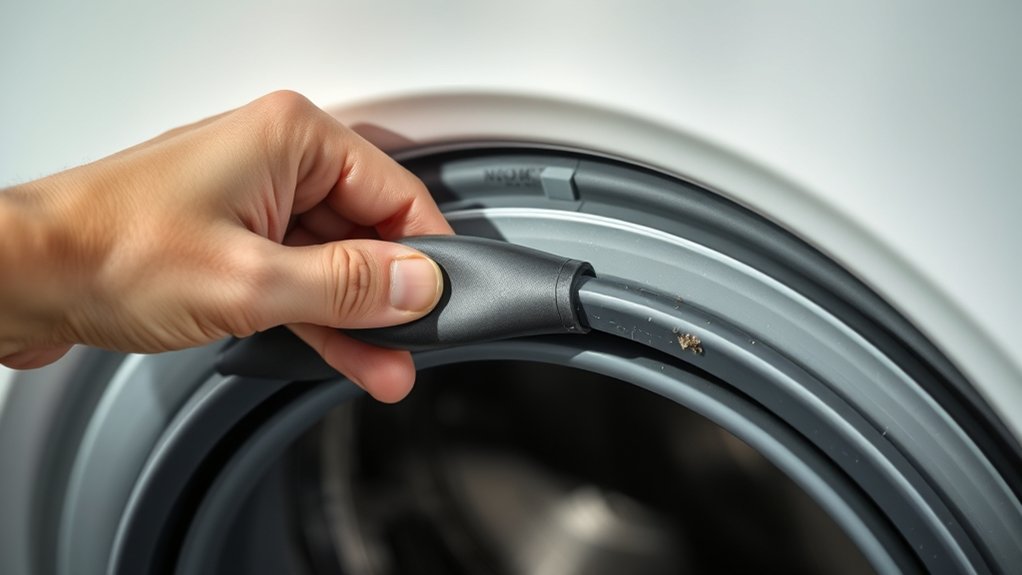
Before you start cleaning, take a close look at the washing machine gasket to spot any mold, mildew, or debris buildup. Mold often hides in the folds, creating stubborn black spots that can cause unpleasant odors and damage. Debris like lint, coins, or hair might be trapped, affecting your washer’s performance.
Inspect the washing machine gasket carefully for hidden mold, mildew, and debris before cleaning to prevent odors and damage.
As you inspect, watch for:
- Dark, slimy patches signaling mold growth
- Cracked or worn rubber that needs attention
- Bits of fabric or dirt stuck in crevices
- Unusual smells hinting at hidden grime
Catching these issues early helps you tackle them effectively, ensuring your washing machine stays fresh and runs smoothly. Don’t rush this step—it sets the stage for a thorough, successful cleaning.
Make a Simple Cleaning Solution for Your Washing Machine Gasket
You’ll need just a few common ingredients to make an effective cleaning solution for your washing machine gasket. Mix equal parts water and white vinegar, then add a bit of baking soda for extra scrubbing power.
Store the solution in a spray bottle for easy use whenever you need to clean.
Ingredients Needed
To make a simple cleaning solution for your washing machine gasket, gather a few common household ingredients that effectively break down mold, dirt, and grime. These easy-to-find items will help you tackle stubborn buildup and keep your machine fresh and odor-free.
Here’s what you’ll need:
- White vinegar: Its natural acidity dissolves soap scum and kills mold spores.
- Baking soda: Acts as a gentle abrasive and deodorizer.
- Liquid dish soap: Cuts through grease and grime.
- Water: Dilutes the mixture for safe application.
Having these ingredients on hand means you’re ready to refresh your washing machine gasket without harsh chemicals. You’ll appreciate how simple and effective this solution is once you see the clean results.
Mixing Instructions
Gather the ingredients listed earlier and combine them carefully to create an effective cleaning solution. Start by pouring half a cup of white vinegar into a small bowl. Next, add a quarter cup of baking soda slowly to avoid excessive fizzing.
Stir the mixture gently until it forms a smooth paste. If the paste is too thick, add a tablespoon of water to reach the right consistency. This solution will help break down mold and mildew on your washing machine gasket.
Use it promptly for the best results, as the baking soda and vinegar react and lose potency over time. Now you’re ready to apply this mixture to the gasket for a thorough clean that eliminates grime and odors efficiently.
Storage Tips
Although the cleaning solution works best when used immediately, you can store any leftover paste in an airtight container for up to a week. Keeping it sealed prevents it from drying out and losing its effectiveness, so you’re ready for your next cleaning session.
Store the container in a cool, dry place away from sunlight to maintain its potency. Remember to label the container with the date you made the solution to avoid using expired paste.
Here are some storage tips that’ll make your cleaning routine easier and more satisfying:
- Keep it airtight to lock in moisture and potency
- Store in a cool, dark spot to prevent degradation
- Label with the preparation date to track freshness
- Avoid contamination by using clean utensils each time
These small steps help you stay on top of your washing machine care effortlessly.
Remove Dirt and Mold From the Gasket Thoroughly
When you start cleaning the washing machine gasket, focus on removing all the dirt and mold trapped in its folds. Pull back the rubber gasket gently to expose hidden grime. Use a soft brush or an old toothbrush dipped in a mixture of equal parts water and white vinegar to scrub the mold and dirt away.
Pay special attention to crevices and folds where moisture lingers. If you spot stubborn mold, apply a small amount of baking soda paste (baking soda mixed with water) to the area, let it sit for 10 minutes, then scrub again. Rinse the gasket with a damp cloth to remove loosened debris and cleaning solution.
Repeat the process until the gasket looks clean and mold-free. This thorough cleaning helps maintain your washer’s hygiene and prevents odors.
Wipe and Dry the Gasket to Prevent Moisture Build-Up
Since moisture encourages mold growth, you’ll want to wipe and dry the washing machine gasket thoroughly after cleaning. Leaving it damp invites mildew, unpleasant odors, and potential damage. To keep your gasket fresh and clean, follow these simple steps:
Wipe and dry the washing machine gasket thoroughly to prevent mold, odors, and damage.
- Use a soft, dry cloth to absorb all moisture in the folds.
- Pay extra attention to crevices where water tends to linger.
- Leave the washing machine door open for a while to air out.
- Avoid using harsh chemicals that could irritate the gasket material.
Taking these quick actions not only prevents mold but also extends the life of your washing machine, keeping your laundry smelling fresh and your home healthier. Don’t rush this step—it’s the key to lasting cleanliness!
Maintain Your Washing Machine Gasket Regularly to Prevent Mold
Taking the time to thoroughly dry your washing machine gasket is a great start, but keeping mold at bay requires regular upkeep. Make it a habit to inspect the gasket weekly for any signs of mold, mildew, or dirt. Use a cloth dampened with a mixture of equal parts water and white vinegar to wipe the gasket clean.
This natural solution kills mold spores without harsh chemicals. After cleaning, leave the washing machine door open for a few hours to allow the gasket to air dry completely. If you notice stubborn mold spots, apply a small amount of baking soda paste, scrub gently, and rinse.
Staying consistent with these simple steps prevents mold buildup, prolongs your machine’s life, and keeps your laundry fresh and hygienic.
Frequently Asked Questions
Can I Use Bleach Safely on My Washing Machine Gasket?
Yes, you can use bleach safely on your washing machine gasket, but dilute it with water to avoid damage. Always wear gloves, ventilate the area, and rinse thoroughly afterward to prevent any residue that could harm your clothes.
How Often Should I Replace the Washing Machine Gasket?
Think of your gasket as a trusted shield that weakens over time. You should replace it every 3 to 5 years or when cracks and mold appear, ensuring your washing machine stays strong and leak-free for years ahead.
Does a Dirty Gasket Affect Washing Machine Performance?
Yes, a dirty gasket can affect your washing machine’s performance by causing leaks, unpleasant odors, and mold buildup.
You’ll notice clothes might not get as clean, and the machine may develop drainage or sealing issues if neglected.
Can Washing Machine Gasket Mold Cause Health Issues?
Mold on your washing machine gasket can affect your health like smoke in a closed room—it triggers allergies, respiratory issues, and skin irritation.
Are There Commercial Products Specifically for Cleaning Gaskets?
Yes, you’ll find commercial products designed specifically for cleaning washing machine gaskets, like mold removers and mildew cleaners. They’re formulated to tackle buildup effectively, making your gasket cleaner and helping prevent odors and damage.
Conclusion
Keeping your washing machine gasket clean is essential to curb costly contamination and clingy mold. By regularly removing residue and rinsing the rubber ring, you’re safeguarding your soap’s effectiveness and stopping stubborn smells.
Stay steadfast in your schedule, and you’ll save time, trouble, and toxins. Remember, routine rinsing and wiping work wonders to ward off wear and unwanted woe.
So, commit to consistent care and keep your machine fresh and functioning flawlessly! Regular cleaning of the washing machine gasket helps prevent mold buildup, eliminates foul odors, and ensures optimal appliance performance.