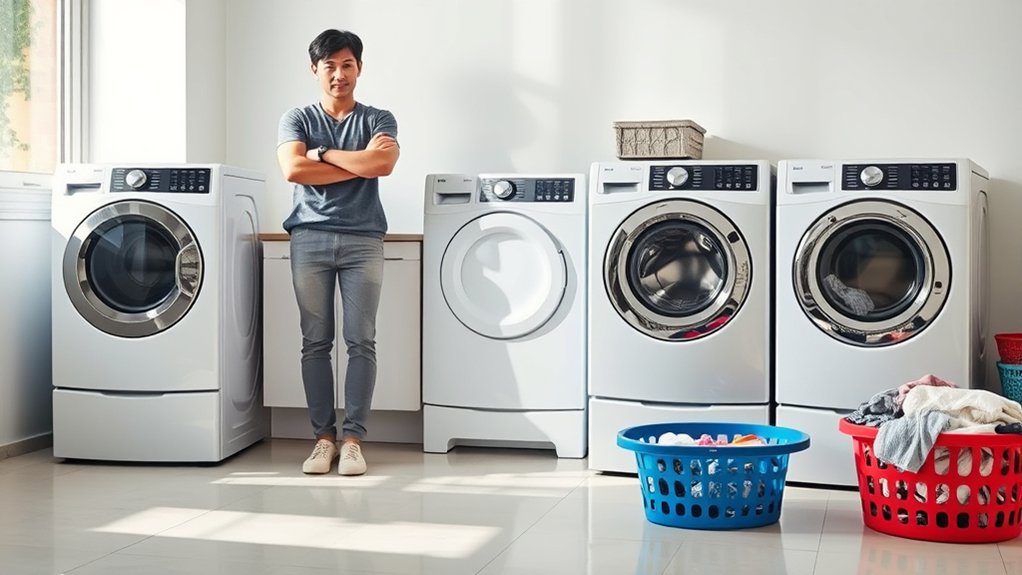
How Big of a Washing Machine Do I Need?
You’ll want a washing machine size that fits your household size and laundry habits to ensure efficiency and convenience. Choosing the right washing machine capacity can save you time, water, and energy while handling your laundry effectively.
Smaller washers (3.5–4.5 cu ft) work well for 1-2 people or frequent small loads, while larger drums (5.5+ cu ft) suit bigger families or bulky items.
Also, consider your available space and budget since bigger models need more room and often consume more energy. Matching your washing machine size to your specific needs helps you get the ideal fit for your home and lifestyle.
Explore these factors carefully to find a washing machine that works best for you.
Key Takeaways
- Choose washing machine capacity based on household size: 3.5–4.5 cu ft for 1-2 people, 4.5–5.5 cu ft for 3-4, and 5.5+ cu ft for 5+.
- Match machine size to laundry habits, with larger drums for frequent bulky items and smaller ones for frequent small loads.
- Measure available space carefully, considering width and ventilation needs before selecting compact, standard, or large models.
- Balance capacity with energy and water use, as larger machines typically consume more resources per cycle.
- Prioritize features and read reviews to ensure the model fits your lifestyle, efficiency goals, and convenience preferences.
What Key Factors Affect Choosing Washing Machine Size?
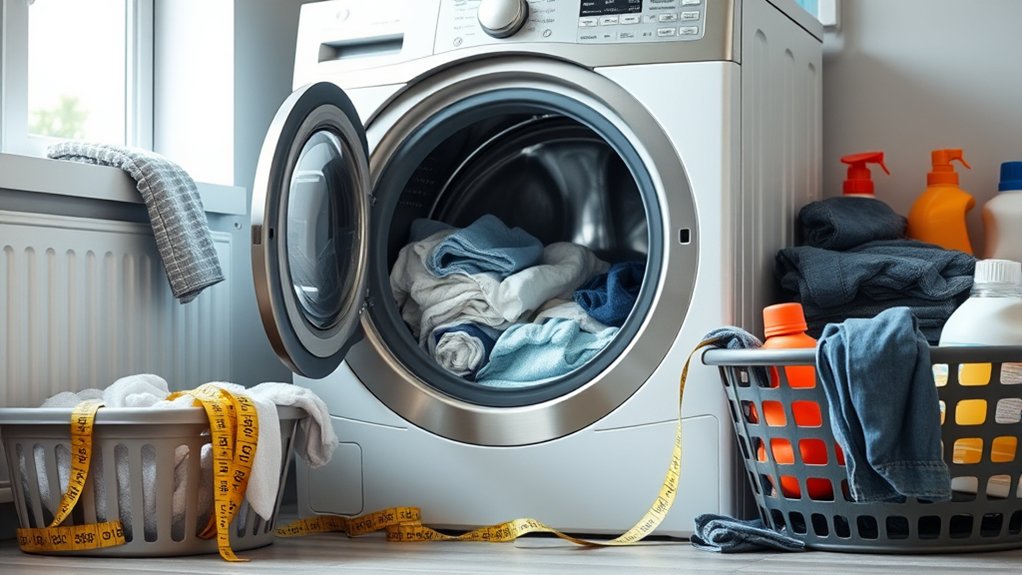
When deciding on the right washing machine size, you’ll want to take into account several key factors that directly impact your choice. First, consider your household size—larger families need bigger machines to handle more laundry at once, saving you time and energy. Next, think about your laundry habits; if you wash bulky items like comforters or blankets often, a larger drum is essential.
Also, evaluate your available space—measure the area carefully to ensure the machine fits comfortably without restricting movement. Don’t forget your budget, as bigger machines often cost more upfront and may use more water and electricity. Finally, consider how frequently you do laundry, since occasional users might prefer a smaller, more economical model.
Balancing these factors helps you pick the perfect washing machine size.
What Does Washing Machine Capacity Actually Mean?
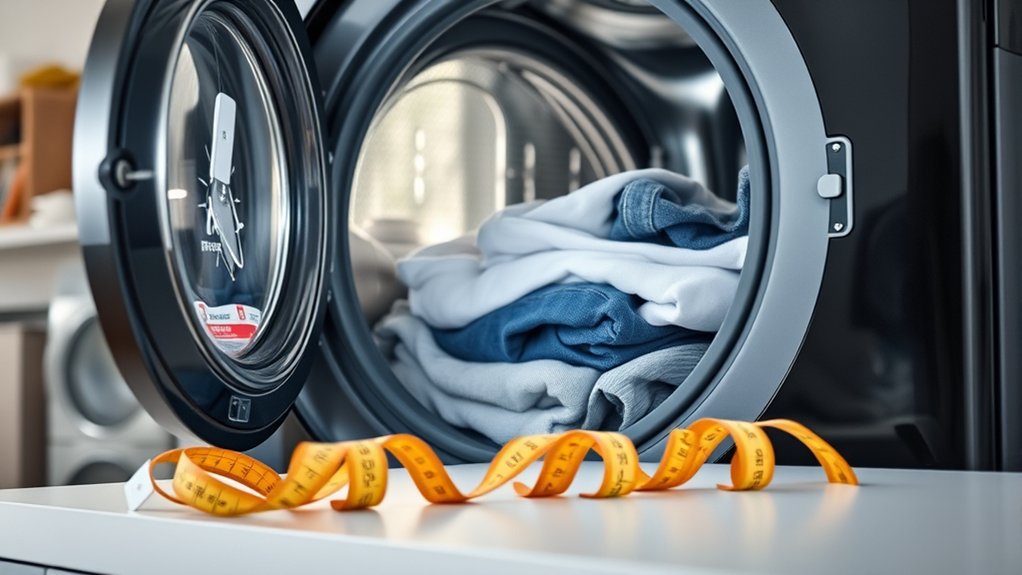
Although washing machine capacity might seem straightforward, it actually refers to the amount of laundry the drum can hold per load, usually measured in cubic feet or kilograms. When you see a washer labeled as 4.5 cubic feet, that means the drum has enough space to accommodate roughly that volume of clothes. For front-load washers, capacity is often given in kilograms, indicating the maximum dry weight of laundry you can wash at once.
Understanding this helps you pick a machine that fits your needs without wasting water or energy. If you overload the washer, clothes won’t get clean, and the machine could wear out faster. On the other hand, a larger capacity than you need means you might pay more upfront and use more resources unnecessarily.
How Do Your Weekly Laundry Loads Impact Washer Size?
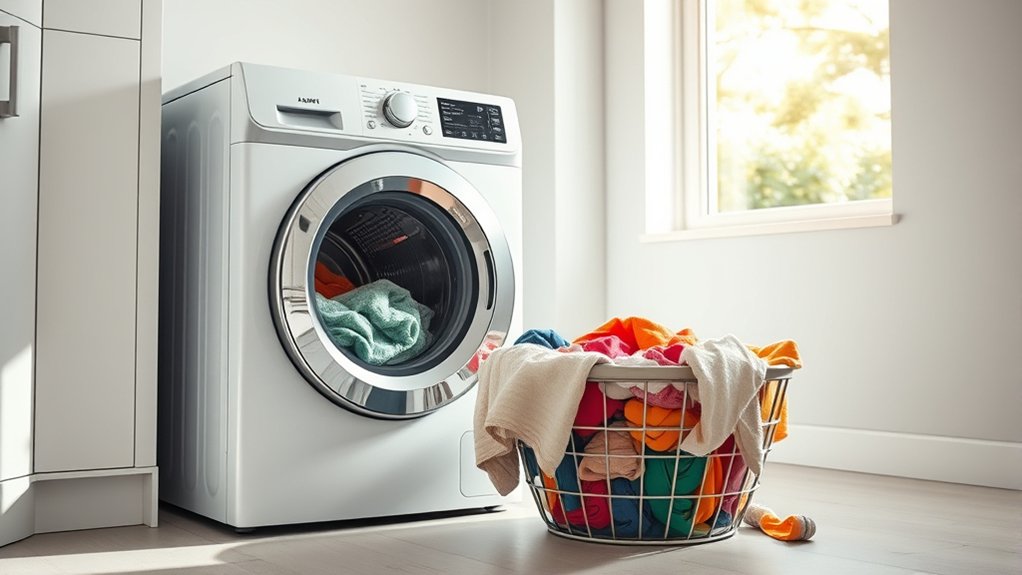
Since your weekly laundry load determines how often you run the washer, it directly influences the size of the machine you need. If you do laundry frequently with small loads, a smaller capacity machine might work fine.
But if you prefer fewer wash cycles, a larger capacity washer saves time by handling bigger loads. Consider these points:
- Load Frequency – More frequent washing means smaller loads and potentially a smaller washer.
- Load Volume – Larger weekly laundry piles require a washer that can accommodate them efficiently.
- Time Savings – Bigger machines reduce the number of cycles, freeing up your schedule.
Understanding your weekly laundry habits helps you pick a washer that fits your routine without unnecessary cycles or wasted energy.
What Washing Machine Size Suits Your Household and Lifestyle?
Your household size and daily habits play a big role in choosing the right washing machine capacity. If you live alone or with a partner and don’t generate much laundry daily, a smaller machine will save water and energy.
Larger families or those with active lifestyles need bigger capacities to handle bulkier items and frequent loads efficiently.
| Household Size | Typical Load Frequency | Recommended Washer Capacity |
|---|---|---|
| 1-2 people | 2-3 times/week | 3.5 to 4.5 cubic feet |
| 3-4 people | 3-5 times/week | 4.5 to 5.5 cubic feet |
| 5+ people | 5+ times/week | 5.5 to 6.5+ cubic feet |
Choose a size that matches your lifestyle to keep laundry day manageable.
How Much Space Do Different Washing Machine Sizes Need?
When selecting a washing machine, you’ll need to take into account the space it will occupy in your home. Different sizes require different amounts of room, so measuring your laundry area first is essential. Here’s a quick guide:
- Compact Machines: Usually 24 inches wide and 24-25 inches deep. Perfect for small apartments but still need clearance for door swing and ventilation.
- Standard Machines: Around 27 inches wide and 30-34 inches deep. These require more space but fit most laundry rooms comfortably.
- Large Capacity Machines: Often 29-30 inches wide and 34-36 inches deep. They need extra space not only for the machine itself but also for easy loading and unloading.
Remember to leave some space around the machine for hoses and air circulation to keep everything running smoothly.
How Does Washing Machine Size Influence Energy and Water Use?
Although larger washing machines can handle more laundry per load, they generally consume more energy and water than smaller models. When you choose a bigger machine, each cycle uses more water to soak and rinse your clothes thoroughly. Similarly, the energy needed to heat that water and power the motor increases.
However, if you have a large household and do fewer loads, a bigger machine might save energy and water overall by reducing the total number of cycles. On the other hand, if you often wash small loads in a large machine, you’ll waste resources. To optimize energy and water use, match the machine size to your typical laundry volume.
That way, you won’t pay for capacity you don’t need or waste resources on oversized loads.
When Is a Compact or Portable Washing Machine the Best Choice?
If you live in a small apartment or have limited space, a compact or portable washing machine can be a game-changer. These machines fit where full-size models can’t and offer flexibility without sacrificing functionality.
You should consider a compact or portable washer if:
- You have minimal laundry needs, like washing a few items regularly.
- You move frequently or live in temporary housing where installing a full machine isn’t practical.
- You lack dedicated laundry hookups but can connect to a sink or use a portable drain.
Choosing a compact or portable washer helps save space, reduces water and electricity use for smaller loads, and provides convenience without a long-term commitment to a bulky appliance.
It’s a smart choice when space or lifestyle limits your options.
How Does Budget Affect Your Washing Machine Size and Features?
Choosing the right washing machine size often depends on your budget as much as your space. Larger machines usually cost more upfront and consume more water and energy, so if you’re on a tight budget, a mid-sized or compact model might be smarter. You’ll save money initially and on utility bills long term.
However, smaller machines may lack advanced features like steam cleaning or smart controls. If you want these extras, be prepared to invest more. Balancing size with features is key—don’t overspend on a large washer with features you won’t use.
Instead, focus on your actual laundry needs and pick a machine that offers the best value without stretching your budget too thin.
How to Adjust Your Washing Machine Size When Your Needs Change?
When your household size or laundry habits change, you’ll need to reconsider the size of your washing machine to keep up with your new demands. Adjusting your machine size ensures efficiency and saves time.
- Assess Your New Laundry Volume: Track how many loads you do weekly. More family members or frequent heavy items like bedding means you’ll need a larger capacity.
- Evaluate Space and Installation: Make sure your laundry area can fit a bigger machine if upgrading. Measure carefully to avoid surprises.
- Consider Energy and Water Use: Larger machines use more resources. Balance capacity with efficiency to avoid higher utility bills while meeting your needs.
What Are Smart Tips for Buying the Right Washing Machine Size?
Adjusting your washing machine size based on your changing needs sets the stage for making a smart purchase. First, assess your average laundry load—if you often wash bulky items or large loads, go for a larger capacity. Next, measure your laundry space to verify the machine fits comfortably.
Don’t forget to contemplate energy efficiency; bigger machines use more water and power, so balance size with eco-friendliness. Think about your lifestyle too—if you’re frequently washing small loads, a compact model might save time and resources. Finally, read reviews and check for features like quick wash cycles or allergen settings that suit your family’s needs.
Frequently Asked Questions
How Do Washing Machine Sizes Vary by Brand?
You’ll find washing machine sizes vary by brand mainly in drum capacity and external dimensions. Some brands offer compact models, while others focus on larger loads.
Check specs carefully to match your space and laundry needs.
What Maintenance Is Required for Different Washer Sizes?
You’ll need to clean filters and detergent dispensers regularly, regardless of size. Larger washers might require more frequent drum cleaning and checking hoses for leaks, while smaller ones need less water but still demand routine maintenance to avoid buildup.
Can Washing Machine Size Affect Wash Cycle Duration?
Yes, washing machine size can affect wash cycle duration because larger machines often have longer cycles to clean bigger loads thoroughly. You’ll notice smaller washers usually finish faster since they handle less laundry at once.
This is because larger loads require more water, energy, and time to ensure everything is cleaned properly. Smaller machines typically have shorter cycles as they focus on smaller amounts of laundry. Therefore, size plays a key role in determining how long a wash cycle will take.
Are There Size Restrictions for Installing Washers in Apartments?
Yes, you often face size restrictions in apartments due to space and building codes. You’ll need to measure your laundry area carefully and choose a compact washer that fits utility hookups and doorways without causing installation issues.
Careful planning ensures your appliance fits properly and complies with regulations. This helps avoid costly modifications or denied installations. Always check with your building management before purchasing.
How Does Washing Machine Size Impact Noise Levels?
Larger washing machines usually generate more noise because they have bigger drums and motors. You’ll notice smaller models run quieter, which is great for apartments. Choosing a machine with good insulation also helps reduce noise levels.
Conclusion
Choosing the right washing machine size is like finding the perfect puzzle piece—it fits your lifestyle, space, and budget seamlessly. By considering your weekly laundry loads and household needs, you’ll avoid overpaying for unused capacity or struggling with too-small machines.
Remember, your needs might change, so stay flexible. With these smart tips, you’ll confidently pick a washer that keeps your laundry flowing smoothly without missing a beat.
In conclusion, selecting the appropriate washing machine size ensures efficiency and convenience. Prioritize capacity, energy efficiency, and your household’s unique demands when choosing a washing machine size. This approach guarantees you get the best value and performance from your new appliance.