How to Drain Water Manually From an Automatic Washing Machine in 7 Steps
Draining water manually from an automatic washing machine is an essential maintenance task to prevent damage and ensure smooth operation. Knowing how to properly remove water helps avoid leaks and keeps your machine in good condition. Follow these simple steps to safely and effectively drain water from your washing machine.
First, turn off the power and water supply to your washing machine to stay safe. Gather tools like a bucket, towels, and pliers. Move the machine to access the drain pump filter, usually at the bottom front.
Place a container under the filter or drain hose, then carefully remove it to let water flow out. Use towels to catch drips and wipe spills.
Finally, clean any leftover water and run a quick spin to test drainage.
Follow these steps to guarantee smooth maintenance and avoid damage.
Key Takeaways
- Turn off power and close water supply valves to ensure safety before starting the draining process.
- Locate and open the drain pump filter or access panel at the bottom front of the machine.
- Place a container under the filter or drain hose to catch water as you carefully remove the filter or detach the hose.
- Drain water slowly through the filter or hose, keeping the hose end low to prevent spills and facilitate flow.
- Wipe up spills, clean residual water from the drum and gasket, then run a short spin cycle to confirm full drainage.
Turn Off Power and Water to Your Washing Machine
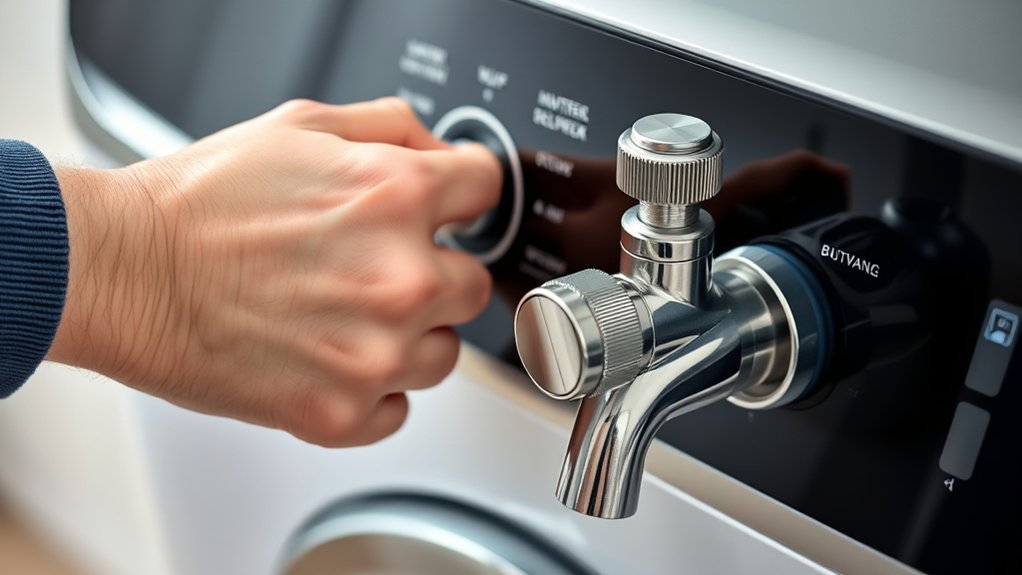
Before you begin draining your washing machine, make sure you turn off both the power and the water supply. This step is vital to prevent electrical hazards and avoid flooding. Start by unplugging the machine from the wall outlet or switching off the circuit breaker connected to it.
Next, locate the water supply valves behind the washer—usually two: one for hot water and one for cold. Turn both valves clockwise until they’re fully closed to stop water flow. Double-check that no water is entering the machine by briefly running a rinse cycle; if water doesn’t fill, you’re good to go.
Taking these precautions guarantees your safety and prevents unnecessary mess while you drain the washing machine manually. Don’t skip this step—it’s essential.
Get the Tools You’ll Need for Draining
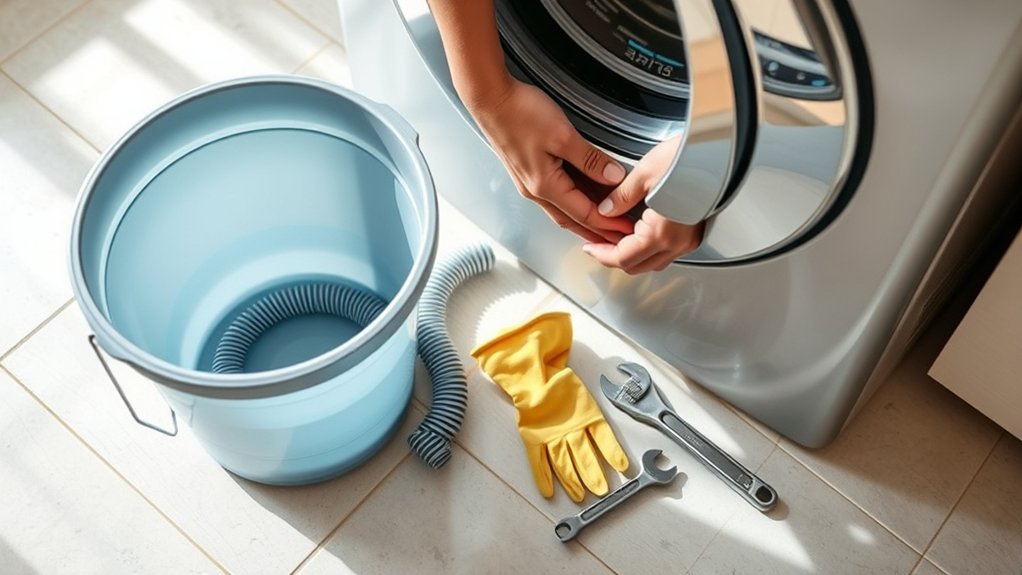
Before you start draining, gather all the essential tools like a bucket, towels, and pliers. Don’t forget to wear gloves and protective eyewear to keep safe.
Make sure each tool is clean and ready to use for a smooth process.
Essential Tools Checklist
You’ll need a few essential tools to drain your washing machine efficiently and avoid spills or damage. First, grab a shallow pan or bucket to catch the draining water. A large towel or rag nearby will help soak up any drips.
Use a pair of pliers to loosen hose clamps if your model has them. A flathead screwdriver might be necessary to open any access panels or remove covers. Have a container or tray ready if your machine has a built-in drain filter you need to clean.
Finally, keep a flashlight handy to see into tight, dark areas, especially if your washing machine is in a dim spot. With these tools ready, you’re set for a smooth draining process.
Safety Gear Recommendations
Although draining a washing machine is a straightforward task, wearing the right safety gear protects you from unexpected hazards like sharp edges, hot water, or electrical components. Start with durable gloves to shield your hands from sharp parts and hot water spills. Safety goggles are essential to prevent splashes from getting into your eyes while you drain the machine.
Wear closed-toe shoes to protect your feet in case water spills on the floor or heavy tools drop. If you expect any electrical components to be nearby, use insulated gloves for added protection. Finally, dress in clothes that cover your arms and legs to guard against scrapes or burns.
Taking these precautions keeps you safe and comfortable throughout the draining process.
Tool Preparation Tips
Since draining a washing machine involves handling water and small parts, gathering the right tools is essential for a smooth process. Having everything ready before you start will save time and prevent frustration. Make certain you have tools that fit your machine’s specific parts and areas.
Here’s what you’ll need:
- A bucket or shallow tray to catch draining water
- Towels or rags to soak up spills
- A pair of pliers for loosening clamps or hoses
- A screwdriver, usually Phillips or flathead, to open access panels
- A small container or bowl to hold screws and small parts safely
Keep these tools within reach to work efficiently and avoid unnecessary trips. Preparing well ensures you can drain your washing machine without hassle.
Empty and Position Your Washing Machine for Draining
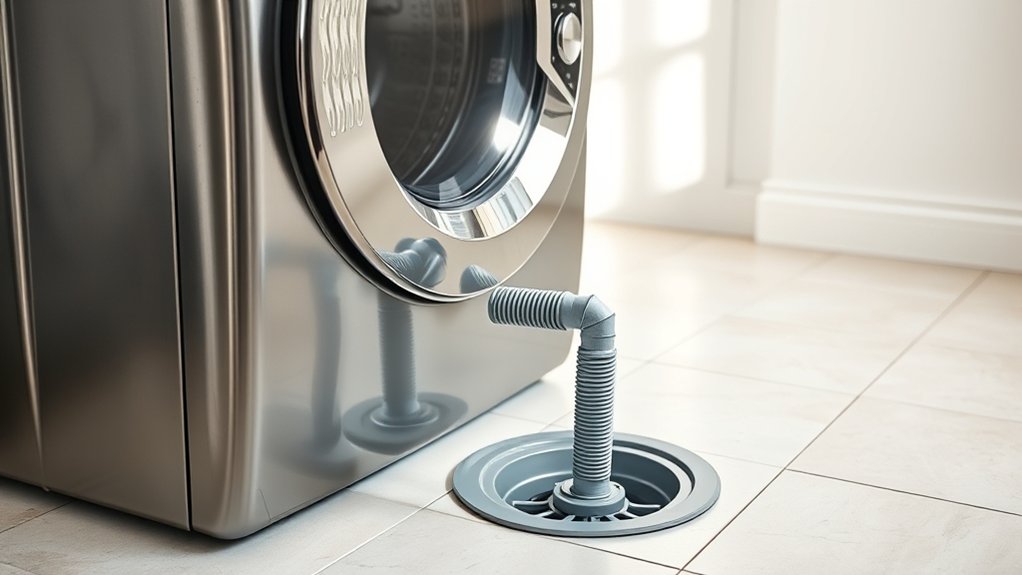
Before you start draining, make sure to unplug your washing machine and check for any safety hazards. Clear the area around the machine to give yourself plenty of room to work.
Then, carefully tilt the washer to access the drain more easily.
Unplug and Safety Check
To guarantee your safety and prevent any electrical hazards, you’ll want to unplug your washing machine before you begin draining it. This simple step cuts off power, reducing the risk of shocks or short circuits when handling water near electrical components.
Once unplugged, perform a quick safety check to make sure everything is secure.
Here’s what to do next:
- Verify the power cord is intact without frays or damage
- Ensure your hands and the floor are dry to avoid slipping
- Check that the machine is stable and won’t tip over when moved
- Confirm the drain hose is accessible and not kinked
- Have a bucket or towels ready to catch any water spills
These precautions keep you safe while you manually drain your washer.
Clear Surrounding Area
A clear area around your washing machine makes draining easier and safer. First, remove any items nearby that could get wet or obstruct your movement. Clear space guarantees you can access the back and sides without hassle.
Next, move the washing machine slightly away from the wall to create room for handling the drain hose and water runoff. Be cautious not to strain the power cord or water connections while repositioning. Place towels or a shallow container nearby to catch any spills.
Making sure the floor is dry and free of clutter reduces slipping hazards. By preparing the space properly, you’ll have better control and visibility during the draining process, making the task quicker and less stressful.
Tilt for Easy Access
Once you’ve emptied your washing machine, tilt it gently to access the drain more easily. This simple step helps the remaining water flow toward the drain hose or plug, making manual draining quicker and less messy.
Before tilting, confirm the machine is unplugged for safety. Use a sturdy grip and tilt just enough to expose the drain area without risking a fall. Position the machine near a drain or bucket to catch water.
Here’s what to keep in mind:
- Clear space around the machine for movement
- Wear gloves to protect your hands
- Use a towel or cloth to catch spills
- Tilt slowly to avoid sudden water splashes
- Have a container ready to collect the draining water
Tilting makes the draining process smoother and more efficient.
Locate and Access the Drain Pump Filter
Before you can drain the water, you’ll need to locate the drain pump filter, which is usually found at the bottom front of your washing machine. Check for a small access panel or cover; this often hides the filter. Some models have a round cap or a rectangular door secured by clips or screws.
Gently pry open or unscrew the panel to reveal the filter housing. Make sure to have a cloth handy, as some residual water may spill out when you open it. If you’re unsure where the filter is, consult your washing machine’s manual or look for diagrams online by searching your model number.
Once you’ve accessed the filter, you’re ready for the next step in draining the water manually.
Set Up a Container to Catch Draining Water
Although draining water might seem straightforward, setting up a container to catch it carefully will prevent spills and messes. You’ll want to prepare before you start draining to keep your space clean and dry.
Careful preparation with the right container helps avoid spills and keeps your space clean while draining water.
Here’s what to do:
- Choose a container large enough to hold several liters of water.
- Place it close to the washing machine’s drain pump filter access.
- Use a shallow pan or bucket to avoid splashing.
- Position towels or rags around the container to catch any drips.
- Make sure the container is stable and won’t tip over when water flows in.
Drain Water Through the Filter or Drain Hose
When you’re ready to drain the water, locate the washing machine’s filter or drain hose, as these are your main access points. First, remove the filter carefully and prepare to catch water flowing out.
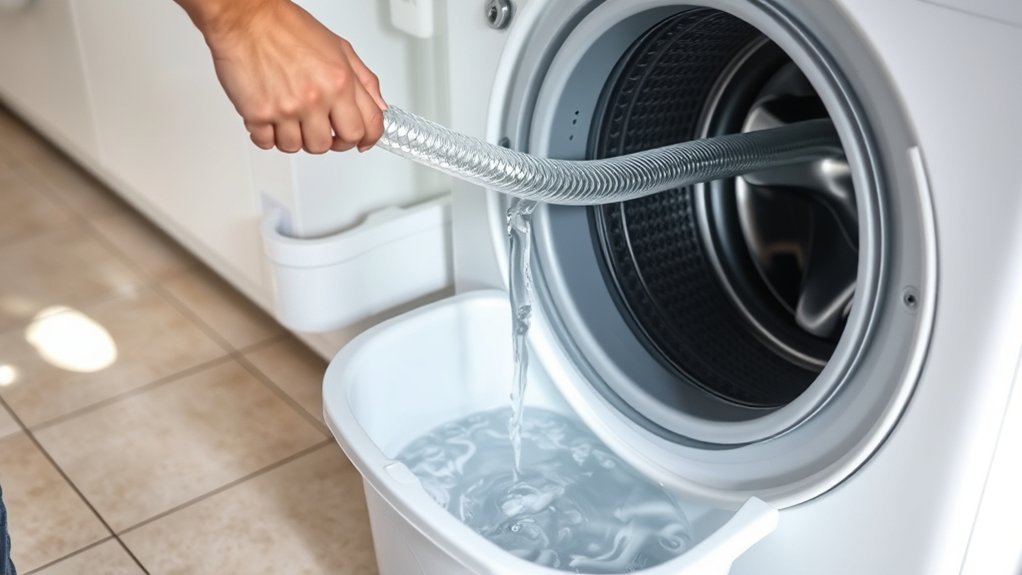
If using the drain hose, detach it from the standpipe or tub and lower it into your container. Take your time to avoid spills.
| Step | Tool Needed | Tip |
|---|---|---|
| Locate filter | Flashlight | Usually at the machine’s base |
| Remove filter | Gloves | Turn slowly to avoid damage |
| Detach hose | Bucket/container | Keep hose end low to drain |
| Drain water | Rag | Wipe spills immediately |
This method guarantees most water drains quickly and efficiently.
Clean Residual Water and Test Your Washing Machine
After draining most of the water through the filter or hose, some residual moisture may still remain inside your washing machine. To clean this up and guarantee your machine works properly, follow these steps:
- Use a sponge or towel to soak up any leftover water inside the drum.
- Wipe around the rubber gasket and door seal to remove trapped moisture.
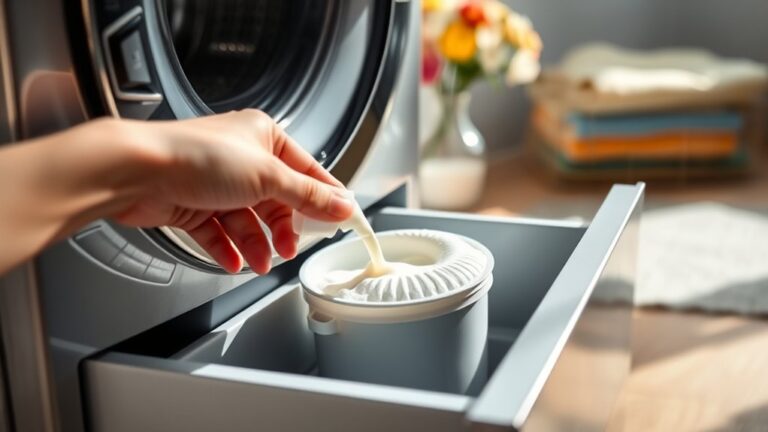
- Check and clean the detergent drawer to prevent mold buildup.
- Leave the door open for a few hours to air dry the interior.
- Run a short spin cycle without clothes to test if the machine drains fully.
Frequently Asked Questions
Can I Use a Wet/Dry Vacuum to Remove Water From My Washing Machine?
Yes, you can use a wet/dry vacuum to remove water from your washing machine.
Just make sure to use the vacuum’s water-safe attachment and carefully extract the water without damaging the machine or electrical components.
How Often Should I Manually Drain My Washing Machine?
You should manually drain your washing machine only when water doesn’t drain properly or if you notice standing water inside.
Regularly, you won’t need to unless there’s a clog or malfunction causing drainage issues.
What Should I Do if the Drain Pump Filter Is Missing?
Like a ship without a rudder, your washer needs that drain pump filter. If it’s missing, you should order a replacement immediately to avoid clogs or damage, then install it carefully to keep things flowing smoothly.
Can Draining Water Manually Damage My Washing Machine?
Draining water manually won’t damage your washing machine if you do it carefully. Just avoid forcing parts or using excessive tools.
Being gentle and following proper steps guarantees your machine stays safe and functional.
Is It Safe to Drain Hot Water From the Washing Machine?
Yes, it’s safe to drain hot water, but be careful. Hot water can cause burns, so wear gloves and let the water cool slightly if possible.
Always handle the drainage process slowly to avoid spills or damage.
Conclusion
Now that you’ve mastered draining water manually from your washing machine, you’re holding the key to preventing bigger issues down the road. Like a captain steering through a storm, taking these simple steps guarantees your machine stays in smooth sailing mode.
Remember, regular care keeps your appliance running efficiently, saving you time and hassle. Draining water manually from your automatic washing machine is an essential maintenance practice. So, don’t wait for trouble to flood in—act promptly and keep your laundry routine flowing effortlessly.