How Do Vacuum Sealers Prevent Freezer Burn?
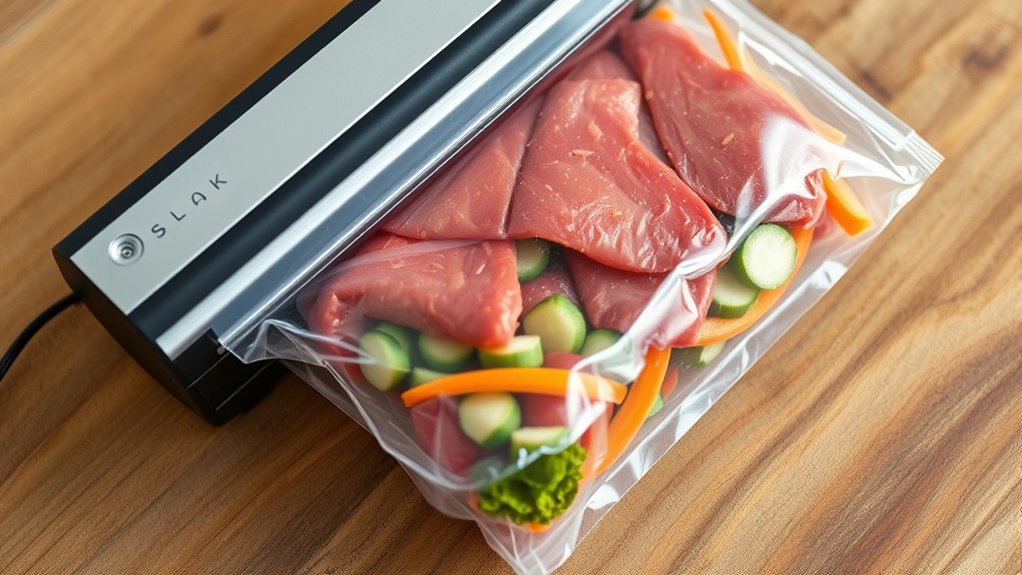
Vacuum sealers prevent freezer burn by removing air and creating a tight, airtight barrier around your food, which limits oxygen exposure and stops moisture loss. This process is crucial because exposure to air causes freezer burn, which damages texture and flavor.
By sealing food properly, vacuum sealers help maintain freshness and extend shelf life. This slows down oxidation, bacterial growth, and ice crystal formation that damage texture and flavor.
To get the best results, make sure bags are dry and sealed properly to avoid leaks. Keep your items portioned and use vacuum sealing for shorter to medium storage times.
There’s more to contemplate for maximizing freshness and shelf life, including proper storage conditions and bag quality. Using vacuum sealers is an effective way to protect your food from freezer burn and preserve its quality.
Key Takeaways
- Vacuum sealers remove oxygen, preventing oxidation that causes discoloration and freezer burn on food surfaces.
- They create airtight seals that block moisture loss and frost formation around frozen items.
- By limiting air exposure, vacuum sealing slows bacterial growth and enzymatic spoilage in frozen foods.
- Proper sealing reduces ice crystal formation that damages food texture during freezing.
- Using vacuum sealers with dry, well-prepared food and quick freezing maximizes freezer burn prevention.
What Causes Freezer Burn and Why It Matters
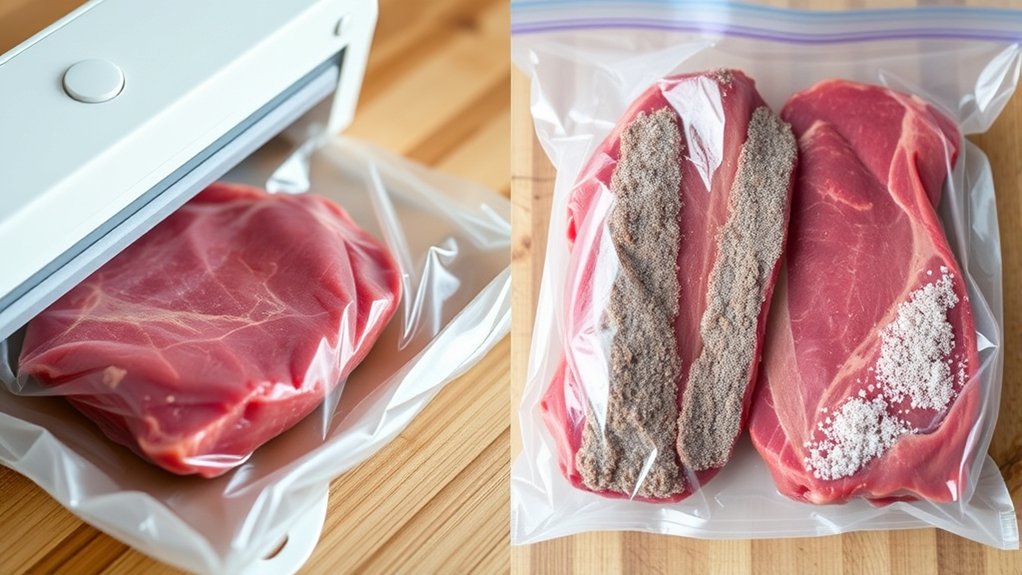
Although you might not notice it right away, freezer burn happens when air reaches your food inside the freezer. This exposure causes your food to dry out, lose flavor, and develop icy patches. When that air interacts with your food’s surface, it extracts moisture, leaving it dehydrated and tough.
You’ll often spot freezer burn as grayish-brown spots or white frost on meats, vegetables, or baked goods. It’s not harmful, but it can seriously affect the texture and taste, making your meals less enjoyable. That’s why understanding what causes freezer burn matters—because it helps you keep your food fresher for longer and reduces waste.
Taking steps to minimize air contact can make a big difference in preserving your food’s quality.
How Oxygen and Moisture Cause Freezer Burn
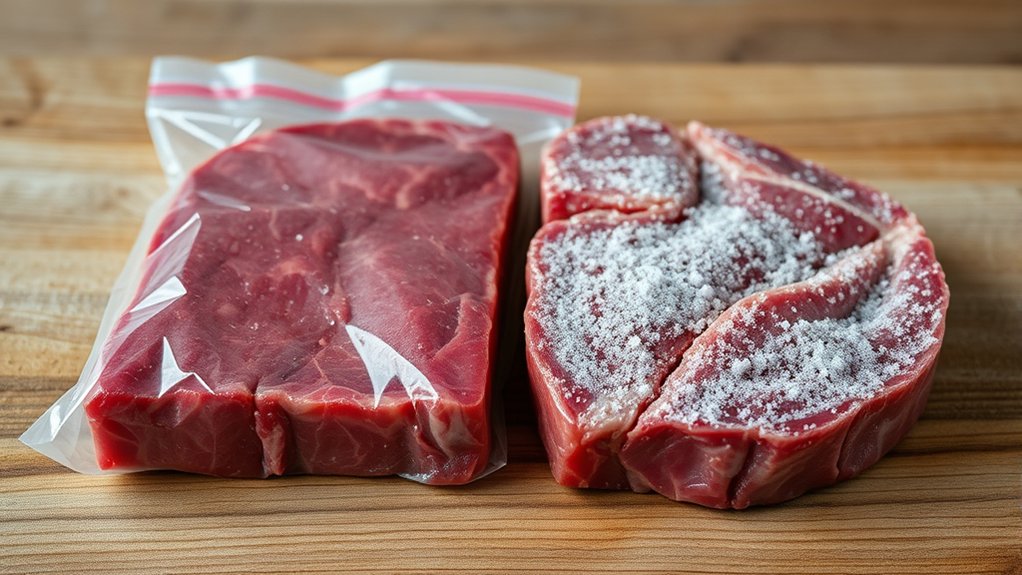
You’ll want to understand how oxygen and moisture work together to cause freezer burn. Oxygen reacts with your food, leading to dry spots and discoloration, while moisture loss makes it tough and less flavorful.
Controlling both is key to keeping your frozen food fresh.
Role Of Oxygen
How exactly do oxygen and moisture work together to cause freezer burn? Oxygen plays a vital role by reacting with the food’s surface, leading to oxidation. When oxygen is present, it breaks down fats and proteins, causing discoloration and off-flavors.
This reaction also dries out the food, making it tough and leathery. Without oxygen, these damaging changes slow down considerably. That’s why vacuum sealers are so effective—they remove most of the air around your food, cutting down oxygen exposure.
Impact Of Moisture
Oxygen doesn’t act alone in causing freezer burn; moisture plays a key role in the process. When moisture escapes from your food, it forms ice crystals on the surface, drying out the texture and flavor. These crystals, combined with oxygen exposure, accelerate freezer burn, making your food look unappetizing and taste stale.
You want to keep moisture locked in to preserve freshness and avoid waste.
| Emotion | Cause | Result |
|---|---|---|
| Disappointment | Moisture loss | Dry, tough food |
| Frustration | Ice crystal formation | Unpleasant texture |
| Regret | Oxygen + moisture exposure | Flavor degradation |
| Annoyance | Packaging leaks | Freezer burn spots |
| Relief | Proper sealing | Long-lasting freshness |
How Vacuum Sealers Remove Air to Protect Food
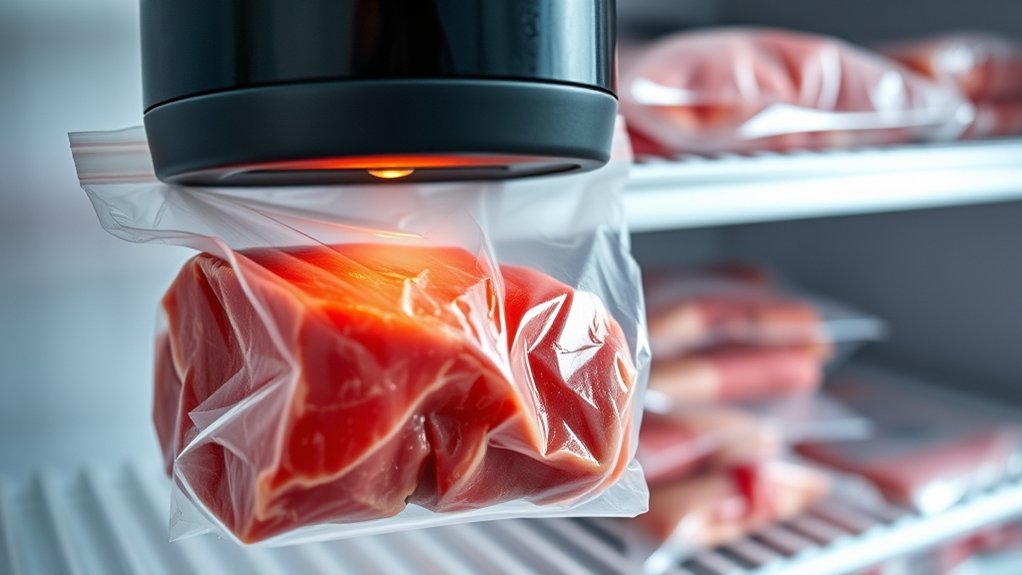
Because air contains moisture and gases that cause food to spoil, vacuum sealers work by removing air from the packaging to create a tight seal. When you use a vacuum sealer, it sucks out the oxygen and other gases surrounding your food, which slows down oxidation and bacterial growth. Without air, the environment inside the package becomes inhospitable for molds and bacteria that cause freezer burn and spoilage.
The vacuum also prevents moisture from escaping, keeping your food’s texture and flavor intact. Once the air is removed, the sealer fuses the plastic tightly around the food, blocking new air from entering. This airtight barrier is essential to preserving freshness and extending the shelf life of your frozen items effectively.
How to Properly Vacuum Seal Different Foods
When you vacuum seal different types of food, you’ll need to adjust your approach to guarantee the best preservation. For raw meats, pat them dry to reduce moisture, then seal tightly to prevent juices from leaking.
With delicate items like berries or bread, use the gentle or “moist” setting if your sealer has one, avoiding crushing them. For liquids or soups, pre-freeze them in containers before sealing to prevent spills.
When sealing leafy greens or herbs, consider blanching first to maintain freshness. Always leave enough space at the bag’s opening for a secure seal, and avoid overfilling.
Best Materials for Vacuum Sealing Frozen Food
Although choosing the right vacuum sealing materials might seem straightforward, using bags and rolls designed specifically for freezing can make a big difference in preserving your food’s quality. Look for materials labeled as freezer-safe, which typically feature thicker plastic layers to prevent punctures and moisture loss.
Multi-layered bags combine nylon and polyethylene, offering excellent barrier protection against air and freezer burn. Avoid standard storage bags, as they aren’t built to withstand prolonged exposure to extreme cold. Also, consider textured or embossed bags, which help air evacuate more efficiently during sealing, ensuring a tighter seal.
Using these high-quality materials helps you lock in freshness, flavor, and nutrients, so your frozen food stays delicious longer. Picking the right vacuum sealing supplies is a simple step that pays off every time you open your freezer.
Tips to Maximize Freshness With Vacuum Sealers
To keep your food fresh longer, choose the right vacuum sealer bags designed for freezing. Make sure you seal them tightly without wrinkles or air pockets to prevent freezer burn.
Using proper sealing techniques will help you get the best results every time.
Proper Bag Selection
How do you choose the right bag to get the most out of your vacuum sealer? Start by picking bags designed specifically for vacuum sealing—they have thicker, multi-layered materials that resist punctures and prevent air leaks. Avoid generic plastic bags; they won’t create an airtight seal and can let moisture in, causing freezer burn.
Look for bags labeled BPA-free and food-safe to protect your food’s flavor and safety. If you’re storing sharp or irregularly shaped items, opt for textured or embossed bags that help the sealer remove air more effectively. Also, consider the size: choose a bag just big enough for your food to minimize excess air.
Proper bag selection is key to maintaining freshness and stopping freezer burn before sealing even begins.
Optimal Sealing Techniques
Choosing the right bag sets you up for success, but sealing your food properly guarantees that freshness lasts. First, confirm the bag’s opening is clean and dry before sealing to create an airtight closure. Avoid overfilling the bag; leave enough space at the top so the sealer can grip and seal effectively.
When sealing, position the bag straight and wrinkle-free to prevent gaps. Use the vacuum sealer’s pulse or manual mode for delicate foods to avoid crushing them. If your sealer has a double-seal option, use it for extra protection against air leaks.
Finally, label your sealed bags with the date to keep track of freshness. Following these techniques helps you maximize the vacuum sealer’s effectiveness and prevents freezer burn.
Common Mistakes That Hurt Vacuum Sealing
Although vacuum sealing can extend the life of your food, many people make mistakes that reduce its effectiveness. You might think sealing is straightforward, but small errors can let air in, leading to freezer burn. Avoid these common pitfalls to get the best results:
- Using dirty or wet bags, which can prevent a proper seal.
- Overfilling bags, making it harder to remove air completely.
- Sealing sharp-edged foods without protection, causing punctures.
- Not checking the seal after vacuuming, missing incomplete seals.
- Storing vacuum-sealed bags improperly, exposing them to temperature fluctuations.
Comparing Vacuum Sealers to Traditional Freezing
When you compare vacuum sealing to traditional freezing, you’ll notice that vacuum sealers remove air more effectively, which slows down freezer burn and preserves food texture and flavor longer. Traditional freezing leaves air pockets, causing moisture loss and ice crystals. Vacuum sealers create a tight seal, limiting oxidation and dehydration.
| Feature | Vacuum Sealing | Traditional Freezing |
|---|---|---|
| Air Removal | Nearly complete | Partial |
| Freezer Burn Risk | Markedly reduced | Higher |
| Food Texture | Better preserved | Often compromised |
| Flavor Retention | Enhanced | Weakened over time |
How Vacuum Sealers Extend Food Shelf Life
Because vacuum sealers remove nearly all the air around your food, they considerably slow down the processes that cause spoilage and freezer burn. Without oxygen, bacteria and mold struggle to grow, keeping your food fresh longer. This means you can store meat, vegetables, and leftovers for extended periods without worrying about losing quality or flavor.
Vacuum sealing removes air to slow spoilage, prevent freezer burn, and keep food fresh longer.
Using a vacuum sealer helps you:
- Preserve nutrients by minimizing oxidation
- Maintain texture and moisture levels
- Prevent freezer burn by blocking air exposure
- Reduce waste by extending usable shelf life
- Save money by buying in bulk and storing safely
When Vacuum Sealing Can’t Fully Prevent Freezer Burn
Even with vacuum sealing, you might still see freezer burn if there’s leftover moisture or if the seal isn’t perfect. Small tears or weak seals let air sneak in, causing damage over time.
Plus, storing food too long can overwhelm any protection, so timing matters just as much as sealing.
Residual Moisture Effects
Although vacuum sealers remove most air, some residual moisture often remains inside the package, which can still contribute to freezer burn. When you seal foods with high water content, that moisture can freeze and form ice crystals. These crystals damage the food’s texture and flavor over time.
Even with vacuum sealing, this moisture creates tiny ice pockets that lead to freezer burn.
To minimize residual moisture effects, consider these tips:
- Pat dry meat and produce before sealing
- Avoid sealing overly wet foods without pre-freezing
- Use moisture-absorbing pads inside bags
- Freeze sealed items quickly to limit ice crystal growth
- Store packages in a consistent, cold freezer environment
Seal Integrity Issues
When vacuum sealing, you might still encounter freezer burn if the seal isn’t completely airtight. Even a tiny gap or weak spot allows air to seep in, causing moisture loss and ice crystal formation on your food. This compromises freshness and texture despite the vacuum process.
To avoid this, inspect the sealing strip for debris or damage before each use, and make certain the bag’s edge is clean and dry. Don’t overfill bags, as uneven surfaces can prevent a proper seal. Also, avoid sealing wet food directly without freezing it first, since moisture can interfere with seal strength.
Regularly maintain your vacuum sealer by cleaning and checking for worn parts. Seal integrity is vital—without it, vacuum sealing can’t fully protect against freezer burn.
Long-Term Storage Limits
Since vacuum sealing removes most air and slows freezer burn, it can extend your food’s shelf life considerably. However, it doesn’t halt freezer burn indefinitely. Over extended periods, ice crystals still form, and moisture loss occurs.
You should recognize that vacuum sealing isn’t a guarantee against long-term degradation.
Consider these factors to understand long-term storage limits:
- Even sealed, fatty foods can oxidize over time.
- Temperature fluctuations in your freezer impact quality.
- Certain foods have natural enzymes that break down slowly.
- Vacuum-sealed items still lose moisture after months.
- Prolonged storage may cause texture and flavor changes despite sealing.
To keep your food tasting fresh, use vacuum sealing as a tool for shorter to medium storage durations rather than indefinite preservation.
Final Thoughts on Preventing Freezer Burn With Vacuum Sealers
How can you best protect your food from freezer burn? Vacuum sealers are your go-to solution. By removing air, they create a tight barrier that stops moisture loss and slows oxidation, which are the main causes of freezer burn.
To get the most out of your vacuum sealer, make sure your bags are sealed properly without wrinkles or punctures. Also, portion your food into meal-sized packages to avoid repeatedly opening large bags. Remember, vacuum sealing extends storage life but doesn’t make food last forever—stick to recommended freezing times.
With the right technique, you’ll keep your food fresh, flavorful, and freezer burn-free, saving both money and taste in the long run. Vacuum sealers truly make a difference in preserving your frozen goods.
Frequently Asked Questions
Can Vacuum Sealing Affect the Taste of Food?
Yes, vacuum sealing can actually enhance your food’s taste by locking in freshness and flavors. It prevents air exposure, so your meals stay more flavorful and moist, especially when you store them longer in the freezer.
Are Vacuum Sealers Safe for Liquids?
You won’t flood your kitchen with a vacuum sealer—they’re safe for liquids if you use special bags and freeze liquids first.
Just avoid sealing hot liquids, or you’ll end up with a messy, sticky disaster!
How Long Do Vacuum Seal Bags Last Unopened?
You can expect vacuum seal bags to last unopened for about 1 to 2 years if stored properly.
Keep them in a cool, dry place to maintain their sealing strength and prevent damage before use.
Can Vacuum Sealing Kill Bacteria in Food?
No, vacuum sealing doesn’t kill bacteria in food. It just removes air to slow bacterial growth.
You still need to cook or freeze food properly to guarantee it’s safe to eat and prevent spoilage effectively.
Do Vacuum Sealers Work on Cooked Meals?
Yes, vacuum sealers work great on cooked meals. They lock out air, keeping your food fresh longer and preserving flavor.
Just make sure your meals are cool before sealing to avoid moisture buildup and potential spoilage.
Conclusion
You might think freezing alone is enough to keep your food fresh, but ironically, it’s often where freezer burn starts.
Luckily, vacuum sealers step in by kicking out the air and locking in moisture, giving your food a fighting chance against those pesky ice crystals.
While vacuum sealing isn’t a magic shield, it’s your best bet to stretch shelf life and keep flavors intact.
So, don’t just freeze—seal and conquer freezer burn! Vacuum sealers prevent freezer burn by removing air and preserving moisture, making them essential for long-term food storage.