How You Can Safely Vacuum Diatomaceous Earth
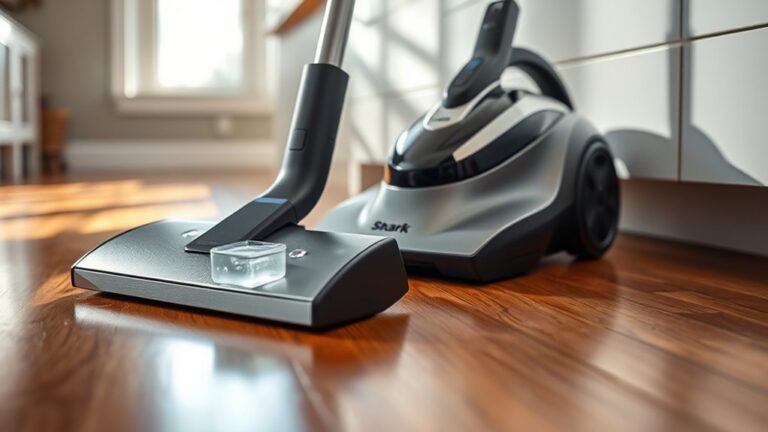
You can safely vacuum diatomaceous earth by using a vacuum equipped with a true HEPA filter and a sealed system. This combination effectively traps fine dust and prevents it from escaping back into the air.
Proper gear, cleanup tricks, and home safety measures are essential when handling diatomaceous earth to keep your space clean and your health protected.
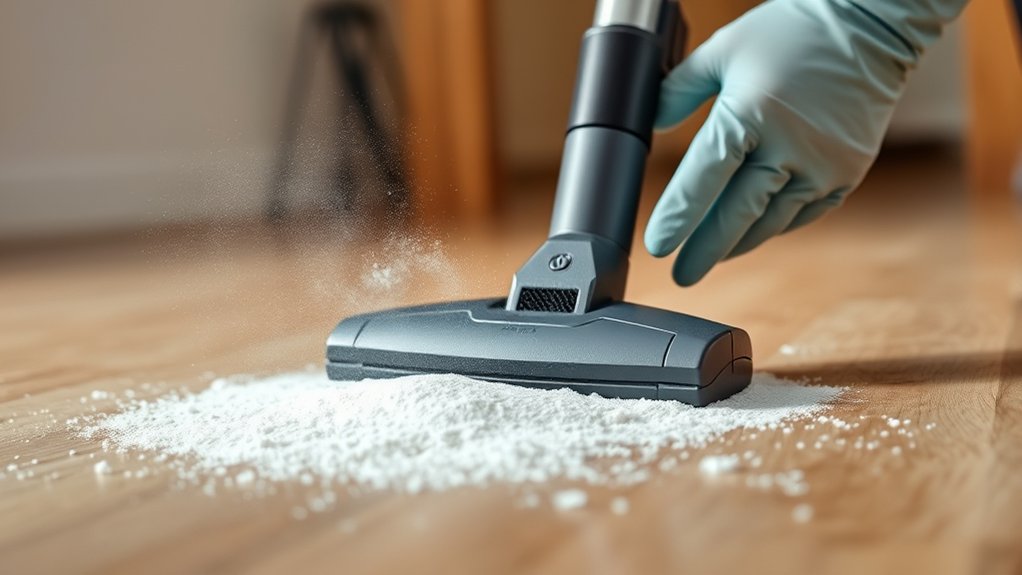
Always wear an N95 mask and gloves to shield your lungs and skin from irritation.
Mist surfaces lightly with water beforehand to reduce airborne dust.
Avoid quick sweeping motions that can stir up particles and increase inhalation risk.
Taking these precautions not only helps protect your health but also extends the life of your vacuum equipment.
Following these steps ensures a safer and more efficient cleanup process when dealing with diatomaceous earth.
Key Takeaways
- Use a vacuum with a true HEPA filter and sealed system to prevent fine diatomaceous earth dust from escaping.
- Wear an N95 respirator, gloves, and long-sleeved clothing to protect against inhalation and skin irritation.
- Mist surfaces lightly with water before vacuuming to minimize airborne dust and improve particle capture.
- Seal off the cleanup area with plastic sheets to contain dust and prevent spread throughout your home.
- Dispose of vacuum contents in double-sealed bags and clean filters and hoses thoroughly after use.
Why You Need to Handle Vacuuming Diatomaceous Earth Carefully
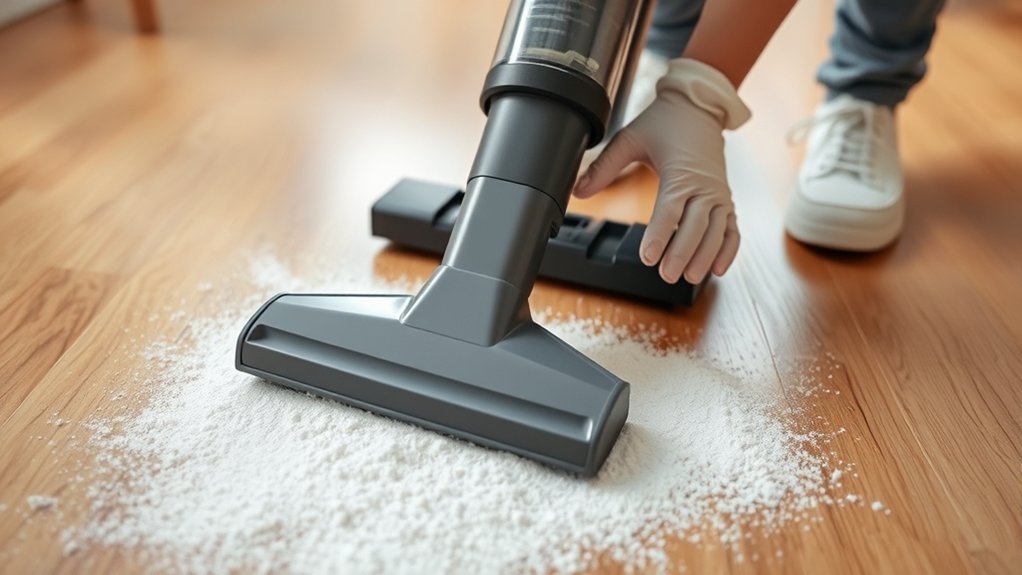
Because diatomaceous earth is made of tiny, abrasive particles, you need to be cautious when vacuuming it to avoid damaging your vacuum or spreading dust into the air. These particles can wear down vacuum components like filters and hoses faster than usual. If your vacuum isn’t designed for fine powders, it might clog or lose suction.
Also, the fine texture means the dust can easily escape if your vacuum’s seal isn’t tight, making cleanup harder. You’ll want to use a vacuum with a HEPA filter and a sealed system to keep the dust contained. Handling it carefully helps protect your equipment and prevents the diatomaceous earth from becoming airborne, ensuring a safer, more effective cleanup process.
Understanding the Hazards of Diatomaceous Earth Dust
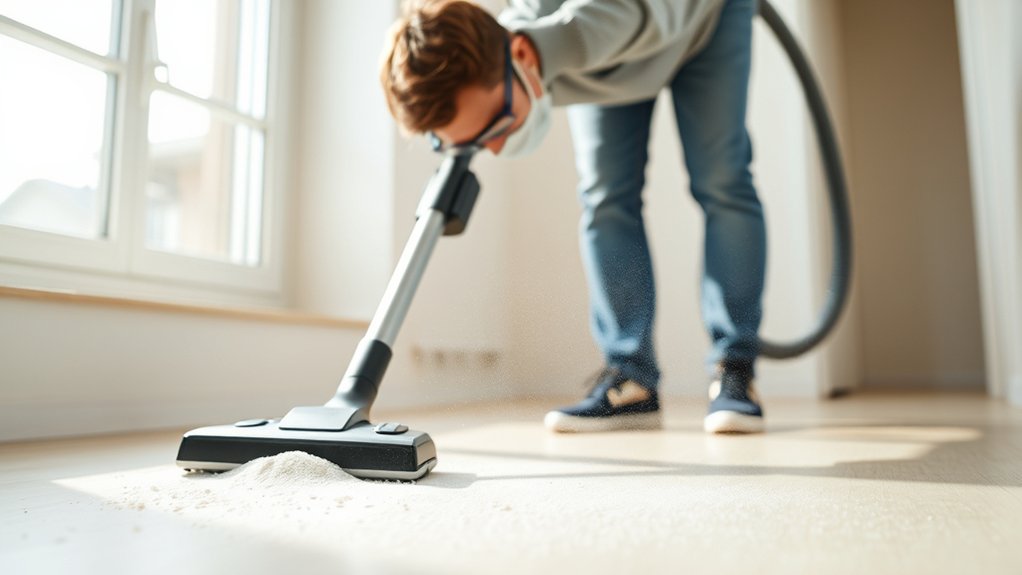
While diatomaceous earth is a natural substance, its fine dust can pose significant health risks if inhaled. When you breathe in these tiny particles, they can irritate your respiratory system, causing coughing, sneezing, or even more severe lung issues over time. Prolonged exposure to the dust may lead to inflammation or chronic respiratory conditions.
You might not notice immediate effects, but repeated inhalation can increase your risk of damage. It’s important to understand that the dust’s microscopic size allows it to penetrate deep into your lungs, making it potentially harmful. Knowing these hazards helps you recognize why proper precautions are essential when cleaning up diatomaceous earth, especially when vacuuming, to protect your health effectively.
Preparing Yourself Safely Before Cleaning Diatomaceous Earth
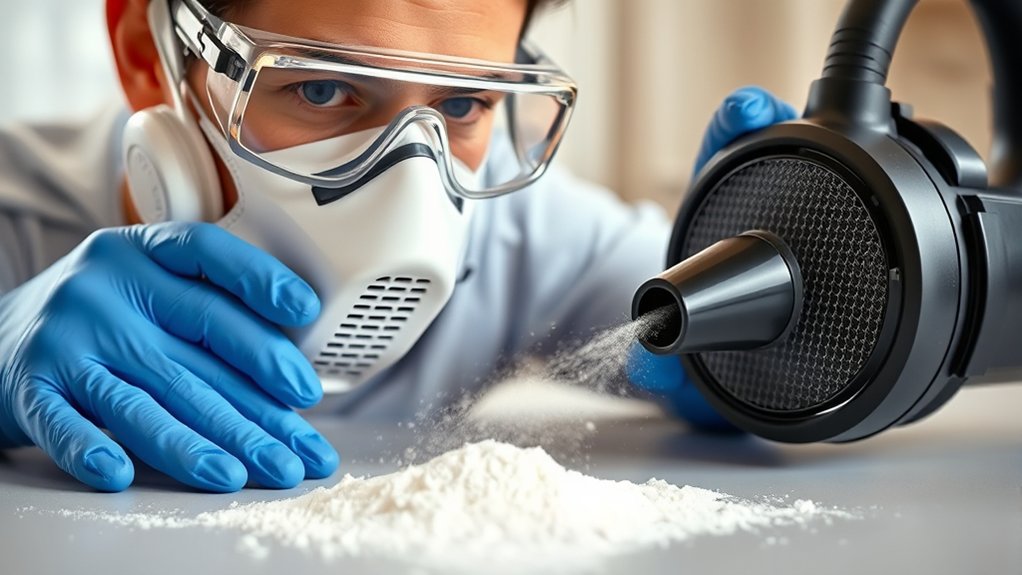
Recognizing the risks of inhaling diatomaceous earth dust means you need to take specific steps before starting cleanup. First, wear a high-quality N95 respirator to protect your lungs from fine particles. Don’t skip gloves, either; nitrile gloves will keep your skin safe from irritation.
Dress in long sleeves and pants to minimize skin exposure. Before you begin, verify the area is well-ventilated by opening windows or using fans to reduce dust concentration. Avoid stirring up dust unnecessarily—handle the material gently.
Keep a damp cloth or spray bottle nearby to lightly mist surfaces, which helps settle dust and prevents it from becoming airborne. Taking these precautions will considerably reduce your risk while preparing to clean up diatomaceous earth safely.
Choosing and Modifying Your Vacuum for Diatomaceous Earth
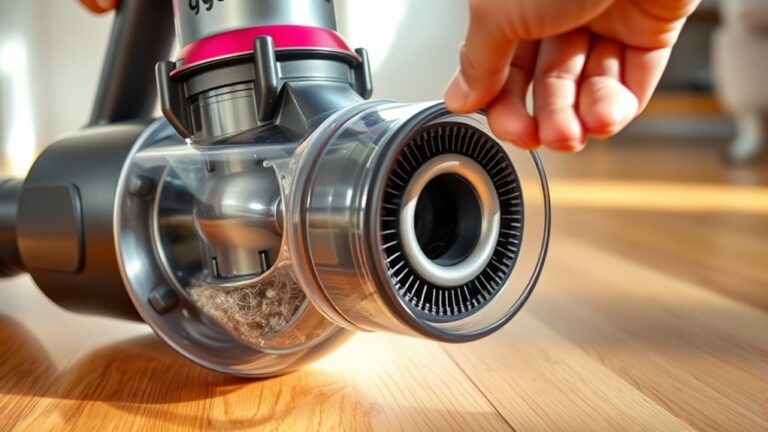
When you vacuum diatomaceous earth, selecting the right vacuum and making key modifications can prevent dust from escaping back into the air. Choose a vacuum with a HEPA filter to trap the fine particles effectively. Avoid standard vacuums without sealed systems, as they’ll release dust and create more mess.
You can also modify your vacuum by attaching a microfilter bag to catch even smaller particles. Make sure all seals and gaskets are tight to prevent leaks.
Here’s what to focus on when choosing and modifying your vacuum:
- Use a vacuum with a true HEPA filter for maximum particle capture
- Add a microfilter bag for extra dust containment
- Check and reinforce all seals to avoid air leaks
These steps will keep your cleanup safer and cleaner.
When to Use Wet Cleanup Instead of Vacuuming Diatomaceous Earth
You should consider wet cleanup when vacuuming could stir up too much dust or damage your vacuum. Wet methods trap the diatomaceous earth, reducing airborne particles and making cleanup safer.
Knowing when these risks increase helps you choose the best approach for your situation.
Wet Cleanup Advantages
Although vacuuming is effective for most situations, wet cleanup offers distinct advantages when dealing with fine dust like diatomaceous earth. You’ll find it especially useful when dust has settled on hard surfaces or in tight corners where vacuums can’t reach easily. Wet cleanup minimizes airborne particles, reducing inhalation risks and preventing dust from spreading.
Consider wet cleanup when:
- You want to control dust dispersion during cleanup.
- Surfaces are non-porous and can be wiped or mopped easily.
- You’re dealing with a thin, widespread layer of diatomaceous earth.
Using damp cloths or mops traps particles effectively, making the process safer and often quicker. This method complements vacuuming, ensuring thorough removal without stirring up dust unnecessarily.
When Vacuuming Risks Increase
Since vacuuming can stir up fine particles, it’s best to avoid it in certain situations to reduce inhalation risks and dust spread. If you’re dealing with large amounts of diatomaceous earth or working in a poorly ventilated space, vacuuming might do more harm than good. Also, avoid vacuuming if your vacuum isn’t equipped with a HEPA filter, as it won’t trap the tiny particles effectively.
In these cases, wet cleanup methods—like damp mopping or wiping—are safer and more effective. Moisture helps keep the dust down, preventing it from becoming airborne. So, whenever dust control is critical or your equipment isn’t up to the task, opt for wet cleanup to protect your lungs and keep your space clean.
Step-by-Step Vacuuming Guide for Diatomaceous Earth
Before you begin vacuuming diatomaceous earth, make sure your vacuum is equipped with a HEPA filter to prevent fine particles from escaping back into the air. Next, wear a mask and gloves to protect yourself from inhaling dust. Slowly vacuum the affected area using overlapping, gentle strokes to avoid kicking up particles.
Empty the vacuum bag or canister outdoors immediately after use to prevent recontamination.
Keep these key points in mind:
- Use a vacuum with strong suction but a sealed system to trap fine dust.
- Avoid aggressive or rapid vacuuming motions that disperse particles.
- Maintain protective gear throughout the process to minimize exposure.
Following these steps helps you clean effectively while keeping both your environment and health safe.
Avoiding Common Mistakes That Spread Diatomaceous Earth Dust
To keep diatomaceous earth dust from spreading, you’ll want to minimize how much dust kicks up during cleaning. Make sure your vacuum has the right filters to trap the fine particles effectively.
Avoid common errors that can send dust back into the air and undo your hard work.
Minimize Dust Dispersion
Although diatomaceous earth is effective for pest control, you’ll need to handle it carefully to prevent dust from spreading. To minimize dust dispersion, avoid stirring up the powder unnecessarily. Move slowly and deliberately when cleaning or vacuuming to keep dust settled.
Also, dampening the area slightly with water before vacuuming can help reduce airborne particles.
Keep these tips in mind:
- Use gentle sweeping or vacuuming motions to avoid kicking up dust.
- Seal off the cleaning area to prevent dust from drifting into other rooms.
- Wear a mask to protect your respiratory system from inhaling fine particles.
Use Proper Vacuum Filters
How can you prevent diatomaceous earth dust from spreading while vacuuming? The key is using the right vacuum filters. Regular vacuum filters aren’t designed to trap the fine, powdery particles of diatomaceous earth, so dust can easily escape back into the air.
Instead, you should use a vacuum equipped with a HEPA filter. HEPA filters capture at least 99.97% of particles this small, keeping dust contained. Make sure the vacuum’s filter is clean and properly installed before you start.
Avoid bagless vacuums, as their dust compartments can release particles when emptied. If you don’t have a HEPA vacuum, consider attaching a fine particulate filter or using a shop vac with appropriate filtration. This simple step helps protect your indoor air quality and keeps diatomaceous earth dust from spreading.
How to Prevent Diatomaceous Earth Dust From Spreading While Cleaning
When you clean up diatomaceous earth, you’ll want to minimize dust spread to protect your lungs and keep your space clean. To do this effectively, start by dampening the area slightly with water. This reduces airborne particles during cleanup.
Next, work slowly and avoid sweeping or quick movements that kick up dust. Finally, use a vacuum equipped with a HEPA filter designed for fine dust.
Here are three essential tips to prevent dust spread:
- Mist the surface with water before vacuuming to settle the dust.
- Wear a mask and gloves to protect yourself from inhalation and skin irritation.
- Close off the area or use plastic sheeting to contain dust within the cleaning zone.
Following these steps keeps the dust controlled and your environment safer.
Proper Disposal of Vacuumed Diatomaceous Earth
After vacuuming, make sure you seal the vacuum contents tightly to prevent dust from escaping.
You’ll want to follow local guidelines for disposing of diatomaceous earth safely.
Taking these steps helps protect both your health and the environment.
Sealing Vacuum Contents
Because diatomaceous earth can become airborne and irritate your lungs, you’ll want to seal the vacuum contents tightly before disposal. Once you finish vacuuming, carefully remove the collection bag or empty the canister without stirring up dust. Immediately place the contents into a sturdy, sealable plastic bag or container to prevent particles from escaping.
To guarantee safe sealing, remember to:
- Use thick, puncture-resistant bags or containers to avoid tears or leaks.
- Double-bag the contents if possible for extra protection.
- Label the sealed bag clearly to indicate it contains diatomaceous earth dust.
Sealing properly minimizes exposure risks and keeps your environment safe until you dispose of the vacuumed material following local regulations.
Safe Waste Disposal Methods
How should you dispose of vacuumed diatomaceous earth to keep yourself and the environment safe? First, always seal the vacuum bag or container tightly to prevent dust from escaping.
Next, place the sealed waste in a sturdy plastic bag, and double-bag if possible, to ensure no leaks occur. Check with your local waste management guidelines—some areas allow you to dispose of diatomaceous earth in regular trash, while others require special handling.
Never pour it down drains or into compost piles, as it can harm aquatic life and soil organisms. If you’re unsure, contact your local hazardous waste facility for instructions.
Cleaning Your Vacuum After Vacuuming Diatomaceous Earth
Why is it important to clean your vacuum thoroughly after using it on diatomaceous earth? Diatomaceous earth is abrasive and can damage your vacuum’s internal parts if left inside. Residue buildup may also clog filters, reduce suction power, and spread fine dust back into the air.
To keep your vacuum working well and maintain indoor air quality, clean it immediately after use.
Here’s how to do it effectively:
- Remove and wash or replace filters to prevent clogging and dust release.
- Wipe down the vacuum’s interior and hose with a damp cloth to remove fine particles.
- Empty the dustbin or bag outside to avoid dust settling back indoors.
Regular cleaning guarantees your vacuum stays efficient and safe for future use.
Protecting Your Home While Cleaning Diatomaceous Earth
When you’re cleaning up diatomaceous earth, taking steps to protect your home can prevent unwanted dust from spreading and settling on surfaces. Start by sealing off the area where you’ll be vacuuming with plastic sheets or old towels at doorways. Close windows and turn off fans to avoid circulating dust.
Lay down drop cloths or newspapers to catch any residue that might fall during cleanup. Wear a mask and gloves to protect yourself and avoid tracking dust into other rooms. After vacuuming, carefully remove protective coverings to keep dust contained.
Tips for Regular Maintenance to Reduce Diatomaceous Earth Cleanup
Keeping dust contained during cleanup helps, but regular maintenance can considerably reduce how often you need to vacuum diatomaceous earth. By staying proactive, you minimize buildup and keep your space cleaner longer.
Here are some practical tips to help:
- Apply DE sparingly: Use only the necessary amount to avoid excessive residue that’s hard to manage.
- Seal off treated areas: Limit access to reduce tracking diatomaceous earth around your home.
- Wipe surfaces regularly: Use a damp cloth to catch any stray dust before it spreads.
Additional Safety Tips for Handling Diatomaceous Earth at Home
Although diatomaceous earth is a natural product, you should still handle it with care to protect your health. Always wear a dust mask and gloves when working with it to avoid inhaling fine particles or irritating your skin. Work in a well-ventilated area to reduce airborne dust.
Avoid using a broom or dry sweeping, as it can release dust into the air. Instead, use a vacuum with a HEPA filter designed to capture fine particles. Store diatomaceous earth in a sealed container away from children and pets.
After handling it, wash your hands thoroughly and clean any tools or surfaces that came into contact with it. These precautions help guarantee you use diatomaceous earth safely and effectively at home.
Frequently Asked Questions
Can Diatomaceous Earth Be Safely Used Around Pets?
Yes, you can safely use diatomaceous earth around pets if you choose food-grade type. Just keep them away during application, avoid inhaling the dust, and clean up thoroughly to protect their respiratory health and comfort.
How Long Does Diatomaceous Earth Remain Effective?
Like a silent guardian, diatomaceous earth stays effective for weeks to months, depending on moisture and disturbance.
You’ll want to reapply after rain or cleaning to keep its protective strength strong and lasting in your space.
Is Food-Grade Diatomaceous Earth Safe to Ingest?
Yes, you can safely ingest food-grade diatomaceous earth in small amounts. Just make sure it’s truly food-grade, avoid inhaling the dust, and consult your doctor if you have health concerns or take medications.
Can Diatomaceous Earth Damage Carpets or Fabrics?
Diatomaceous earth won’t damage your carpets or fabrics, but it can be abrasive. You should vacuum it up carefully to avoid spreading the powder further.
Using a vacuum with a HEPA filter helps keep things clean.
What Are Alternative Uses for Diatomaceous Earth Besides Pest Control?
You can use diatomaceous earth to improve soil drainage, filter water, whiten teeth, exfoliate skin, and preserve food.
Just remember to choose food-grade DE for personal care and consumption to stay safe and effective.
Conclusion
Handling diatomaceous earth safely is essential since its fine dust can irritate your lungs—over 70% of particles are small enough to reach deep into your respiratory system. By prepping properly, choosing the right vacuum, and knowing when to opt for wet cleanup, you protect your health and home.
Regular maintenance and thorough vacuum cleaning keep dust levels down. Using a vacuum specifically designed for fine dust or equipped with a HEPA filter ensures effective removal without spreading particles. Always wear a mask to avoid inhaling harmful dust during the process.
With these steps, you’ll manage diatomaceous earth safely and effectively every time. Proper vacuuming, combined with personal protective equipment and regular cleanup, is key to minimizing health risks. Safe vacuuming of diatomaceous earth protects both your respiratory health and your living environment.