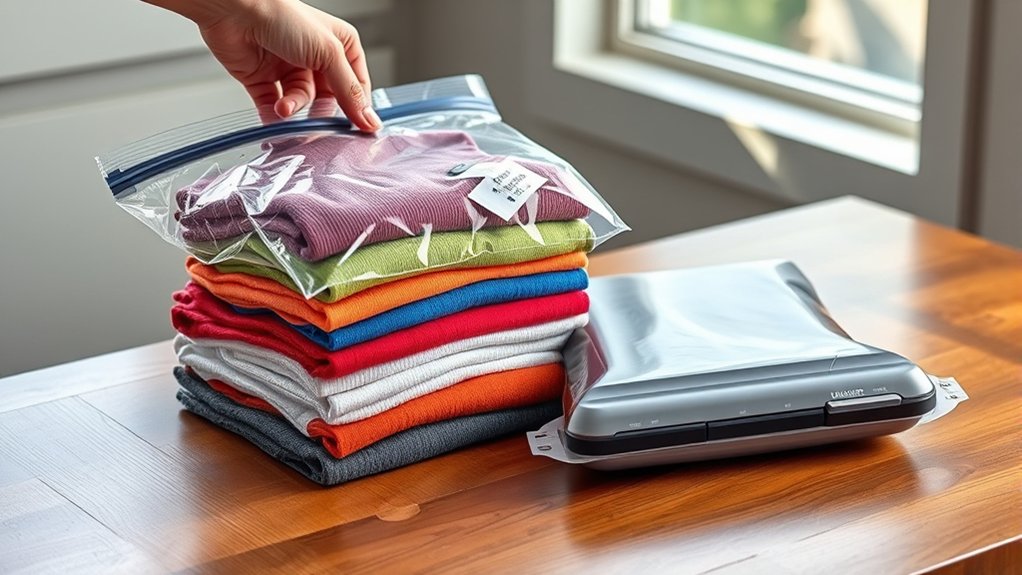
How Do You Vacuum Pack Clothes in 7 Easy Steps
To vacuum pack clothes in 7 easy steps, start by gathering essential items such as a vacuum cleaner with a hose, airtight bags, and clean, dry clothes. Using vacuum sealing for clothes helps save space and protect fabrics from moisture, dust, and pests.
Choose durable, sealable bags sized appropriately to your items for the best results.
Prepare your clothes by sorting, cleaning, and folding them neatly. Avoid overstuffing the bags to ensure effective vacuum sealing. Pack the clothes carefully, then seal the bag tightly to prevent air from entering.
Attach the vacuum hose to the bag valve and remove all the air fully. Check the seal to make sure it is airtight.
Finally, store your compressed clothes in a cool, dry spot to keep the fabric fresh and well-preserved.
Keep going to uncover tips for best storage and maintenance.
Key Takeaways
- Sort, clean, and dry clothes thoroughly before folding them efficiently to save space and prevent wrinkles.
- Choose durable, airtight vacuum storage bags with double-seal zippers and compatible valves for your vacuum cleaner or manual pump.
- Pack clothes neatly inside the bag without overstuffing, then seal the bag tightly to ensure no air leaks.
- Attach the vacuum hose to the bag valve and remove all air until the bag shrinks around the clothes.
- Store vacuum-packed clothes in a cool, dry place away from sunlight, moisture, and temperature fluctuations.
Gather Materials for Vacuum Packing Clothes
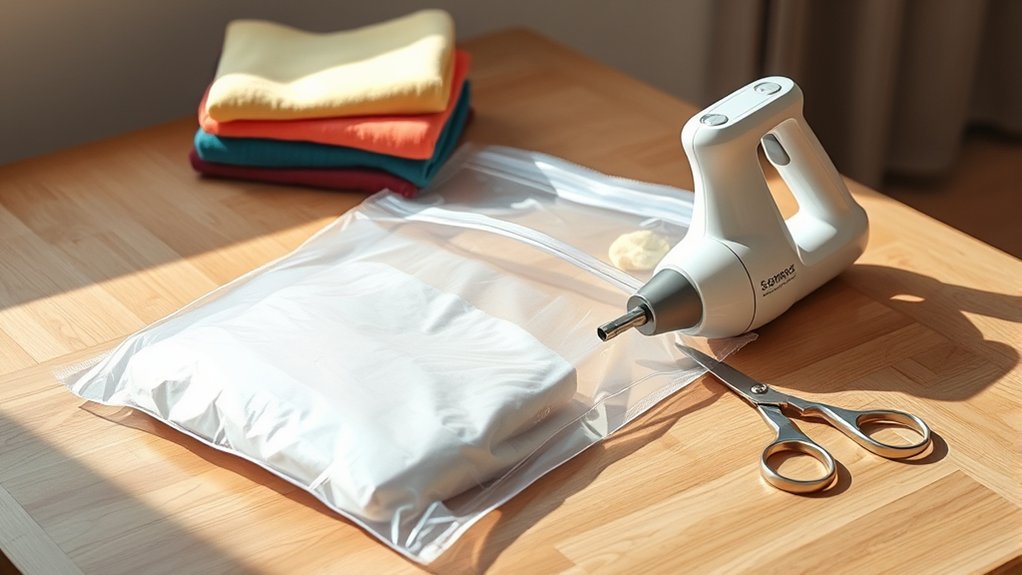
Before you start vacuum packing your clothes, you’ll need to gather a few essential materials. First, get a vacuum cleaner with a hose attachment; this will help you remove the air efficiently. Next, have your clothes ready—clean and dry to prevent mildew.
You’ll also need sturdy, airtight bags designed for vacuum packing, but we’ll cover choosing those in the next step. Additionally, keep a flat surface nearby to lay out your clothes and bags while packing. Depending on your vacuum, a manual pump can be a handy backup if you don’t have a compatible vacuum hose.
Finally, have some labels and a marker ready so you can organize your packed clothes for easy access later. With these materials on hand, you’re set for a smooth vacuum packing process.
Choose the Right Vacuum Storage Bags
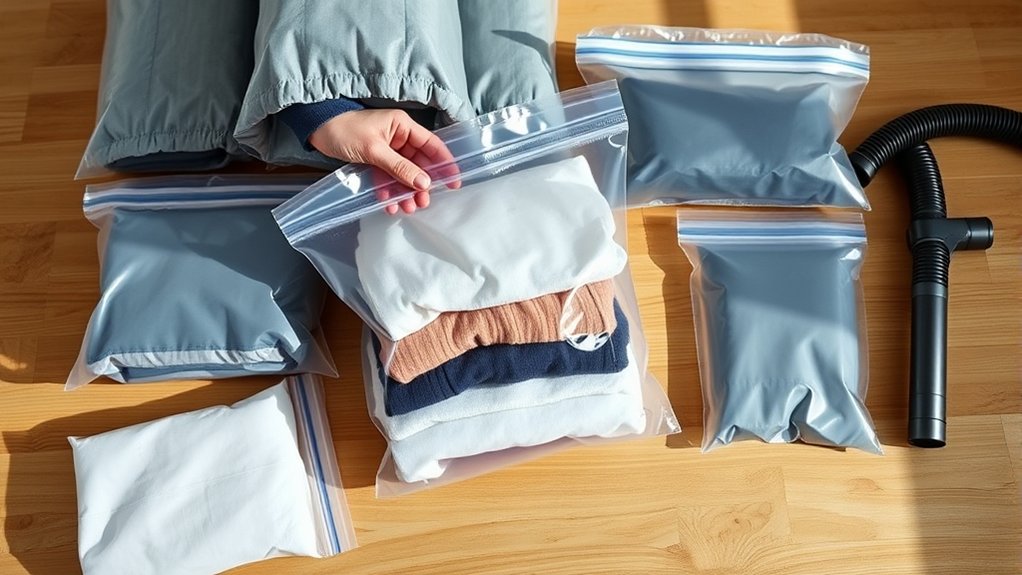
Selecting the right vacuum storage bags plays a crucial role in keeping your clothes compressed and protected. You’ll want bags made from durable, puncture-resistant material to prevent air leaks and damage. Look for double-seal zippers to guarantee an airtight closure.
Consider the size of the bags based on the amount and type of clothing you plan to pack—larger bags work well for bulky items like sweaters, while smaller ones suit t-shirts or underwear. Some bags come with a valve designed for use with a vacuum cleaner or hand pump, making the compression process quicker and easier. Choosing transparent bags helps you identify contents without opening them.
Prepare Your Clothes for Vacuum Packing
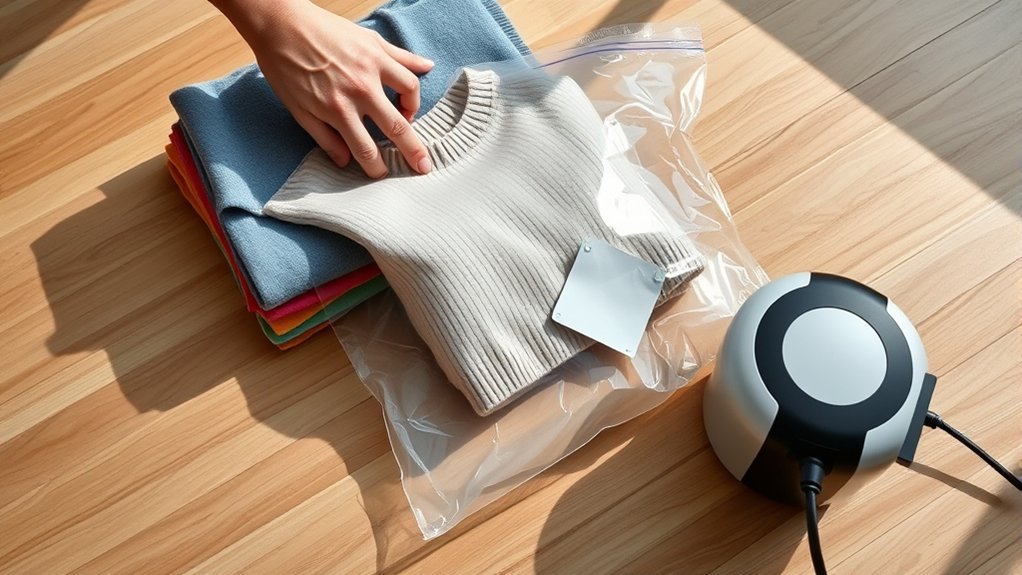
Before vacuum packing, sort your clothes by fabric type to prevent damage and wrinkles. Make sure each item is clean and completely dry to avoid mold and odors.
Taking these steps will keep your clothes fresh and protected while stored.
Sort Clothes By Fabric
When you sort clothes by fabric, you make the vacuum packing process more efficient and protect your garments better. Different fabrics respond uniquely to compression, so grouping similar materials together prevents damage and guarantees ideal storage.
For instance, delicate fabrics need gentler handling, while sturdy fabrics can withstand more pressure.
| Fabric Type | Vacuum Packing Tips |
|---|---|
| Delicate | Use low suction; avoid over-compression |
| Cotton | Can be compressed moderately |
| Synthetic | Pack tightly; retains shape well |
Clean And Dry Clothes
Sorting your clothes by fabric helps prevent damage during vacuum packing, but you’ll also want to make certain each item is clean and completely dry before sealing. Dirt, oils, and moisture can cause stains, mildew, or unpleasant odors when trapped inside the vacuum bag.
Before packing, wash your clothes according to their care labels and give them enough time to air dry thoroughly. Avoid packing damp items, as this can lead to mold growth and fabric deterioration. If you spot any stains, treat them beforehand to prevent permanent marks.
Taking these steps ensures your clothes stay fresh and protected while stored. Clean, dry clothes make vacuum packing more effective and keep your garments in top condition for when you unpack them later.
Pack Clothes Neatly Without Overstuffing
Start by folding your clothes efficiently to save space and prevent wrinkles. Make sure you pick the right size bag for your load to avoid wasting space or straining the seal.
Don’t overstuff the bags, or you risk damaging your clothes and the vacuum seal.
Fold Clothes Efficiently
Although it might be tempting to cram your clothes into the vacuum bag, folding them efficiently makes a huge difference in saving space and preventing wrinkles. Start by laying each item flat, smoothing out wrinkles, then fold into uniform, compact shapes. Roll heavier garments like jeans to minimize bulk.
Arranging clothes by size and fabric type can help you pack smarter and maintain order.
| Item Type | Folding Method | Space-Saving Tip |
|---|---|---|
| T-shirts | Fold in thirds | Stack flat, avoid bulky folds |
| Jeans | Roll tightly | Reduces volume |
| Sweaters | Fold flat | Prevent stretching |
| Dresses | Fold along seams | Maintains shape |
| Socks | Roll or fold | Fill small gaps |
Efficient folding keeps your vacuum bag neat and maximizes space.
Choose Appropriate Packing Size
Folding your clothes efficiently sets the stage for choosing the right packing size to avoid overstuffing your vacuum bag. Start by evaluating the volume of your folded clothes and select a vacuum bag that comfortably fits them without stretching or bulging. Using a bag too large can leave excess space, reducing compression efficiency, while a bag too small can cause wrinkles or damage.
Lay your clothes flat and evenly distribute them inside the bag, ensuring no items bunch up in one area. This neat arrangement helps the vacuum remove air more effectively. Remember, packing your clothes neatly and choosing the correct bag size not only protects your garments but also maximizes storage space, making your vacuum packing process smoother and more efficient.
Avoid Overloading Bags
How much you put into each vacuum bag can make a big difference in preserving your clothes and achieving ideal compression. Avoid overloading bags by packing clothes neatly without stuffing too much inside. Overstuffed bags won’t seal properly, risking air leaks and less effective compression.
Plus, it can damage delicate fabrics.
To avoid overloading, follow these tips:
- Fold clothes flat and smooth to maximize space.
- Leave some room for air to be fully removed.
- Distribute weight evenly to prevent uneven compression.
Seal the Bag and Use a Vacuum to Remove Air
Once you’ve placed your clothes inside the vacuum bag, make sure to seal it tightly before using the vacuum. Check the zipper or seal strip to ensure it’s fully closed with no gaps. A secure seal prevents air from leaking back in, which is essential for effective compression.
Next, locate the valve or air hole on the bag and attach your vacuum hose. Turn on the vacuum, letting it suck out all the air. You’ll notice the bag shrinking as the air is removed, compressing your clothes to save space.
Keep the vacuum running until you hear no more air being pulled out. Once done, quickly remove the vacuum hose and close the valve tightly to maintain the vacuum inside the bag.
Check the Seal and Compress Clothes Fully
After sealing the bag and removing the air, double-check the closure to make sure no air can sneak back in. Run your fingers along the seal to confirm it’s completely closed. If the seal isn’t tight, air will enter, defeating the purpose of vacuum packing.
Always double-check your vacuum seal to prevent air from entering and compromising your packed items.
Next, compress the clothes fully by pressing down on the bag to remove any remaining pockets of air. Verify the clothes lie flat and evenly distributed so the bag maintains its compact shape.
Here’s what to do:
- Inspect the seal closely for gaps or wrinkles.
- Press firmly on the bag’s surface to expel trapped air.
- Smooth out clothes inside to avoid lumps and maximize space.
These steps help keep your clothes protected and compressed for long-term storage.
Store Vacuum-Packed Clothes in a Cool, Dry Place
Though vacuum packing removes air to protect your clothes, storing the bags in a cool, dry place *guarantees* they stay fresh and free from moisture damage. Avoid damp basements or humid areas, as trapped moisture can cause mildew or mold, even inside sealed bags. Choose a closet, drawer, or shelf with good ventilation and consistent temperature to preserve fabric quality.
Keep the bags away from direct sunlight to prevent color fading and material breakdown. Also, avoid places prone to temperature fluctuations, which can lead to condensation inside the bags. By carefully selecting the right storage spot, you *assure* your vacuum-packed clothes remain clean, wrinkle-free, and ready to wear when you need them.
Proper storage maximizes the benefits of vacuum packing and extends your clothes’ lifespan.
Frequently Asked Questions
How Long Do Vacuum-Packed Clothes Stay Fresh?
Vacuum-packed clothes can stay fresh for several months to a year, depending on storage conditions. You’ll want to keep them in a cool, dry place to prevent moisture and odors from creeping in and ruining your garments.
Proper storage is key to maintaining freshness. Avoid exposure to direct sunlight and excessive heat, as these can degrade fabric quality over time.
Regularly checking your vacuum packs can help catch any issues early. This way, your clothes remain in good condition and ready to wear when you need them.
Can Vacuum Packing Damage Delicate Fabrics?
Yes, vacuum packing can damage delicate fabrics if you compress them too tightly. You’ll want to avoid over-squeezing and consider using protective layers like tissue paper to keep your delicate clothes safe while saving space.
Are Vacuum Storage Bags Reusable?
Yes, you can reuse vacuum storage bags multiple times. Just make sure to handle them carefully, avoid punctures, and clean them if needed.
This way, you’ll get the most out of your bags for storing clothes efficiently.
Will Vacuum Packing Prevent Mold and Mildew?
Vacuum packing helps prevent mold and mildew by removing air and moisture, but it’s not foolproof.
You still need dry clothes and a clean, dry storage area to avoid mold growth inside the bags.
Can I Vacuum Pack Wet or Damp Clothes?
No, never vacuum pack wet or damp clothes. Moisture molds materials, making mildew multiply.
Make sure your clothes are completely dry before sealing, so you safeguard your stuff, stop smells, and save space smartly.
Conclusion
Now that you’ve mastered vacuum packing clothes, think of your storage space as a magic suitcase—shrinking bulky piles into sleek, compact bundles. With just a few simple steps, you’ve tamed the chaos and created room for new adventures.
Keep your vacuum-packed clothes cozy in a cool, dry spot, and they’ll stay fresh, ready whenever you need them. You’ve turned packing into a breeze—like folding time itself!
By following these vacuum packing clothes steps, you maximize space and protect your garments. This efficient method ensures your clothes stay clean and wrinkle-free while saving valuable storage room. Embrace vacuum packing clothes for organized, stress-free storage every time.