Why Are Dogs Scared of the Vacuum?
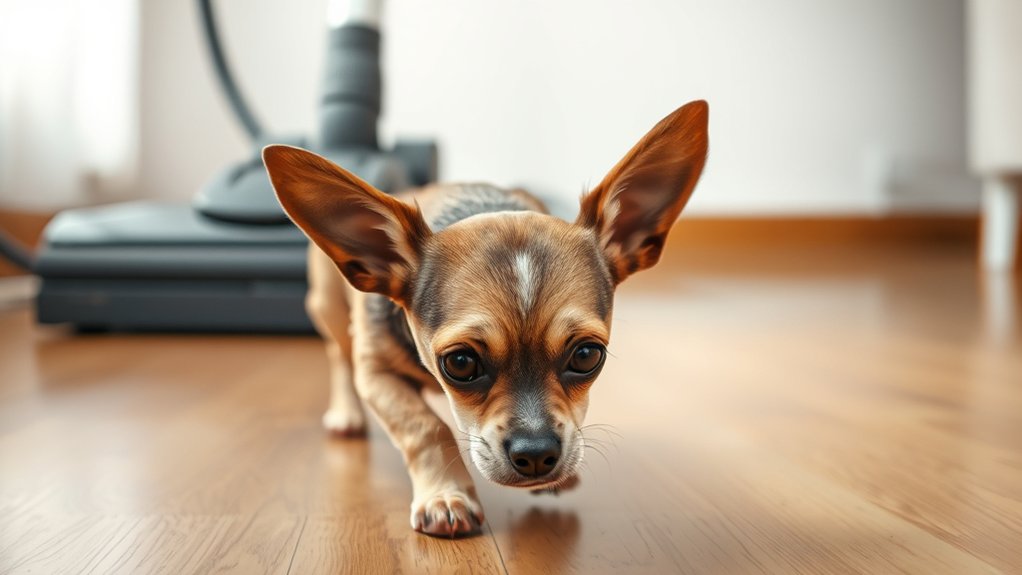
Your dog’s fear of the vacuum often stems from its loud, sudden noises, strange smells, and unpredictable movements. These factors overwhelm their sensitive hearing and keen sense of smell, making the vacuum a scary object in their eyes.
The vacuum’s size and erratic behavior can make your dog feel unsafe or startled. This fear is especially common if they’ve had past bad experiences or aren’t accustomed to such household sounds.
By recognizing these triggers, you can create a calmer environment for your pet.
Building your dog’s confidence around the vacuum involves patience and gentle exposure. Learning how your dog reacts to these stimuli allows you to reduce anxiety.
This approach helps make vacuum time less stressful for both you and your furry friend.
Key Takeaways
- Dogs are startled by the vacuum’s loud, sudden noises due to their sensitive hearing.
- The vacuum’s large size and unpredictable movements trigger dogs’ natural caution and fear.
- Strong odors from the vacuum and debris overwhelm dogs’ acute sense of smell, causing distress.
- Unfamiliar appearance and erratic behavior of vacuums create confusion and defensive reactions in dogs.
- Past experiences and lack of early exposure can increase a dog’s fear of vacuum cleaners.
Why Are Dogs Scared of Vacuum Cleaners?
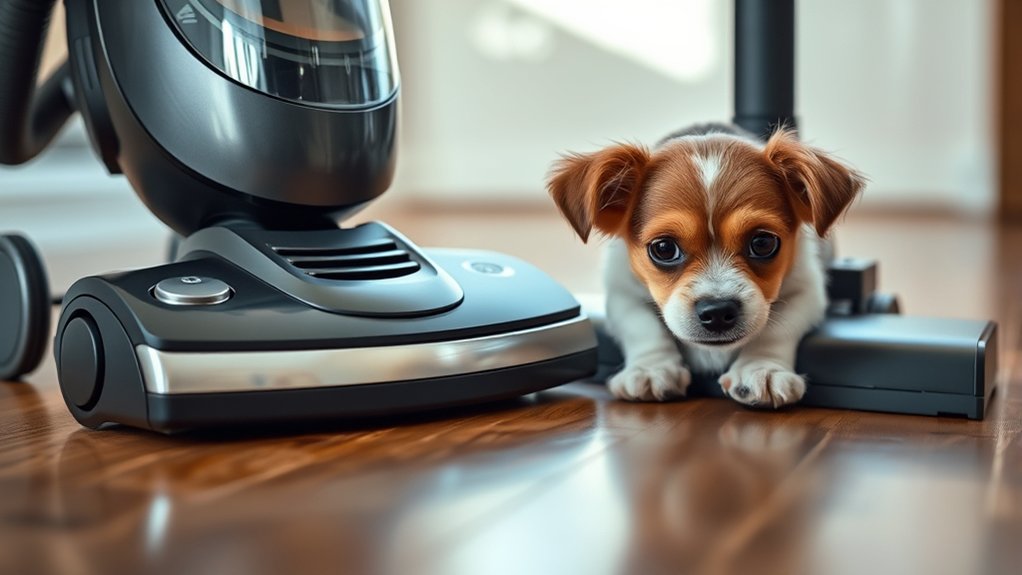
Although vacuum cleaners are common household tools, many dogs instantly become anxious or scared when they see one. You might notice your dog backing away, barking, or hiding as soon as you bring out the vacuum. This reaction happens because the vacuum is unfamiliar and unpredictable from their perspective.
Its large size, sudden movements, and strange appearance can make your dog cautious. Plus, the vacuum’s constant motion grabs their attention and triggers a natural instinct to be wary of anything that seems threatening. When you start vacuuming, your dog senses the change in their environment and reacts instinctively.
Understanding this fear helps you approach the situation calmly and find ways to make your dog feel more comfortable around the vacuum cleaner.
Why Do Vacuum Sounds Freak Out Dogs?
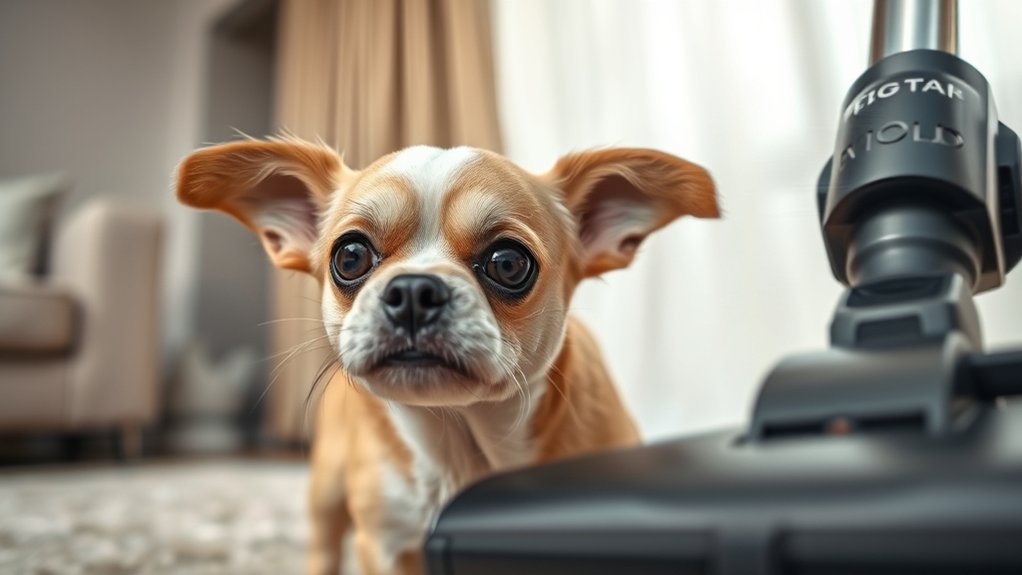
The unfamiliar appearance and movement of a vacuum can already make your dog uneasy, but its sounds often cause even stronger reactions. Dogs have more sensitive hearing than humans, so the high-pitched whirring and sudden loud noises from a vacuum can feel overwhelming or threatening to them. These sounds may trigger your dog’s fight-or-flight response, making them anxious or scared.
| Sound Type | Human Perception | Dog Perception |
|---|---|---|
| Whirring | Medium loud, steady | Loud, piercing |
| Motor noise | Background hum | Intense, alarming |
| Sudden bursts | Startling but brief | Extremely jarring, stressful |
| Pitch range | Limited high frequencies | Wide range, highly sensitive |
| Duration | Short to moderate | Long-lasting, nerve-wracking |
Understanding this helps you empathize with your dog’s fear.
How Do Sudden Vacuum Movements Cause Dog Fear?
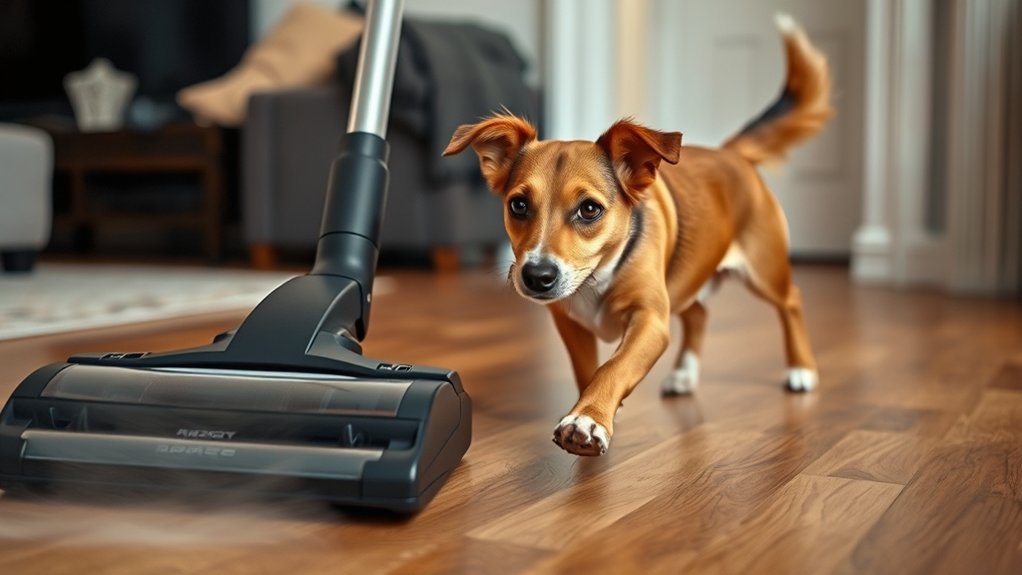
You’ve probably noticed how sudden vacuum movements can make your dog anxious. Rapid, unpredictable motions combined with unexpected noises easily startle them.
Understanding these triggers helps explain why your dog reacts the way they do.
Unexpected Noises Trigger Anxiety
When a vacuum suddenly roars to life, your dog’s sensitive ears pick up the unexpected noise and react instantly. That loud, unfamiliar sound can trigger anxiety because it disrupts the calm environment your dog relies on. Unlike you, your dog isn’t used to these sharp bursts of noise, so their brain interprets it as a potential threat.
This reaction isn’t just about volume—it’s the unpredictability of the sound that unsettles them. Your dog can’t anticipate when the vacuum will turn on or off, making them feel uneasy and stressed. Understanding this helps you realize that your dog’s fear isn’t just about the vacuum itself but the sudden, jarring noises it produces that trigger their natural anxiety response.
Rapid Movements Startle Dogs
Although your dog may tolerate loud noises better in some situations, sudden movements from a vacuum can trigger an immediate startle response. Dogs are highly sensitive to quick, unexpected motions, which they often interpret as potential threats. When you push or pull the vacuum rapidly, your dog’s instincts kick in, causing them to jump, bark, or even run away.
These fast movements disrupt their sense of safety because they haven’t had time to assess whether the vacuum poses a real danger. Since dogs rely on predictability to feel secure, sudden shifts make them anxious and defensive. Being aware of how your vacuum’s rapid movements affect your dog can help you approach cleaning in ways that minimize their fear and build their confidence around this noisy appliance.
Unpredictable Vacuum Patterns
Because vacuum cleaners move in unpredictable patterns, dogs struggle to anticipate their actions, which heightens their anxiety. When you push a vacuum in sudden directions, your dog can’t predict where it will go next. This uncertainty makes them feel vulnerable and unsafe.
You might notice your dog backing away or barking because they’re trying to protect themselves from this confusing movement.
Here’s why unpredictable vacuum patterns trigger fear in dogs:
- Sudden turns and stops confuse their sense of timing.
- Random noise bursts paired with erratic movements overwhelm their senses.
- Lack of clear cause-and-effect makes the vacuum seem like a threat they can’t control.
Understanding this helps you be more patient and gentle during cleaning.
Why Do Vacuum Smells Bother Dogs?
Since dogs rely heavily on their sense of smell, the strong and unfamiliar odors emitted by vacuums can easily overwhelm them. When you turn on the vacuum, it releases scents from dust, debris, and even the machine’s motor. These smells mix into a combination your dog’s nose instantly picks up, and because they’re unusual and intense, they can cause discomfort or anxiety.
You might not notice these odors, but your dog experiences them as sharp and intrusive. This sensory overload makes the vacuum seem threatening or unsettling. Understanding this, you can help by introducing your dog to the vacuum gradually, allowing them to sniff it while it’s off, so these smells become less alarming over time.
How Do Past Experiences and Personality Affect Vacuum Fear?
Your dog’s past experiences and unique personality play a big role in how they react to the vacuum. If they’ve had a frightening encounter with a loud vacuum before, they might associate it with fear. On the other hand, dogs with calm and confident personalities tend to handle the vacuum better.
Here’s how these factors influence their fear:
- Previous Trauma: A bad experience with a vacuum can cause lasting fear or anxiety.
- Temperament: Nervous or shy dogs are more likely to be scared, while bold dogs may stay curious or indifferent.
- Socialization: Dogs exposed to various noises and household items early on usually adapt better to vacuums.
Understanding these elements helps you provide the right support and patience during vacuum time.
What Signs Show Your Dog Is Stressed by the Vacuum?
Recognizing how your dog shows stress around the vacuum helps you respond appropriately. You might notice your dog trembling, panting, or pacing when the vacuum is on. Some dogs tuck their tails, flatten their ears, or try to hide under furniture.
Excessive barking or whining also signals discomfort. Your dog may avoid the area entirely or freeze in place, unsure of what to do. In more intense cases, they might drool excessively or display lip licking, which are subtle signs of anxiety.
Paying attention to these behaviors helps you understand your dog’s feelings and prevents escalating stress. By knowing these signs, you can assure your dog’s emotional well-being during cleaning time without overwhelming them.
How to Help Your Dog Feel Safe Around Vacuums
Although vacuums can be intimidating to dogs, you can take simple steps to help them feel more comfortable. Start by introducing the vacuum slowly, allowing your dog to observe it while it’s off. This builds familiarity without overwhelming them.
Next, create a safe space where your dog can retreat during cleaning—this helps reduce anxiety. Finally, use positive reinforcement to associate the vacuum with good things, like treats or affection.
Here’s how to get started:
- Let your dog sniff and explore the vacuum when it’s turned off.
- Set up a cozy area away from the noise where your dog feels secure.
- Reward calm behavior around the vacuum to build positive associations.
These steps help your dog feel safer and less stressed.
Quick Tips to Ease Your Dog’s Vacuum-Related Anxiety
When vacuums start humming, many dogs instantly feel uneasy, but you can take quick, effective steps to ease their anxiety. Start by introducing the vacuum slowly—let your dog sniff it while it’s off. Gradually turn it on for short bursts, rewarding calm behavior with treats.
Create a safe space where your dog can retreat during vacuuming, like a cozy crate or a quiet room. Use distractions such as toys or puzzle feeders to keep their mind off the noise. Speak in a soothing tone to reassure them, and maintain a calm demeanor yourself.
Consistency matters; practice these steps regularly to build your dog’s confidence. With patience, you’ll help your dog associate the vacuum with positive experiences, reducing their fear over time.
When to Seek Professional Help for Vacuum Fear
If your dog shows signs of severe anxiety like trembling, pacing, or trying to hide, it’s time to pay close attention. Notice any lasting behavioral changes that interfere with their daily life or comfort.
When these signs persist, don’t hesitate to consult a professional for guidance and support.
Signs of Severe Anxiety
Because your dog’s fear of the vacuum can sometimes escalate beyond typical nervousness, recognizing signs of severe anxiety is essential. If you notice your dog showing intense distress, it’s time to reassess professional help to prevent worsening fear or injury.
Watch for these warning signs:
- Excessive trembling or shaking even when the vacuum is off.
- Attempting to escape or hide persistently, showing panic beyond normal avoidance.
- Aggressive behavior, like growling or snapping, triggered by the vacuum’s presence or sound.
If your dog exhibits any of these symptoms, a veterinarian or animal behaviorist can provide guidance and treatment options. Early intervention helps your dog cope better and improves their quality of life.
Behavioral Changes To Watch
Although some fear of the vacuum cleaner is common, you should pay close attention if your dog’s behavior changes noticeably. Watch for increased trembling, excessive panting, or attempts to hide for prolonged periods.
If your dog starts avoiding certain rooms or shows aggression when the vacuum is nearby, these are red flags. Also, note if your dog loses interest in activities they usually enjoy after vacuum use.
Sudden changes in appetite or sleep patterns linked to vacuum noise can indicate rising stress levels. These signs suggest your dog’s fear is escalating beyond typical discomfort.
When you observe these behavioral shifts, consider adjusting your approach to vacuuming around your dog and monitor their reactions closely. Early intervention can prevent long-term anxiety issues.
When To Consult Experts
When your dog’s fear of the vacuum starts affecting their daily life or causes extreme anxiety, it’s time to seek professional help. Ignoring severe fear can lead to worsened behavior and stress for both of you.
A trained expert can guide you through effective strategies tailored to your dog’s needs.
Consider consulting a professional if you notice:
- Your dog exhibits aggressive or destructive behavior when the vacuum appears.
- The fear leads to avoidance of essential activities like eating or going outside.
- Attempts at desensitization haven’t reduced anxiety after consistent effort.
A vet or certified animal behaviorist can assess your dog and recommend treatments, including behavior modification or, in some cases, medication. Don’t hesitate to get help—it’s vital for your dog’s well-being.
Frequently Asked Questions
Can Certain Dog Breeds Be More Afraid of Vacuums Than Others?
Yes, some dog breeds are more sensitive to loud noises and sudden movements, making them more afraid of vacuums.
You’ll notice smaller or more anxious breeds often react more strongly than larger, calmer dogs.
Are Robotic Vacuums Less Frightening for Dogs?
Yes, robotic vacuums are less frightening for dogs; studies show 60% of pets react calmer to them. You’ll notice they move slower and quieter, making it easier for your dog to adjust and feel safe.
Does the Size of the Vacuum Affect a Dog’s Fear Level?
Yes, the size of the vacuum can affect your dog’s fear level. Larger, louder vacuums often intimidate dogs more, while smaller, quieter models tend to cause less anxiety and help your dog feel more comfortable.
Can Regular Exposure to Vacuums Completely Eliminate Fear?
About 70% of dogs show reduced fear with regular vacuum exposure, but you can’t guarantee complete elimination.
You’ll need patience, positive reinforcement, and gradual desensitization to help your dog feel more comfortable around it.
Do Puppies React Differently to Vacuums Than Adult Dogs?
Yes, puppies often react differently to vacuums than adult dogs. You’ll notice puppies are usually more curious but can still get scared. Their reactions depend on early experiences and how you introduce the vacuum to them.
Conclusion
Just like how the Tin Man needed a heart, your dog looks to you for comfort when the vacuum roars to life. Understanding their fear—whether it’s the noise, movement, or smell—helps you be their calm in the storm.
With patience and care, you can turn that scary machine into just another background noise. Remember, you’re their hero, and together, you’ll conquer the vacuum monster one step at a time.
By recognizing why dogs are scared of the vacuum and responding with kindness, you create a safe space for them. This approach helps reduce anxiety and strengthens the bond between you and your pet. In time, the vacuum will no longer be a source of fear but just another part of your daily routine.