Remove Mold From Washing Machine Rubber Seal in 7 Easy Steps
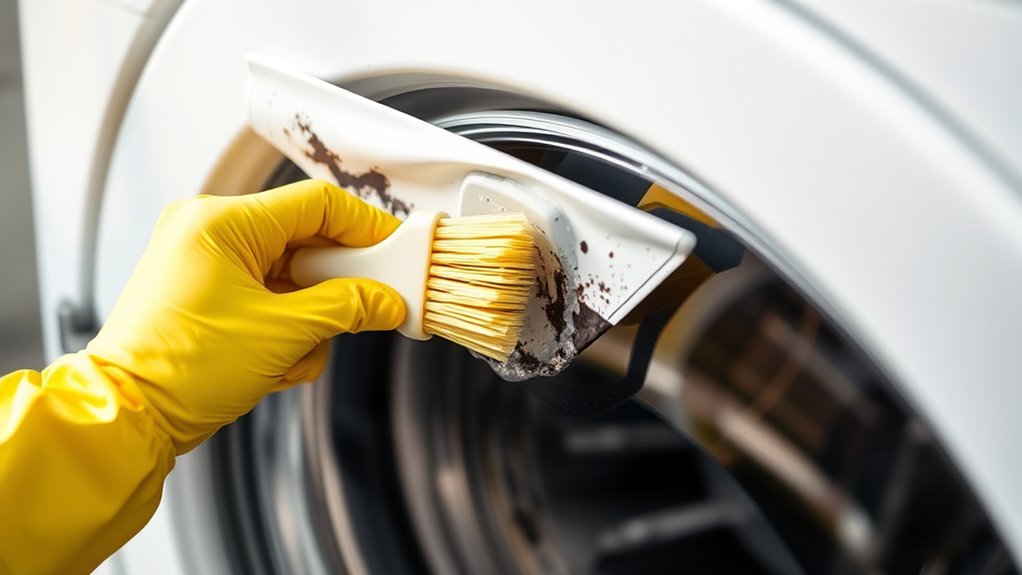
To remove mold from your washing machine rubber seal in 7 easy steps, start by wearing gloves and pulling back the seal to expose moldy spots.
Mold buildup on the rubber seal not only causes unpleasant odors but can also affect your machine’s performance and laundry cleanliness. Addressing this issue promptly helps maintain a fresh and hygienic washing environment.
Wipe away debris with a cloth, then spray a mold-killing solution like vinegar or bleach on the affected areas.
Scrub gently with a toothbrush, rinse with a damp cloth, and dry thoroughly.
Keep the door open to air out moisture.
Follow this simple routine, and you’ll soon have a cleaner, fresher seal. There’s more to learn on preventing mold long-term.
Key Takeaways
- Wear rubber gloves and prepare a mold-killing solution like bleach or vinegar in a spray bottle.
- Gently pull back the washing machine seal to expose mold hidden in the folds and crevices.
- Spray the mold-killing solution on the seal and scrub thoroughly with an old toothbrush or small brush.
- Wipe the seal with a damp cloth to remove mold and residue, then rinse with warm water.
- Dry the seal completely and leave the door open to air out moisture and prevent mold regrowth.
Why Mold Grows on Washing Machine Rubber Seals
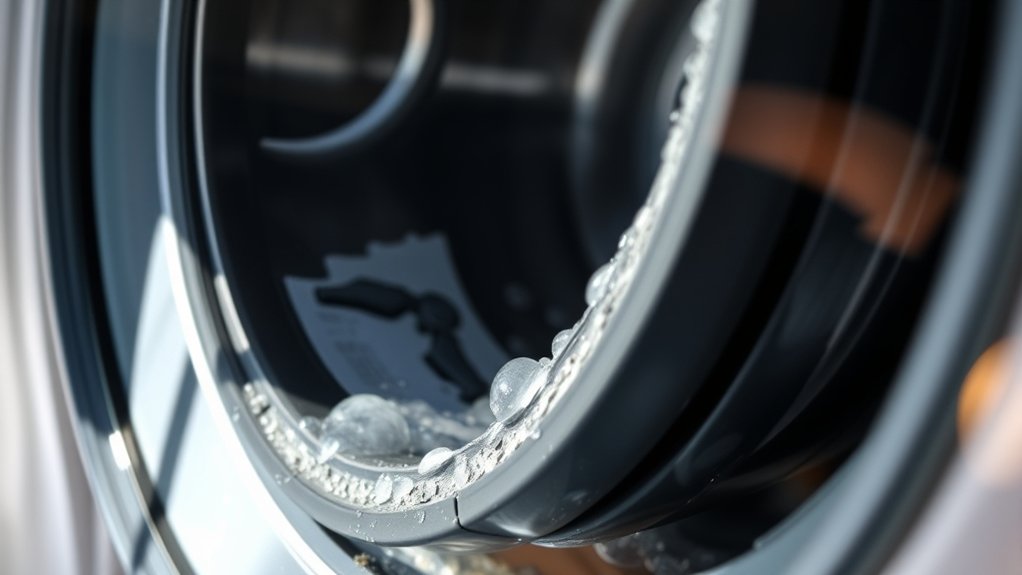
Although you may not notice it immediately, mold tends to grow on washing machine rubber seals because these areas stay damp and trap dirt and detergent residue. Every time you run a wash cycle, moisture lingers in the folds of the seal, creating a perfect environment for mold spores to thrive. When you leave the door closed after washing, you’re fundamentally trapping humidity inside, which encourages mold growth.
Additionally, detergent buildup can mix with dirt and grime, providing nutrients that help mold spread. If you don’t clean and dry the seal regularly, you’ll likely see mold start to form. Understanding this helps you realize why keeping the seal dry and clean is key to preventing mold from taking hold in your washing machine.
How to Identify Mold on Your Washing Machine Seal
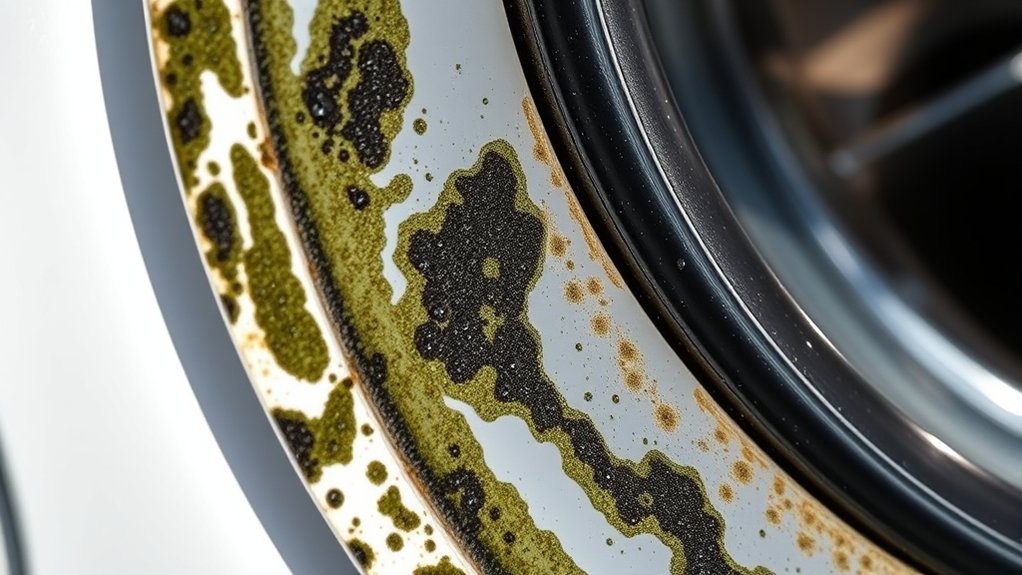
Many washing machine seals show early signs of mold as small black, green, or gray spots clustered around the rubber edges. You’ll often notice a musty smell coming from the door area, indicating mold growth. Check the folds and crevices of the rubber seal carefully since mold thrives in these damp, hidden spots.
If you see slimy or fuzzy patches, that’s a clear sign mold has taken hold. Sometimes, the seal might feel sticky or damp even after a wash cycle, which also points to mold presence. Keep an eye out for discoloration beyond normal wear and tear.
Tools You’ll Need to Remove Mold From Your Washing Machine Seal
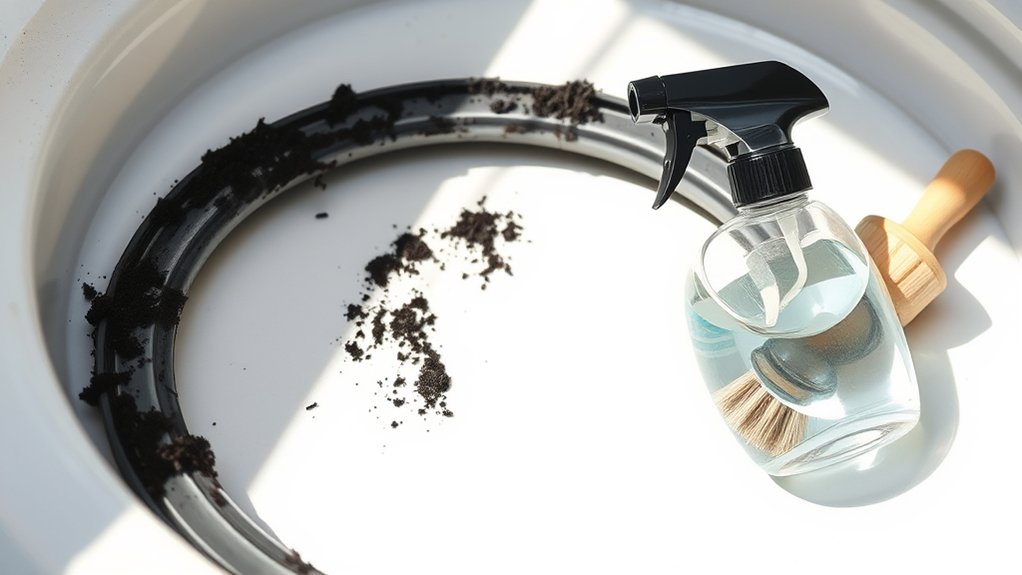
Before you start scrubbing, gather the right tools to make removing mold from your washing machine seal easier and more effective. You’ll need rubber gloves to protect your hands from harsh cleaners and mold spores. A spray bottle filled with a mold-killing solution, like diluted bleach or white vinegar, will help you target the affected areas precisely.
Grab an old toothbrush or small scrub brush to get into the crevices of the rubber seal without causing damage. Have microfiber cloths or paper towels on hand to wipe away mold and moisture. Finally, keep a bowl of warm water nearby to rinse the brush as you clean.
With these tools ready, you’ll tackle mold efficiently and keep your washing machine fresh.
How to Prepare Your Washing Machine for Mold Removal
Before you start removing mold, make sure you gather all the cleaning supplies you’ll need. Check that your washing machine is completely empty to avoid any obstructions. This will help you work efficiently and safely during the cleaning process.
Gather Cleaning Supplies
To effectively remove mold from your washing machine’s rubber seal, you’ll need a few essential cleaning supplies on hand. Grab rubber gloves to protect your hands from harsh cleaners and mold spores. You’ll also want a spray bottle filled with white vinegar or a mixture of equal parts water and bleach for disinfecting.
A soft cloth or sponge works well for scrubbing without damaging the seal. Additionally, keep an old toothbrush handy to reach tight crevices. Have paper towels or a clean rag ready for drying the area afterward.
If you prefer, you can use a commercial mold remover designed for household use, but always follow the instructions carefully. Preparing these supplies before you start will make the cleaning process quicker and more efficient.
Ensure Machine Is Empty
Once you have all your cleaning supplies ready, make certain your washing machine is completely empty. Check the drum thoroughly for any clothes, detergent pods, or loose items that might interfere with the cleaning process. Removing everything ensures you can access the rubber seal fully and prevents damage to your laundry.
Also, an empty machine allows cleaning solutions to work effectively without dilution or obstruction. Before starting, leave the door open for a few minutes to air out any lingering moisture or odors. This step helps reduce mold spores and makes the cleaning more efficient.
Taking these precautions sets the stage for a thorough mold removal, protecting both your machine and your clothes from potential contamination.
How to Remove Mold From the Washing Machine Seal Step-by-Step
Although mold can seem stubborn, you can effectively remove it from your washing machine seal by following a few simple steps. First, put on gloves to protect your skin. Then, gently pull back the rubber seal to expose any hidden mold and wipe away visible debris with a clean cloth.
Next, dampen a cloth with a cleaning solution suitable for mold removal and thoroughly scrub the seal, paying close attention to crevices. After scrubbing, rinse the seal with a damp cloth to remove any residue.
Finally, dry the area completely with a dry cloth or towel to prevent mold from returning. Leave the door open for a while to air out the seal before using your machine again. Repeat as needed to keep mold at bay.
Natural Cleaners That Effectively Kill Washing Machine Seal Mold
Since harsh chemicals can damage your washing machine or irritate your skin, you’ll want to try natural cleaners that effectively kill mold on the rubber seal. White vinegar is a top choice—its acidity breaks down mold and disinfects. Spray undiluted vinegar onto the seal, let it sit for an hour, then wipe it clean.
Baking soda also works well; mix it with water to form a paste, apply it to the moldy areas, scrub gently, and rinse. Tea tree oil is another powerful natural option. Add a teaspoon to a cup of water, spray the solution on the seal, and leave it for a few hours before wiping.
These natural cleaners kill mold without harsh chemicals, keeping your machine and hands safe.
How to Dry and Maintain Your Washing Machine Seal to Prevent Mold
After treating the mold with natural cleaners, keeping your washing machine seal dry is key to stopping mold from coming back. Always leave the door or lid open after each wash to let moisture escape and air circulate. Wipe down the rubber seal with a dry cloth or towel regularly, especially after using hot water cycles.
Check for and remove any trapped debris or lint that can hold moisture. You might also use a small fan or dehumidifier in your laundry area to reduce humidity. Every few weeks, run a maintenance wash on the hottest setting with a cup of white vinegar to prevent buildup.
Frequently Asked Questions
Can Mold on Washing Machine Seals Cause Health Problems?
Yes, mold on washing machine seals can cause health problems. You might experience allergies, respiratory issues, or skin irritation. It’s important you clean the mold regularly to protect your health and keep your laundry fresh.
Is It Safe to Use Bleach to Clean Mold From Seals?
Bleach can be a bold but beneficial bleach for banishing bothersome bacteria and black mold. But be careful! You’ll want to wear gloves, ventilate vigorously, and rinse thoroughly to keep safety solid and seals sturdy.
How Often Should I Clean the Washing Machine Seal?
You should clean the washing machine seal at least once a month to prevent mold buildup.
If you notice moisture or odor, don’t wait—clean it immediately to keep your machine fresh and functioning properly.
Can Mold Damage the Washing Machine’s Rubber Seal Permanently?
Mold can’t usually cause permanent damage to your washing machine’s rubber seal if you clean it promptly.
But if you let it grow unchecked, it might degrade the rubber, leading to cracks or leaks over time.
Are Commercial Mold Removers Better Than Natural Cleaners?
Commercial mold removers are usually stronger and work faster than natural cleaners, but they can be harsh and contain chemicals.
You might prefer natural options for safety and eco-friendliness, though they may take longer to be effective.
Conclusion
Now that you’ve gently ushered mold away from your washing machine seal, you’re on the path to a fresher, happier laundry routine. With a little care and regular attention, you can keep that pesky unwelcome guest from returning.
Remember, a clean washing machine rubber seal means a bright, welcoming space for your clothes and family. Maintaining mold-free seals helps ensure your laundry stays fresh and hygienic.
So, keep up the good work, and enjoy the fresh, inviting hum of your washing machine every time you do laundry! Regularly removing mold from your washing machine rubber seal is key to a cleaner, more efficient appliance.