How to Vacuum an Air Conditioning System in 7 Easy Steps
To vacuum your AC system effectively, start by turning off the power to ensure safety. Gather essential tools like your vacuum pump, gauges, and safety gear before beginning the process.
Proper vacuuming of an air conditioning system is crucial to remove moisture and air, which can impair performance and longevity.
Next, securely connect the vacuum pump to the low-pressure service port of your AC system. Once connected, start the pump to begin the evacuation process.
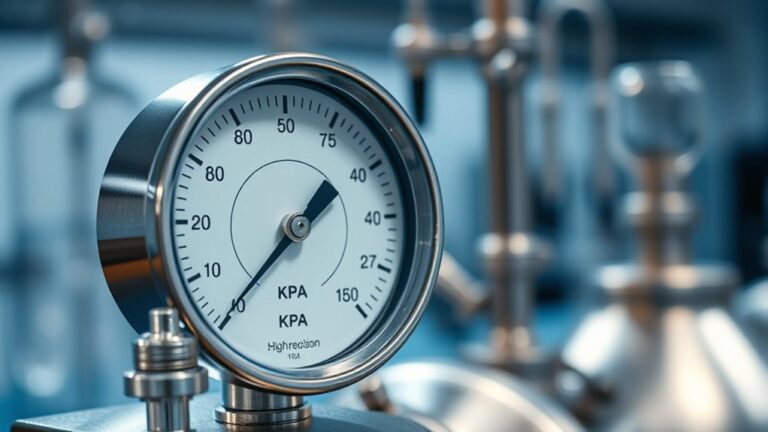
Monitor the vacuum pressure closely, aiming to reach below 500 microns.
Maintain this vacuum level for 15-30 minutes to ensure thorough moisture and air removal.
After that, close the valves and carefully disconnect the equipment.
Finally, test the system to confirm it is cooling properly.
Keep following for detailed tips to achieve a flawless vacuuming process.
Key Takeaways
- Turn off power, wear safety gear, and gather necessary tools including a vacuum pump and manifold gauge set.
- Connect the vacuum pump hose securely to the low-pressure service port, ensuring all connections are clean and tight.
- Run the vacuum pump until pressure reaches below 500 microns, maintaining it for 15-30 minutes to remove moisture and air.
- Close all service valves tightly before disconnecting equipment and immediately cap the service ports to prevent leaks.
- Turn the system back on, verify airflow and cooling, monitor pressure stability, and listen for unusual noises to confirm proper operation.
Turn Off Power to Your AC Unit
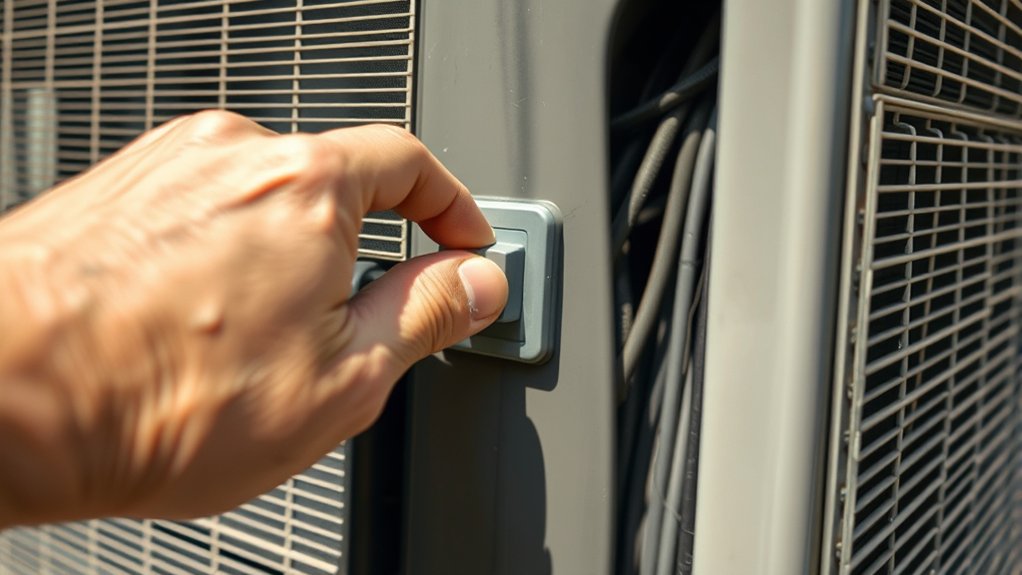
Before you begin cleaning your air conditioning system, make sure you turn off the power to your AC unit. This step is vital for your safety and to prevent any damage to the system. Locate the main electrical panel, usually near your home’s entrance or utility area, and switch off the circuit breaker that controls your air conditioner.
If you’re unsure which breaker it is, turn off the main breaker to cut power to the entire house temporarily. Double-check by trying to turn on the AC to confirm it’s off. Never attempt to vacuum or clean any part of the system while it’s powered, as this can cause electrical shocks or harm the unit’s components.
Taking this precaution guarantees a safe, smooth cleaning process.
Gather the Right Tools for Vacuuming Your AC
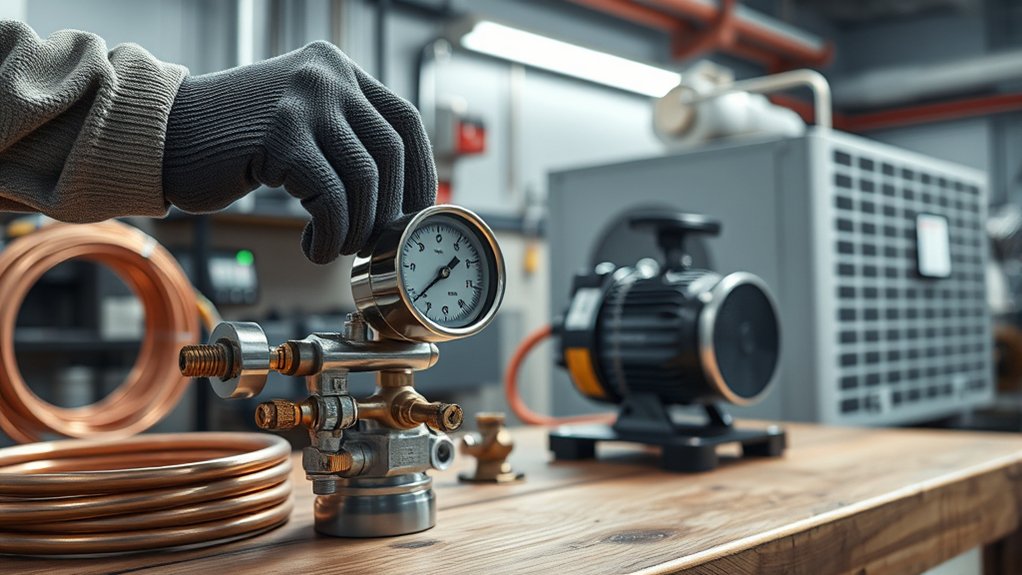
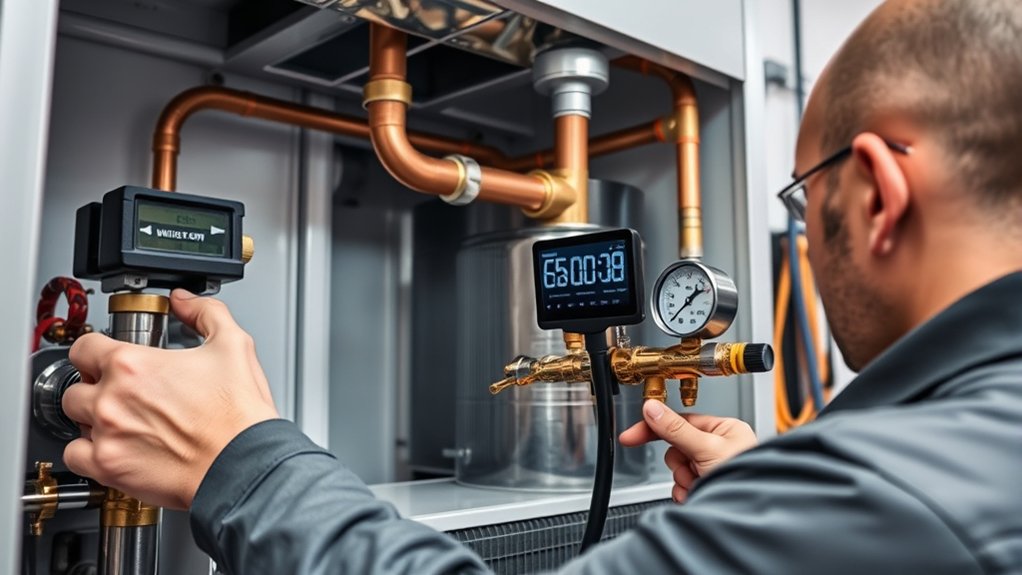
Since vacuuming your air conditioning system requires specific equipment, you’ll need to gather the right tools to do the job effectively. Start with a vacuum pump designed for HVAC systems—it’s essential for removing air and moisture. You’ll also need a manifold gauge set to monitor pressure levels accurately.
Don’t forget durable hoses that connect the pump to your AC unit; they should be leak-free and compatible with your manifold gauges. A wrench or adjustable spanner will help you tighten fittings securely. Additionally, have safety goggles and gloves on hand to protect yourself from refrigerants or debris.
How to Connect the Vacuum Pump to Your AC System
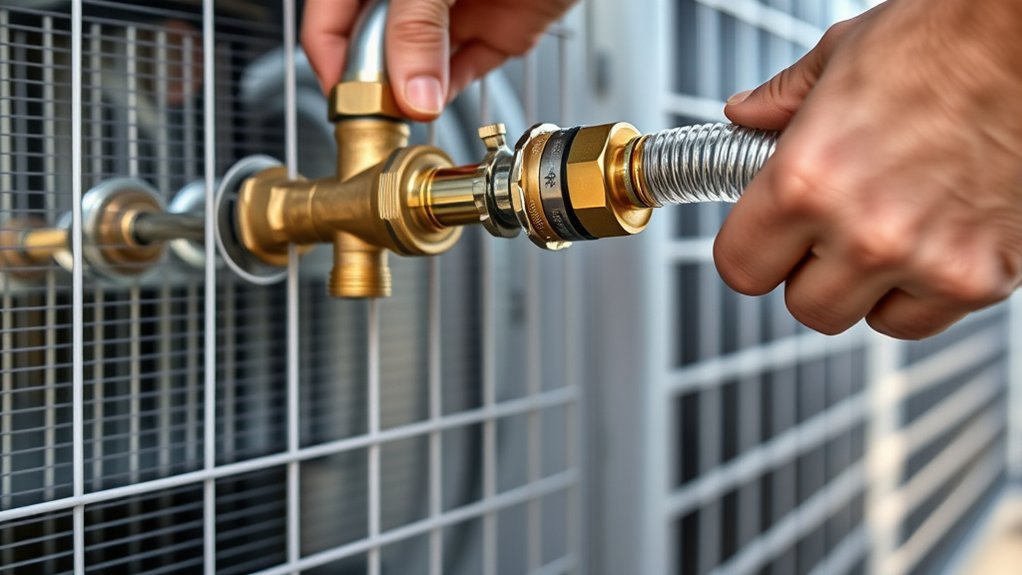
First, locate the correct connection ports on your AC system to attach the vacuum pump hoses. Make certain each hose is securely fastened to prevent any air leaks.
Taking these steps guarantees your vacuum process will work efficiently.
Identifying Connection Ports
Where exactly do you connect the vacuum pump to your air conditioning system? You’ll want to locate the service ports on your AC unit—usually found on the low-pressure and high-pressure sides of the system. These ports have threaded valves designed for attaching gauges and vacuum equipment.
Focus on the low-pressure port, as this is typically where you’ll connect your vacuum pump hose. It’s often larger and marked with a blue cap, while the high-pressure port is smaller and has a red cap. Make sure you identify these ports correctly to avoid damaging your system.
Once you spot the low-pressure port, you’re ready to attach the vacuum pump hose and begin evacuating the system efficiently.
Securing Vacuum Pump Hoses
After locating the low-pressure port on your AC system, the next step is to securely attach the vacuum pump hose. First, verify the hose and port are clean and free of debris. Connect the hose firmly to the low-pressure port by pushing it onto the fitting until it snaps or twists into place, depending on your hose type.
Tighten any locking mechanism or clamps to prevent air leaks. Next, connect the other end of the hose to the vacuum pump’s inlet port, making sure it’s also secure. Double-check both connections for tightness to maintain a proper vacuum seal.
Properly securing the hoses is essential to avoid leaks that can compromise the vacuuming process and the overall efficiency of your AC system.
Start Vacuuming to Remove Moisture and Debris
Why is vacuuming vital for your air conditioning system? It removes moisture and debris that can cause corrosion, reduce efficiency, and damage components.
Once your vacuum pump hoses are secured, turn on the vacuum pump and let it run. The pump creates a low-pressure environment, pulling out trapped air, water vapor, and contaminants.
Here’s what vacuuming does for your system:
| Purpose | Effect | Result |
|---|---|---|
| Remove Moisture | Prevents freezing | Protects compressor |
| Extract Debris | Avoids blockages | Ensures smooth airflow |
| Eliminate Air | Improves refrigerant flow | Boosts cooling efficiency |
Monitor Vacuum Pressure for Effective Vacuuming
Although vacuuming removes moisture and debris, you need to monitor the vacuum pressure closely to assure the process is effective. Use a vacuum gauge to track the pressure, aiming for a deep vacuum level—typically below 500 microns. This guarantees that most contaminants and moisture are eliminated from the system.
Keep an eye on the gauge throughout the process because pressure fluctuations might indicate leaks or equipment issues. If the pressure doesn’t drop as expected, double-check your connections and the vacuum pump’s performance. Maintaining steady, low pressure for at least 15 to 30 minutes confirms thorough evacuation.
Close Valves and Safely Disconnect Equipment
Once you finish vacuuming, make sure to close the correct valves to maintain system integrity. You’ll also need to disconnect your equipment carefully to avoid leaks or damage. Following safety precautions during this process is essential to protect yourself and the system.
Valve Types And Functions
How do you guarantee safety and efficiency when disconnecting an air conditioning system? Understanding valve types and their functions is key. You’ll encounter mainly two valves: service valves and shut-off valves.
Service valves control refrigerant flow during maintenance; they’re designed for easy access and precise operation. Shut-off valves completely isolate sections of the system, preventing refrigerant leaks. When preparing to vacuum, you need to close both types properly.
Turn service valves clockwise to seal off refrigerant paths, and ensure shut-off valves are fully closed to maintain system integrity. Knowing these valves lets you avoid accidental releases and system contamination, keeping your work safe and efficient. Mastering their functions sets the foundation for a successful vacuuming process.
Proper Equipment Disconnection
Before you disconnect any equipment, make sure all valves are fully closed to prevent refrigerant leaks and system contamination. Double-check each valve’s position, ensuring they’re tightly sealed. Next, carefully detach your vacuum pump and manifold gauge set from the service ports.
Loosen the fittings slowly to avoid sudden pressure changes that could damage the system. Use appropriate tools to avoid stripping valve stems or fittings. Once disconnected, cap or plug the service ports immediately to maintain system integrity.
Handle all components gently to prevent damage and contamination. By following these steps, you’ll maintain a sealed environment and protect the system’s efficiency, setting you up for a smooth reinstallation or further service.
Safety Precautions And Tips
Although closing valves and disconnecting equipment might seem straightforward, taking proper safety precautions is essential to protect both you and the air conditioning system. Always wear protective gloves and goggles to prevent injury from refrigerants or sharp edges. Make sure the system is powered off before you start closing valves to avoid electrical hazards.
Slowly close valves to prevent pressure surges that might damage components. When disconnecting, handle hoses and fittings gently to maintain seals and avoid leaks.
| Action | Emotion Felt | Reason |
|---|---|---|
| Close valves | Confidence | System secured, avoiding leaks |
| Disconnect | Caution | Prevents accidental damage or injury |
| Wear safety gear | Assurance | Protects you from harmful exposure |
Test Your AC System to Confirm It’s Working
Once you’ve completed the vacuuming process, you’ll need to test your AC system to confirm it’s working properly. Start by turning the power back on and setting your thermostat to a cooling mode. Listen carefully for any unusual noises like hissing or clanking, which could indicate leaks or mechanical issues.
Check if the air coming from the vents feels cold and consistent. Monitor the pressure gauges to verify they remain stable, confirming there’s no loss of refrigerant. Keep an eye on the system’s cycle times; short cycling can signal a problem.
If everything runs smoothly and the room cools effectively, your vacuuming job was successful. If not, recheck your connections or consult a professional to avoid further damage.
Frequently Asked Questions
How Often Should I Vacuum My AC System?
You should vacuum your AC system every 1 to 2 years during routine maintenance or after any repairs. This keeps it clean, improves efficiency, and prevents contaminants from damaging the system or reducing cooling performance.
Can Vacuuming Fix Refrigerant Leaks?
Vacuuming won’t fix refrigerant leaks, so don’t rely on it alone. It removes air and moisture, but you’ll need a professional to locate and repair leaks before recharging your system for proper cooling.
What Type of Vacuum Pump Is Best for AC Systems?
You’ll want a deep vacuum pump with at least a 5 CFM rating for AC systems. It efficiently removes moisture and air, ensuring proper evacuation.
Rotary vane pumps are popular for their reliability and performance.
Is Vacuuming Necessary for All Types of AC Units?
You don’t need to vacuum every AC unit, but it’s essential for systems with refrigerant lines that have been opened or repaired. Skipping vacuuming risks moisture and contaminants, which can damage your unit and reduce efficiency.
What Safety Precautions Should I Take During Vacuuming?
Wear gloves, wear goggles, wear a mask; avoid open flames, avoid electrical hazards, avoid refrigerant leaks.
Always check connections, always monitor pressure, always work in a ventilated area.
You’ll stay safe and protect your system.
Conclusion
Now that you’ve learned how to vacuum your AC system in just seven easy steps, you can trust that a properly maintained unit truly performs better and lasts longer. It’s not just a theory—removing moisture and debris prevents costly damage and keeps your home comfortable.
Taking this simple action shows you care about your system’s health, saving you stress and money down the line. Proper vacuuming helps maintain efficient airflow and extends the lifespan of your air conditioning system. So, don’t skip it—your AC will thank you!