Why Is My Washing Machine Making Grinding Noise and How to Fix It
Your washing machine making a grinding noise usually indicates issues like worn bearings, trapped debris, or loose parts that need immediate attention. This common problem can disrupt your laundry routine and may signal underlying mechanical faults. Understanding why your washer grinds and how to fix it can save you time and money on repairs.
Start by unplugging the machine for safety. Inspect the drum and agitator carefully for any foreign objects that might be stuck. Also, check the belts and motor components for visible damage or wear.
Cleaning the drain pump and tightening any loose parts often resolves the noise. However, if the grinding sound persists or you notice leaks and motor problems, it’s best to seek professional repair.
Keep reading to learn how to pinpoint causes and maintain your washer effectively.
Key Takeaways
- Grinding noise often results from worn bearings, damaged motor couplings, or foreign objects lodged in the drum or pump.
- Inspect and manually turn the drum, check belts, agitator, and pump for debris or damage to locate the noise source.
- Ignoring grinding sounds can cause motor strain, leaks, and further mechanical damage, increasing repair costs.
- Regularly clean the drain pump filter, agitator, and hoses to prevent debris buildup and reduce grinding noise.
- Replace worn parts carefully or seek professional help if noise persists, leaks occur, or the machine fails to spin.
What a Grinding Noise Signals About Your Washing Machine
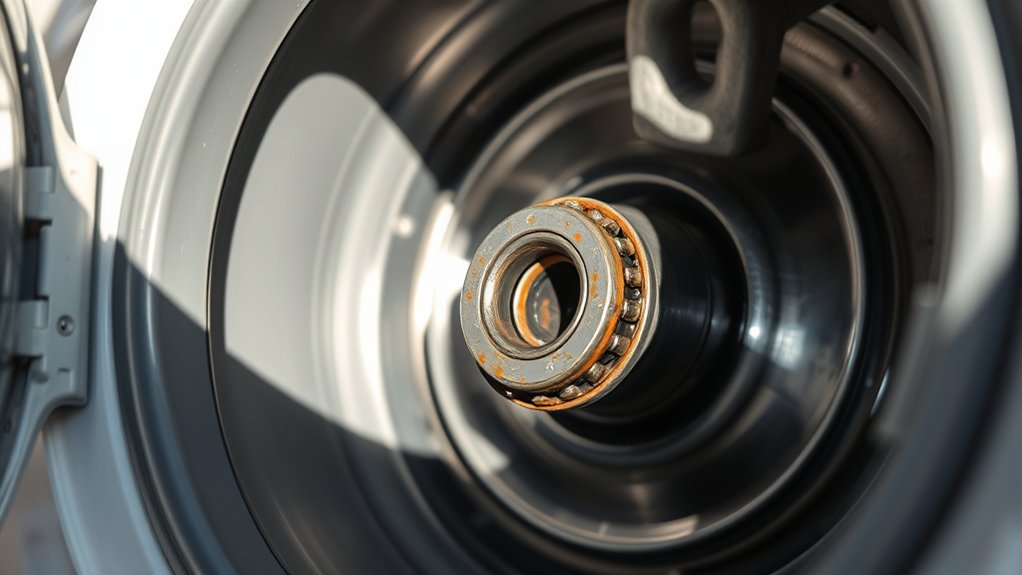
When your washing machine starts making a grinding noise, it’s usually a sign that something is wrong inside the drum or motor. You might be dealing with worn-out bearings, which support the drum and can cause that unpleasant sound when they start to fail. Another common cause is a damaged or loose motor coupling, which connects the motor to the drum and transfers power.
If this coupling wears out, you’ll hear grinding as the parts struggle to work together. Sometimes, debris like small coins or screws trapped in the drum’s drain pump can produce a similar noise, indicating an obstruction. Recognizing these signals early helps you avoid further damage, so it’s essential to address grinding noises promptly to keep your washer running smoothly.
How to Locate the Source of Grinding Noise in Your Washer
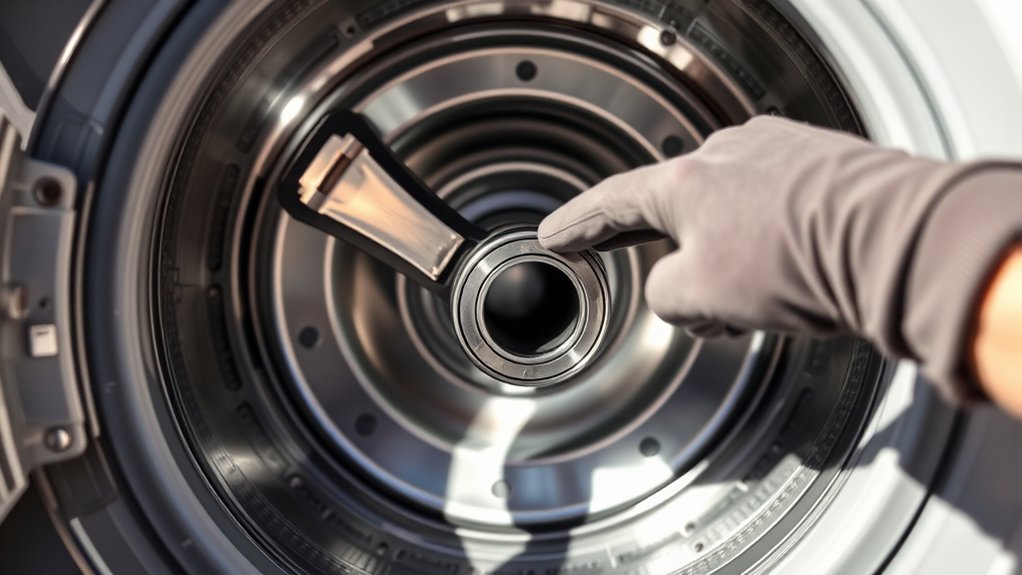
Although identifying a grinding noise can be frustrating, you can pinpoint its source by systematically checking key components of your washer. First, unplug your machine for safety. Then, inspect the drum by turning it manually; rough spots may signal worn bearings.
Next, look inside the agitator or impeller for trapped debris or loose parts. Check the drive belt for wear or damage, as a slipping belt can cause grinding sounds. Don’t forget to examine the motor area and pump for foreign objects or worn parts.
Finally, listen closely during a test spin (after reassembly) to confirm the noise’s location. By isolating these areas, you’ll know where to focus repairs, saving time and preventing further damage.
Common Causes of Grinding Noise in Washing Machines
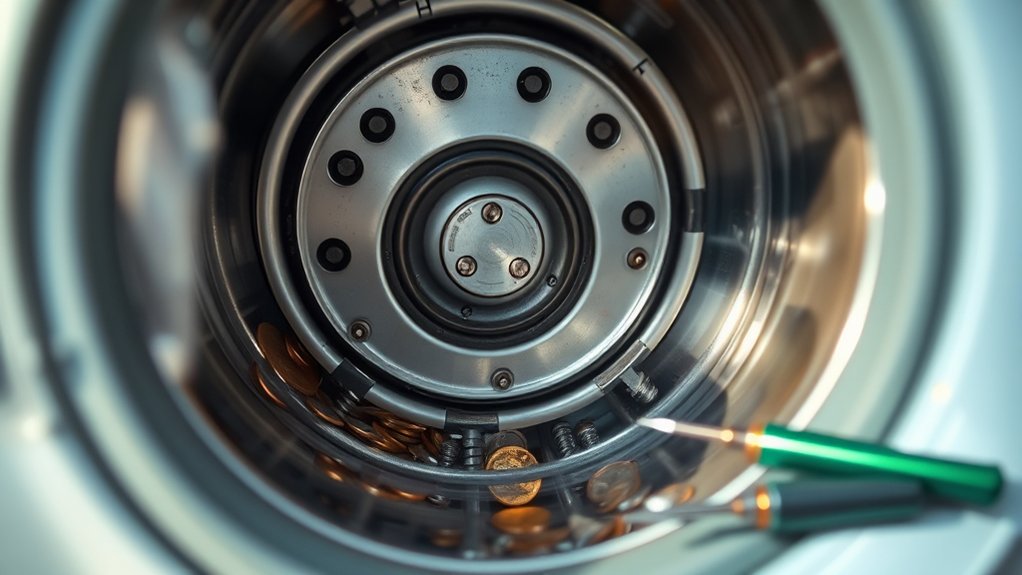
Since grinding noises often indicate mechanical issues, understanding their common causes can help you address the problem quickly. One common cause is debris caught between the drum and tub, like coins or small objects, which can create a grinding sound during the spin cycle. Another usual culprit is a damaged or misaligned drive belt that slips or rubs against other parts.
Additionally, faulty motor couplings can cause grinding when they wear out or break. Worn-out transmission components may also produce grinding noises as they struggle to rotate the drum. Ultimately, issues with the pump, such as blockages or worn impellers, can result in grinding sounds when water is being drained.
Identifying these causes early lets you take the right steps to fix your washing machine.
How Worn Bearings Cause Grinding and How to Fix Them
If your washing machine starts making a persistent grinding noise during the spin cycle, worn bearings could be to blame. Bearings support the drum’s rotation, and when they wear out, metal-on-metal contact creates that harsh grinding sound. Over time, water and detergent can corrode these bearings, accelerating wear.
To fix this, you’ll need to replace the bearings. First, unplug the machine and remove the drum to access the bearing assembly. Then, press out the old bearings carefully and install new ones, ensuring they fit snugly.
If you’re not comfortable with this, calling a professional is a smart move. Addressing worn bearings promptly prevents further damage and keeps your washing machine running smoothly without that annoying grinding noise.
What Happens When a Damaged Drum Causes Grinding Noise
If your washing machine’s drum is damaged, you’ll likely hear a grinding noise during the cycle. This can disrupt washing performance and cause further harm to internal parts. Ignoring the noise risks costly repairs or even a total breakdown.
Drum Damage Symptoms
When your washing machine’s drum gets damaged, you’ll often hear a distinct grinding noise that signals trouble. This noise usually means the drum’s integrity is compromised, affecting the machine’s performance. You might notice these common symptoms:
- Visible dents or cracks on the drum’s surface.
- Clothes caught or snagged during the cycle.
- Unusual vibrations or shaking when the drum spins.
- Metallic scraping sounds that worsen over time.
If you experience these signs, it’s essential to address them quickly to prevent further damage. Ignoring drum damage can lead to bigger issues that cost more to fix, so keep an ear out and inspect the drum regularly to maintain your washing machine’s health.
Impact on Washing Cycle
Grinding noises from a damaged drum don’t just signal a problem—they directly disrupt your washing cycle. When the drum is compromised, it can cause uneven spinning, longer cycles, or even stop your machine mid-wash.
You might notice clothes aren’t getting as clean or the washer vibrates excessively, which can lead to further issues.
| Issue | Cause | Effect on Washing Cycle |
|---|---|---|
| Uneven Spinning | Drum imbalance | Clothes not cleaned properly |
| Prolonged Cycle Time | Sensor detects problem | Cycle extends, wasting energy |
| Machine Stops | Severe drum damage | Wash interrupted, incomplete |
| Excessive Vibration | Drum misalignment | Noise and potential damage |
| Poor Cleaning Result | Drum not rotating fully | Residue and dirt remain |
Act quickly to avoid worsening damage.
Risks of Ignoring Noise
Although it might seem harmless at first, ignoring the persistent noise from a damaged drum can lead to serious consequences for your washing machine. When you overlook grinding sounds, the damage worsens, affecting the machine’s overall performance and lifespan. You’ll face more costly repairs or even replacement.
Here’s what can happen if you ignore the noise:
- Increased wear on bearings and seals, causing leaks and further damage.
- Motor strain due to unbalanced loads, risking motor failure.
- Reduced washing efficiency, leaving clothes less clean.
- Potential safety hazards like overheating or electrical issues.
Address the grinding noise early to protect your washing machine and avoid these costly problems down the line.
How Debris and Foreign Objects Lead to Grinding Sounds
If you’ve noticed a persistent grinding noise coming from your washing machine, debris and foreign objects trapped inside could be the culprit. Small items like coins, buttons, or hairpins often slip through pockets and get stuck between the drum and tub. These objects scrape against moving parts, causing that annoying grinding sound.
Over time, this can wear down components and reduce your machine’s efficiency.
Here’s a quick look at common culprits and their impact:
| Debris Type | Common Source | Effect on Machine |
|---|---|---|
| Coins | Pockets, loose change | Drum damage, loud grinding |
| Buttons | Clothing | Drum misalignment, noise |
| Hairpins | Pockets, hair | Scratches, mechanical strain |
| Small stones | Shoes, pockets | Drum damage, vibration |
Being aware helps you prevent damage and extend your washer’s life.
When and How to Clean Blockages Causing Grinding Noise
You’ll want to start by checking common blockage spots like the filter and drain pump. Grab basic tools like a screwdriver and gloves before you begin.
Follow a clear step-by-step process to safely remove any debris causing that grinding noise.
Identifying Common Blockage Areas
When your washing machine starts making a grinding noise, it’s often because debris has built up in key areas, causing blockages. You’ll want to check these common spots to identify where the blockage is:
- Drain Pump Filter – Lint, coins, or small objects often get stuck here, restricting water flow.
- Drain Hose – Kinks or clogs in the hose can cause water to back up and create noise.
- Agitator or Drum – Foreign objects like buttons or small items can get trapped between the drum and tub.
- Inlet Valve Screens – Mineral deposits can block water entry, affecting the machine’s operation.
Inspecting and clearing these areas regularly can prevent grinding noises and keep your washing machine running smoothly.
Tools Needed For Cleaning
Although tackling blockages in your washing machine might seem intimidating, having the right tools on hand makes the job much easier. You’ll want a few essentials to clean effectively and safely without causing damage or frustration.
Here’s a quick guide:
| Tool | Purpose | Tip |
|---|---|---|
| Screwdriver | Remove panels or covers | Use appropriate size |
| Pliers | Grip and pull debris | Choose needle-nose for tight spots |
| Flashlight | Spot blockages in dark areas | Use a bright LED for clarity |
Having these tools ready will help you access and clear blockages causing that grinding noise. You won’t need anything fancy—just basic, reliable equipment to get the job done efficiently.
Keep them nearby before you start cleaning to save time.
Step-by-Step Cleaning Process
Since blockages often cause that persistent grinding noise, cleaning them promptly can prevent further damage to your washing machine. Here’s how to clean blockages effectively:
- Unplug the machine to guarantee safety before you start.
- Remove the filter or drain pump cover—usually located at the bottom front—and place a shallow tray underneath to catch water.
- Clear out debris like coins, lint, or fabric scraps that may be causing the blockage.
- Flush the area with warm water to remove any remaining dirt, then reinstall the parts securely.
Perform this cleaning whenever you notice unusual noises or slow draining to keep your washing machine running smoothly and quietly.
Replacing Bearings and Faulty Washing Machine Parts Yourself
If you notice unusual grinding or squeaking sounds during your wash cycle, you’ll likely need to replace the bearings or other faulty parts. Start by unplugging your machine and accessing the drum area. Remove the back panel to inspect for wear or damage.
Bearings often wear out due to age or overloading. Replace them carefully with the correct tools, ensuring proper alignment.
| Part | Common Issue |
|---|---|
| Bearings | Grinding noise |
| Drum Seal | Water leaks |
| Drive Belt | Slipping or noise |
| Motor Coupling | Machine won’t spin |
| Suspension Springs | Excessive vibration |
Replacing parts yourself saves money but requires patience and the right tools. Follow manufacturer instructions closely for best results.
When to Call a Pro for Grinding Noise Fixes
If your washing machine keeps grinding despite basic fixes, it’s time to call a pro. Look for signs like persistent noise, leaks, or the machine not spinning properly.
Choosing the right technician guarantees the problem gets fixed quickly and safely.
Signs You Need Help
Although some washing machine noises are normal, persistent grinding sounds usually indicate a serious problem that you shouldn’t ignore. If you hear grinding regularly, it’s a clear sign you need professional help. Trying to fix it yourself might worsen the issue or cause injury.
Here are four signs you should call a pro:
- The grinding noise continues even after cleaning filters and removing foreign objects.
- You notice water leaking during or after the wash cycle.
- Your machine fails to spin or drain properly alongside the noise.
- You smell burning or see smoke coming from the washer.
If any of these happen, stop using your machine and schedule a repair service immediately.
Choosing The Right Technician
When should you call a professional to fix your washing machine’s grinding noise? If you’ve checked simple issues like foreign objects or loose parts and the noise persists, it’s time to call a pro. Also, if you’re uncomfortable opening your machine or lack the right tools, don’t risk causing more damage.
When choosing a technician, look for someone licensed and experienced with your machine’s brand. Read reviews and ask for recommendations to ensure reliability. Request a clear estimate before work begins to avoid surprises.
A skilled technician will diagnose the problem accurately and fix it effectively, saving you time and money. Knowing when to call a pro helps you avoid costly repairs and keeps your washing machine running smoothly.
Preventing Grinding Noise With Regular Washing Machine Care
Since washing machines handle heavy loads and constant movement, regular care is essential to prevent grinding noises. You can keep your machine running smoothly and quietly by following these simple steps:
Regular maintenance keeps your washing machine running quietly and efficiently by preventing grinding noises.
- Clean the drum and filters regularly to remove debris that might cause friction.
- Check and tighten loose bolts and screws to avoid vibrations that lead to grinding.
- Avoid overloading the machine, as excess weight strains the motor and bearings.
- Balance the load evenly during each wash cycle to prevent uneven wear.
Why Ignoring Grinding Noise Can Lead to Costly Repairs
If you ignore a grinding noise in your washing machine, you risk turning a minor issue into a major, expensive repair. That grinding sound often signals worn-out bearings, damaged drum parts, or debris caught in the machine. When left unchecked, these problems worsen, causing further damage to the motor, drum, or transmission.
Repairs then become more complex and costly, sometimes requiring full part replacements or even a brand-new machine. By addressing grinding noises early, you save money and extend your washer’s lifespan. Don’t wait for the noise to get worse—inspect your machine promptly or call a technician.
Taking quick action prevents small issues from escalating into major headaches, ensuring your washing machine runs smoothly and efficiently for years to come.
Frequently Asked Questions
Can Grinding Noises Damage My Clothes During the Wash Cycle?
Yes, grinding noises can damage your clothes by causing fabric tears or snagging. You should stop using the machine, check for foreign objects, or call a technician to prevent further damage to both your clothes and the washer.
Does the Type of Detergent Affect Grinding Noises in Washers?
You might think detergent type causes grinding, but it rarely does. However, using the wrong detergent can create excess suds, making your washer struggle and sound off.
Are Certain Washing Machine Brands More Prone to Grinding Noises?
Yes, some brands have models more prone to grinding noises due to design or parts quality. You’ll want to check reviews and maintenance tips for your specific brand to avoid common issues and keep your washer running smoothly.
Can Overloading the Washer Cause Grinding Sounds?
Yes, overloading your washer can cause grinding sounds because it strains the motor and agitator. You should avoid stuffing too many clothes in at once to keep your machine running smoothly and prevent damage.
Overloading puts extra pressure on the internal components, which may lead to wear and tear. It can also cause the drum to become unbalanced, resulting in unusual noises.
To maintain your washer’s longevity, always follow the manufacturer’s load recommendations. Properly distributing clothes inside the drum can help avoid grinding sounds. This simple practice can save you from costly repairs.
How Long Can a Washing Machine Run With a Grinding Noise Safely?
You shouldn’t run your washing machine with a grinding noise for more than one cycle. Continuing can cause serious damage.
Turn it off, inspect the drum and motor, and call a professional if needed to avoid costly repairs.
Conclusion
Your washing machine’s grinding noise might seem like a minor annoyance now, but ignoring it can turn a simple fix into a costly repair.
By identifying the source early and tackling worn bearings or faulty parts yourself, you save money and extend your machine’s life.
On the flip side, waiting too long means you’ll face expensive replacements or professional help.
So, act now—address the grinding noise, worn bearings, or faulty parts in your washing machine.
Taking prompt action will protect your wallet and extend the life of your washer.