What Does Vacuum Mean: Understanding the Phrase
When you hear the word “vacuum,” you probably think of empty space or the strong suction of a vacuum cleaner. A vacuum means an area mostly free of air or matter, whether it’s the sealed air inside a chip bag or the near-perfect void in outer space.
This concept of vacuum is essential in many fields, from everyday life to advanced technology.
You experience vacuum daily and in high-tech industries. Understanding the different types and uses of vacuum can reveal how this simple idea powers everything from household gadgets to space exploration. It also plays a crucial role in cutting-edge innovation across various scientific and industrial applications.
Key Takeaways
- Vacuum refers to an empty space devoid of matter, including air or particles.
- It describes a void or absence, such as a “vacuum of leadership” in everyday language.
- Scientifically, vacuum means a space with pressure much lower than atmospheric pressure.
- Various vacuum types exist, from low to ultra-high, used in industries and scientific research.
- Vacuum principles impact technology, medicine, space exploration, and everyday products like vacuum-sealed food.
What Does Vacuum Mean in Everyday Language?
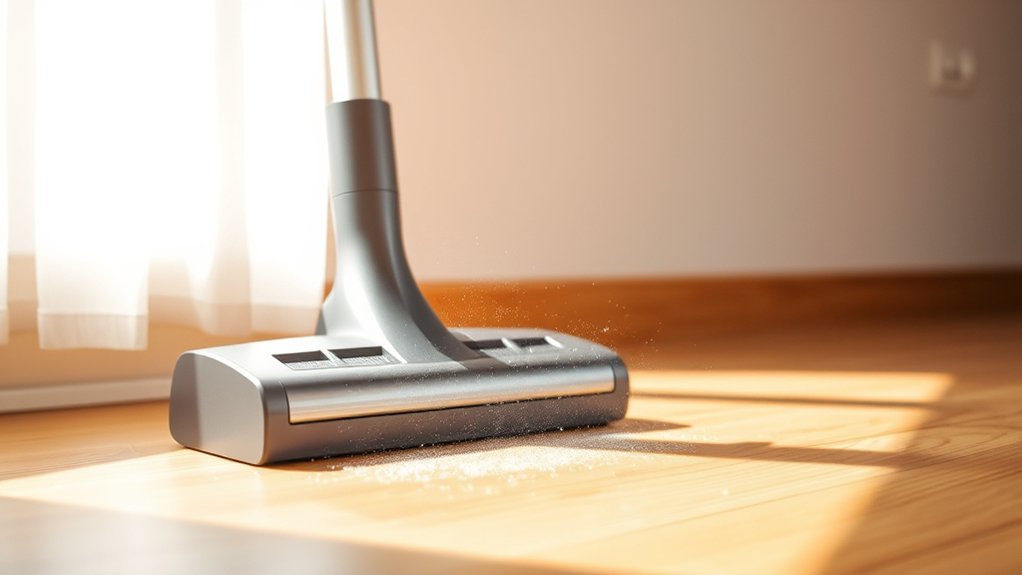
In everyday language, the word “vacuum” usually refers to an empty space where nothing exists, not even air. When you hear “vacuum,” you might think of a place completely void of matter or a spot where everything has been sucked away.
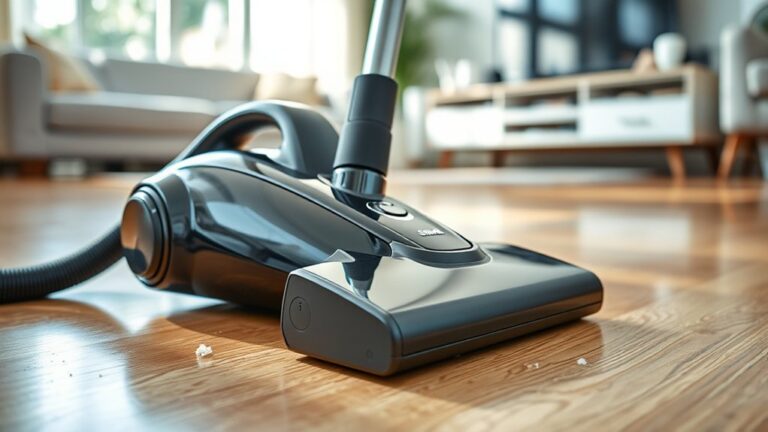
You often use the term to describe a situation lacking something important, like “a vacuum of leadership” or “an emotional vacuum.” You also interact with vacuum cleaners daily, devices designed to suck up dirt and dust using suction, which is why the term feels familiar.
Even though you might not always stop to think about it, the word “vacuum” has a flexible meaning in your daily conversations, generally pointing to emptiness or the removal of something unwanted.
What Vacuum Means in Science and Physics

When you hear “vacuum” in science and physics, it means a space mostly free of matter, like air or particles. You’ll find that physicists define a vacuum as an area with pressure much lower than the atmosphere around us. Understanding this helps you see how vacuums play a vital role in experiments and technology.
Definition of Vacuum
How do scientists define a vacuum? Simply put, a vacuum is a space devoid of matter. It’s not just empty; it has considerably reduced pressure compared to the atmosphere around you.
When you think of a vacuum, imagine a container where air and particles have been removed.
Here’s a quick overview:
| Term | Meaning |
|---|---|
| Vacuum | Space with little or no matter |
| Partial Vacuum | Reduced, but not zero, pressure |
| Absolute Vacuum | Complete absence of matter and pressure |
| Vacuum Pressure | Pressure lower than atmospheric |
| Vacuum Chamber | Enclosure that creates a vacuum |
Understanding these basics helps you grasp what scientists mean when they talk about vacuums.
Vacuum in Physics
Why does the concept of a vacuum matter so much in physics? Because it helps you understand the nature of space, forces, and energy. In physics, a vacuum isn’t just empty space—it’s a region where pressure is markedly lower than atmospheric pressure.
Here’s why it’s important:
- Studying fundamental forces: Vacuums let you isolate forces like gravity and electromagnetism without interference from air molecules.
- Experimentation and innovation: You’ll find vacuums essential in particle accelerators and space simulations.
- Understanding the universe: Space itself is close to a perfect vacuum, so it helps you explore cosmic phenomena accurately.
Grasping the vacuum concept gives you insight into both everyday technology and the vast cosmos.
Types of Vacuum: From Low to High and How They Work
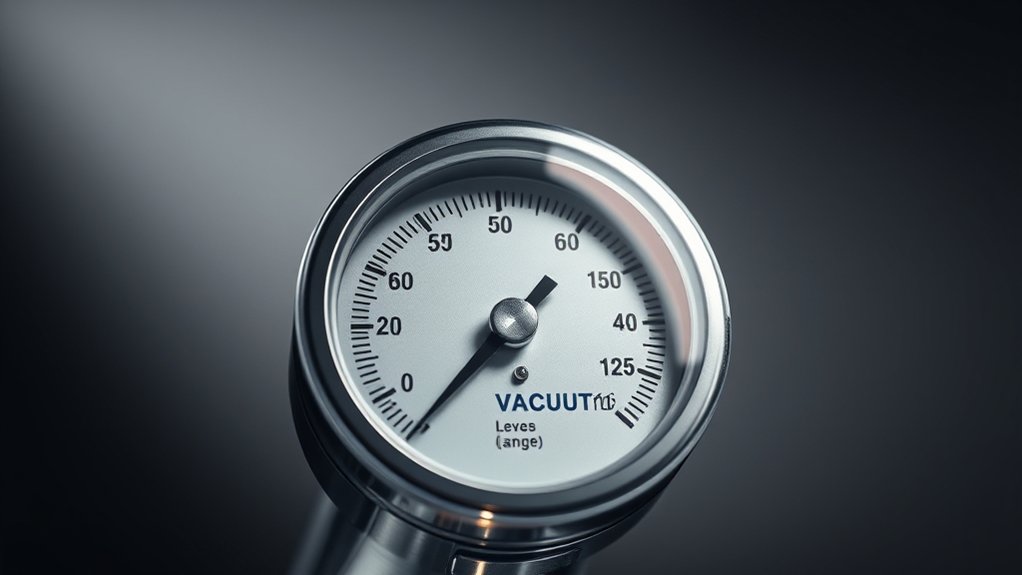
Classifying vacuums by their pressure levels helps you understand their applications and limitations. Low vacuum ranges from atmospheric pressure down to about 1,000 pascals and is easy to create with simple pumps. You’ll find these in household vacuum cleaners or basic lab equipment.
Medium vacuum extends from 1,000 to 0.1 pascals, often used in processes like freeze drying or electron microscopy. High vacuum, below 0.1 pascals, requires specialized pumps like turbomolecular or diffusion pumps and is essential for sensitive scientific experiments. Ultra-high vacuum, even lower, is indispensable for surface science and semiconductor manufacturing.
Each type works by progressively removing more air molecules, creating environments with fewer particles. This is critical for many precise and controlled processes you encounter in science and industry.
How Vacuum Powers Technology and Industry
You rely on vacuum technology more than you might realize, especially in manufacturing processes that require precise control and cleanliness. Vacuum systems help create the conditions needed for everything from electronics production to packaging.
Let’s explore how these applications keep industries running smoothly.
Vacuum in Manufacturing
Vacuum technology plays an essential role in manufacturing, driving innovations across multiple industries. When you work with vacuum systems, you’re tapping into a powerful tool that improves efficiency and product quality.
Here’s how vacuum impacts manufacturing:
- Material Handling: Vacuum lifts and moves delicate or heavy components without damage, streamlining assembly lines and reducing manual labor.
- Vacuum Packaging: You preserve freshness and extend shelf life by removing air from packaging, indispensable for food and pharmaceuticals.
- Coating and Surface Treatment: Vacuum chambers create controlled environments for processes like thin-film deposition, enhancing durability and performance of products.
Vacuum Technology Applications
How does technology harness the power of vacuum to drive innovation? You’ll find vacuum technology at the heart of many industries. In electronics, vacuum chambers create the perfect environment for manufacturing semiconductors, ensuring precision and cleanliness.
In healthcare, vacuum pumps power devices like suction machines and sterilizers, improving patient safety. You’ll also see vacuum used in food packaging, where removing air preserves freshness and extends shelf life. In scientific research, vacuum systems enable experiments that require low-pressure conditions, like particle accelerators or space simulations.
Even everyday gadgets like vacuum cleaners rely on the principle to generate suction. By controlling air pressure, you can manipulate environments and processes, making vacuum technology a versatile tool that pushes both industry and innovation forward.
Why Vacuum Conditions Matter in Space Exploration
Since space lacks air and atmospheric pressure, conditions there create a near-perfect vacuum that considerably impacts spacecraft design and astronaut safety. You need to understand why these vacuum conditions matter so much in space exploration. First, the absence of pressure means your spacecraft must be airtight to protect against the vacuum’s harshness.
Second, you have to manage extreme temperature variations caused by the vacuum, affecting materials and systems onboard. Third, without atmospheric pressure, fluids behave differently, complicating life support and fuel management. These factors show why engineers rigorously design spacecraft to withstand vacuum conditions, ensuring both functionality and crew survival.
Grasping these challenges helps you appreciate the complexity behind every mission beyond Earth’s atmosphere.
The Origin and Operation of Vacuum Cleaners
Understanding vacuum conditions in space highlights how powerful air pressure differences can be. Vacuum cleaners use this principle by creating a low-pressure area inside the machine. When you turn one on, a motor powers a fan that pulls air out, lowering pressure inside the cleaner.
This pressure difference causes air from outside to rush in, carrying dirt and debris along with it. The dirt gets trapped in a bag or container, while clean air is expelled. The first vacuum cleaner was invented in the early 1900s, revolutionizing cleaning by making it more efficient and less labor-intensive.
Today, you rely on this clever use of vacuum to keep your living spaces free of dust and allergens every day.
Common Vacuum Misconceptions Debunked
Although vacuum cleaners are common household tools, many people hold misconceptions about how they actually work. You might think a vacuum cleaner creates a “vacuum” by sucking air out completely, but that’s not true.
Here are three common myths debunked:
- Vacuum cleaners create a perfect vacuum. They don’t; they lower air pressure inside to pull dirt in.
- Stronger suction always means better cleaning. Sometimes, too much suction can push dirt deeper into carpets.
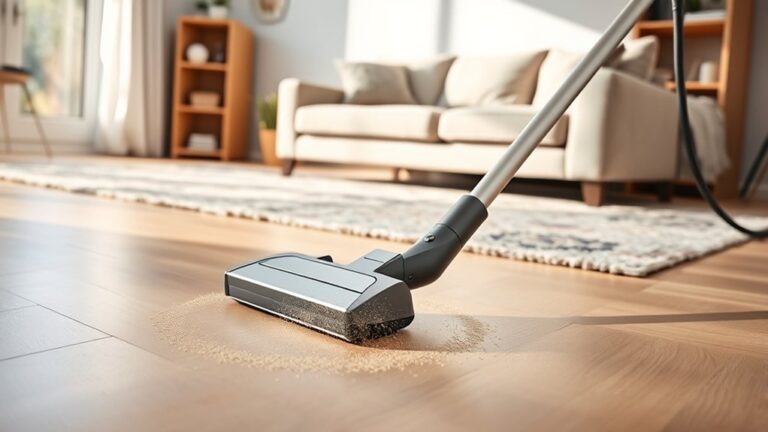
- Vacuum cleaners only clean carpets. They’re designed to clean various surfaces, including hard floors and upholstery.
Understanding these facts helps you use your vacuum more effectively and appreciate the science behind this everyday tool.
How Vacuum Concepts Drive Modern Innovation
Knowing how vacuums actually work can change the way you see their role beyond household cleaning. Vacuum concepts are essential in fields like technology, medicine, and manufacturing. When you understand how creating low-pressure environments affects matter, you realize its impact on innovations like semiconductor fabrication.
These processes require vacuum chambers to prevent contamination and guarantee precision. In medicine, vacuum-assisted devices help during surgeries and wound healing, improving patient outcomes. Even space exploration depends on vacuum principles, as spacecraft must withstand the vacuum of space.
Where You Encounter Vacuum in Daily Life Without Noticing
Whenever you open a sealed bag of chips or notice your vacuum-sealed leftovers, you interact with vacuum principles without even realizing it. Vacuum plays a silent role in many daily activities, making life more convenient.
Here are three common places you encounter vacuum:
- Vacuum Cleaners: They create suction by lowering air pressure, pulling dirt and debris from floors.
- Thermos Bottles: Their vacuum insulation keeps your drinks hot or cold by preventing heat transfer.
- Light Bulbs: Many have a vacuum inside to prevent filament oxidation, extending bulb life.
Frequently Asked Questions
How Does Vacuum Affect Sound Transmission?
You won’t hear sound in a vacuum because it lacks air or particles to carry sound waves. Without a medium, sound can’t travel, so vacuum completely blocks sound transmission, making it silent in space.
Can Vacuum Be Created Naturally on Earth?
You won’t find a perfect vacuum naturally on Earth, like a medieval knight chasing dragons—nature always fills gaps with air or water.
However, tiny near-vacuums appear in volcanic eruptions or deep caves, barely close to true emptiness.
What Safety Precautions Are Needed When Working With Vacuums?
You should wear protective gloves and goggles, guarantee proper ventilation, avoid sudden pressure changes, and use equipment rated for vacuum conditions.
Always follow safety protocols to prevent implosions and protect yourself from flying debris or harmful gases.
Does Vacuum Have Any Psychological or Metaphorical Uses?
When you’re in a vacuum, you’re often in an emotional or mental void, feeling isolated or disconnected. It’s like being caught between a rock and a hard place, where clarity and connection feel just out of reach.
How Is Vacuum Measured in Scientific Experiments?
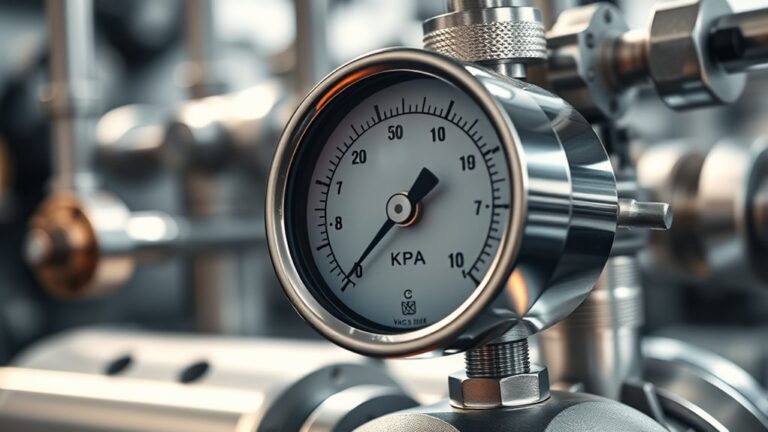
You measure vacuum using instruments like manometers or vacuum gauges, which compare pressure inside a chamber to atmospheric pressure, often expressed in units like pascals, torr, or millimeters of mercury for precise scientific experiments.
Conclusion
Now that you’ve peeled back the layers, you see vacuum isn’t just empty space—it’s a powerful force shaping our world. From cleaning your floors to exploring distant planets, vacuum plays a starring role behind the scenes.
So next time you hear the word, remember it’s more than just a hole—it’s the whole kit and caboodle driving tech, science, and everyday life in ways you might’ve never imagined.
Keep this in your back pocket! Understanding the phrase “vacuum” helps you appreciate its impact on technology, science, and daily life like never before.