Do Robot Vacuum Cleaners Work on Carpet: 10 Facts
You can rely on robot vacuums to handle low- and medium-pile carpets effectively, as they are designed to navigate and clean these surfaces with ease. However, thick or high-pile carpets often pose challenges like reduced suction and navigation issues.
Strong suction and specialized brushes matter for picking up embedded dirt and pet hair.
Regular maintenance improves performance and helps your robot vacuum work efficiently on various carpet types. Though robot vacuums excel at everyday cleaning, for deep cleaning or complex areas, traditional vacuums might be better.
Understanding these factors will help you get the most out of your robot vacuum on carpets and avoid common pitfalls.
Key Takeaways
- Robot vacuums clean low-pile carpets effectively but struggle with thick, high-pile carpets due to resistance and suction limitations.
- Strong suction power and specialized brush rollers improve cleaning performance on medium and high-pile carpets.
- Navigation and sensor issues are common on thick carpets, causing reduced cleaning efficiency and potential brush tangling.
- Regular maintenance like cleaning brushes and filters enhances robot vacuum performance on carpets.
- Deep cleaning of high-pile carpets and embedded dirt often requires traditional vacuums for better results.
Do Robot Vacuums Really Work on Carpets?
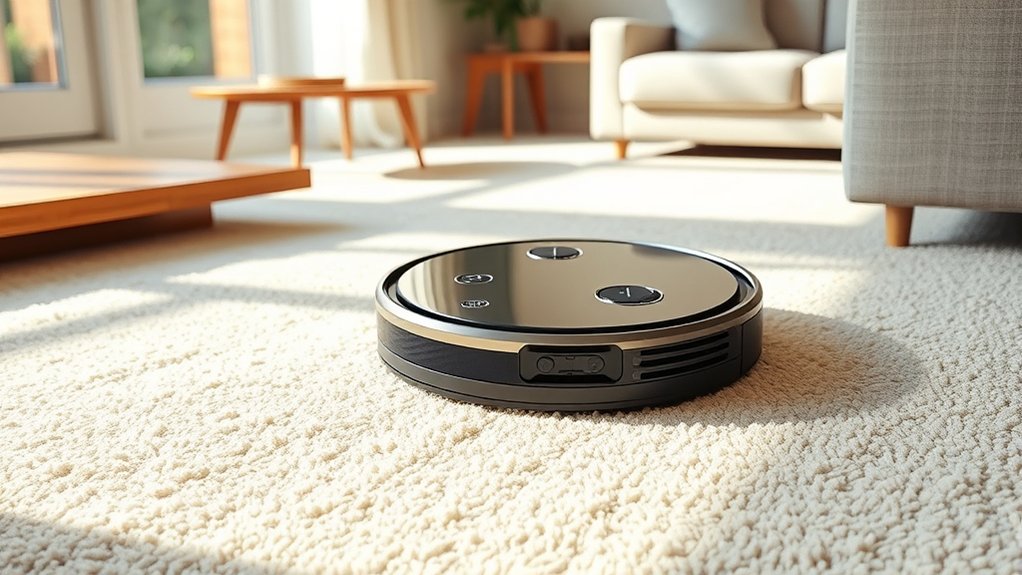
Although robot vacuums are designed to handle various floor types, you might wonder if they really work well on carpets. The short answer is yes, they do clean carpets, but their effectiveness depends on the vacuum’s suction power and brush design. You’ll find most models can pick up everyday dirt, pet hair, and debris from low-pile carpets without trouble.
However, you should keep in mind that robot vacuums might struggle with deeply embedded dirt or thick piles. They’re better at routine maintenance than heavy-duty carpet cleaning. Still, using a robot vacuum regularly can reduce allergens and keep your carpets looking fresher between more thorough cleanings.
Performance on Different Carpet Types and Thicknesses

You’ll find robot vacuums handle low pile carpets with ease, picking up dirt efficiently. Medium pile carpets can slow them down and challenge their suction power.
When it comes to thick carpets, performance often drops, and some models might struggle to clean thoroughly.
Low Pile Carpet Efficiency
How well does a robot vacuum handle low pile carpets compared to other surfaces? You’ll find that these vacuums generally perform quite efficiently on low pile carpets. The shorter fibers won’t bog down the machine or tangle brushes, allowing strong suction to remove dirt, dust, and pet hair effectively.
Because the carpet is thinner, the robot’s sensors and wheels navigate it almost as easily as hardwood or tile. You’ll notice consistent cleaning results without much manual intervention. However, keep in mind that regular maintenance, like emptying bins and cleaning brushes, still matters to maintain peak performance.
Medium Pile Carpet Challenges
While robot vacuums handle low pile carpets with ease, medium pile carpets present a few more obstacles. You might notice your vacuum struggling to maintain consistent suction as the fibers get denser and longer. Some models can navigate these carpets but may slow down or miss debris caught deeper in the pile.
The vacuum’s brushes might have trouble agitating dirt effectively, reducing cleaning efficiency. You’ll want to check if your robot has adjustable suction settings or specialized brushes designed for medium pile carpets. Also, keep in mind that navigation sensors can sometimes misread the thicker texture, causing hesitation or repeated passes.
Thick Carpet Performance
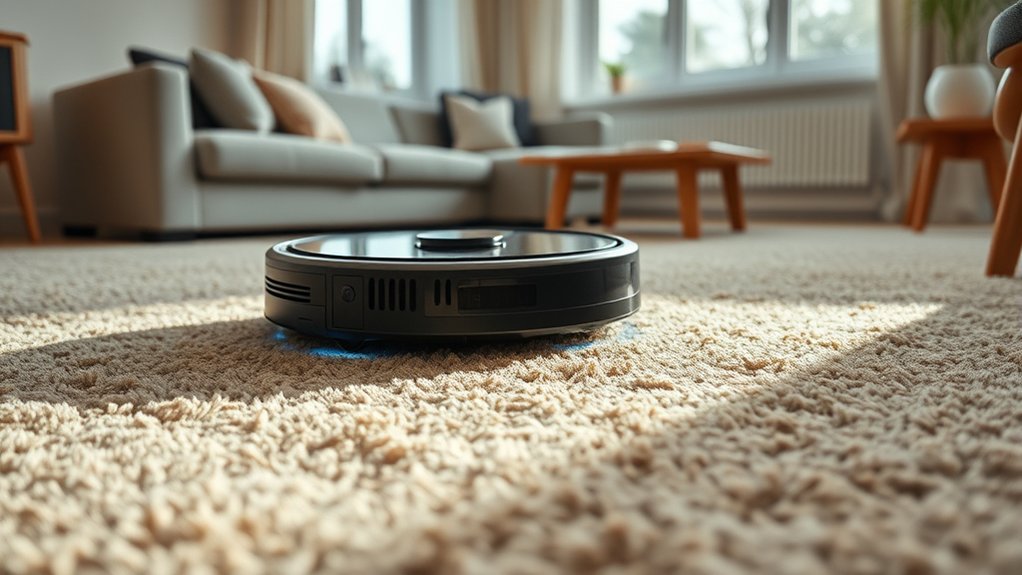
What happens when a robot vacuum tackles thick carpets? You’ll likely notice it struggles more than on thinner surfaces. Thick carpets create resistance that can slow down or even stall less powerful models.
The vacuum’s brushes might not reach deep enough to pull embedded dirt, reducing cleaning effectiveness. However, some high-end robots come with stronger suction and adjustable height settings to better handle dense fibers. You should also consider models with specialized brush rolls designed for thick carpets to avoid tangling.
If your carpet has a deep pile, expect the robot to work harder and possibly need more frequent maintenance. In short, while robot vacuums can clean thick carpets, their performance depends heavily on power and design tailored for that carpet type.
Why Suction Power Matters for Carpet Cleaning
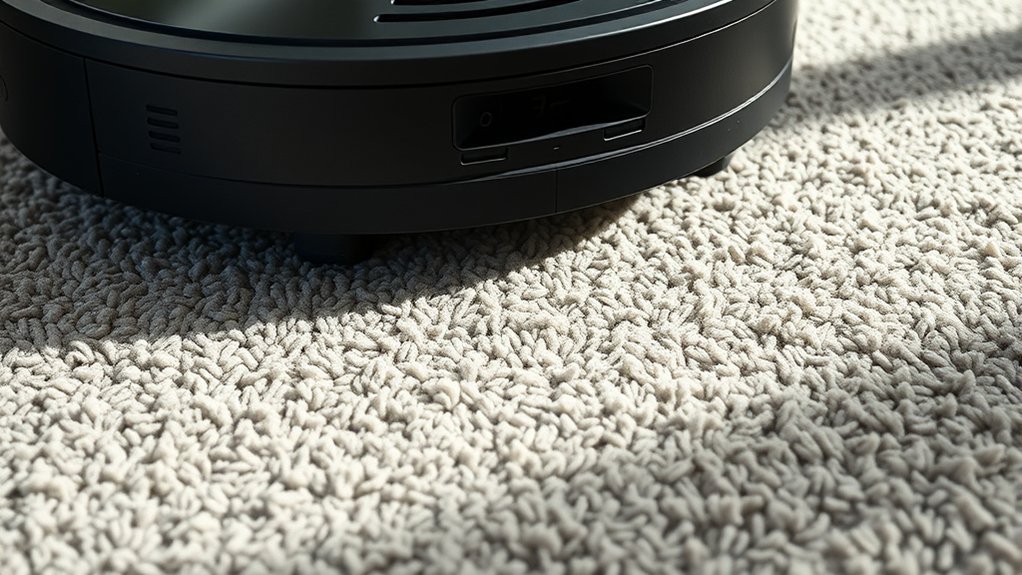
Because carpets trap more dirt and debris than hard floors, your robot vacuum needs strong suction power to clean effectively. Without sufficient suction, dust, pet hair, and crumbs get stuck deep in the fibers, leaving your carpet looking dirty and worn. Strong suction pulls out particles that brushing alone can’t reach, ensuring a thorough clean.
It also prevents debris from being pushed around, which happens when suction is weak. When you choose a robot vacuum, prioritize models with adjustable suction settings—this lets you boost power for carpets while saving battery on hard floors. Remember, the better the suction, the less often you’ll need to deep clean manually, saving you time and keeping your carpet fresh longer.
Navigating High-Pile Carpets With Robot Vacuums
You’ll notice robot vacuums can struggle with thick, high-pile carpets because their wheels and brushes might get stuck. Choosing models designed with stronger motors and adjustable settings can make a big difference.
Let’s look at which robots handle these challenges best.
Challenges With Thick Fibers
How do robot vacuums handle thick carpet fibers? You’ll find they often struggle with dense, high-pile carpets due to several challenges. Thick fibers can slow down or trap the robot, reducing cleaning efficiency.
Here are four key issues you might encounter:
- Reduced Suction Power – Thick fibers block airflow, making it harder for the vacuum to pick up debris.
- Navigation Difficulties – The robot may get stuck or avoid thick areas altogether.
- Brush Roll Tangles – Long fibers can wrap around brushes, requiring frequent maintenance.
- Battery Drain – Extra effort to move through dense carpet drains battery faster.
Understanding these challenges helps you decide if a robot vacuum fits your carpet type or if alternative cleaning methods are better.
Best Robot Models
Dealing with thick carpet fibers can be frustrating for many robot vacuums, but some models handle high-pile carpets better than others. When choosing a robot vacuum, you want one with strong suction, large wheels, and smart navigation to avoid getting stuck.
Here are five top models that navigate high-pile carpets effectively:
| Model | Key Feature |
|---|---|
| iRobot Roomba s9+ | Powerful suction, smart mapping |
| Roborock S7+ | Sonic carpet cleaning tech |
| Eufy RoboVac 30C | Slim design, strong suction |
| Neato Botvac D8 | D-shape for edge cleaning |
| Shark IQ Robot | Self-emptying base |
These robots combine features that help them glide over thick carpet fibers without losing performance.
Can Robot Vacuums Pick Up Pet Hair on Carpets?
Although pet hair can be stubborn, robot vacuums have come a long way in picking it up from carpets. If you’re worried about your furry friend’s shedding, a robot vacuum can make maintenance easier. Here’s what you should know:
- Most robot vacuums effectively lift pet hair from low to medium-pile carpets.
- Hair can sometimes tangle in brushes, so regular cleaning of the vacuum is essential.
- Some models handle pet hair better, but even basic ones reduce hair buildup considerably.
- Robot vacuums aren’t a complete substitute for deep cleaning but help maintain daily cleanliness.
In short, if you want to keep pet hair under control without constant manual vacuuming, robot vacuums are a helpful tool on carpets.
Features That Help Robot Vacuums Clean Carpets Better
You’ll notice that robot vacuums with enhanced suction power tackle carpets more effectively by lifting dirt deep within fibers. Specialized brush rollers also play a key role by agitating and loosening debris for better pickup.
These features combined help your robot vacuum clean carpets thoroughly.
Enhanced Suction Power
When tackling carpet cleaning, enhanced suction power makes a significant difference in how effectively a robot vacuum lifts dirt and debris. You want a model that can adjust its suction based on carpet thickness to guarantee a deep clean without getting stuck. Strong suction helps pull out dust and pet hair embedded deep within fibers, improving overall cleanliness.
Here are four key benefits of enhanced suction power:
- Improves dirt and debris removal from dense carpet fibers.
- Increases efficiency by reducing multiple cleaning passes.
- Adapts suction strength automatically to protect delicate carpets.
- Helps capture fine dust particles, enhancing air quality.
Choosing a robot vacuum with powerful suction ensures your carpets stay fresh and thoroughly cleaned every time.
Specialized Brush Rollers
How does a robot vacuum effectively lift dirt trapped deep within carpet fibers? Specialized brush rollers play a key role. These rollers are designed with different bristle types and patterns to agitate and loosen debris embedded in carpets.
When the vacuum moves, the brush spins rapidly, sweeping dirt toward the suction path. Some models feature rubber or silicone brushes, which grab pet hair and fine dust without tangling. Others combine stiff bristles for deep agitation with softer ones to protect delicate carpet fibers.
You’ll find that robot vacuums with these tailored brush rollers clean carpets more thoroughly than those relying on suction alone. Selecting a robot vacuum with effective brush rollers guarantees you get a deeper, more efficient carpet clean every time.
Common Challenges Robot Vacuums Face on Carpets
Although robot vacuums have advanced considerably, they still struggle with certain aspects of carpet cleaning. You might notice that despite their intelligence, some challenges remain when tackling carpets. Here are common issues you could face:
- Navigation Difficulties: Thick or high-pile carpets can confuse sensors, causing the vacuum to get stuck or miss spots.
- Reduced Suction Power: Some models lose suction on deeper carpets, making them less effective at picking up embedded dirt.
- Brush Roll Clogs: Carpet fibers and pet hair can tangle around brushes, requiring frequent maintenance.
- Battery Drain: The extra effort needed to clean carpets often shortens the vacuum’s battery life, limiting coverage time.
Knowing these challenges helps you set realistic expectations when using robot vacuums on carpets.
Tips to Optimize Robot Vacuums for Carpet Cleaning
Since carpets pose unique challenges for robot vacuums, you can take specific steps to improve their performance and efficiency. First, regularly clean your vacuum’s brushes and filters to prevent hair and debris buildup that can reduce suction. Adjust the vacuum’s settings to a higher suction power if available, which helps tackle carpet fibers more effectively.
Clear clutter and cords from the floor to avoid interruptions during cleaning. You can also schedule cleaning sessions when traffic is low, allowing the vacuum to cover carpets thoroughly without getting stuck. Finally, consider using boundary markers or virtual walls to guide your robot away from thick rugs where it might struggle.
With these tips, you’ll maximize your robot vacuum’s ability to keep carpets cleaner.
Best Robot Vacuum Models for Carpeted Floors
When you’re choosing a robot vacuum for carpeted floors, you want models that combine strong suction, effective brush rolls, and smart navigation. These features ensure thorough dirt removal and smooth movement across different carpet types.
Look for robot vacuums with strong suction, effective brushes, and smart navigation for optimal carpet cleaning.
Here are four top models to consider:
- iRobot Roomba s9+ – Offers powerful suction and a specially designed brush for deep carpet cleaning.
- Roborock S7 – Features sonic vibration technology that lifts dirt embedded in carpets.
- Eufy RoboVac G30 Edge – Balances affordability with strong suction and smart path navigation.
- Neato D8 – Uses a unique D-shape design to reach corners and edges effectively on carpeted floors.
Each of these vacuums excels in carpet cleaning, helping you maintain a spotless home effortlessly.
When to Choose a Traditional Vacuum Instead of a Robot Vacuum for Carpets
If you need a deep, thorough clean for thick or high-pile carpets, a traditional vacuum often delivers better results than a robot vacuum. You’ll want a traditional vacuum when dirt is deeply embedded or if your carpet has long fibers that can tangle brushes.
Also, if you have lots of furniture or tight spaces, a handheld or upright vacuum gives you better control and reach.
| Situation | Why Choose Traditional Vacuum |
|---|---|
| Thick or high-pile carpets | Strong suction and adjustable settings |
| Deeply embedded dirt | More powerful, thorough cleaning |
| Lots of furniture or narrow spaces | Better maneuverability and control |
| Frequent pet hair and debris | Specialized attachments available |
Choosing the right vacuum depends on your carpet type and cleaning needs.
Frequently Asked Questions
How Often Should I Clean the Robot Vacuum’s Brushes on Carpet?
You should clean the robot vacuum’s brushes at least once a week, or more if you have pets or thick carpet.
This keeps it running smoothly and guarantees it picks up dirt and hair effectively every time.
Can Robot Vacuums Avoid Tangling on Carpet Fringes or Edges?
You’d think robot vacuums could wrestle carpet fringes like pros, but they often get tangled or stuck. However, newer models use smart sensors to detect edges, helping you avoid those frustrating snags.
Do Robot Vacuums Work Well on Rugs With Intricate Patterns?
Yes, you’ll find that robot vacuums handle rugs with intricate patterns fairly well, but they might miss some dirt trapped in detailed weaves. You’ll want to choose one with strong suction and smart navigation for best results.
Selecting a model designed for textured surfaces can also improve cleaning efficiency. However, occasional manual cleaning might still be necessary to ensure deep dirt removal. Overall, robot vacuums provide a convenient solution for maintaining patterned rugs.
How Long Does It Take for a Robot Vacuum to Clean a Carpeted Room?
It usually takes your robot vacuum 20 to 45 minutes to clean a carpeted room, depending on size, carpet thickness, and vacuum power. It moves steadily, sweeps thoroughly, and navigates carefully to cover every corner efficiently.
Are Robot Vacuums Noisy When Operating on Carpets?
Robot vacuums can be a bit noisier on carpets since their motors work harder to lift dirt, but they usually won’t disturb you too much. You’ll notice some extra sound, but it’s generally manageable.
Conclusion
When it comes to cleaning carpets, robot vacuums can be a helpful ally, but they’re not perfect. They work best on low to medium-pile carpets and with strong suction power. Remember, “You get what you pay for”—investing in a quality model makes a big difference.
For thick, high-pile carpets or heavy pet hair, sometimes a traditional vacuum is the way to go. Optimize your robot vacuum’s settings, and you’ll see cleaner carpets with less effort.
In conclusion, robot vacuum cleaners work on carpet effectively when used correctly. Choosing the right model and adjusting settings can improve performance on various carpet types. This ensures your carpets stay cleaner with minimal effort.