How Full Should a Washing Machine Be?
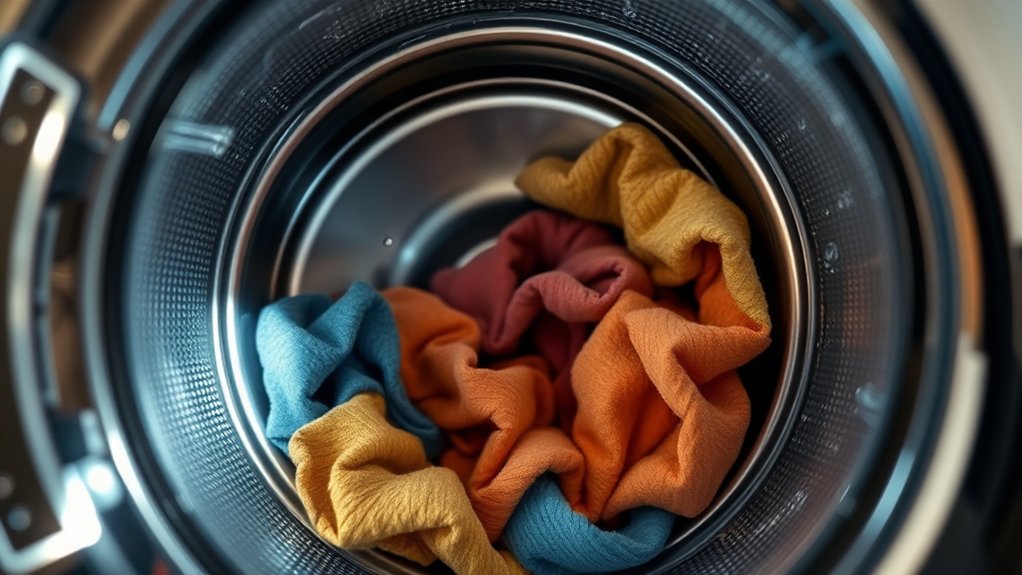
You should fill your washing machine drum about three-quarters full to let your clothes move freely and get properly cleaned. Proper washing machine loading is essential for optimal cleaning and machine longevity.
Overloading reduces rinsing and strains the machine, while underloading wastes water and energy.
Adjust the load size based on how dirty your clothes are and their fabric type—for example, smaller loads for heavy stains or delicate fabrics.
By finding the right balance and settings, you’ll boost cleaning efficiency and protect your washer.
Keep exploring to learn how to get the most from every load.
Key Takeaways
- Fill the drum about three-quarters full to allow clothes enough space to move and ensure effective cleaning and rinsing.
- Avoid overloading, as it reduces cleaning efficiency, causes residue buildup, and strains the machine.
- Underloading wastes water and energy since the machine uses similar resources regardless of load size.
- Adjust load size based on fabric type and soil level, with smaller loads for heavy soils and delicate fabrics.
- Use appropriate water levels and cycle settings to match the load size for optimal cleaning and resource efficiency.
How Full Should a Washing Machine Be for Best Cleaning?
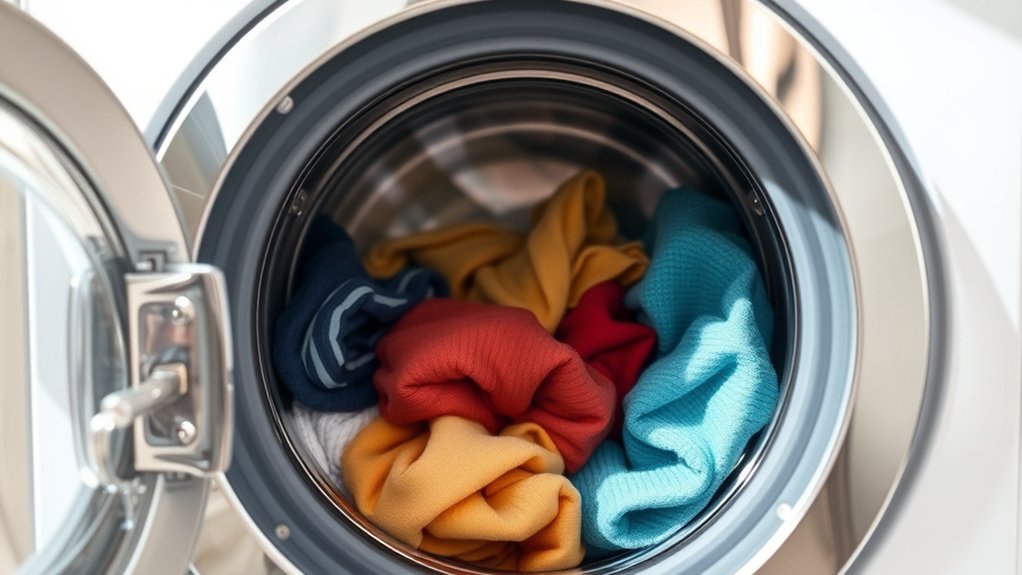
Although it might be tempting to fill your washing machine to the brim, you should leave enough space for clothes to move freely. When the drum isn’t overcrowded, water and detergent can circulate properly, ensuring your laundry gets thoroughly cleaned. Aim to fill the washer about three-quarters full.
This allows enough room for the agitator or drum to work effectively without straining the machine. If you pack clothes too tightly, they won’t rinse well, and dirt or detergent residue might remain. On the other hand, washing too few items wastes water and energy.
What Happens If You Overload Your Washing Machine?
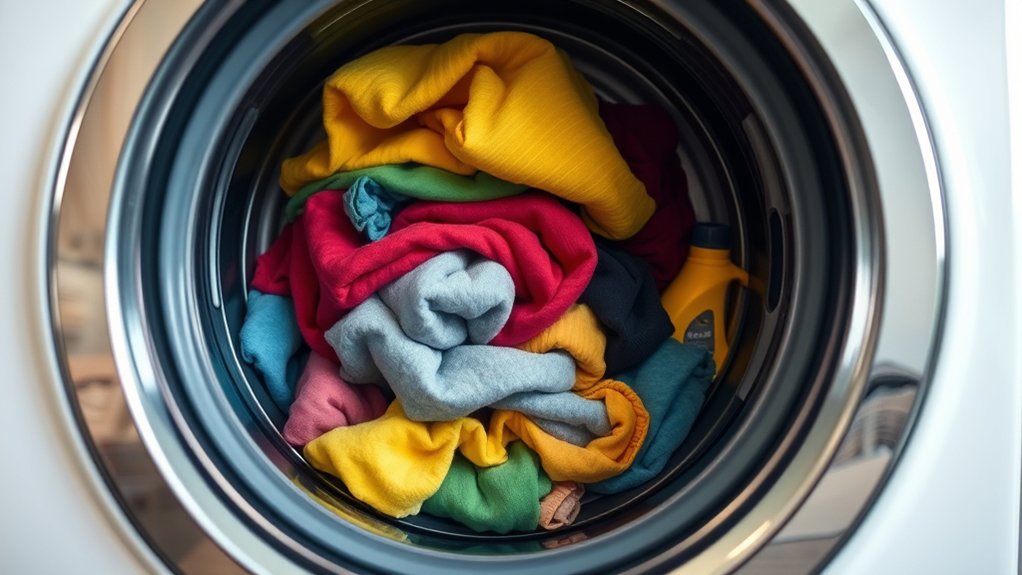
Filling your washing machine too full might seem like a good way to save time, but it can actually cause several problems. When you overload the machine, clothes don’t have enough space to move around, which means they won’t get cleaned properly. Detergent may not rinse out completely, leaving residue that irritates your skin or damages fabric.
Overloading also strains the motor and drum, increasing wear and tear and possibly leading to costly repairs. Your washing machine might become unbalanced during spin cycles, causing loud noises or even stopping mid-cycle. To avoid these issues, leave enough room for clothes to tumble freely.
That way, you’ll keep your washer running smoothly and get cleaner, fresher laundry every time.
Why Does Underloading a Washing Machine Waste Water and Energy?
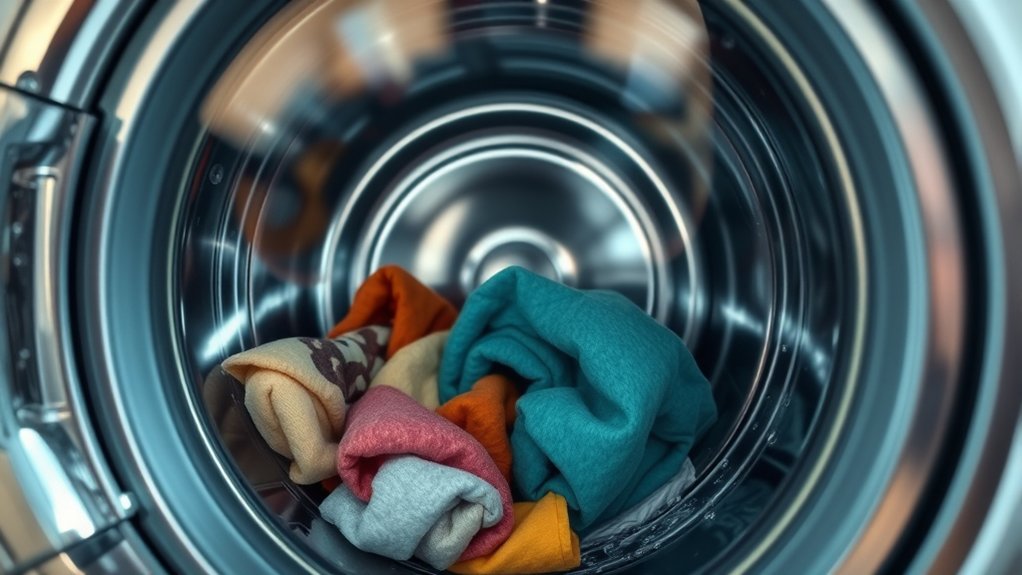
If you don’t load your washing machine enough, you’ll end up wasting water and energy on smaller loads that don’t fully utilize the machine’s capacity. Each wash cycle uses a set amount of water and electricity regardless of load size.
So, running half-empty loads means you’re paying the same for less laundry cleaned.
Here’s a quick comparison:
| Load Size | Water & Energy Use | Efficiency |
|---|---|---|
| Full Load | Standard | High (optimal use) |
| Half Load | Standard | Low (wasteful) |
| Underload | Standard | Very Low (inefficient) |
How to Judge the Right Load Size for Your Washing Machine
When you load your washing machine, striking the right balance is key to maximizing efficiency and protecting your clothes. To judge the right load size, start by loosely filling the drum about three-quarters full. Your clothes should have enough room to move freely without being tightly packed.
Avoid stuffing items in; this can prevent proper cleaning and strain the machine. You can test the load by placing your hand inside—there should be enough space to easily fit your hand between the clothes and the drum walls. Also, consider the weight of the laundry; heavier fabrics reduce space faster.
Following these simple guidelines helps your washer work most effectively, saves water and energy, and keeps your garments looking their best.
How Fabric Type Affects Washing Machine Load Capacity
You’ll need to adjust your load size based on the types of fabrics you’re washing. Delicate fabrics require more space to avoid damage, while heavy fabrics take up more room and add weight.
When mixing fabrics, you should balance the load to keep your machine running smoothly.
Delicate Fabrics Load Limits
Because delicate fabrics require gentle handling, you should avoid overloading your washing machine when cleaning items like silk, lace, or chiffon. These materials need more space to move freely, reducing friction and preventing damage.
To protect your delicates, fill your washing machine only halfway or less. Using mesh bags can also help keep them safe.
| Fabric Type | Recommended Load Capacity | Wash Cycle Setting |
|---|---|---|
| Silk | 30-40% of drum capacity | Gentle or Delicate |
| Lace | 25-35% of drum capacity | Gentle or Delicate |
| Chiffon | 30-40% of drum capacity | Gentle or Delicate |
| Fine knit | 30-40% of drum capacity | Gentle or Delicate |
This approach guarantees your delicate fabrics last longer and stay in good condition.
Heavy Fabrics Space Needs
Handling heavy fabrics like denim, towels, and blankets requires more space in your washing machine compared to delicate items. These materials absorb more water and become considerably heavier during the wash cycle, so you shouldn’t overload the drum. Give them at least half to two-thirds of your machine’s capacity to move freely.
Packing heavy fabrics too tightly reduces cleaning efficiency and strains the motor. Also, overfilling can cause uneven spinning, leading to longer drying times. If you’re washing bulky items, consider washing fewer pieces at once to avoid these issues.
Mixed Fabrics Load Balance
How do different fabric types affect your washing machine’s load capacity? When you mix fabrics, your machine’s efficiency depends on how well you balance those materials. Different fabrics absorb water differently and take up varying amounts of space, impacting your load size.
Here’s what you need to know:
- Heavy fabrics like denim or towels absorb more water and take up more space, reducing load capacity.
- Light fabrics such as cotton shirts dry faster and allow you to add more items.
- Mixing heavy and light fabrics can cause uneven washing and strain your machine if overloaded.
- Separate by fabric weight when possible to optimize washing performance and protect your machine.
Balancing your mixed fabric loads helps your washer work better and lasts longer.
How to Load Your Washing Machine for Even Cleaning and Spinning
You’ll want to balance your clothes evenly inside the drum to guarantee smooth spinning and thorough cleaning. Avoid overloading, as it can strain the machine and leave items dirty.
Also, separate heavy and light fabrics to help everything wash and spin properly.
Balance Clothes Evenly
Although it might seem simple, balancing clothes evenly in your washing machine is essential for effective cleaning and spinning. When the load is uneven, the machine can become unbalanced, causing noisy spins and poor washing results.
To balance your clothes properly, follow these steps:
- Distribute garments evenly around the drum to prevent heavy spots.
- Mix large and small items to keep weight balanced.
- Avoid clumping similar fabrics together, which can cause uneven distribution.
- Check that bulky items, like towels or blankets, don’t cluster on one side.
Avoid Overloading Drum
Balancing clothes evenly sets a solid foundation, but overloading the drum can still cause problems with cleaning and spinning. When you cram too many items inside, water and detergent can’t circulate properly, leaving your clothes less clean. Overloading also puts extra strain on the motor, which may lead to mechanical issues or uneven spinning.
To avoid this, fill the drum no more than about three-quarters full, leaving enough space for garments to move freely. You should be able to fit your hand comfortably between the clothes and the drum’s top edge. This space ensures effective washing and reduces wear on your machine.
Separate Heavy And Light
When loading your washing machine, separate heavy items like towels and jeans from lighter fabrics such as t-shirts and blouses. This helps your machine clean and spin clothes evenly, preventing damage and imbalance during the cycle. Mixing heavy and light items can cause uneven wear and longer drying times.
To load your machine effectively:
- Group heavy fabrics together to maintain balance.
- Place lighter clothes separately for gentler treatment.
- Avoid stuffing the drum; leave enough space for movement.
- Distribute items evenly around the agitator or drum.
How to Adjust Load Size for Heavily Soiled Versus Lightly Worn Clothes
If your clothes are heavily soiled, you’ll want to reduce the load size to guarantee they get thoroughly cleaned. Overloading with dirty clothes prevents water and detergent from reaching every fabric surface, leaving stains behind. Stick to smaller loads when dealing with mud, grease, or sweat to give your washing machine room to agitate effectively.
On the other hand, lightly worn clothes don’t require as much space, so you can fill the drum closer to its recommended capacity. Just ensure the clothes can move freely to avoid wrinkles and uneven washing. Adjusting load size based on soil level helps optimize cleaning performance and protects your garments.
Always check the care labels and your machine’s guidelines for the best results.
How Overloading Shortens Your Washing Machine’s Lifespan
Because washing machines rely on proper load distribution, overloading puts extra strain on their components and can quickly wear them down. When you cram too many clothes inside, the machine struggles to balance the drum, causing excessive vibration and noise. This leads to premature damage and costly repairs.
Here’s how overloading shortens your washing machine’s lifespan:
- Motor Overwork: The motor works harder, increasing the chance of burnout.
- Bearing Damage: Unbalanced loads stress the drum bearings, causing wear.
- Pump Strain: The drainage pump may clog or fail from excess water and debris.
- Reduced Cleaning Efficiency: Overloaded machines can’t clean clothes properly, leading to repeated cycles that further stress the machine.
To keep your machine running smoothly, avoid pushing it beyond its recommended capacity.
How to Save Energy and Water by Optimizing Your Washing Machine Load
Optimizing your washing machine load helps you cut down on both energy and water usage without sacrificing cleaning quality. When you fill your machine just right—not too full or too empty—you guarantee efficient use of resources.
Overloading forces the machine to work harder, using more energy and water, while underloading wastes capacity.
Here’s a quick guide to optimize your load:
| Load Size | Energy Use | Water Use | Tip |
|---|---|---|---|
| Small (1-3 kg) | Low | Low | Use quick wash settings |
| Medium (4-6 kg) | Moderate | Moderate | Ideal for most loads |
| Large (7-9 kg) | High | High | Avoid frequent large loads |
| Overloaded | Very High | Very High | Causes wear, avoid at all costs |
How to Adjust Washing Machine Settings Based on Load Size
When you adjust your washing machine settings to match your load size, you improve cleaning efficiency and save energy. Here’s how to tailor your settings effectively:
- Select the Right Water Level: Use low or medium water levels for small to medium loads, and high for large loads to avoid wasting water.
- Choose the Appropriate Cycle: Shorter cycles work for smaller loads, while larger loads benefit from longer cycles for thorough cleaning.
- Adjust Spin Speed: Higher spin speeds remove more water for bigger loads, reducing drying time, but use lower speeds for delicate, smaller loads.
- Use Load Sensing Features: If your machine has automatic load sensing, enable it to optimize water and energy use based on the load size.
Adjusting these settings keeps your laundry efficient and your utility bills down.
How to Troubleshoot Poor Cleaning Caused by Load Issues
If your clothes aren’t coming out clean, you might be overloading the machine. Too many items can prevent proper agitation and rinsing.
Try reducing the load size to see if that improves the cleaning results.
Identifying Overloading Effects
Because overloading your washing machine can cause poor cleaning results, it’s important to recognize the signs early. When your machine is packed too tightly, water and detergent can’t circulate properly, leaving clothes dirty or soapy. You might notice these effects:
- Clothes come out still stained or grimy.
- Excessive suds remain after the cycle ends.
- The washer vibrates or makes unusual noises.
- Clothes feel heavy and damp even after the spin cycle.
If you spot one or more of these issues, it’s a clear sign your machine is overloaded. Catching this early helps you avoid damage and guarantees your laundry gets properly cleaned every time.
Adjusting Load Size
Although it might be tempting to fill your washing machine to the brim, adjusting the load size guarantees your clothes get the best clean possible. Start by sorting laundry into smaller, balanced loads to prevent overcrowding, which stops detergent and water from circulating properly.
If your clothes come out still dirty or smelling musty, try reducing the amount of laundry per cycle. Overloading causes friction that wears fabrics and traps dirt instead of removing it. Conversely, running very small loads wastes water and energy, so aim for moderate loads that allow clothes to move freely.
Always check your machine’s manual for recommended load limits. By adjusting the load size, you’ll avoid poor cleaning results and extend your washer’s lifespan while saving resources.
Frequently Asked Questions
Can I Wash Delicate Items With Heavy Fabrics in the Same Load?
You shouldn’t wash delicate items with heavy fabrics together because the heavier fabrics can damage the delicate ones.
Keep them separate to protect your clothes and guarantee they get the proper care and cleaning they need.
How Often Should I Clean My Washing Machine Drum?
You should clean your washing machine drum at least once a month to prevent mold and odors. If you use it frequently or notice smells, clean it more often.
Regular maintenance keeps your machine fresh and efficient.
What Detergents Work Best for Different Load Sizes?
You’d think detergent chooses you, right? Use concentrated detergent for small loads—don’t drown your clothes.
For big loads, grab high-efficiency formulas; they work harder so you don’t have to.
Less mess, more clean!
Can Load Size Affect the Drying Time After Washing?
Yes, your load size affects drying time. Overloading traps moisture, making clothes wetter and extending drying. Smaller loads spin more efficiently, reducing drying time.
Is It Safe to Pause a Washing Cycle to Add More Clothes?
You can safely pause your washing machine to add more clothes, like dropping a telegram mid-message. Just hit pause, quickly add your items, then resume—just don’t keep the door open too long or water might spill.
Conclusion
You might think loading your washing machine to the brim saves time, but it’s a trap that steals cleanliness and efficiency. Overloading strains your machine and underloading wastes water and energy—both costly mistakes.
Think of your washer as a dance partner; it needs space to move freely to perform at its best. So, find that perfect balance, and you’ll keep your clothes fresh, your machine happy, and your utility bills low.
Proper washing machine load size is key to maximizing cleaning power and energy efficiency. By avoiding overloading or underloading, you ensure optimal wash cycles that protect your clothes and save water and electricity.