What Is a Faucet and How Does It Work?
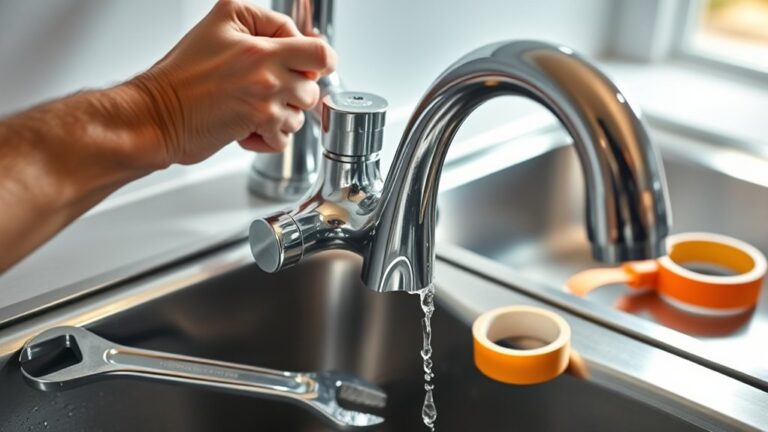
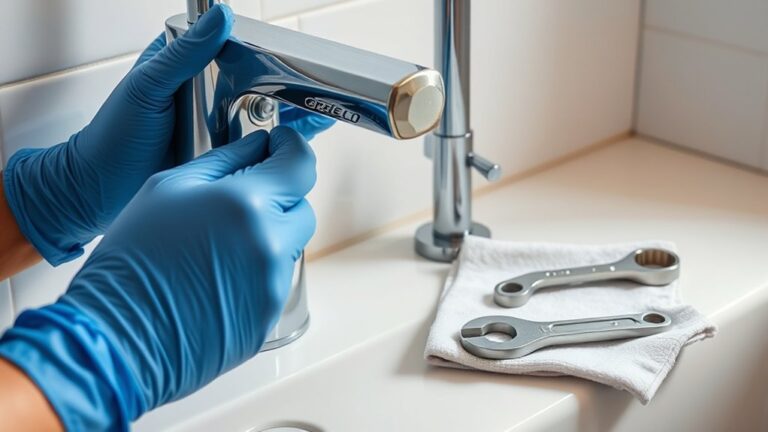
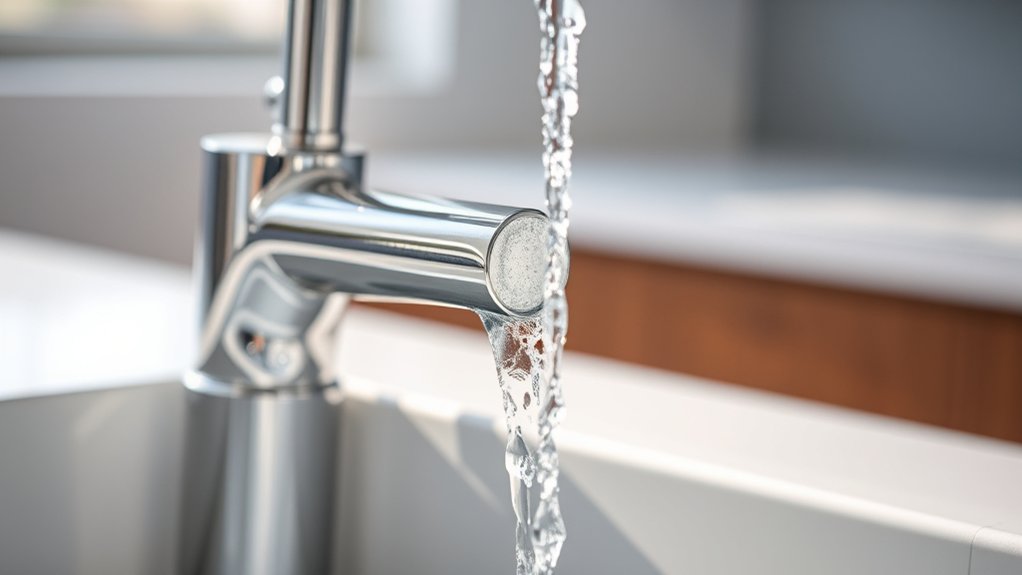
A faucet is a device that controls the flow and temperature of water from your plumbing system to sinks or tubs. Faucets use handles or levers to regulate water output, making them essential for everyday water use. Understanding how a faucet works can help you maintain it and address common problems effectively.
Inside a faucet, mechanisms such as cartridges, ceramic discs, or rotating balls control the flow of water and mix hot and cold water to your desired temperature. Water pressure influences how much water flows out, while washers and seals prevent leaks.
Faucets come in various types to suit different needs and preferences.
Keep reading to discover how these parts work together and learn simple ways to fix common faucet issues you might encounter in your home.
Key Takeaways
- A faucet controls water flow from pipes to fixtures like sinks or tubs using handles or levers. It regulates water amount, temperature, and stops flow for convenience and cleanliness. Faucets use internal mechanisms like cartridges, valves, or ceramic discs to manage water flow and temperature.
- Water pressure influences faucet flow, with valves and flow restrictors ensuring consistent water delivery. Common faucet types include single-handle, double-handle, ball, cartridge, and ceramic disc models, each with unique operation methods.
What a Faucet Is and Why It Matters
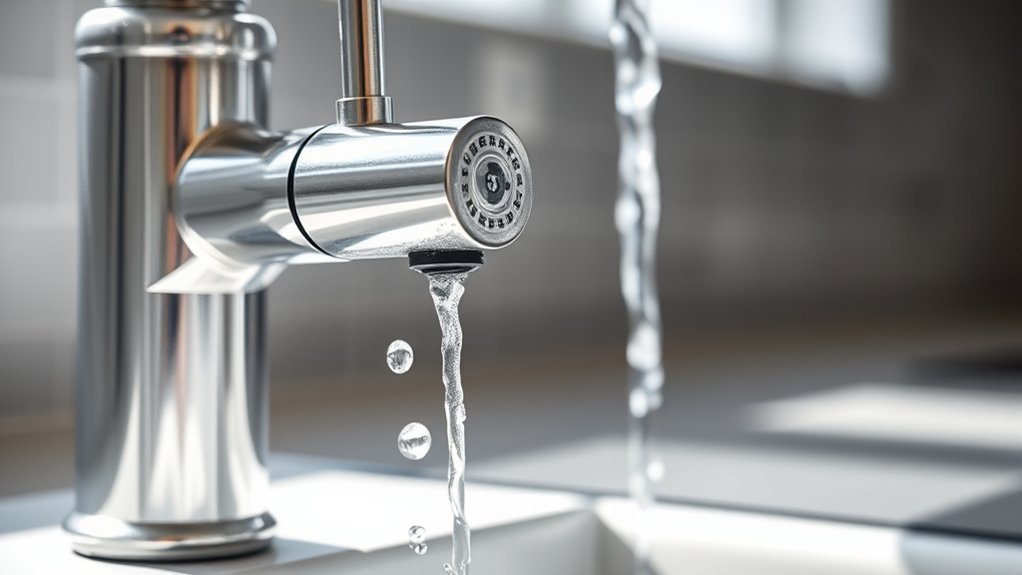
What exactly is a faucet, and why should you care? A faucet is a simple device that controls the flow of water from your pipes to your sink, tub, or outdoor hose. You use it every day without giving it much thought, but it plays an essential role in your daily routine.
By turning a handle or lever, you control how much water comes out, whether it’s hot or cold, and when it stops. Without faucets, accessing water would be messy and inefficient. Understanding what a faucet is helps you appreciate how it keeps your water use clean, convenient, and controlled.
Next time you turn on the tap, you’ll know it’s more than just a fixture—it’s a key part of your home’s plumbing system.
Main Parts of a Faucet You Should Know
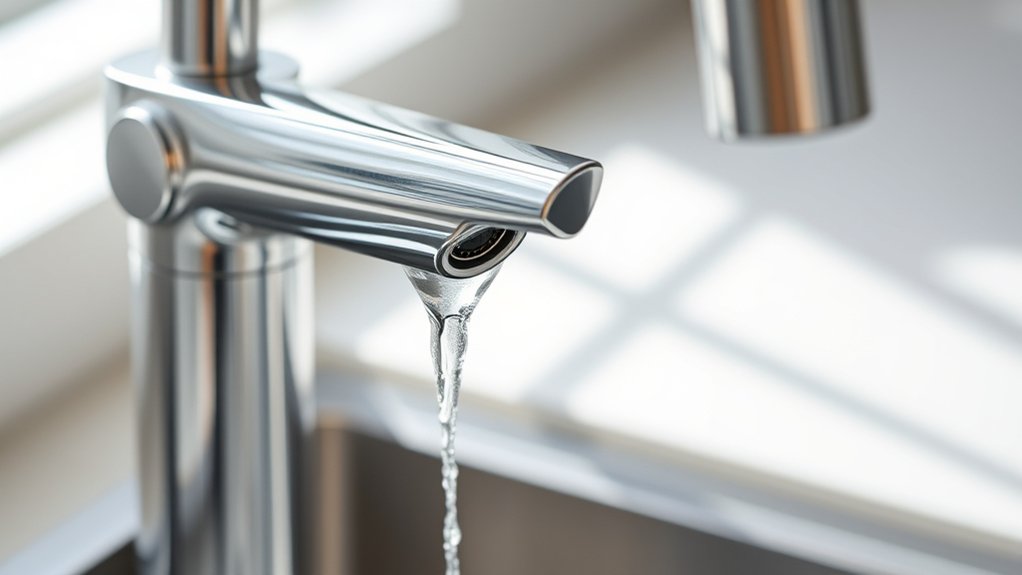
To understand how your faucet works, you need to know its main parts and the materials they’re made from. Each component plays a vital role in controlling water flow and durability.
Let’s take a closer look at these key elements so you can spot quality and functionality in your faucet.
Key Faucet Components
Although faucets come in various styles and designs, they all rely on a few essential components that control water flow and temperature. First, you have the handle or handles, which you turn or lift to start or stop the water. Inside, there’s a cartridge or valve that regulates the flow and mixes hot and cold water to your desired temperature.
The spout directs the water out, and often includes an aerator to reduce splashing and conserve water. You’ll also find washers and seals inside that prevent leaks by creating tight connections. Finally, mounting hardware secures the faucet to your sink or countertop.
Understanding these key parts helps you troubleshoot issues and choose the right faucet for your needs.
Common Faucet Materials
Knowing the key components inside a faucet gives you a better idea of what materials will hold up best over time. Choosing the right material means your faucet won’t just look great but will also resist corrosion and wear.
Here are three common materials you’ll find in faucets:
- Brass: Durable and corrosion-resistant, brass is a popular choice for faucet bodies and internal parts.
- Stainless Steel: Known for its strength and rust resistance, stainless steel is perfect if you want a sleek, modern look.
- Plastic: Often used in budget-friendly faucets or internal parts, plastic is lightweight but less durable over time.
How Water Pressure Controls Faucet Flow
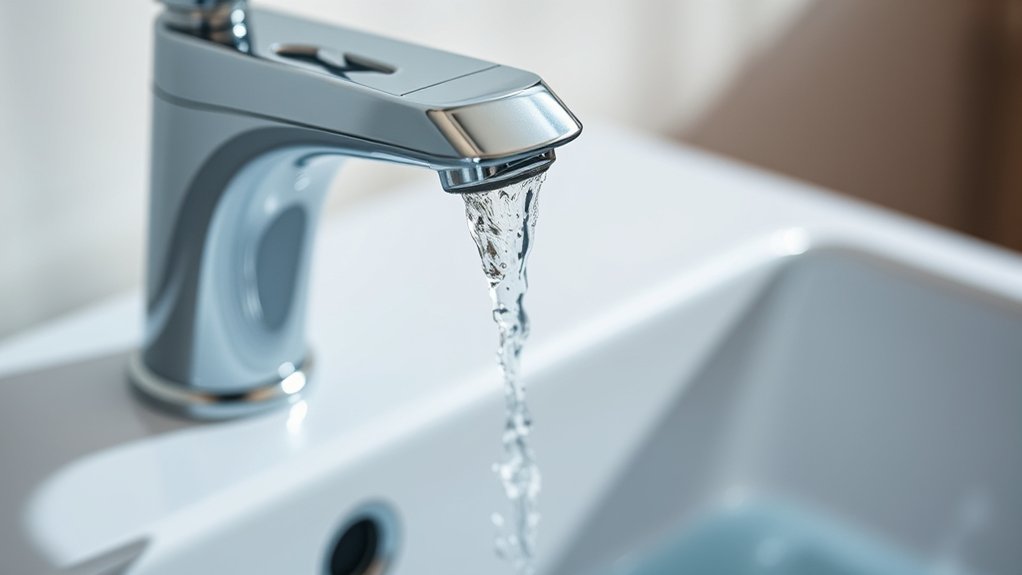
You’ll notice that water pressure directly affects how much water flows through your faucet. Higher pressure pushes more water out, while lower pressure limits the flow.
Understanding this helps you see how faucets regulate water to give you just the right amount.
Water Pressure Basics
When water pressure changes, it directly affects how your faucet delivers flow. Understanding water pressure basics helps you see why your faucet might sputter or gush unexpectedly. Water pressure is the force pushing water through your pipes, and it controls how quickly water comes out of your faucet.
Here are three key points about water pressure you should know:
- Measured in PSI: Water pressure is typically measured in pounds per square inch (PSI). Most homes operate between 40-60 PSI for ideal faucet performance.
- Too Low: Low pressure means weak water flow, causing slow filling or weak spray.
- Too High: Excessive pressure can damage your faucet and plumbing over time.
Knowing this helps you troubleshoot flow issues and maintain your faucet’s longevity.
Flow Rate Regulation
How exactly does water pressure influence the flow rate of your faucet? Water pressure pushes water through your pipes and out of the faucet. When pressure is high, more water flows quickly; when it’s low, the flow slows down.
Your faucet’s internal valves respond to this pressure, opening wider or narrower to regulate the water amount. Some faucets include flow restrictors to limit water use, maintaining steady flow even if pressure spikes. If pressure fluctuates, you might notice inconsistent water flow.
Understanding this helps you troubleshoot issues like weak streams or bursts. So, controlling your home’s water pressure directly affects how much water your faucet delivers, ensuring efficient and comfortable use every time you turn it on.
Faucet Types You’ll Want to Know
Although faucets may seem simple, the variety of types available can considerably affect your experience and home’s functionality. Choosing the right faucet type guarantees better water control, ease of use, and style that matches your space.
Selecting the right faucet ensures improved control, convenience, and a seamless fit with your home’s design.
Here are three common faucet types you’ll want to know:
- Single-handle faucets – You control both temperature and flow with one lever, making adjustments quick and easy.
- Double-handle faucets – Separate hot and cold water controls let you fine-tune temperature but require more effort.
- Pull-out or pull-down faucets – These have detachable spray heads, offering flexibility for washing and cleaning tasks.
Understanding these types helps you pick a faucet that fits your needs and lifestyle perfectly.
Compression Faucets: How They Work
You’ll find that compression faucets use a simple valve mechanism to control water flow by tightening or loosening the handle. When you turn the handle, it compresses a washer against a valve seat, stopping the water.
Knowing how this process works can help you spot common issues and fix leaks quickly.
Basic Valve Mechanism
When you turn the handle of a compression faucet, you’re actually controlling a valve that regulates water flow. Inside, a stem with a washer moves up or down, pressing against a valve seat to stop water or lifting away to let it flow.
This simple mechanism relies on a few key parts:
- Valve Stem – Connects to the handle and moves the washer.
- Washer – Seals against the valve seat to block water.
- Valve Seat – The surface where the washer presses to stop flow.
Operation Process Explained
How does turning a faucet handle control the flow of water? When you twist the handle on a compression faucet, it moves a stem connected to a rubber washer. Turning the handle clockwise presses the washer down against a valve seat, creating a seal that blocks water from flowing.
When you turn it counterclockwise, the washer lifts away, opening the valve and letting water pass through. This simple mechanism relies on the washer’s tight fit to stop water and its movement to allow flow. Because the washer controls the seal, you can regulate water pressure by adjusting how far you turn the handle.
This basic but effective design has been used for decades, letting you easily control water with a simple twist.
Common Issues And Fixes
Although compression faucets are reliable, they can develop common issues like leaks or difficulty turning the handle. When you notice these problems, you can often fix them yourself with some basic steps.
Here are three common issues and how to address them:
- Leaking Faucet: Usually caused by worn-out washers. Turn off the water supply, disassemble the faucet, replace the washer, and reassemble.
- Stiff Handle: Mineral buildup can make the handle hard to turn. Remove the handle and clean the valve stem with vinegar or a descaling solution.
- Dripping Spout: This often means the valve seat is damaged. Inspect it for wear and replace if necessary to stop the drip.
Understanding Cartridge Faucets
Since cartridge faucets combine ease of use with reliable performance, they’ve become a popular choice for many homeowners. When you use one, you’ll notice a smooth handle operation that controls both water temperature and flow. Inside, a plastic or brass cartridge moves up and down or side to side, regulating water mix and volume precisely.
This design reduces leaks and makes repairs straightforward—you can often replace the cartridge itself without changing the entire faucet. Cartridge faucets work well with both single- and double-handle setups, giving you flexibility in style and function. If you run into issues like drips or uneven flow, replacing the cartridge usually fixes it quickly.
Understanding how this mechanism works helps you maintain your faucet efficiently and avoid unnecessary expenses.
Ball Faucets and Flow Regulation
When you turn the handle on a ball faucet, a rotating metal ball inside controls both water flow and temperature with a simple, smooth motion. This design makes it easy for you to adjust water precisely without much effort. Here’s how it works:
- The ball has holes aligned with water inlets; when you move the handle, these holes either open or block water flow.
- As you rotate the ball, it mixes hot and cold water inside the faucet body, giving you control over temperature.
- The rubber seals around the ball prevent leaks and help regulate water pressure, ensuring smooth operation.
Ceramic Disc Faucets Explained
Ball faucets use a rotating metal ball to control water flow and temperature, but ceramic disc faucets take a different approach to achieve smooth and reliable operation. Inside a ceramic disc faucet, you’ll find two polished ceramic discs that slide against each other. One disc remains stationary while the other moves when you turn the handle.
This movement aligns or misaligns holes in the discs, controlling water flow and mixing hot and cold water precisely. Because ceramic discs are extremely durable and resistant to wear, you’ll notice fewer drips and leaks over time. Plus, their smooth operation means you can adjust water with minimal effort.
If you want a faucet that’s both efficient and long-lasting, ceramic disc models are definitely worth considering.
Materials That Make Your Faucet Last
The materials used in your faucet play a crucial role in its durability and performance. Choosing a faucet made from high-quality materials guarantees it withstands daily use and resists corrosion.
Here are three materials that help make your faucet last:
- Brass – Known for its strength and resistance to rust, brass faucets handle water pressure well and maintain their finish over time.
- Stainless Steel – This material offers excellent corrosion resistance and durability, making it ideal for both kitchen and bathroom faucets.
- Zinc Alloy – While more affordable, zinc alloys provide decent durability but may not last as long as brass or stainless steel.
Common Faucet Problems and How to Spot Them
Even the most durable faucets can develop issues over time. You might notice dripping sounds even when the faucet is off, signaling a leak. Watch for reduced water flow or uneven spray patterns, which often indicate clogged aerators or buildup inside.
If your faucet handle feels stiff or loose, it could mean worn-out parts or mineral deposits. Pay attention to any strange noises like squeaking or banging when you turn the water on or off; these often reveal pressure problems or loose components.
Finally, look for visible corrosion or rust, which can weaken your faucet’s structure. Spotting these problems early helps you avoid bigger headaches and keeps your faucet working smoothly longer.
How to Fix a Leaky Faucet in a Few Simple Steps
If you notice a persistent drip from your faucet, you can often fix it yourself without calling a plumber. Start by turning off the water supply under the sink to prevent any spills.
Next, follow these steps:
- Remove the faucet handle using a screwdriver to access the inner parts.
- Inspect the washer and O-ring for wear or damage; these are common causes of leaks.
- Replace any damaged parts with new ones, then reassemble the faucet carefully.
Once everything’s back in place, turn the water supply on and check for leaks. Fixing a leaky faucet is usually straightforward and saves water and money.
Just take your time, and you’ll have it drip-free in no time.
When to Replace Your Faucet Instead of Repairing
Fixing a leaky faucet often solves the problem quickly, but sometimes repairs aren’t enough. You should consider replacing your faucet if issues persist or if the fixture is outdated. Replacement can save water, prevent bigger leaks, and improve your sink’s look.
Here’s when to replace instead of repair:
| Signs to Replace | Why Replace? |
|---|---|
| Frequent leaks | Repairs won’t last |
| Corroded or damaged parts | Risk of water contamination |
| Low water pressure | Internal valve failure |
| Outdated design | Inefficient and unattractive |
If your faucet matches any of these, it’s time to invest in a new one rather than patching up old problems repeatedly.
Tips to Keep Your Faucet Working Longer
To keep your faucet working longer, you need to perform regular maintenance and handle it with care. Small steps can prevent major issues and extend your faucet’s life. Here are three essential tips:
1. Clean Aerators and Screens Regularly
Mineral deposits can clog the aerator, reducing water flow. Unscrew and soak it in vinegar monthly to keep it clear.
2. Check for Leaks Promptly
Don’t ignore drips. Fixing leaks early prevents water waste and damage to internal parts.
3. Operate Gently
Avoid using excessive force when turning handles. This reduces wear on internal components and prevents cracks.
Frequently Asked Questions
How Do Faucets Differ Internationally in Design and Function?
You’ll find faucets vary internationally in design and function based on local plumbing standards, water pressure, and cultural preferences. Some use single handles, others separate hot and cold taps, and sensor-activated faucets are common in public spaces.
Can Smart Faucets Help Conserve Water Effectively?
Smart faucets help you conserve water effectively by using sensors and timers, unlike traditional taps that run continuously. You’ll save water and energy effortlessly, making your daily routines eco-friendlier without sacrificing convenience or comfort.
What Are the Environmental Impacts of Faucet Manufacturing?
You’ll find faucet manufacturing uses metals and plastics, consuming energy and water. This process emits greenhouse gases and creates waste, impacting ecosystems.
Choosing faucets made sustainably or from recycled materials can help reduce these environmental effects.
How Do Faucet Aerators Improve Water Efficiency?
Think of faucet aerators as tiny superheroes—they mix air with water, reducing flow without sacrificing pressure.
You’ll save water and energy effortlessly, turning every tap into an eco-friendly, efficient tool in your daily routine.
Are There Specific Faucets Designed for People With Disabilities?
Yes, you’ll find faucets designed for people with disabilities, featuring lever handles, touchless sensors, or easy-grip designs. These make turning water on and off simpler, improving accessibility and independence in daily tasks.
Conclusion
Now that you know what makes a faucet tick, you’re better equipped to keep it flowing smoothly. Think of your faucet as the heart of your sink—when it’s healthy, everything runs effortlessly. By spotting problems early and following simple fixes, you can avoid a drip turning into a flood.
So, give your faucet the care it deserves, and it’ll reward you with years of reliable service without missing a beat. Proper maintenance and understanding how a faucet works are key to preventing leaks and ensuring consistent water flow. A well-maintained faucet not only saves water but also enhances the overall efficiency of your plumbing system.