How to Maintain a System in Deep Vacuum
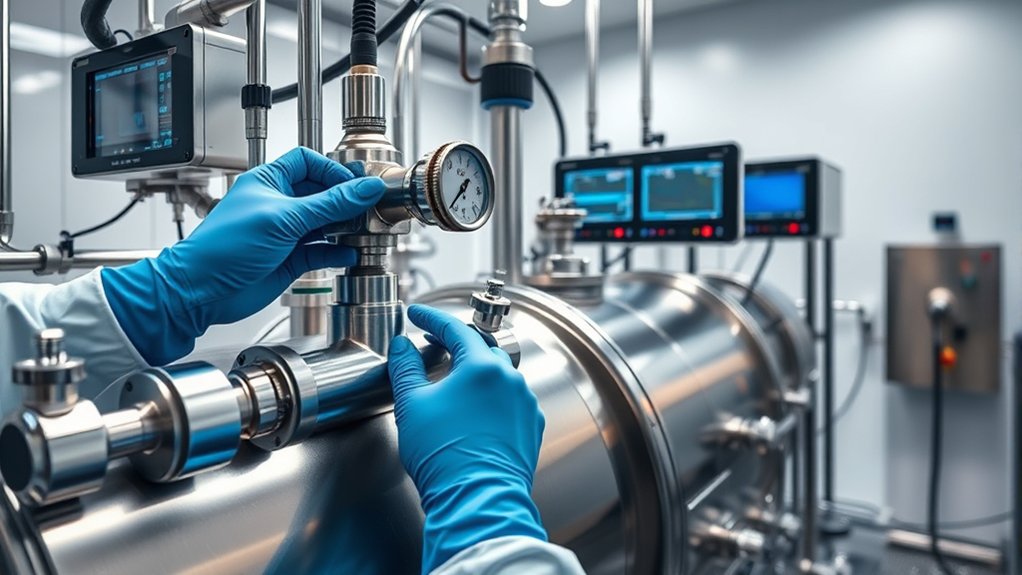
To maintain a system in deep vacuum, it is essential to ensure airtight seals by regularly cleaning and inspecting joints. Monitoring pressure with calibrated gauges helps detect leaks early, which is crucial for maintaining vacuum integrity.
Routine servicing of pumps, including checking oil, seals, and filters, supports consistent system performance.
Gradually raising the temperature during bake-outs prevents stress on components, preserving their functionality.
Storing equipment in stable, clean conditions minimizes contamination risks.
Keeping track of system performance helps identify potential failures before they occur.
By consistently following these practices, you can improve the reliability of your deep vacuum system. This approach effectively extends the system’s lifespan and ensures optimal operation over time.
Key Takeaways
- Regularly inspect and replace seals, gaskets, and filters to prevent leaks and maintain vacuum integrity.
- Monitor vacuum pressure continuously using calibrated gauges to detect leaks or performance issues early.
- Clean and assemble components carefully, ensuring all joints and flanges are sealed tightly and free of contaminants.
- Perform scheduled maintenance on vacuum pumps, including oil checks and part replacements, to ensure reliable operation.
- Store vacuum equipment in controlled environments, dry thoroughly, and protect parts from dust and moisture when not in use.
What Deep Vacuum Means for Your System
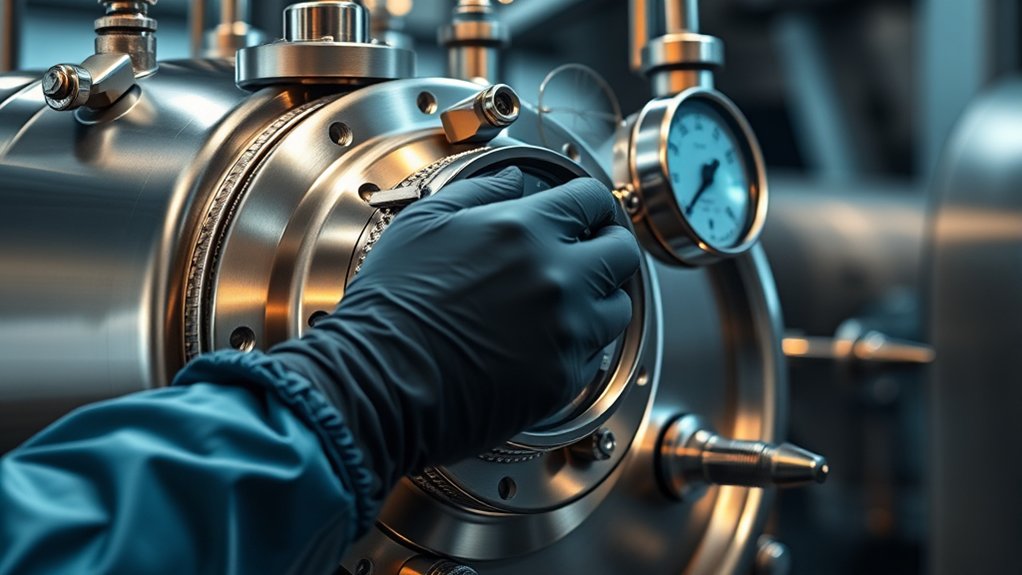
Although the term “deep vacuum” might sound technical, it simply means removing nearly all the air and moisture from your system. When you achieve a deep vacuum, you considerably lower the pressure inside the system, often reaching levels far below atmospheric pressure. This reduction helps prevent contamination, oxidation, and corrosion, which can damage sensitive components.
You’ll notice that maintaining such low pressure improves system reliability and performance, especially in processes like semiconductor manufacturing or scientific experiments. However, achieving and sustaining a deep vacuum requires careful attention to leaks, seals, and materials that won’t outgas.
Understanding what deep vacuum entails helps you appreciate why proper maintenance is critical to keep your system operating efficiently and free from unwanted particles or moisture that could compromise results.
How to Choose the Right Vacuum Pumps and Components
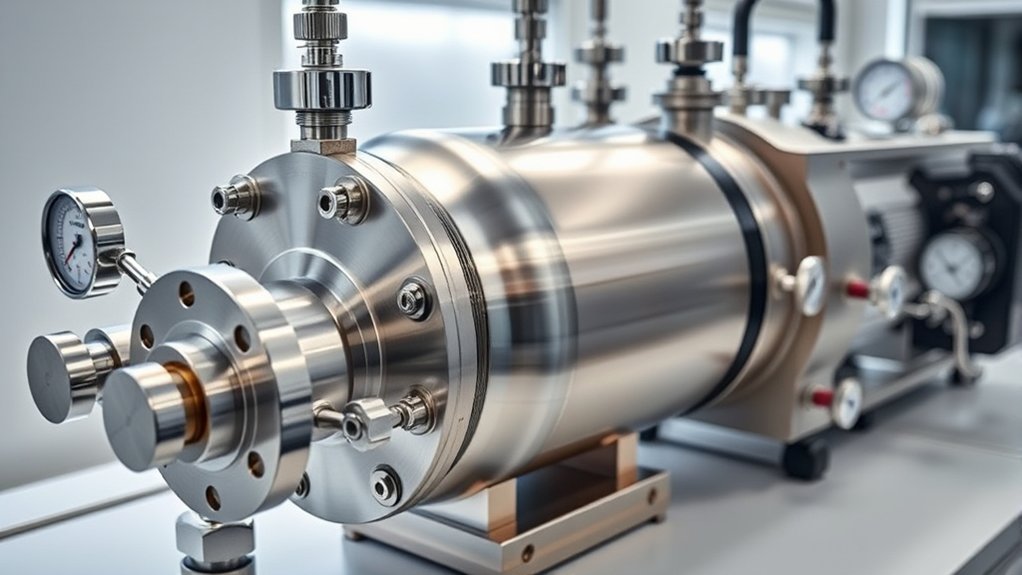
You’ll need to compare different pump types to find one that matches your system’s deep vacuum requirements. Choosing essential components like valves and gauges is just as important to guarantee reliable performance.
Let’s explore how to pick the right equipment to keep your system running smoothly.
Pump Types Comparison
Which vacuum pump suits your system best depends on several key factors like desired pressure, maintenance needs, and budget. Rotary vane pumps offer reliable medium vacuum performance and are relatively easy to maintain, making them ideal for many lab applications.
If you need ultra-high vacuum levels, turbomolecular pumps excel, though they require clean conditions and more careful upkeep. Dry pumps avoid oil contamination and reduce maintenance but often come at a higher price. Scroll pumps balance quiet operation with low maintenance, suitable for moderate vacuum tasks.
You’ll want to match pump speed and ultimate pressure with your system’s demands to avoid over- or under-specifying. By weighing these factors carefully, you can select a pump type that keeps your vacuum system efficient and trouble-free.
Essential Component Selection
Selecting the right vacuum pumps and components goes beyond just understanding pump types. You need to take into account the operating pressure range, gas load, and chemical compatibility to guarantee optimal performance. Choose pumps designed for your system’s specific vacuum level, whether rough, high, or ultra-high vacuum.
Components like valves, seals, and gauges must match the pump’s materials and withstand the environment inside your system. Don’t overlook maintenance ease—select parts that simplify cleaning and replacement. Also, prioritize energy efficiency and noise levels, especially for continuous operation.
How to Prepare Your Vacuum System Before Use
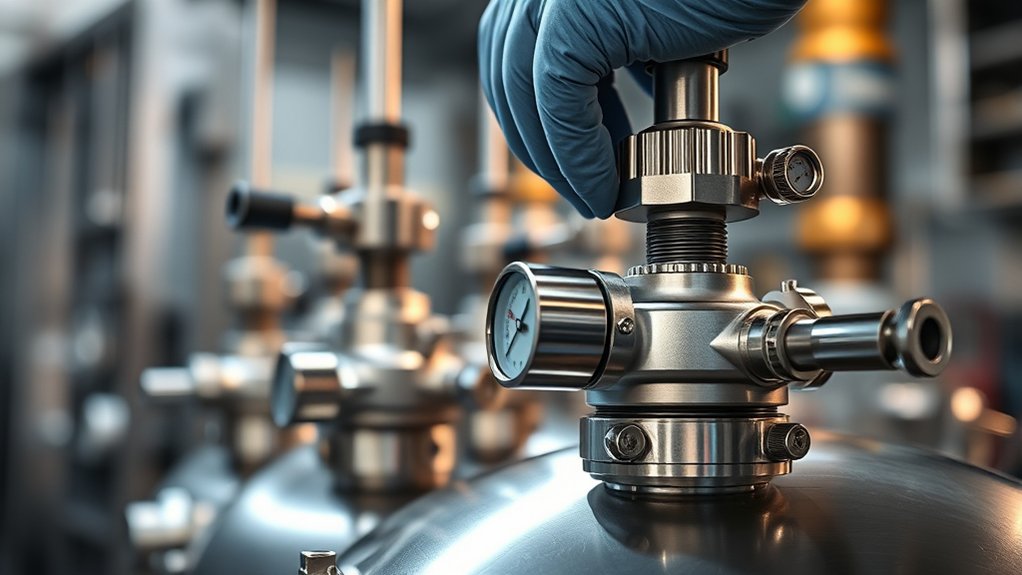
Before starting your vacuum system, verify all components are clean and properly assembled to prevent contamination and leaks. Taking these steps guarantees your system runs efficiently and lasts longer.
Follow these essential preparation steps:
- Inspect thoroughly: Check all parts for damage or dirt. Even minor debris can compromise your vacuum’s performance, so don’t overlook this.
- Clean carefully: Use appropriate solvents or wipes to remove any residues. A spotless system means fewer risks of contamination.
- Assemble with care: Ensure each component fits securely. Loose connections can lead to poor vacuum levels and frustrating downtime.
How to Seal Joints and Flanges to Prevent Vacuum Leaks
Since even the smallest leaks can compromise your vacuum system’s integrity, you need to seal joints and flanges carefully to maintain deep vacuum conditions. Start by cleaning all surfaces thoroughly to remove dust, oil, or debris that could prevent a tight seal. Use appropriate gaskets—metal, elastomer, or silicone—based on your system’s temperature and pressure requirements.
When assembling flanges, tighten bolts evenly in a star pattern to apply uniform pressure and avoid warping. For threaded joints, apply vacuum-compatible thread sealant or tape to ensure airtight connections without outgassing. Regularly inspect seals for wear or damage and replace gaskets as needed.
Taking these steps guarantees you prevent leaks and maintain the vacuum system’s performance over time.
How to Monitor Vacuum Pressure Accurately
Although maintaining a deep vacuum depends on many factors, you can’t manage what you don’t measure accurately. To keep your system stable, you need precise and reliable vacuum pressure readings. Choose the right gauge for your pressure range—ion gauges work well for ultra-high vacuum, while Pirani gauges suit rougher vacuums.
Regular calibration ensures your readings stay trustworthy, so don’t skip it. Also, monitor trends instead of just spot readings; this helps you catch leaks early and avoid system failures.
- Select appropriate gauges to match your vacuum level.
- Calibrate instruments routinely for consistent accuracy.
- Track pressure trends to detect issues before they escalate.
How to Clean Vacuum Chambers and Surfaces
You need to clean vacuum chambers and surfaces thoroughly to keep your system running smoothly. Using effective cleaning techniques helps remove contaminants that could compromise the vacuum.
Let’s explore methods that prevent contamination and maintain a pristine environment.
Effective Cleaning Techniques
How do you guarantee a vacuum chamber stays free from contaminants that could compromise its performance? You need effective cleaning techniques that thoroughly remove residues without damaging delicate surfaces. Start by using compatible solvents to dissolve oils and greases.
Follow with lint-free wipes to eliminate particles. Finally, employ ultrasonic cleaning for hard-to-reach areas.
- Choose the right solvent: Using incompatible chemicals can leave residues or damage components. Select solvents designed for vacuum systems.
- Use proper wiping materials: Avoid cotton; instead, pick lint-free wipes or swabs to prevent fiber contamination.
- Ultrasonic cleaning: This method uses high-frequency sound waves to remove microscopic debris, ensuring even the smallest crevices are spotless.
Contamination Prevention Methods
Since contaminants can severely impact vacuum system performance, you must adopt strict prevention methods when cleaning chambers and surfaces. Always wear clean gloves to avoid introducing oils or dirt. Use lint-free wipes and solvents compatible with vacuum materials, like isopropyl alcohol or acetone, to remove residues.
Avoid abrasive materials that can scratch surfaces and create sites for contamination. After cleaning, rinse parts thoroughly and dry them completely with filtered air or in a clean environment. When reassembling, minimize exposure to open air by working quickly and in clean conditions.
Store cleaned components in sealed, contaminant-free containers until installation. Regularly inspect and replace seals or gaskets prone to degradation. By following these steps, you’ll maintain a clean vacuum environment and guarantee reliable deep vacuum system performance.
How to Use Bake-Out to Remove Contaminants
Although removing contaminants from a deep vacuum system can be challenging, bake-out offers an effective solution by heating the system to release trapped gases and moisture. When you perform a bake-out, you raise the temperature gradually, allowing contaminants to desorb from surfaces and be pumped away. This process restores vacuum quality and prolongs system life.
Bake-out effectively removes contaminants by heating the vacuum system, improving performance and extending its lifespan.
To use bake-out effectively:
- Prepare thoroughly: Seal the system and ensure all components withstand high temperatures to avoid damage.
- Control temperature carefully: Increase temperature slowly to prevent thermal stress and monitor it closely.
- Maintain vacuum pumping: Keep pumps running during bake-out to remove released gases promptly and sustain pressure.
How to Identify and Fix Common Vacuum Leaks Quickly
When your vacuum system loses pressure unexpectedly, you’ll want to locate and fix leaks as quickly as possible to keep it running efficiently. Start by visually inspecting all seals, flanges, and fittings for obvious damage or loose connections. Use a handheld ultrasonic leak detector or a simple soapy water solution to spot escaping air bubbles at suspect joints.
For smaller, harder-to-find leaks, a helium leak detector offers precise identification. Once you pinpoint a leak, tighten fittings or replace worn gaskets immediately. Avoid using excessive force, which can cause further damage.
After repairs, run the system and monitor pressure to confirm the leak is sealed. Quick identification and repair prevent contamination and maintain deep vacuum integrity, ensuring your system performs reliably without unnecessary downtime.
How to Maintain Your Vacuum Pumps and Replace Parts
Properly maintaining your vacuum pumps and replacing worn parts on schedule guarantees your system runs smoothly and avoids unexpected breakdowns. Neglecting maintenance can lead to costly repairs and frustrating downtime.
Consistent vacuum pump maintenance prevents breakdowns and costly repairs, ensuring reliable system performance.
To keep your pumps in top shape, focus on these essential steps:
- Regularly check oil levels and quality – Dirty or low oil strains the pump, risking failure.
- Inspect and replace seals and gaskets promptly – Worn seals cause leaks, undermining vacuum integrity.
- Clean or change filters on schedule – Clogged filters reduce efficiency and increase wear.
How to Store Vacuum System Equipment Properly
Before storing your vacuum system equipment, make sure you clean it thoroughly to prevent contamination. You’ll also want to keep it in a controlled environment with stable temperature and humidity.
These steps help preserve the equipment’s performance and extend its lifespan.
Cleanliness Before Storage
Although vacuum system equipment might seem clean after use, you’ll need to thoroughly inspect and clean every component before storing it. Residual particles or moisture can cause corrosion or contamination, compromising future performance.
To keep your equipment in top shape, focus on these steps:
- Disassemble carefully to access hidden areas where debris might hide, preventing surprises later.
- Use appropriate cleaning agents designed for vacuum systems to avoid damaging sensitive parts.
- Dry components completely to eliminate moisture, which can lead to rust and mold growth.
Controlled Environment Conditions
Once you’ve cleaned and dried every component, the next step is to store your vacuum system equipment in conditions that prevent damage and contamination. Keep the equipment in a dry, dust-free environment with stable temperature and low humidity to avoid corrosion and degradation. Use sealed containers or protective covers to shield parts from airborne particles and moisture.
Avoid direct sunlight and extreme temperature changes, as these can affect seals and materials. Store sensitive components like O-rings and valves separately in airtight bags with desiccants to maintain their integrity. Label everything clearly so you can quickly identify parts when needed.
How to Track Vacuum System Performance and Schedule Maintenance
To keep your vacuum system running smoothly, you need to monitor its performance regularly and set a clear maintenance schedule. Tracking key metrics helps you spot issues before they escalate, saving you time and costly repairs.
Regular monitoring and a clear maintenance schedule keep your vacuum system efficient and prevent costly repairs.
Here’s how to stay on top of it:
- Record pressure readings daily – Consistent monitoring reveals trends and alerts you to leaks or pump failures early.
- Inspect and replace seals and filters on schedule – Worn components reduce efficiency and can cause system contamination.
- Log all maintenance activities – Keeping detailed records ensures you don’t miss vital upkeep and helps diagnose recurring problems quickly.
Frequently Asked Questions
Can Deep Vacuum Systems Be Used for Food Packaging?
Yes, you can use deep vacuum systems for food packaging to extend shelf life and preserve freshness. Just make sure you follow proper hygiene and packaging standards to keep the food safe and maintain quality effectively.
What Safety Precautions Are Needed When Working With Deep Vacuum Systems?
You should wear protective gear, avoid rapid pressure changes, make sure equipment is intact, and keep clear of implosion hazards.
Always follow safety protocols and never work alone to prevent accidents when handling deep vacuum systems.
How Does Ambient Temperature Affect Deep Vacuum System Performance?
Oh, sure, ambient temperature doesn’t affect your deep vacuum system at all—except it actually does. You’ll notice leaks, outgassing, and pump inefficiencies spike when temperatures fluctuate, so keep things stable to maintain peak performance.
Are There Specific Materials That Degrade in Deep Vacuum Environments?
Yes, you’ll find materials like certain plastics, rubbers, and lubricants degrade in deep vacuum. They outgas or become brittle, so you should choose vacuum-compatible materials like metals, ceramics, and specially formulated polymers for long-term stability.
Can Deep Vacuum Systems Be Automated for Remote Operation?
You can automate deep vacuum systems for remote operation—over 70% of advanced labs rely on automation to boost efficiency and safety.
You’ll control pumps and sensors remotely, minimizing human error and improving system reliability considerably.
Conclusion
To maintain a system in deep vacuum, you’ll want to master meticulous monitoring and methodical maintenance. By sealing swiftly, selecting suitable pumps, and spotting sneaky leaks, you secure system stability. Staying sharp on storage and scheduling smart servicing strengthens system success.
Remember, regular reviews and rapid repairs keep your vacuum energy vibrant. With consistent care and careful checks, you’ll conquer challenges and confidently control your deep vacuum conditions for lasting, leak-free performance. Maintaining a deep vacuum requires dedication to monitoring, sealing, and proactive maintenance to ensure optimal system function.